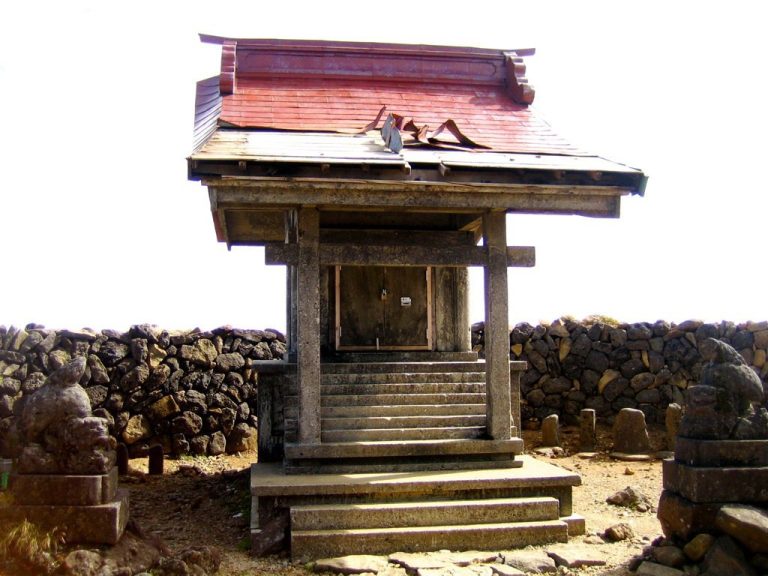
Hirashio Kumano Shrine: A Historic Shinto Sanctuary in Sagae, Japan


Site at a Glance
- Rating
- 3.9
- Popularity
- Very Low
- Country
- Japan
- Primary era
- Medieval
- Eras represented
- Medieval, Early Modern
- Civilizations
- Ashikaga shogunate, Tokugawa
- Site type
- Religious
- Remains
- Sanctuary
On this page9 sections
History
Hirashio Kumano Shrine is a Shinto shrine in Sagae, Yamagata Prefecture, Japan, traditionally founded in 721 when the Buddhist monk Gyoki is said to have enshrined the three Kumano sanctuaries. Gyoki was a Nara-period monk known for religious and charitable foundations, and his senior disciple Shokaku reportedly assisted as the shrine’s betto, or supervising religious official. The shrine’s principal deities are Susanoo, Izanami, and Izanagi, major figures in Shinto mythology. Izanami and Izanagi are creator deities, while Susanoo is associated with storms.
Medieval foundation and patronage
During the Earlier Nine Years’ War, Minamoto no Yoriyoshi and Minamoto no Yoshiie prayed at the shrine for victory. In 1061, they donated fields, woodland, and two mirrors. Tradition places a rebuilding of the shrine in 1086, during the Later Three Years’ War. These conflicts were campaigns involving powerful warrior families in northern Japan, and the shrine’s association with the Minamoto commanders formed part of its medieval history.
A sutra mound was established within the grounds during the Heian period, an era associated with classical Japanese court culture. Sutra mounds were deposits intended to preserve Buddhist scriptures and gain religious merit. A stone bell excavated from the mound dates to approximately 1142–1143. The mound and its contents reflect the shrine’s early connection with Buddhist practice.
In 1189, the Oe family, which had become the jito, or estate steward, of Sagae Estate, granted land to the shrine. The Nakayama family, hereditary retainers of the Sagae branch of the Oe family, later took responsibility for its protection. Through land reclamation along the Mogami River, the Nakayamas controlled a territory assessed at 7,000 koku, a historical measure of agricultural production conventionally linked to the annual rice needs of one person. They designated Hirashio Kumano Shrine as their prayer sanctuary and established branch shrines at Kitame, Takaya, and Fushikuma as local tutelary shrines.
Religious divisions and early modern rule
The institution was originally divided into three parts, following the arrangement of the Kumano sanctuaries: a Goma Hall for Buddhist fire rituals, an Inner Hall, and a Nyoho Hall. These parts were consolidated at the present site during the Meio period, approximately 1492–1501. The Nyoho Hall was renamed Hirashio Temple in February 1655. Known as Yugonzan Hirashio Temple, it became a subordinate temple of Hōdōji Temple of the Shingon school, an esoteric Buddhist tradition founded in Japan in the early ninth century, and handled administrative and financial affairs.
Under the Sagae family, Hino Shikibu served as betto. After the family’s fall, Yujitsu, a grandson of Harumune, the fifteenth head of the Date family, succeeded him. The temple’s bettos did not marry, and Hōdōji Temple appointed their replacements. After the Oe family fell, the Nakayama family entered the service of the Mogami family, which continued to protect the shrine. When the Mogami family was dispossessed, the shogunate granted the shrine more than 149 koku of vermilion-seal land.
Separation of shrine and temple traditions
The Meiji-era separation of Shinto and Buddhism converted the institution into a shrine. Hirashio Temple was established to undertake village funerals. During the subsequent suppression of Buddhism, the shrine’s two Ten Kings statues were reportedly buried in the rear hill for concealment. They were later excavated and enshrined again, while the principal image of Shakyamuni was lost during the same period.
Following the separation, Zekan, an official of Hirashio Temple, became the shrine priest and adopted the surname Takebe. At the villagers’ request, his disciple Enmyo succeeded him at Hirashio Temple. The temple received the former complex’s Amida image, which had stood in the Great Amida Hall, together with Buddhist ritual implements and the Great Perfection of Wisdom Sutra. It thereafter assumed responsibility for funerals.
The Ten Kings statues were conserved at the Kyoto National Museum’s Cultural Property Conservation and Repair Center over three years beginning in 2006. They returned in 2008, and a ceremony marked their return. The pair is designated a prefectural cultural property, while Hirashio Bugaku, a performance of ten traditional dances accompanied by music, is a prefecturally designated intangible folk cultural property.
Festivals and local religious practices
Hirashio Bugaku was formerly transmitted by the Hayashi family, as at Risshakuji, Jionji, and Yachi Hachimangu. Shrine personnel took over its transmission during the Tensho period, a sixteenth-century Japanese era. The shrine also preserves the Osai-jin Festival, a rite intended to avert calamity and invite good fortune.
The Osai-jin Festival was historically held in late February, corresponding to the fifteenth day of the first month in the former lunar calendar. A pine effigy was consecrated and offered to the boundary deity at a stone on the eastern end of the shrine approach, then distributed among participants. The person who picked one up was believed to receive good fortune. A pond beside the approach was formerly used for rainmaking rites directed toward a dragon deity believed to dwell there.
Approximately 600 meters north of Osai-jin, the Mogami River passes the former Ushimae ferry crossing. During the Edo period, this area also served as a shipment point for tribute rice. Hirashio Bridge was built there in 1960. The crossing is associated with a view of Mount Gassan, also called Gagyūzan.
Remains
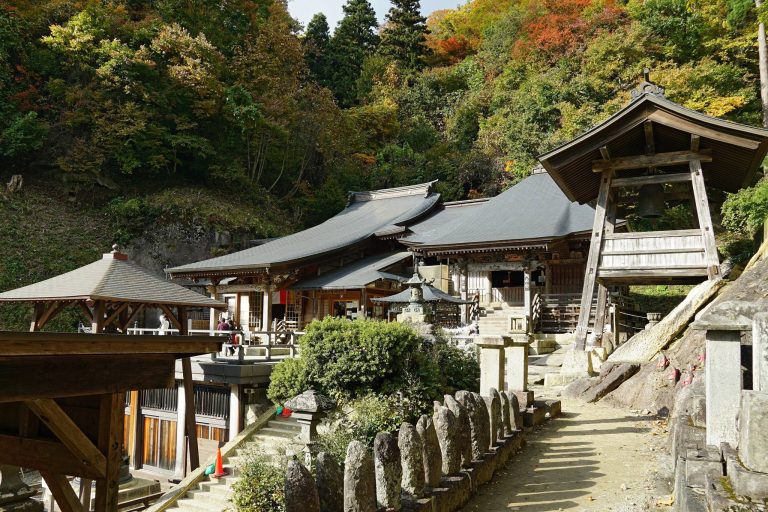
Hirashio Kumano Shrine is organized around an approach that runs almost straight for approximately 600 meters from Osai-jin, through a torii gate marking the sacred entrance, to the shrine buildings. A water channel and houses line the stretch between Osai-jin and the torii. The arrangement has been interpreted as a planned design established together with construction of the shrine buildings.
Sutra mound and excavated materials
A Heian-period sutra mound survives within the grounds. Materials from Mound No. 1 include an eight-sided, column-shaped stone bell associated with the date approximately 1142–1143, three large knives, a stone ritual mirror, a Suzu ware outer container for a sutra cylinder, and two fragments of a stone dish from the Jomon period. The Jomon period encompasses Japan’s prehistoric hunter-gatherer and early settled cultures. Together, these objects represent the mound’s Buddhist purpose and the earlier material preserved among its deposits.
Ten Kings sculptures
The shrine preserves a pair of wooden seated Ten Kings statues, generally dated to the middle of the twelfth century. The Ten Kings are Buddhist judges associated with the assessment of the dead, and Enma is the best known of them. Each sculpture was carved from a single block of wood. The seated Enma measures 133.5 centimeters, with a total height of 166.3 centimeters. The figure identified as Taizan Fukun, or the Great God of the Five Paths, has a seated height of 121.8 centimeters and a total height of 154.0 centimeters. They are said to be among Japan’s earliest examples of Ten Kings imagery and sculpture.
Knots visible in the wood have led to the supposition that the statues were carved from a sacred tree formerly growing within the shrine grounds. Their concealment during the suppression of Buddhism, later recovery, and conservation in the early twenty-first century form part of their surviving history.
All-night lanterns and the river approach
A pair of all-night lanterns was erected to aid worshippers and was kept lit throughout the night. The present lanterns were built on April 3, 1804, with oil financed by an “oil field” donated by Jisshōbō. Each lantern had a fire chamber and a wick dish for burning rapeseed oil. Members of the Hirashio religious community took turns tending them annually, and Umemotobō performed the final lighting duty in 1941, after which electric lighting ended this centuries-old practice.
The former Ushimae ferry crossing lay on the Mogami River approximately 600 meters north of Osai-jin. Its place in the shrine’s wider landscape is also connected with the view of Mount Gassan, or Gagyūzan, and with the movement of tribute rice during the Edo period.