Hikosan Jingū: A Sacred Mountain Center and Shrine in Japan


Site at a Glance
- Rating
- 4.4
- Popularity
- Medium
- Country
- Japan
- Primary era
- Early Modern
- External website
- Open
- Eras represented
- Early Modern
- Civilizations
- Tokugawa
- Site type
- Religious
- Remains
- Sanctuary
On this page14 sections
History
Hikosan Jingū is a historic mountain shrine in Japan that developed from an ancient sacred mountain and a Buddhist center of Shugendo, the Japanese tradition of ascetic practice combining Buddhism, mountain worship, and other religious elements. Its foundation is uncertain, although tradition places its establishment in 531 and other proposals date its origins to the sixth or eighth century. The site lies on the Fukuoka Prefecture side of Mount Hikosan, near the boundary with Oita Prefecture, and its religious importance grew through successive Buddhist, mountain-ascetic, and Shinto phases.
Origins and Sacred Mountain Traditions
Hikosan was probably already revered in antiquity, but the record before its revival by the monk Zokei in the early eleventh century is sparse. The mountain has sometimes been identified with the Ninoko-no-mikoto Shrine listed in the tenth-century Engishiki, a compilation of court rites and shrine registers, although that identification remains uncertain because another location has also been proposed.
One foundation tradition tells how the Northern Wei monk Zensho encountered a hunter named Fujiwara while training on the mountain. After a white deer was revived through the intervention of three hawks, Fujiwara understood the event as a divine manifestation, became Zensho’s disciple, and founded the religious establishment. Another tradition attributes the origin to the descent of the deity Ninoko and the construction of a small mountain shrine. These accounts preserve the religious meaning attached to the mountain, but they do not establish a certain foundation date.
The mountain was traditionally called Hikosan. A later story says that the monk Horen petitioned Emperor Saga in 819 to change the name after finding a message on a hawk feather, but this is legendary, since early records already use the form Hikosan. Retired Emperor Reigen, a former emperor who had abdicated while retaining court status, bestowed the character Ei in 1729, after which the mountain was called Eihikosan.
Shugendo and Medieval Development
The institution first developed as a Buddhist Shugendo center rather than as a Shinto shrine. From the twelfth century it became a major base for the mountain ascetics known as yamabushi, whose religious training took place in the mountains. A poem by Retired Emperor Go-Shirakawa from the twelfth century lists Hikosan among the sacred places of Tsukushi, showing that its reputation had reached the central court.
During the period when Shinto and Buddhism were practiced together, the establishment was known as Hikosan Gongen Reisenji. A gongen was understood as a Buddhist-syncretic manifestation of a native deity. The three sacred peaks of Hikosan were represented through the Three Gongen, whose forms were also classified as the Dharma-body, secular-body, and female-body manifestations.
In 1333, Chosuke Imperial Prince, the eighth son of Emperor Go-Fushimi, became chief abbot. The office thereafter passed through his direct line, from which the Takachiho family, the shrine’s hereditary priestly house, traces its descent. Tradition also associated the mountain with more than 3,000 monks’ residences and forty-nine caves used for ascetic training.
Warfare, Rebuilding, and Institutional Change
Warfare involving the Akizuki and Otomo families during the Tensho era, from 1573 to 1592, brought fires to the mountain and destroyed the Hohei-den and other religious buildings. Hosokawa Tadaoki, lord of the Kokura domain, rebuilt the Hohei-den in 1616, when it served as the Great Lecture Hall of Reisenji. Further burnings and the abolition of temple estates caused additional damage, and the institution declined after the beginning of the Edo period.
In 1696, Reisenji became a special head temple of Tendai mountain asceticism. Tendai is a major Japanese school of Mahayana Buddhism, and a special head temple held an elevated position within its institutional system. The Meiji-era separation of Shinto and Buddhism then abolished Shugendo. Reisenji, formerly the head temple of the Hikosan yamabushi, was dissolved and converted into Hikosan Jinja. Kyoyu, the former chief abbot, entered secular life as Takachiho and became chief priest.
The new shrine was ranked a National Shrine of the Lesser Rank in 1871 and raised to a National Shrine of the Middle Rank in 1898. Takachiho Noriari received the title of baron and entered the peerage in 1883. With imperial permission, the institution adopted the name Hikosan Jingū in 1975. It is the only shrine in Fukuoka Prefecture to bear the title Jingū and is counted among the three original sacred mountains of the yamabushi.
Recognition and Revival
Hikosan was designated a national historic site in 2017. The Hikosan gardens, including gardens associated with the former Kameishibo, the former chief abbot’s residences, former Masadokoro-bo, former Senzo-bo, former Kenyo-bo, and the shrine’s temporary lodging, received designation as places of scenic beauty in 1928, with an additional designation in 2020. The Giant Oni Cedar of Hikosan became a natural monument in 1924.
Religious practices connected with the mountain tradition have also been revived. Goma prayer services, which use ritual fire in Buddhist practice, returned to Shimotsu-gu in 2020. A shrine priest obtained Buddhist ordination at Mount Hiei and began restoring mineiri, the practice of entering and traversing a sacred mountain as religious training, as part of an effort to renew Hikosan’s Shugendo heritage.
Remains
Mountain Layout and Sacred Precinct
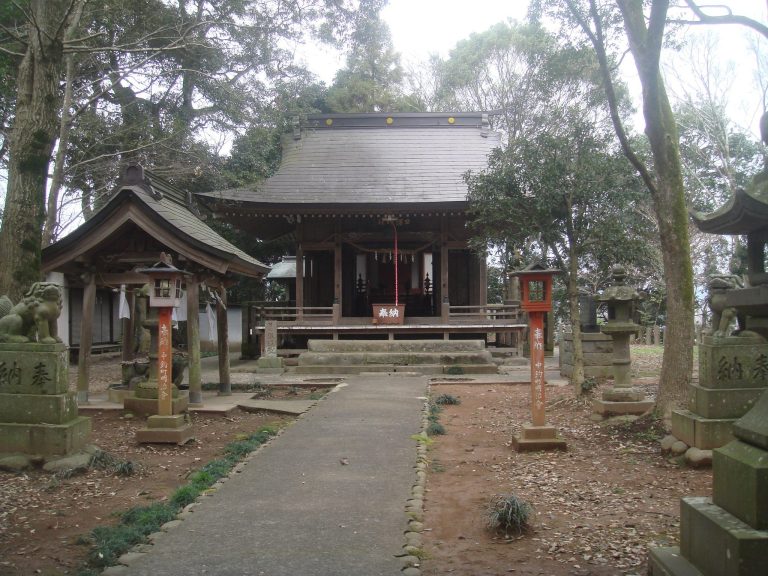
Hikosan consists of three peaks, Kitadake, Nakadake, and Minamidake. Minamidake is the principal peak at 1,199 metres, while the mountain itself is regarded as the shrine’s sacred body. The Upper Shrine, or Jogu, stands at the summit of Nakadake, the central peak, in the innermost part of the precinct. Nakatsu-gu and Shimotsu-gu extend from the summit down the western mountainside, with the Hohei-den below them. Subsidiary shrines and branch shrines are distributed throughout the mountain.
Stone steps form the Omotesando approach to the shrine. The Hikosan Kaen slope car provides a monorail connection between the Kane-no-Torii and the shrine complex. The wider historic landscape includes the Giant Oni Cedar and groups of gardens formerly associated with religious residences and the shrine’s temporary lodging.
Buildings and Gateways
Hohei-den
Rebuilt in 1616, the Hohei-den is an early Edo-period building that formerly served as the Great Lecture Hall of Reisenji. Its roof has an irimoya form, combining a hipped lower section with a gabled upper section, and is covered with overlapping wooden shingles. Fourteen associated ridge-pole tablets are preserved with the building.
Kane-no-Torii
The Kane-no-Torii is a bronze gateway donated in 1637 by Nabeshima Katsushige, lord of the Saga domain. The metalworker Taniguchi Seizaemon cast it. Its imperial plaque bears the inscription “Eihikosan,” attributed to the handwriting of Retired Emperor Reigen.
Sacred Images and Sutra Deposits
Three Gongen Images
A group of three medieval sacred images associated with the Three Gongen of Hikosan dates from the Kamakura period. It includes an image of Ninoko, an image of Izanagi, and a mirror panel whose image is missing. Together, the objects reflect the former religious combination of native deities and Buddhist doctrinal forms at Hikosan.
Sutra Mound Finds
Excavations of sutra mounds, buried deposits intended to preserve Buddhist scriptures and objects associated with religious merit, produced several bronze objects. The finds include a bronze sutra container from Minamidake inscribed with the date 1113, five fragmentary bronze containers from the same peak, two bronze containers from Kitadake, and a standing bronze Buddha accompanied by its bronze-container lid from Kitadake.
Gardens and Historic Landscape
The surviving garden groups preserve the former settings of the Kameishibo, the chief abbot’s main and secondary residences, Masadokoro-bo, Senzo-bo, Kenyo-bo, and the shrine’s temporary lodging. Along with the mountain peaks, stone approach, shrines, bronze gateway, lecture hall, and sacred cedar, these elements form the physical landscape of Hikosan Jingū’s religious establishment.