Hexham Old Gaol: A Medieval Prison and Museum in Northumberland
Site at a Glance
- Popularity
- Medium
- Country
- United Kingdom
- Primary era
- Medieval
- Eras represented
- Medieval
- Civilizations
- English
- Site type
- Civic
- Remains
- Prison
On this page7 sections
History
A purpose-built prison
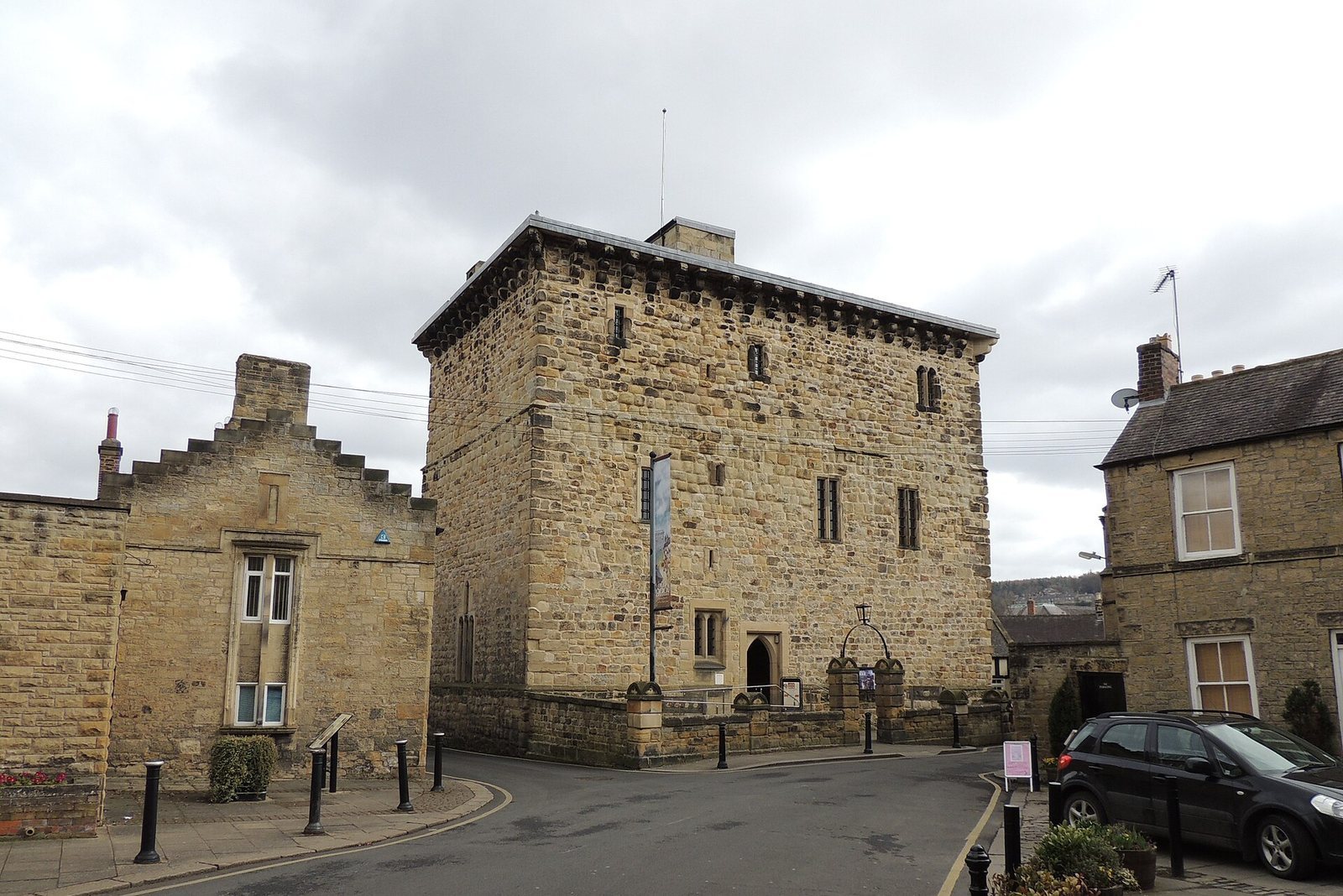
Hexham Old Gaol is a medieval prison building in Hexham, Northumberland, United Kingdom. Commissioned by William Melton, Archbishop of York, it was completed in January 1332. The prison held people from Hexhamshire, the historic district around Hexham, and, from the sixteenth century, also prisoners from the English Middle March, the border region between England and Scotland. They were kept there temporarily while awaiting trial in the nearby Moot Hall. Hexham Old Gaol is among England’s oldest purpose-built prisons.
The 1761 riot and closure
During the Hexham Riot of 1761, protesters opposed changes to the rules for militia service. Troops from the North Yorkshire Militia, a local militia force, fired on them in the Market Place, killing about 45 people. Many others were imprisoned in the gaol. After the prisoners were transferred to Morpeth Gaol, Hexham Old Gaol closed as a prison in 1820.
Later uses
Following its prison years, the building was used as a bank and a solicitor’s office. In 1860 it became the base of the newly formed 2nd Northumberland Rifle Volunteers, a volunteer military unit, and continued in that role until Hencotes drill hall was completed in 1891. During the Second World War, it served as a fire lookout tower.
The building was designated Grade I listed on 2 October 1951, under the official listing name The Manor Office. Grade I is England’s highest category of listed-building protection. It reopened as a museum in 1980, with displays covering subjects including archaeology, law and order, music, social history and war.
Remains
Exterior
The gaol is a three-storey rectangular building facing Hallgate. It stands in a valley at 57 metres above sea level, where the terrain rises to the northwest and is flatter to the southeast. Its medieval-style walls are made of rubble masonry, using roughly shaped stones. At ground level, a two-part window with curved, pointed heads replaced the original doorway on the left; a framed arched doorway was later added in the centre. On the first floor are two pairs of tall, narrow windows on the right and one on the left. The second floor has a two-part window with curved, pointed heads on the right and two small windows on the left. Deeply projecting eaves rest on heavy corbels, or projecting supports.
Interior and collections
The principal prison spaces were two basement cells with arched ceilings, while rooms on the upper floors served mainly for administration. The museum’s collections include fifteenth- and sixteenth-century arms and armour, alongside objects connected with local history. Its Border Library holds the Butler Collection, a group of books, recordings and music about the culture of the Borders assembled by William Butler, a former chairman of the Northumbria Tourist Board.