Heusenstamm Castle: A Historic Castle and Town Hall Complex


Site at a Glance
- Rating
- 4.5
- Popularity
- Medium
- Country
- Germany
- Primary era
- Early Modern
- External website
- Open
- Eras represented
- Medieval, Early Modern
- Civilizations
- Holy Roman Empire
- Site type
- Domestic
- Remains
- Castle
On this page13 sections
History
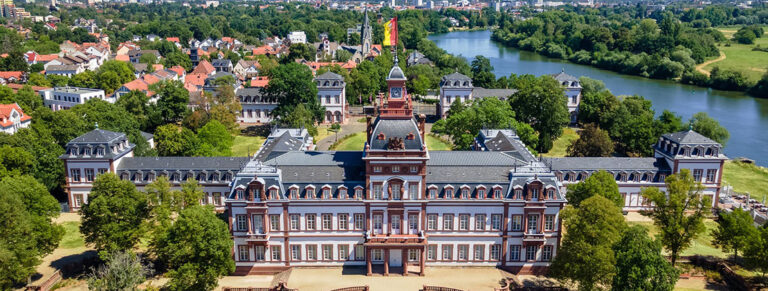
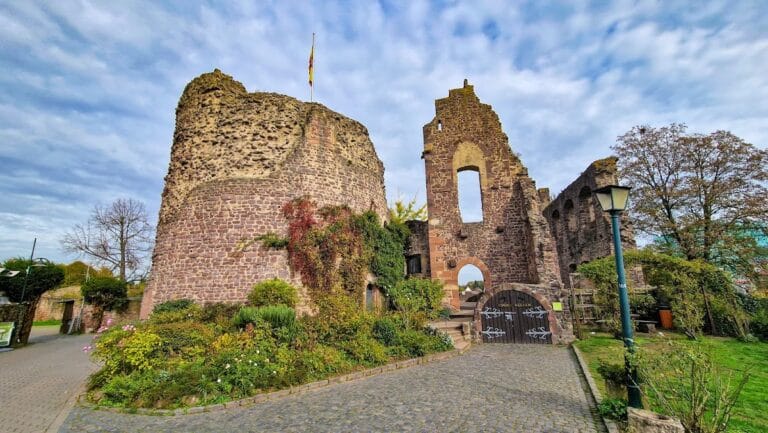
Heusenstamm Castle, also known as Schönborn Castle, is a historic castle complex in Heusenstamm, Germany. It developed on the site of the former stronghold of the Lords of Heusenstamm and now comprises the Vorderes Schloss, or front castle, and the Hinteres Schloss, or rear castle. The present front castle was built in the Baroque style between 1663 and 1668, while the rear castle preserves the location of the earlier fortress beside the Bieber.
The Lords of Heusenstamm
The older castle was destroyed, rebuilt, and altered several times. Important rebuilding phases took place in the early fifteenth century and the mid-sixteenth century, with reconstruction securely documented in 1561. The Thirty Years’ War, a European conflict fought from 1618 to 1648 that brought extensive military destruction and population loss to the German lands, caused especially severe damage to both Heusenstamm and its castle.
When the Lords of Heusenstamm died out in 1616, the castle and the lordship passed to an Austrian branch of the family. That branch leased the territory to the Frankfurt patrician Steffan von Cronstetten family. In 1661, the lordship, including Obertshausen and Hausen, was sold to Philipp Erwein von Schönborn, an important Electoral Mainz administrative official at Steinheim. The Schönborn family was a prominent German noble family whose members held major ecclesiastical and political offices in the Holy Roman Empire.
The Schönborn rebuilding
Philipp Erwein von Schönborn commissioned the front castle soon after acquiring the lordship. Built between 1663 and 1668 on the former forecourt of the older fortress, it was initially planned as a four-winged moated residence. The rear castle was repaired after the purchase, although parts of it were used only by servants.
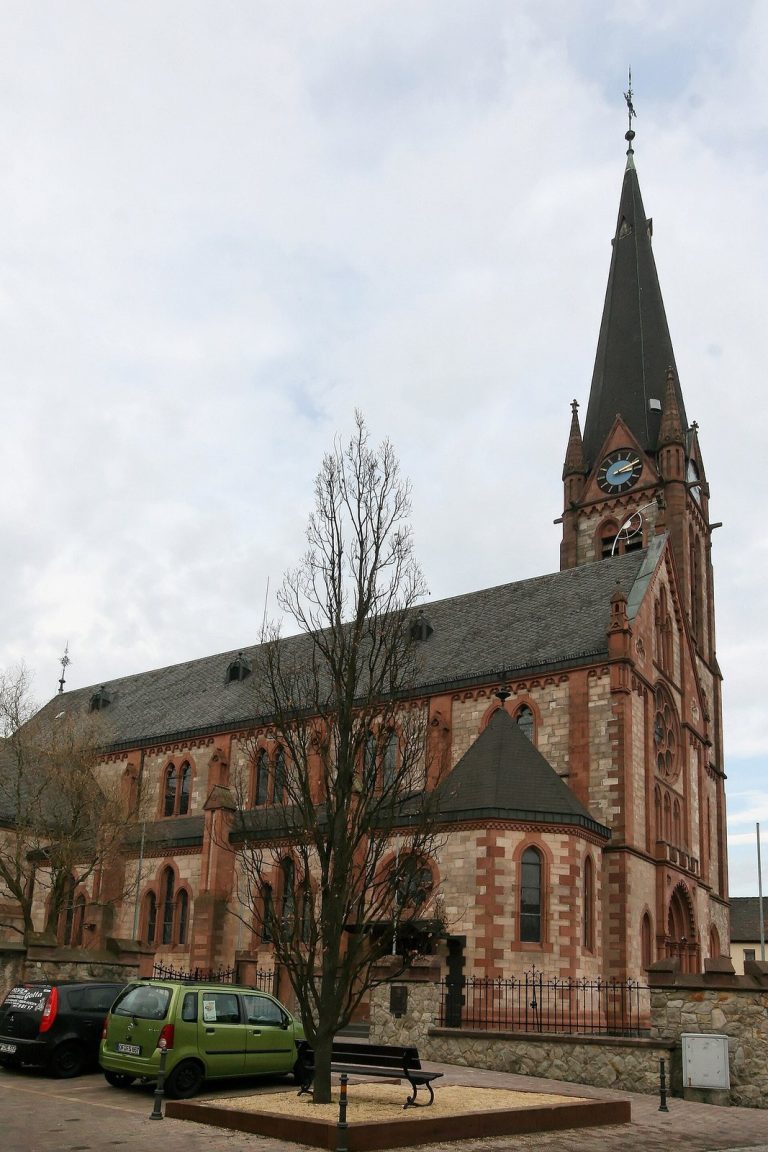
St. Cecilia Parish Church was built between 1739 and 1741 by Johann Balthasar Neumann, a leading German Baroque architect, as the Catholic burial church of the Heusenstamm branch of the Schönborn counts. In 1764, Francis I, Holy Roman Emperor from 1745 until his death in 1765, stayed at the castle during the coronation of his son in Frankfurt. A ceremonial gate was erected for the occasion, incorporating two stone lions and the Schönborn coat of arms.
War damage and changing uses
During the Second World War, an anti-aircraft command post was installed on the Bannturm, the detached tower of the rear castle. American aerial reconnaissance located the position, and an Allied air raid on 11 December 1944 attempted to destroy it. The attack failed to eliminate the command post but severely damaged part of the old castle. The remaining damaged fabric was removed during postwar renovation.
From 1896, the rear castle housed a kindergarten run by the Sisters of Divine Providence. During the 1940s, it contained a childcare center operated by the Nazi welfare organization. Between 17 May 1954 and 1976, the Frankfurt regional postal administration rented the castle for a school that trained civil servants for the senior civil service.
Municipal ownership
In 1978, the City of Heusenstamm purchased the castle complex and most of the Schönborn family’s property in the town. Later additions enlarged the front castle into a closed quadrangular complex modeled on Aschaffenburg Castle. The building was adapted for use as Heusenstamm’s town hall and administrative seat. The complex currently includes the town hall and a restaurant, while the grounds support civic and cultural events, including the summer wine festival, the Christmas market known as the Heusenstammer St. Nicholas Market, and summer musical performances.
Remains
Castle buildings
Front castle
The front castle is a Baroque building begun in 1663 and completed in 1668 on the former forecourt of the earlier fortress. It was originally conceived as a four-winged moated castle. Later additions closed the sides and created the present four-sided complex, which now serves as the municipal administrative center.
Its ceremonial entrance includes two stone lions and a gate structure carrying the Schönborn coat of arms. These features were added in connection with Emperor Francis I’s stay at Heusenstamm in 1764.
Rear castle and Bannturm
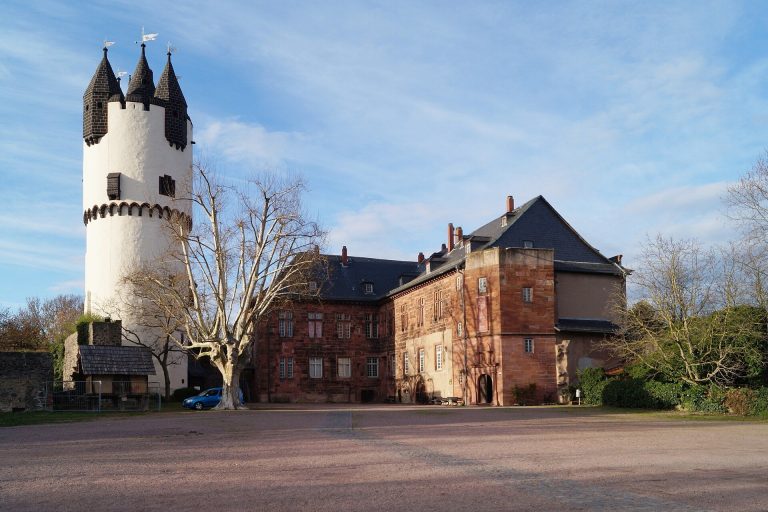
The rear castle stands on the site of the fortress of the Lords of Heusenstamm. It now consists of a residential or main building and the detached Bannturm. The term refers to a tower associated with territorial or judicial authority. The tower also bears the physical evidence of the site’s wartime history, since an anti-aircraft command post was installed there during the Second World War.
Moat and grounds
Moat and park
A now-dry moat surrounds the castle. It was formerly supplied with water from the Bieber. A small park lies in front of the buildings and preserves remains of a once extensive orangery. Ponds and the alignment of the avenues indicate the former extent of that garden installation.
Formal garden remains
The former formal garden also survives in the Imperial Lime Tree Avenue on the entrance axis and in two ponds laid out on both sides outside the castle precinct. The avenue was replanted in 1995. The present Baroque garden was recreated in modern times.
Covered stage
A permanently installed covered open-air stage stands between the rear castle and the Bannturm. It is used for musical performances and other cultural events, adding a modern function to the historic space between the surviving castle buildings.