Herrensitz Tümpling: A Historic Manor Estate in Germany


Site at a Glance
- Rating
- 4.5
- Popularity
- Very Low
- Country
- Germany
- Primary era
- Unclassified
- Eras represented
- Unclassified
- Civilizations
- Unclassified
- Site type
- Domestic
- Remains
- Manor House
On this page7 sections
History
Herrensitz Tümpling is a historic manor estate in Germany, located in Tümpling within Dornburg-Camburg. The estate was first documented in 1242 and is thought to have originated as a fortified manor associated with the von Tümpling family, a German noble family connected with the area.
The von Tümpling Estate
The von Tümpling family appears repeatedly in documents from Jena from the fourteenth century onward. Cuno von Tümpling was associated with the estate while serving as castellan of the Wettin castle at Camburg. A castellan was an official responsible for administering and defending a castle, while the Wettins were a German ruling dynasty whose territories included Saxony and neighboring regions.
Later holders included Otto Wilhelm von Tümpling-Casekirchen, who served as court marshal of Saxe-Merseburg, and Christian Ludwig von Tümpling-Casekirchen, who held Tümpling, Casekirchen, and Stöben. In 1817, the estate acquired land from the Stöbern cadastral area.
The Vogt Family and Agricultural Estate
Before 1824, Gut Tümpling passed to the bourgeois Vogt family. The term bourgeois refers here to a non-noble family. August Theodor Vogt-Tümpling became a regional land-chamber councillor and representative. A land-chamber councillor was an official concerned with the administration of state or princely property. Together with his son Peter August Vogt, he leased the grand-ducal chamber estate of Dornburg with Wilsdorf, property administered for the ruler’s household or government.
Eduard Vogt was recorded as the owner of the Tümpling estate toward the end of the nineteenth century. He had been married since 1891 to Helene von Anker, the daughter of Major General Elwin von Anker. The Vogt family was regarded as successful in agriculture, and Eduard Vogt was identified as a horse breeder in 1931.
Land Reform and Reconstruction
The small farmyard belonging to the manor was expropriated in 1945 and divided among resettlers under the land-reform laws introduced after the Second World War. These measures redistributed large estates and agricultural land to resettlers and other beneficiaries.
In 1993, direct descendants of the von Tümpling family acquired the estate. They immediately began reconstructing the castle, opening a new phase in the physical history of Herrensitz Tümpling.
Remains
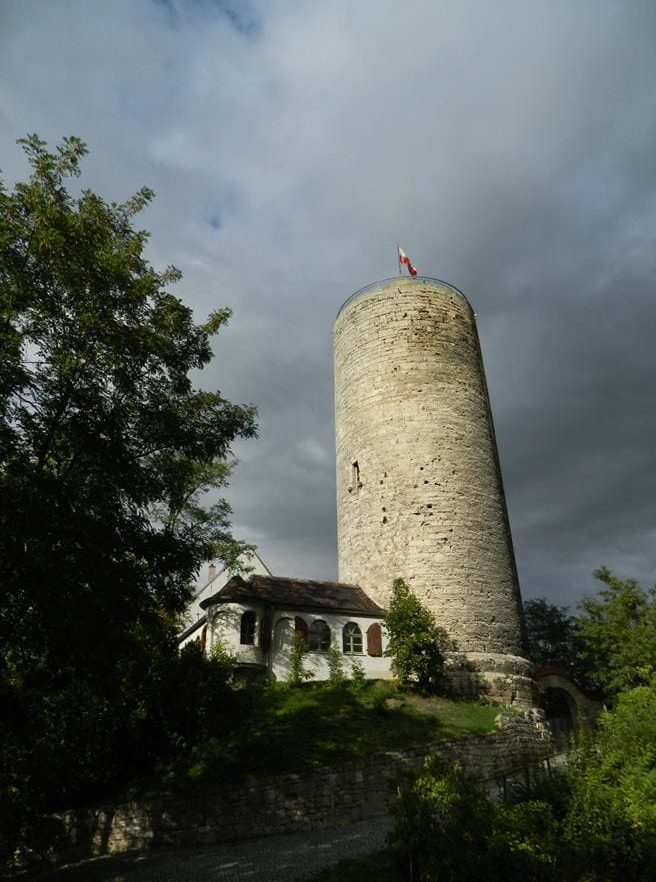
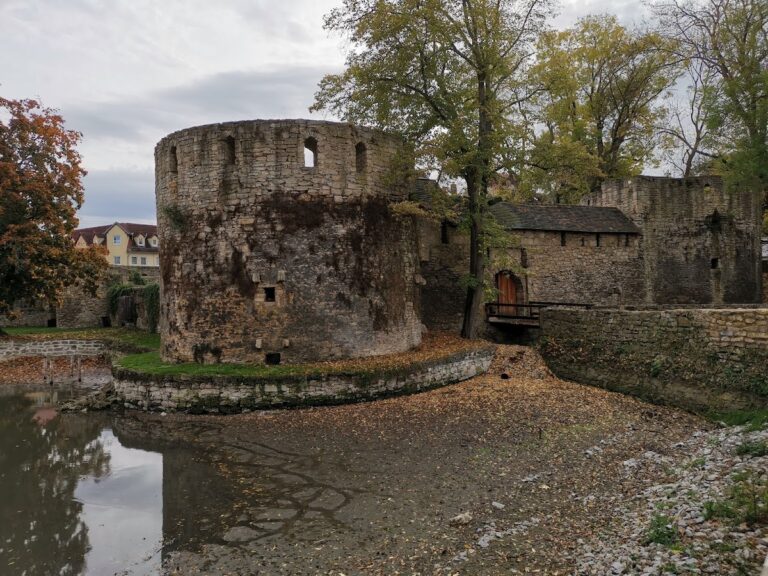
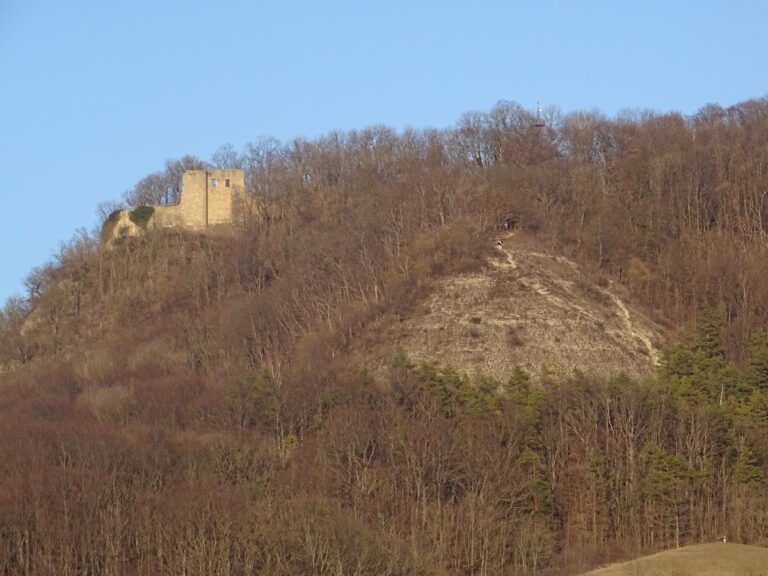
Herrensitz Tümpling stands on a spur-like elevation east of the Saale in the Tümpling district of Dornburg-Camburg, within Thuringia’s Saale-Holzland district. The manor complex includes the main building, cellars considered suitable for defensive use, surrounding gardens and a park, and a small farmyard.
Manor House and Cellars
The manor house forms the principal structure of the estate. Its cellars are considered suitable for use in a defensive situation, reflecting the possibility that the earlier manor had a fortified character. The building became the subject of reconstruction after the estate returned to descendants of the von Tümpling family in 1993.
Gardens, Park, and Farmyard
Gardens and a park surround the manor, extending the complex beyond the main building. A small farmyard also belonged to the estate and formed part of its agricultural organization. The farmyard was expropriated and redistributed in 1945 under land-reform laws.
Nearby sites