Hermitage of San Domenico: A Romanesque Benedictine Hermitage in Italy
Site at a Glance
- Country
- Italy
- Primary era
- Medieval
- Eras represented
- Medieval, Early Modern, Modern
- Civilizations
- Italian, Kingdom of Naples, Spanish
- Site type
- Religious
- Remains
- Monastery
On this page13 sections
History
The Hermitage of San Domenico is a men’s Benedictine hermitage in Villalago, Italy. Benedictines belong to a monastic order that follows the Rule of Saint Benedict. The hermitage remains an active monastery within the Diocese of Sulmona-Valva, a territorial jurisdiction of the Roman Catholic Church. It was built around the 15th century as devotion to Saint Dominic of Sora spread. Its architecture is Romanesque, a medieval style characterized by rounded arches and heavy masonry.
Origins and traditions
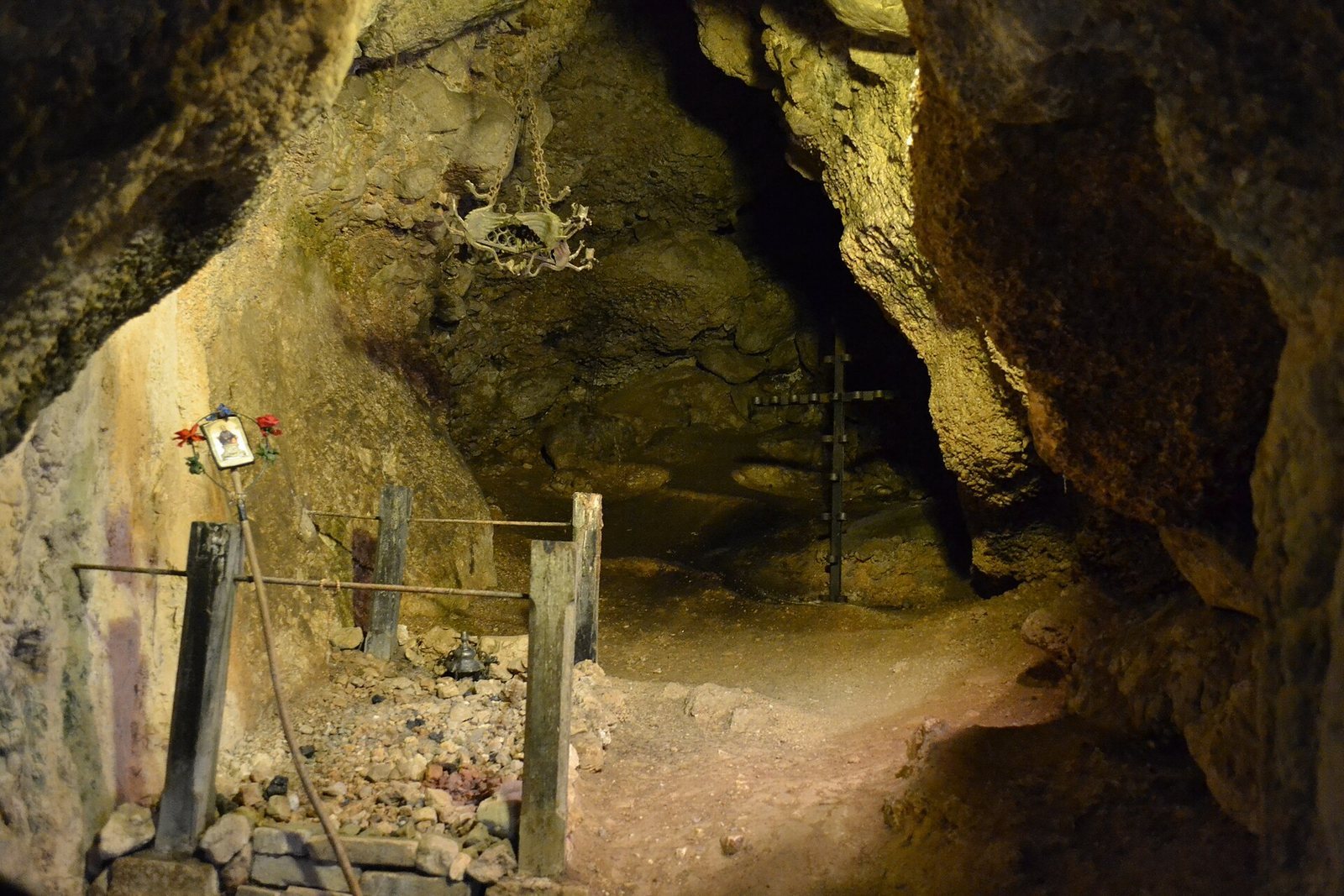
Tradition holds that Dominic lived around 1000 in the limestone cave now included in the hermitage. Stories of his life say that he first stayed at San Pietro de Lacu, a Benedictine monastery that no longer exists, before going to nearby Cocullo. There he healed a girl bitten by a snake. On the way, he is said to have tamed a wolf that had taken an infant from its cradle while the child’s parents gathered wood in the forest.
Modern changes
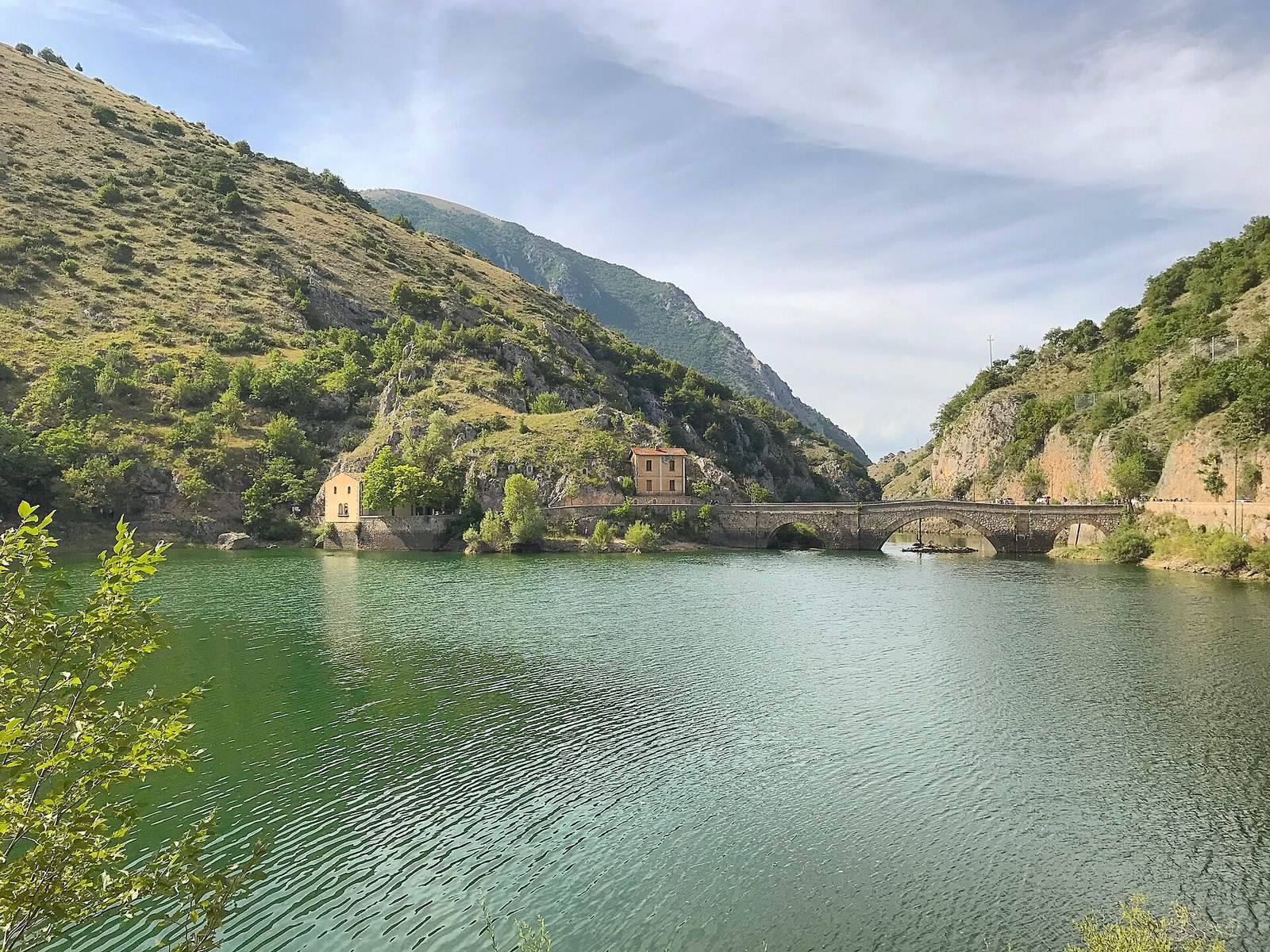
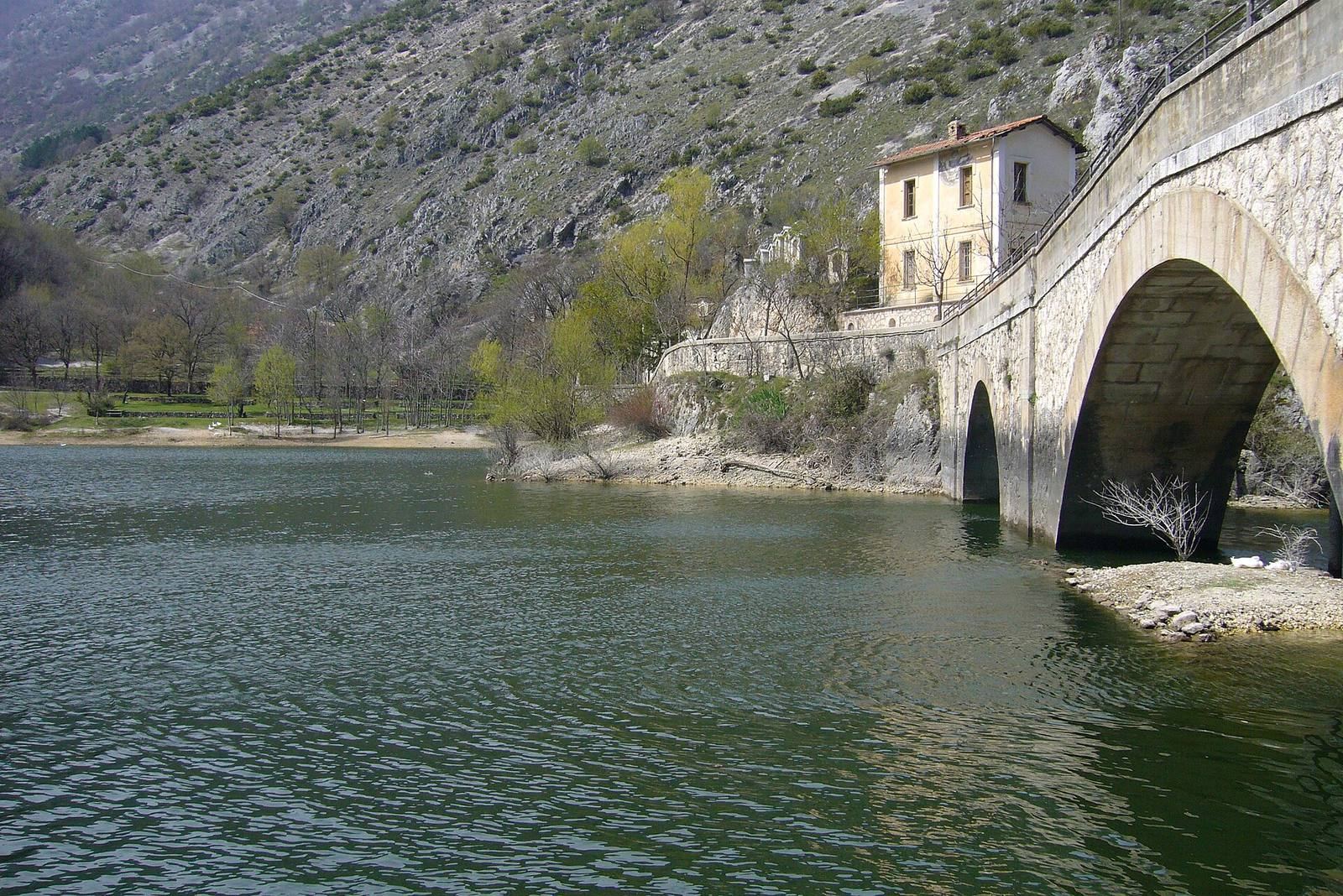
Construction of a dam and formation of the lake in 1929 led to a rebuilding of the hermitage facade and the replacement of its deteriorated medieval access bridge with a stone bridge designed to look medieval. The 2009 earthquake damaged paintings in the porch; they were restored in 2012.
Pilgrimage and continuing devotion
Each year on 21 August, pilgrims travel from Fornelli, in Molise, to the hermitage on a route of more than 80 kilometers through communities in Abruzzo and Molise. Settlers who came to Fornelli from Sulmona brought devotion to Dominic with them. There he is venerated alongside Saint Peter of Verona, a 13th-century Dominican friar and martyr.
Remains
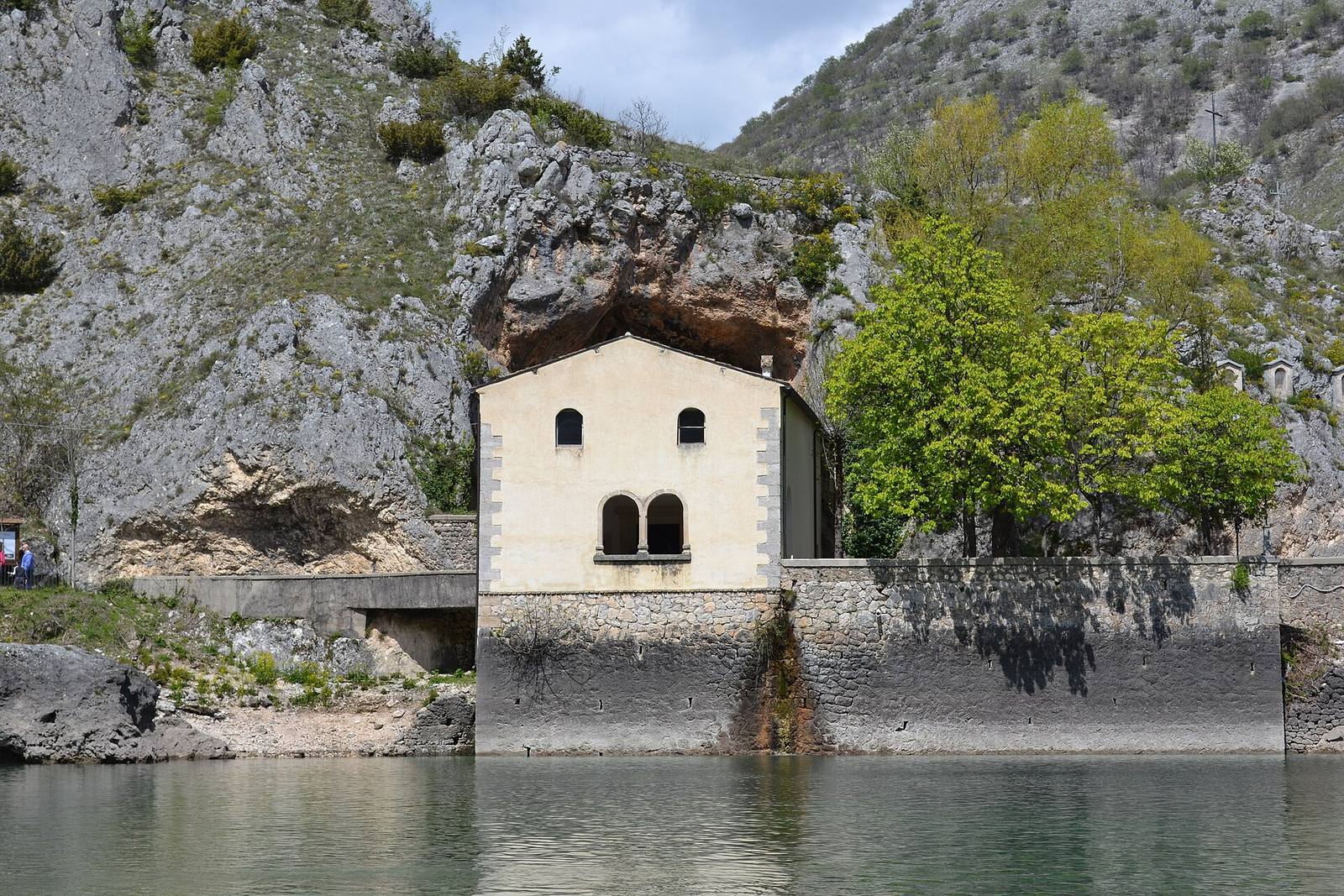
The hermitage stands in the Sagittario Valley on the shore of Lago di San Domenico. Its physical remains include a cave cut into limestone and a church with a single nave, entered through a 17th-century portico.
Exterior features
Portico
Four paintings by local artist Alfredo Gentile decorate the portico. Made in 1938, they depict episodes from Dominic’s life, including miracles. A paired-arched opening in the vestibule affords a view of the lake.
Facade and bridge
An earlier exterior included a double-arched portico and a recessed facade with a large window. The rebuilt facade and stone access bridge remain part of the hermitage; the bridge was designed in a style that evokes medieval construction.
Church interior
Altar
The neo-Gothic altar, which revives Gothic architectural forms, has a niche containing a wooden statue of Dominic. At its base is a stucco altar front finished to resemble marble and dated 1761. Giuseppe Mancini made it on commission from Francesco Iafolla, a hermit from Villalago.
Madonna and Child painting
Near the entrance, on the right side of the nave, a niche cut into the supporting wall contains an early-19th-century painting of the Madonna and Child. The image survives in fragments.
Paintings
Gentile also completed four paintings for the church in 1969: Saint Dominic Abbot Saving a Possessed Woman, Saint Anthony of Padua with the Child, Madonna and Child, and Saint Francis Speaking to the Wolf.
Relics
The hermitage preserves part of a wooden bench attributed to Dominic. The other part is kept as a relic in Villalago’s main church. The hermitage also holds one of Dominic’s molars, which he gave to the inhabitants of Villalago as a sign of affection.