Hermitage of Our Lady of La Lanzada: A Romanesque Chapel in Galicia
Site at a Glance
- Popularity
- Medium
- Country
- Spain
- Primary era
- Medieval
- Eras represented
- Medieval
- Civilizations
- Kingdom of León
- Site type
- Religious
- Remains
- Chapel
On this page13 sections
History
The Hermitage of Our Lady of La Lanzada is a Catholic chapel on a headland in Galicia, Spain, built in the 12th or early 13th century in the late Romanesque style, a medieval European architectural tradition. Its history links ancient occupation, coastal defenses, and a continuing pilgrimage dedicated to the Virgin Mary under her local title of Our Lady of La Lanzada.
Antiquity and early traditions
The headland has been inhabited since antiquity. Friar Martín Sarmiento, a Galician monk and scholar, proposed that its ruins were those of Lambriaca, an ancient city described by the Roman-era geographer Pomponius Mela. A lighthouse may also have stood in the area, perhaps built by the Phoenicians or Romans, but it has disappeared.
A pre-Christian deity, possibly associated with fertility, may once have been worshipped here. This remains a possibility rather than a certainty.
Medieval defenses
In 952, merinos, medieval administrative officials from Iria Flavia, built a fortress in El Salnés on the orders of Bishop Sisnando Menéndez. El Salnés is a coastal area of Galicia. The fortress was intended to protect the lands of Santiago de Compostela from Viking, Norman, Saracen, and Muslim invaders. The defensive network also included the Towers of the West at Catoira and the Tower of San Sadurniño at Cambados.
When enemy ships were sighted, local people apparently lit warning fires, which were relayed from high points toward more distant areas. The chapel was built over the remains of an earlier church associated with the fortress.
Chapel and later history
The chapel’s early history overlapped with conflicts between Queen Urraca I of León and Diego Gelmírez, Archbishop of Santiago de Compostela. Arab forces destroyed the chapel in the 13th century, after which it was rebuilt more sturdily. It was badly damaged during the Irmandiña Revolt, a series of 15th-century uprisings in Galicia, and abandoned in the 16th century.
Pilgrimage and folklore
The annual pilgrimage takes place on the last weekend of August. In a traditional fertility rite, women seeking relief from infertility bathe at midnight in nine waves that strike the abdomen. At dawn, they visit the chapel, sweep its floor while reciting words meaning ‘Witches out’ to dispel spells and the evil eye, and make an offering to the Virgin. A procession follows Mass. Variations call for hearing three Masses, sweeping three times around the chapel or in a circle from the apse to behind the altarpiece, circling the chapel three times, or leaving three coins. Another version prescribes nine circuits, with a prayer at each.
Baths also take place around June 21 or on Saint John’s night. At dawn on the last Sunday in August, women, men, and children bathe to seek healing for the sick, protection, and good luck; the practice also includes prayers for the healing of animals. Mariners ask the Virgin for protection from dangers at sea. Legends tell of tunnels connecting the coast with the Ons Islands and may be related to the tradition that the Santa Compaña, a procession of the dead in Galician folklore, began at La Lanzada and continued toward the islands. Several popular songs honor Our Lady of La Lanzada.
Remains
The chapel stands at the western end of a headland projecting into the sea, near the medieval fortress ruins and the site of an ancient fortified settlement. In the surrounding landscape, two sandy stretches are separated by the small peninsulas of Punta do Outeiro das Lapas and Nuestra Señora de La Lanzada.
Chapel architecture
Exterior
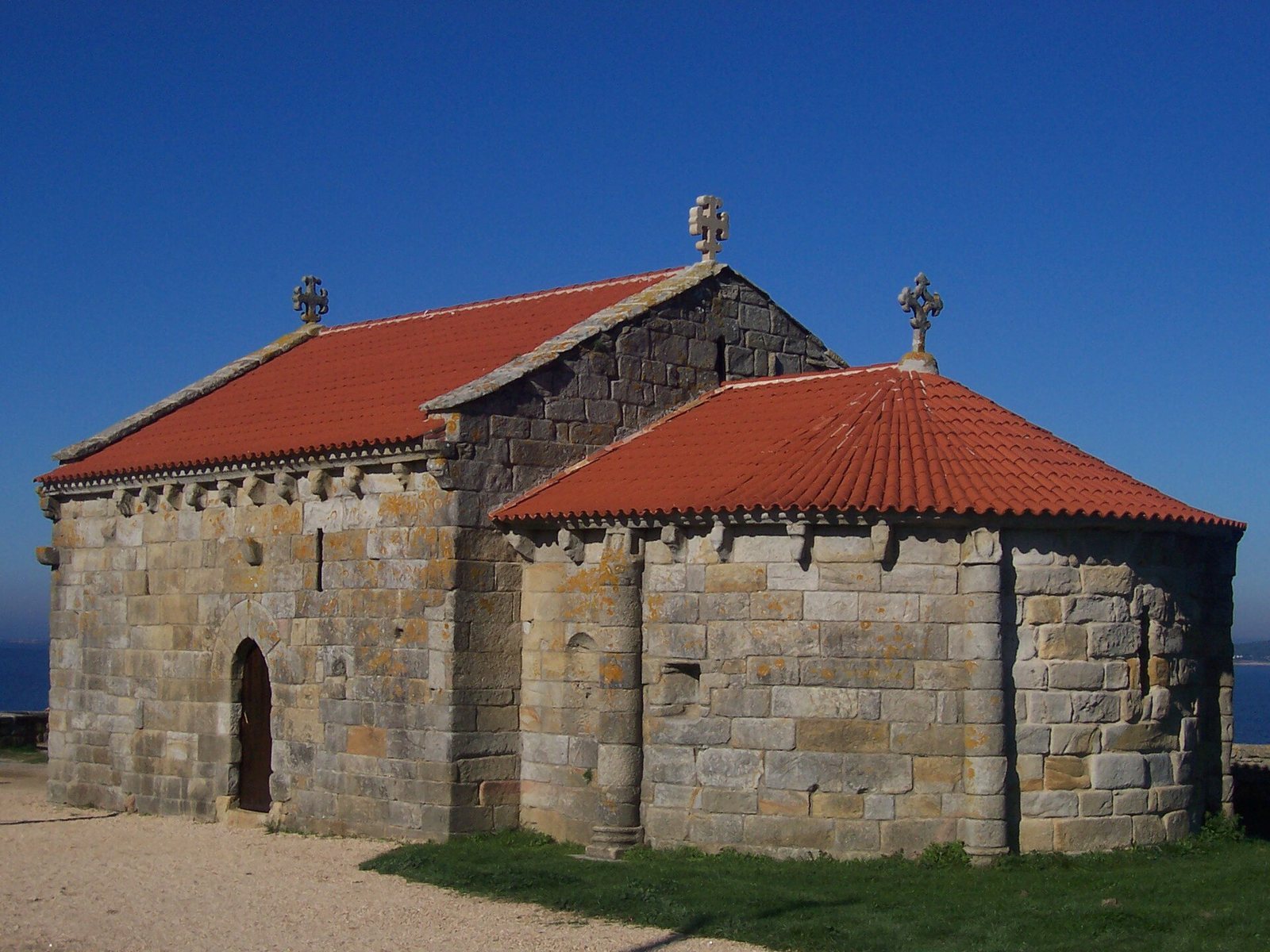
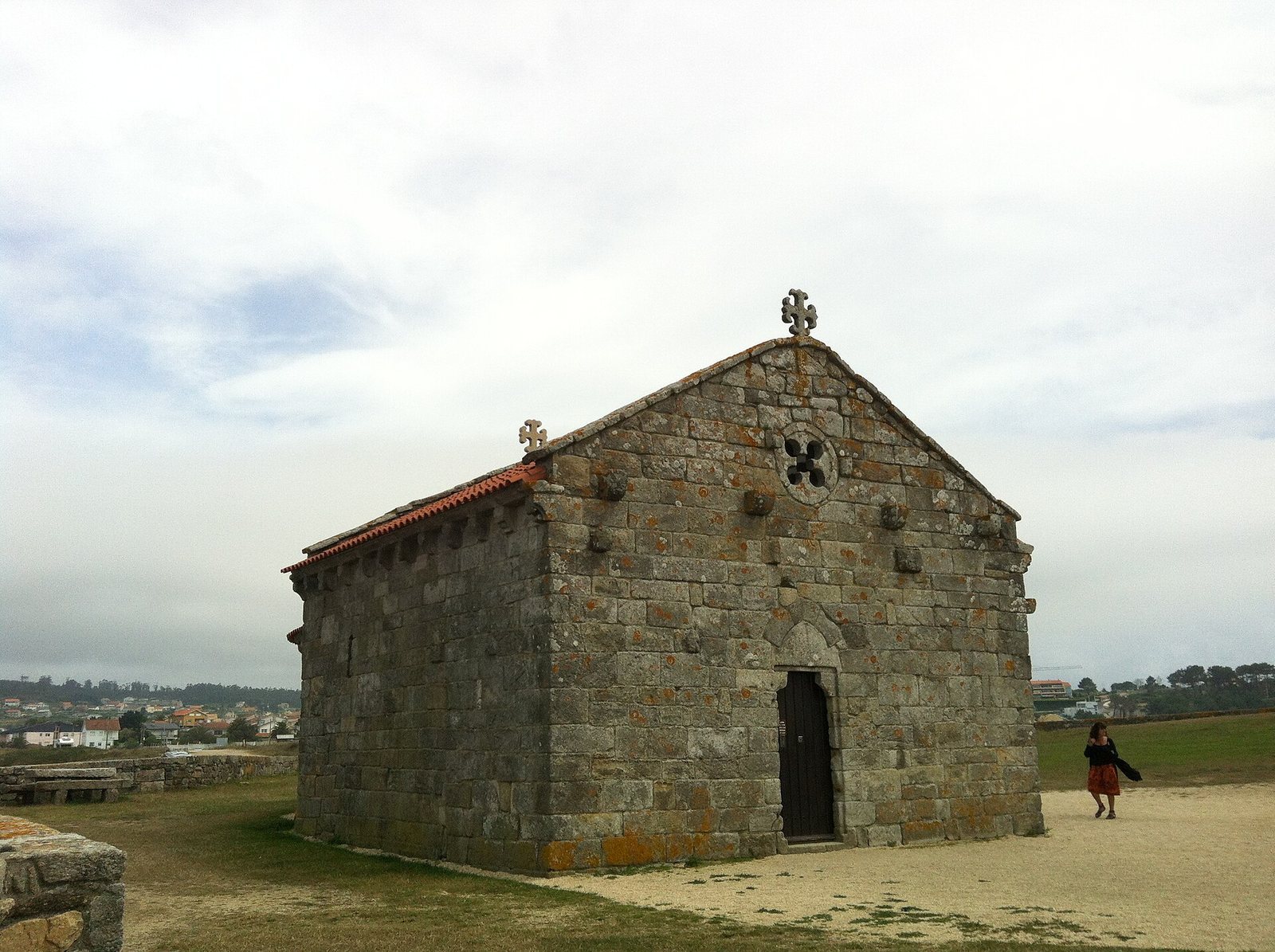
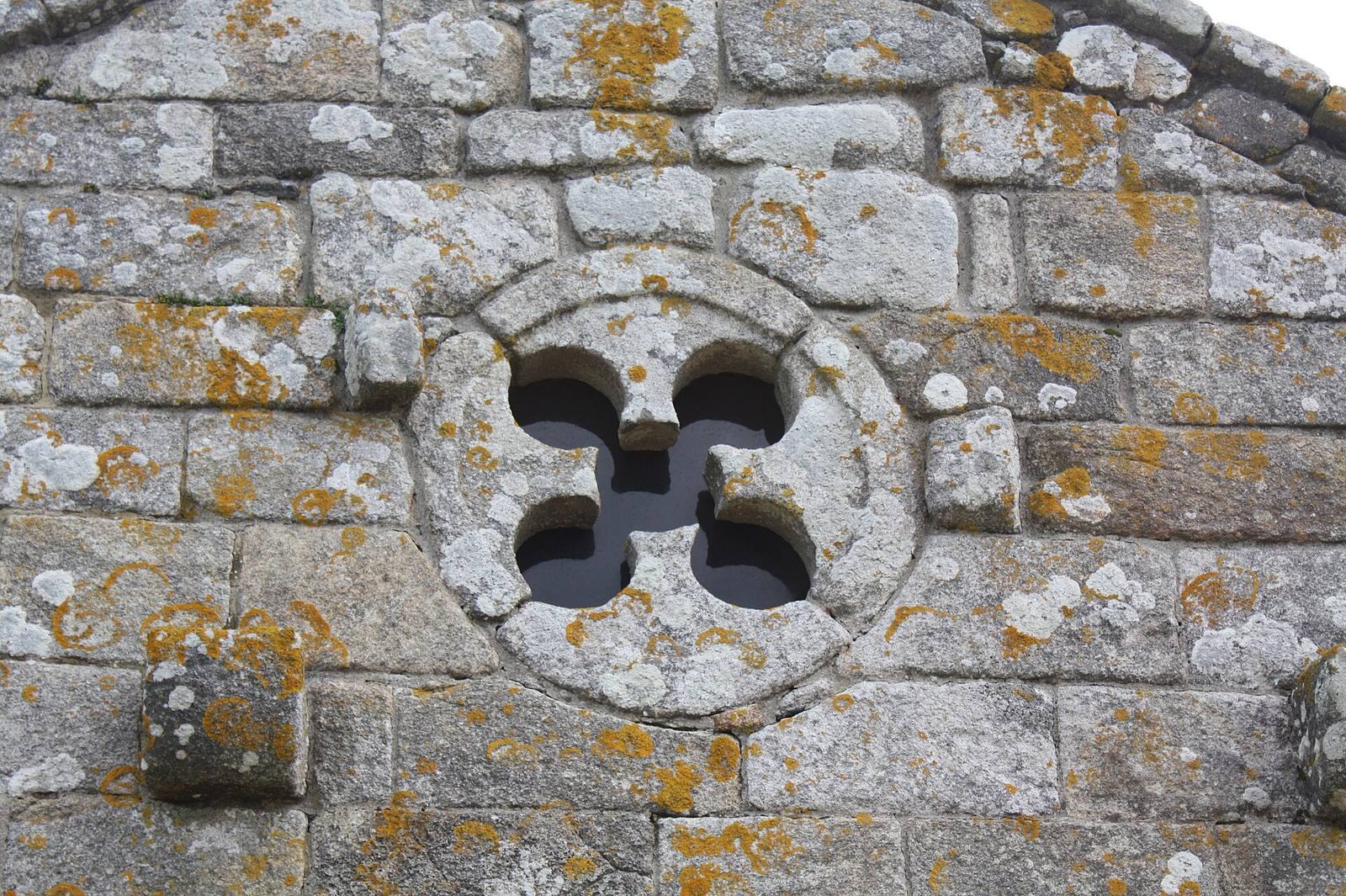
The chapel’s west-facing entrance is set in a plain façade. Above the doorway are a tympanum, the panel over an entrance, and a trefoil rose window, a circular window with three lobes. A small pointed relieving arch, which redirects weight above an opening, sits over the doorway’s lintel. The rear ends in a semicircular apse, the curved end of a church, strengthened by four columns attached to the wall. The plain side walls have projecting supports beneath the roofline, and one contains a second doorway with a round arch. Three Greek crosses, each with four equal arms, top the tiled roof.
Interior and furnishings
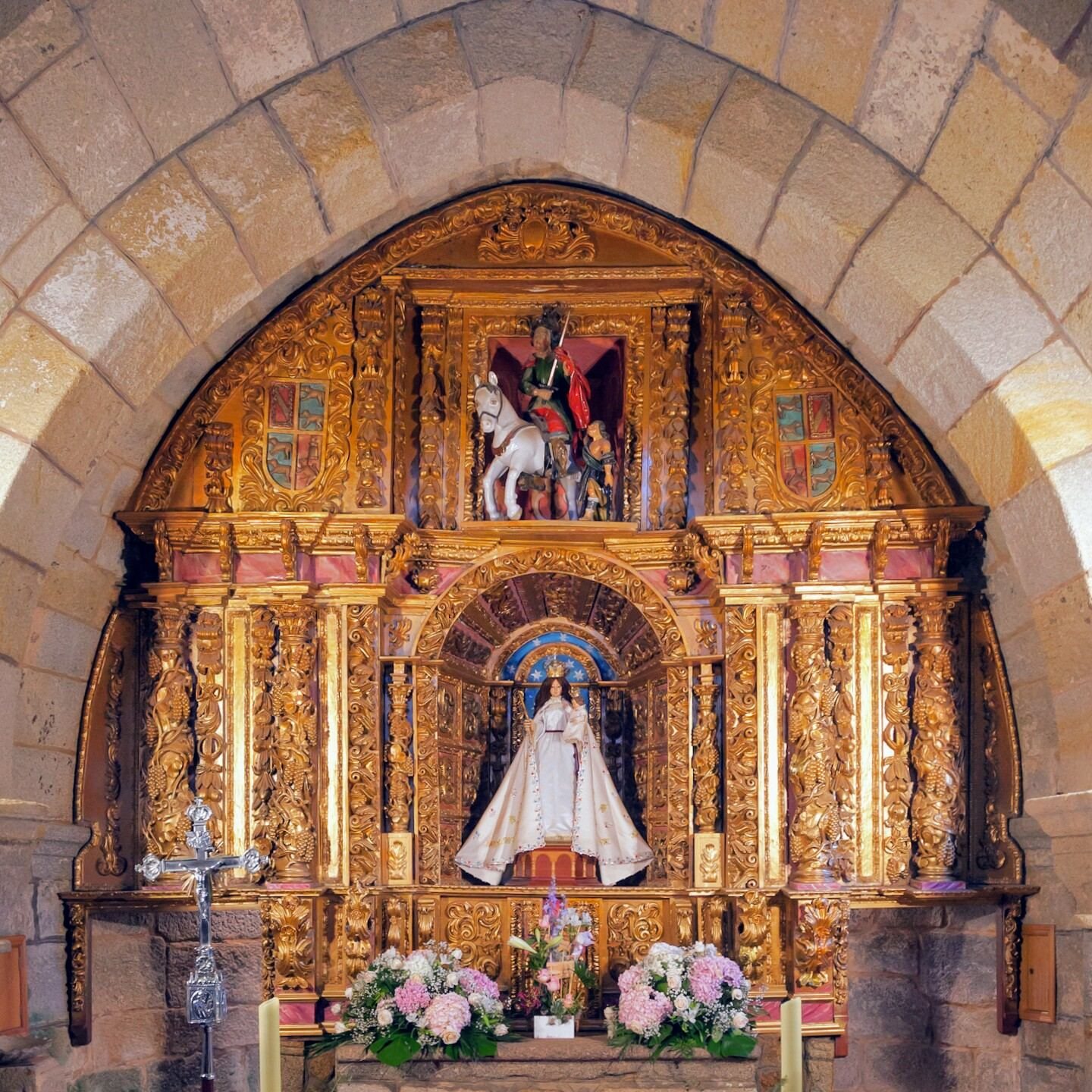
The rectangular interior has a single nave, the main space of a church, divided into two sections by an arch resting on pillars. A slightly pointed vault, or arched ceiling, covers the nave. A carved image of Christ crucified hangs on the left wall. The main chapel occupies the apse and contains a Baroque altarpiece in golden tones. It displays a clothed image of Our Lady of La Lanzada between spiral-shafted columns decorated with grape clusters. Above them, a polychrome image of Saint Martin of Tours depicts the mounted saint sharing his cloak with a beggar.
Two miniature boat offerings, given in fulfillment of vows or in thanks, hang inside. In 2020, conservators treated damage to the altarpiece caused by humidity, age, and wood-boring insects, including serious deterioration at the rear. They cleaned and treated the altarpiece and the images of Saint Martin and the Virgin, and restored missing three-dimensional forms. The Virgin’s image is traditionally kept at the Church of San Esteban de Noalla during winter.
Fortress and earlier occupation
Ancient settlement and remains
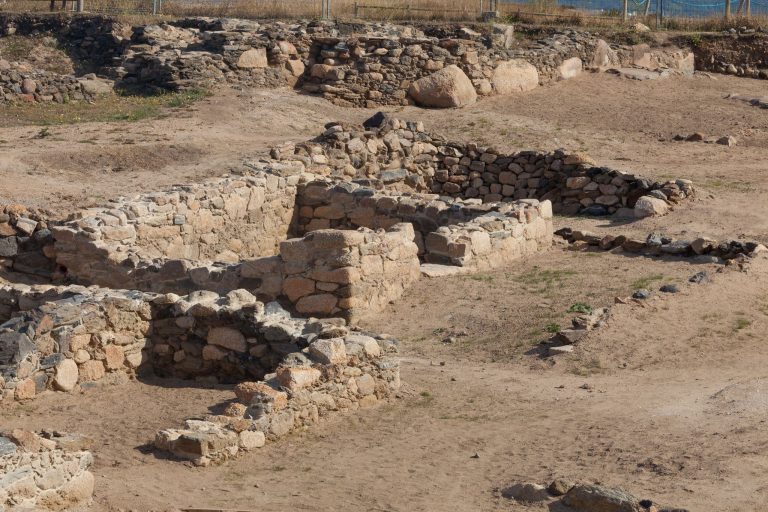
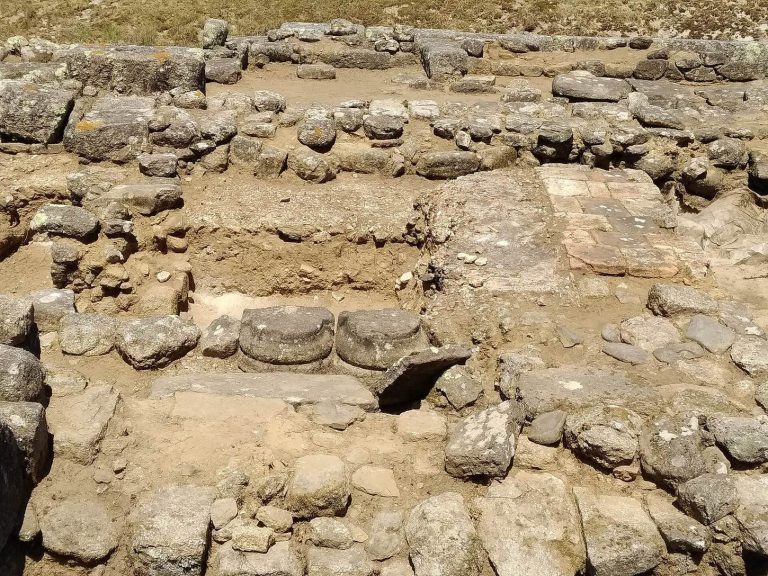
An eighth-century BC fortified settlement lies beside the chapel. The area also contains a cemetery dating to the third or fourth century AD. Roman remains include an installation for preserving food with salt. Finds point to commercial activity and large-scale food processing. Human remains of several people show signs of violence; they were found face down with their hands bound.
Medieval fortress
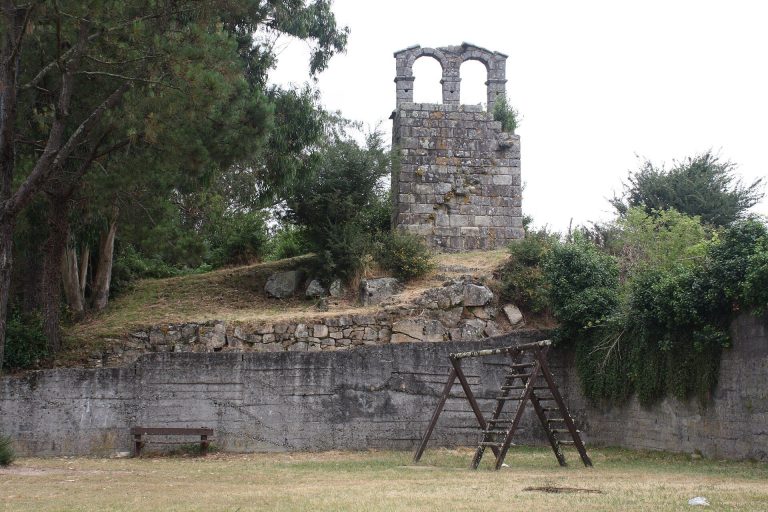
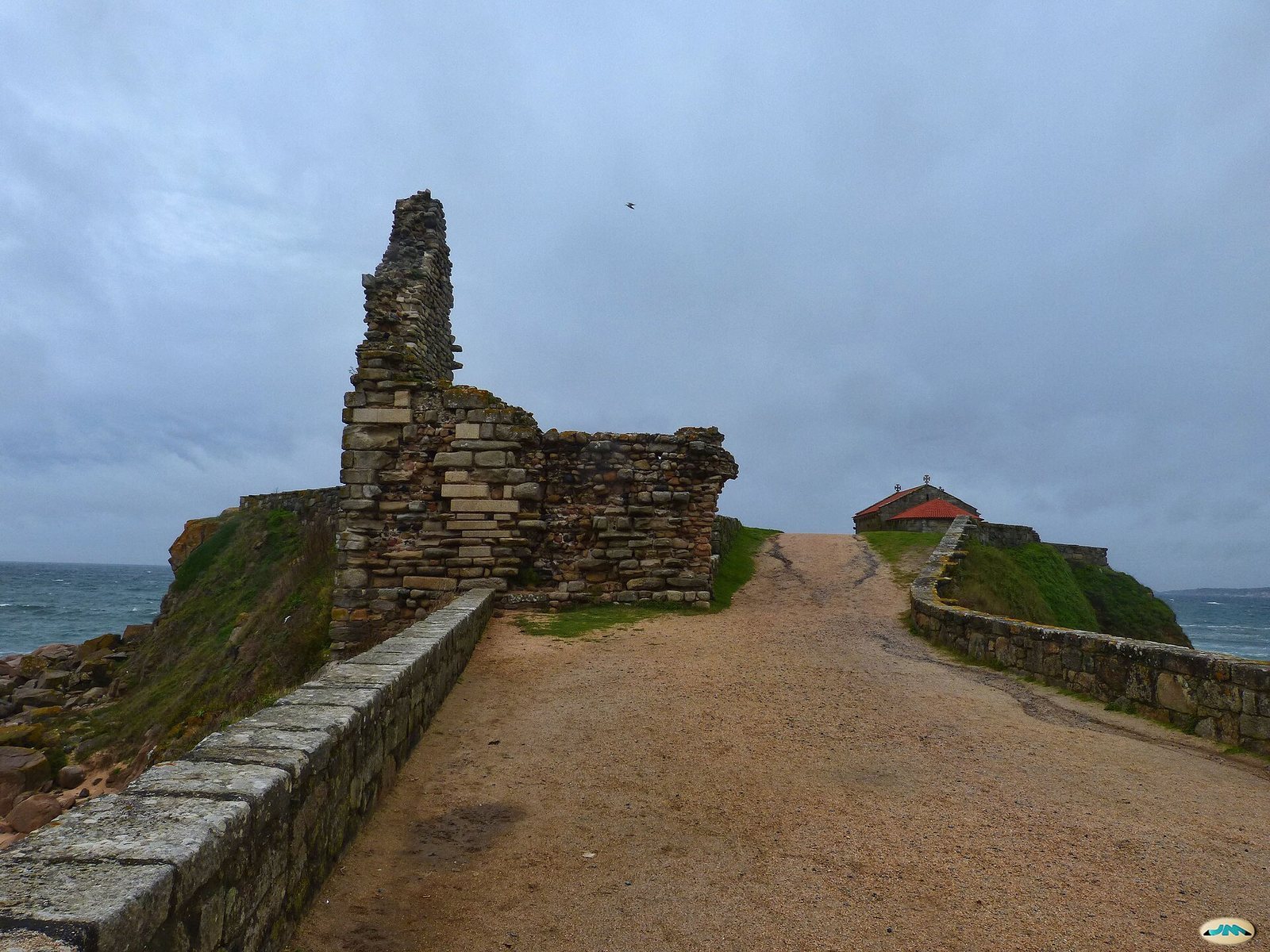
The ruins of the medieval fortress known as the Tower of La Lanzada include a surviving tower. The chapel stands near these remains and beside the ancient settlement.
Coastal ritual landscape
A bed-shaped rock lies where waves break below the headland and is associated with fertility rites. A monument to Our Lady of La Lanzada stands in the festival field opposite the chapel. Three dolmens, prehistoric stone-built burial monuments, are also present in the surrounding area.