Sinj Fortress: A Historic Hilltop Stronghold in Croatia
Site at a Glance
- Popularity
- Medium
- Country
- Croatia
- Primary era
- Early Modern
- Eras represented
- Iron Age, Medieval, Early Modern, Modern
- Civilizations
- Austria-Hungary, Byzantine, Habsburg, Hungarian, Illyrian, Venetian
- Site type
- Military
- Remains
- Castle
On this page14 sections
History
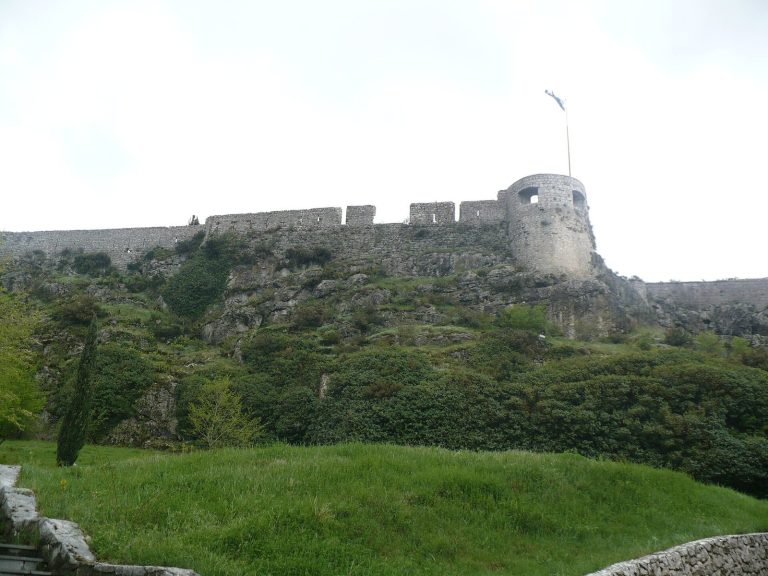
Sinj Fortress occupies a rocky height above Sinj in Croatia. The site’s long history includes prehistoric settlement, a Byzantine stronghold, and a medieval seat of power.
Early settlement and Byzantine rule
Archaeological investigations led by Croatian archaeologist Tonći Milošević in the 1980s identified human habitation more than 5,000 years ago. The earliest finds date to the Copper Age, around 2500–1900 BC, while continuous settlement can be traced from the Late Bronze Age, around 1200–800 BC.
In Roman times, the Osiniatae, a local community among the Delmatae peoples of the eastern Adriatic, lived in the area. The Roman name Osinium is linked to later forms of Sinj’s name, including Fsini and Zyn. A Byzantine, or eastern Roman, fortress occupied the hill in the sixth and early seventh centuries. The stronghold later became the seat of a county prefect and of the Nelipčić family, princes of the Cetina region.
Medieval noble families
A grant from 1341 names the site as the fortress of Fsini or Frini. In 1345 it appears as the royal fortress of Zyn, when Louis I, king of Hungary and Croatia, granted it to the dispossessed Knin prince Ivan Nelipčić. The Nelipčić family made Sinj its permanent seat. Backed by the Cetina lordship, it became one of Croatia’s influential noble families in the late fourteenth and early fifteenth centuries.
The Frankopan family held Sinj briefly from 1435. The Croatian bans, senior political and administrative officers, from the Talovci family then held it until 1453.
Ottoman and Venetian control
Ottoman forces made repeated attempts to capture Sinj from the mid-fifteenth century and took the fortress in the sixteenth century. The Republic of Venice gained control in 1686, then enlarged and strengthened the defenses.
Defense, devotion, and decline
An earthquake severely damaged the fortress in 1709. In 1715, its defenders repelled a much larger Ottoman force. Local tradition credited the victory to the intercession of the Virgin Mary. Franciscans fleeing Rama, a region in present-day Bosnia and Herzegovina, had brought an image of the Virgin Mary, Our Lady of Grace, to Sinj. After the defense, the image received a gold crown and gifts from people of the Cetina region, and became known locally as the Miraculous Our Lady of Sinj.
At Franciscan friar Pavao Vučković’s instigation, construction of the Church of St Mary below the fortress began in 1699 and was completed in 1712. Earthquakes in 1768 and 1796, together with further Ottoman attacks, weakened the fortress walls, which gradually began to collapse. As the threat of attack receded, residents moved to Podvaroš below the walls and reused fortress stone in houses and other buildings. The fortress was abandoned and partly demolished in 1808.
Later use and conservation
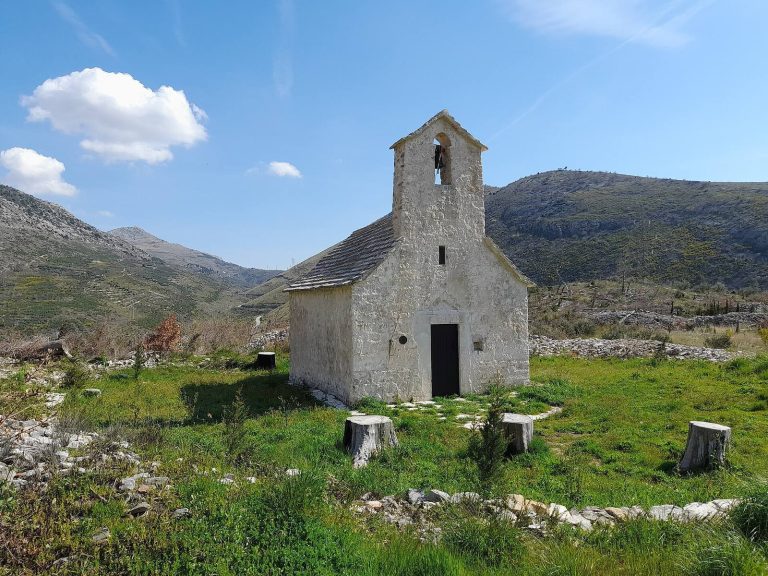
A small votive church dedicated to Our Lady of Sinj was built at the summit in 1887, two centuries after people from Rama arrived in the Cetina region. It expressed the region’s vow and devotion to its patron saint. On the days of the Sinjska alka, a traditional equestrian competition, and the Feast of the Assumption, a Catholic celebration of the Virgin Mary’s assumption into heaven, mačkule, small cannon-like guns used for salutes, are fired from the fortress walls.
During the Croatian War of Independence, the conflict in which Croatia fought for independence, the fortress’s position helped shield the city hospital, the national electricity utility’s distribution center, the Ban Petar Berislavić barracks and military training center, and a densely populated area on the hill’s southern slopes. Following extensive investigation and recording, repair and restoration of the walls began in 2004. The fortress and adjoining cemetery are protected as immovable cultural heritage in the category of military and defensive structures.
Remains
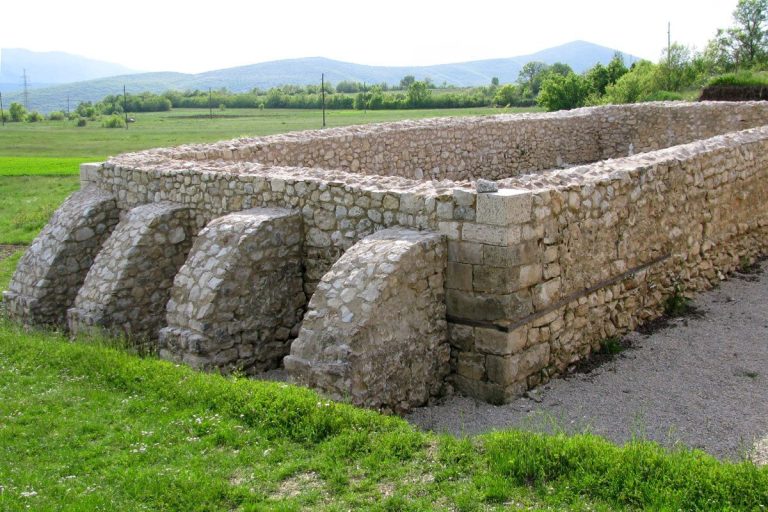
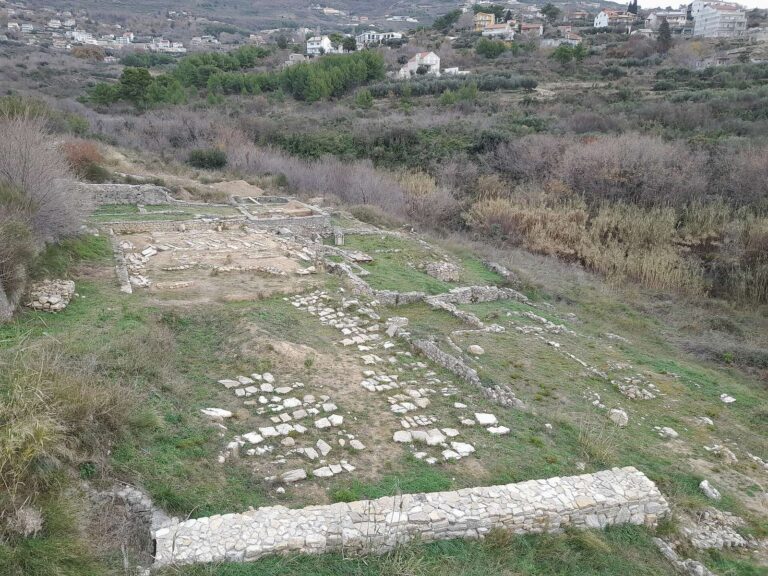
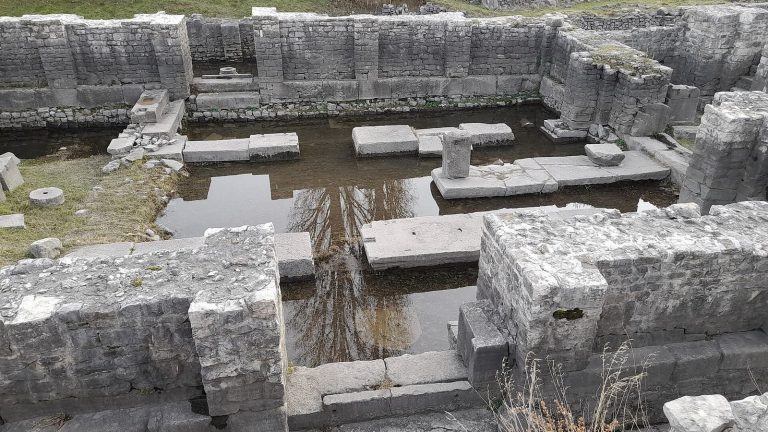
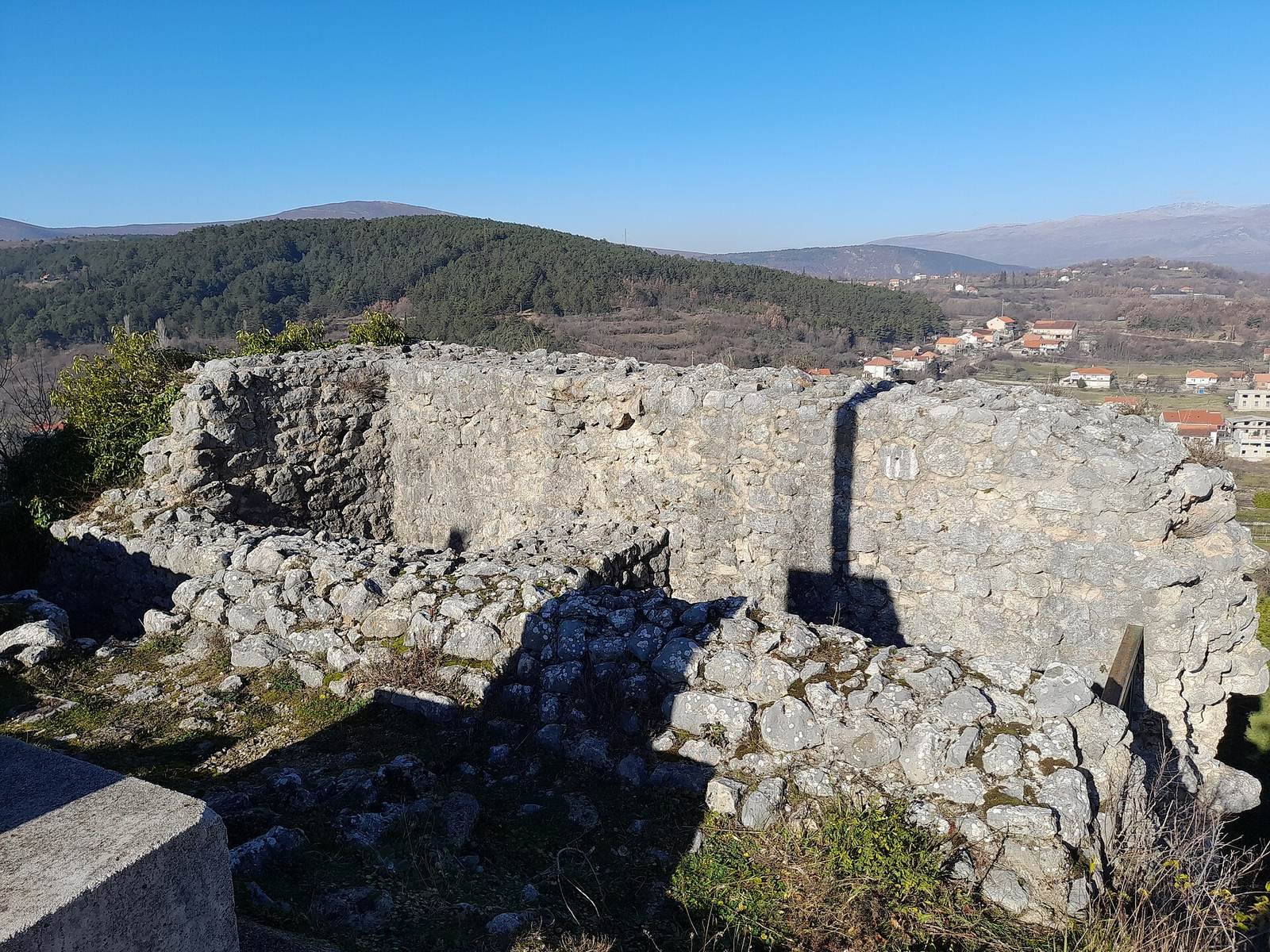
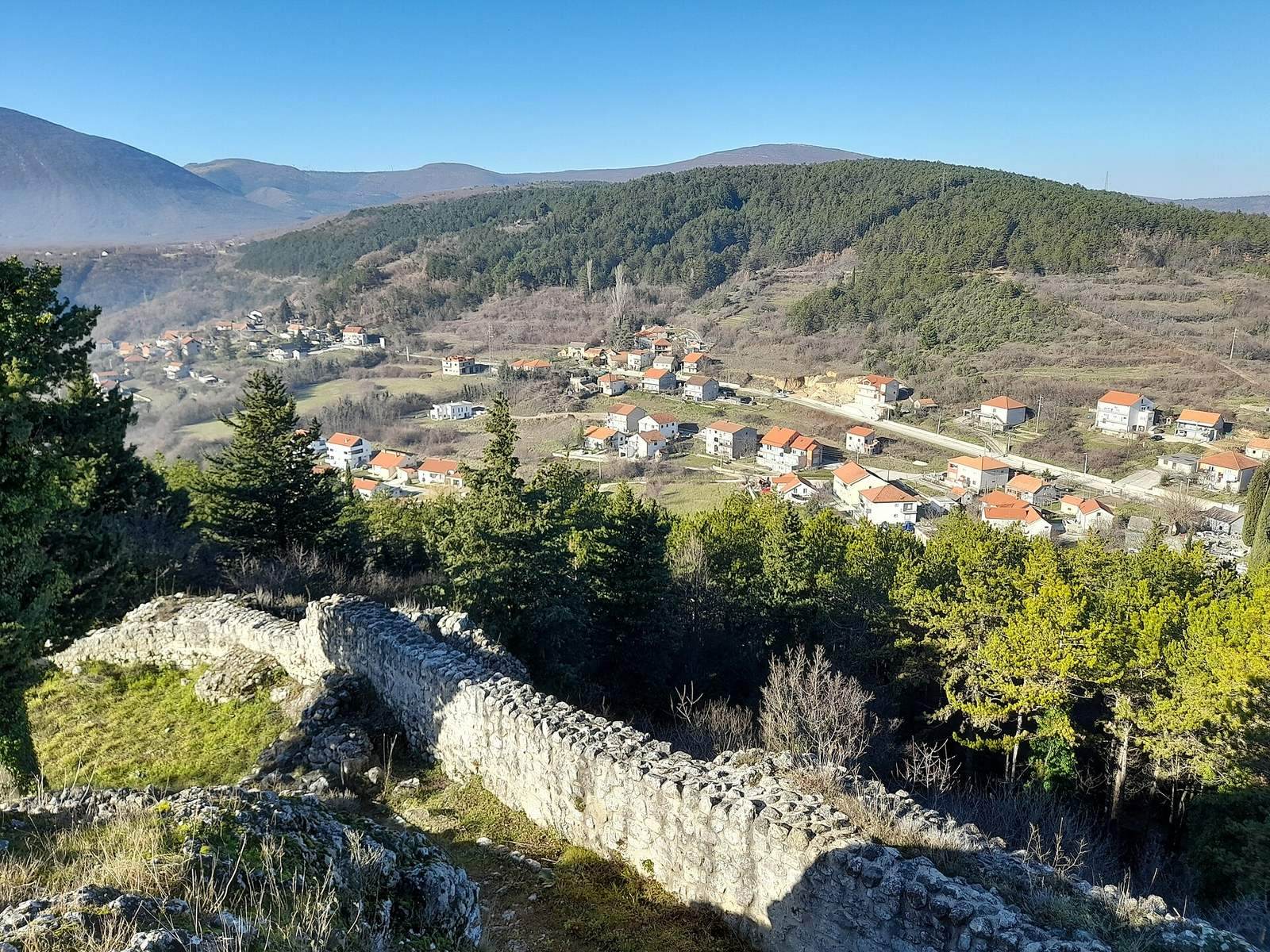
The site occupies a natural rocky height at about 402 metres above sea level. Its stone fortress remains stand on the hill, while the Roman settlement lay on the southern slopes. The site also includes the location of an Illyrian hillfort. Its surviving features reflect ancient, late-antique, Byzantine, medieval, and Venetian phases.
Hilltop fortress
Defenses and settlement layout
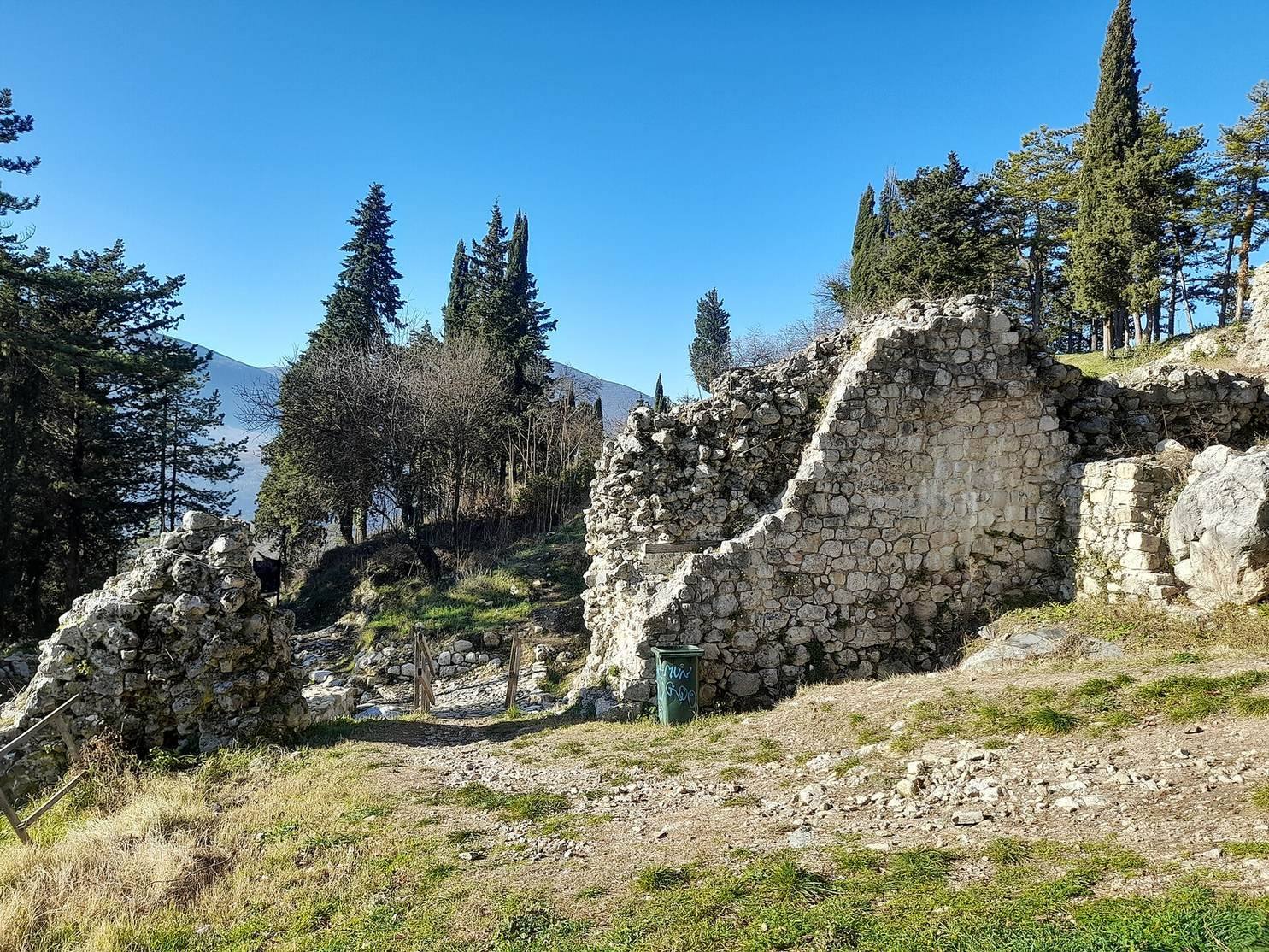
The Byzantine fortress stood on the hill, with substantial residential buildings and early Christian churches below it. Under Venetian control, the defenses were enlarged with an outer ward and strengthened by earthen ramparts. The fortress walls that survive have been conserved.
Church of St Michael
The former Church of St Michael stood at the fortress’s center. It had an altar dedicated to St Barbara, where the image of Our Lady of Grace was placed.
Later religious buildings and cemetery
Summit church and devotional route
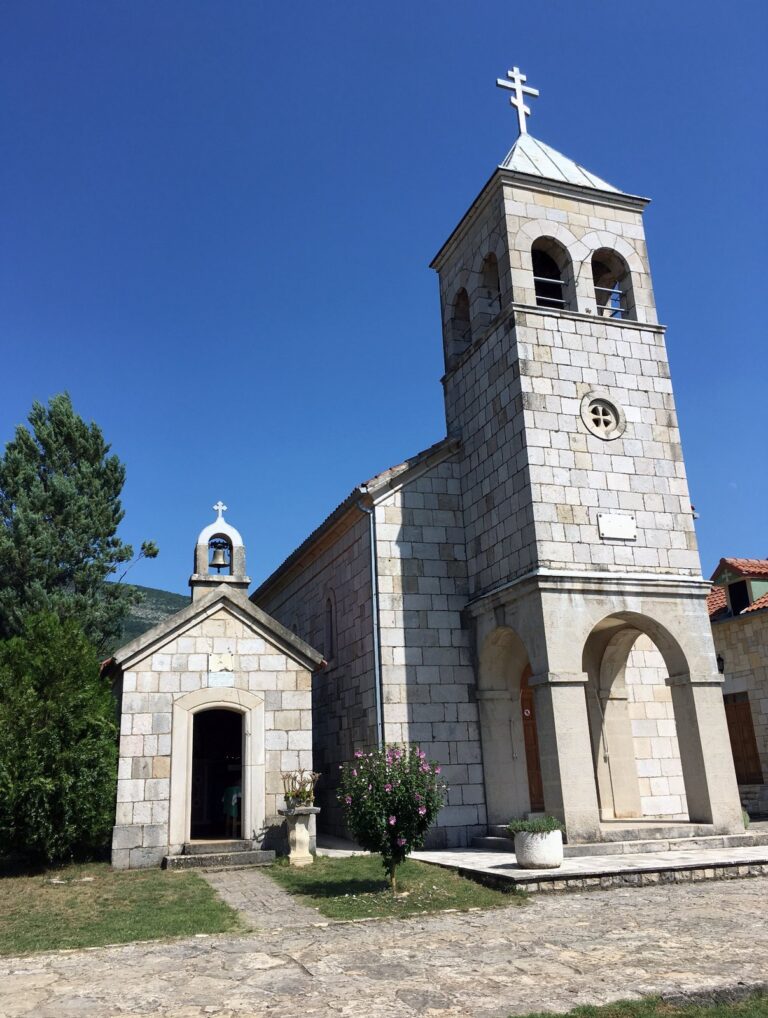
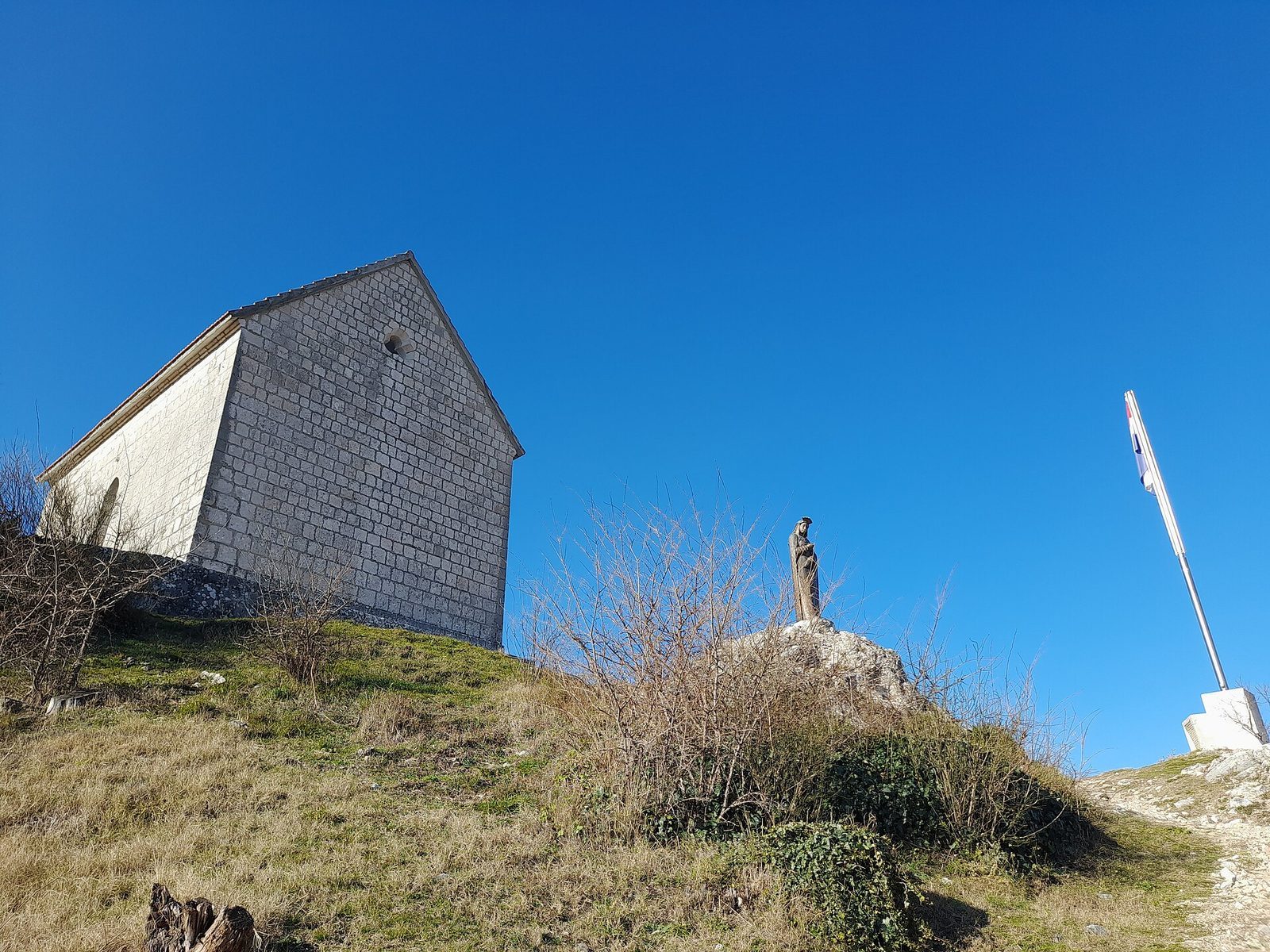
The small Church of Our Lady of Sinj stands at the summit. Beside it is a bronze statue of Our Lady of Sinj by Croatian academic sculptor Josip Marinović, installed in 2008. A Way of the Cross, a devotional route with stations depicting events from Jesus’s Passion, climbs from the foot of the hill to the church. Its 14 stations feature sculptures by Croatian sculptors; work began in 2004, and five sculptures had been installed by 2012.
Church of St Francis and cemetery
A cemetery established in the nineteenth century lies at the fortress’s foot beside the Church of St Francis.
Vegetation and wartime damage
Pine, cypress, and spruce were planted at the foot of the fortress and within its walls. White hornbeam, oak, and acacia also grew on the slopes. During the Croatian War of Independence, artillery impacts damaged the already ruined walls and surrounding vegetation, especially on the northern and northwestern slopes.