Håtuna Church: A Medieval Church in Bro, Sweden
Site at a Glance
- Country
- Sweden
- Primary era
- Medieval
- Eras represented
- Medieval, Early Modern, Modern
- Civilizations
- Swedish
- Site type
- Religious
- Remains
- Church
On this page13 sections
History
Medieval origins and rebuilding
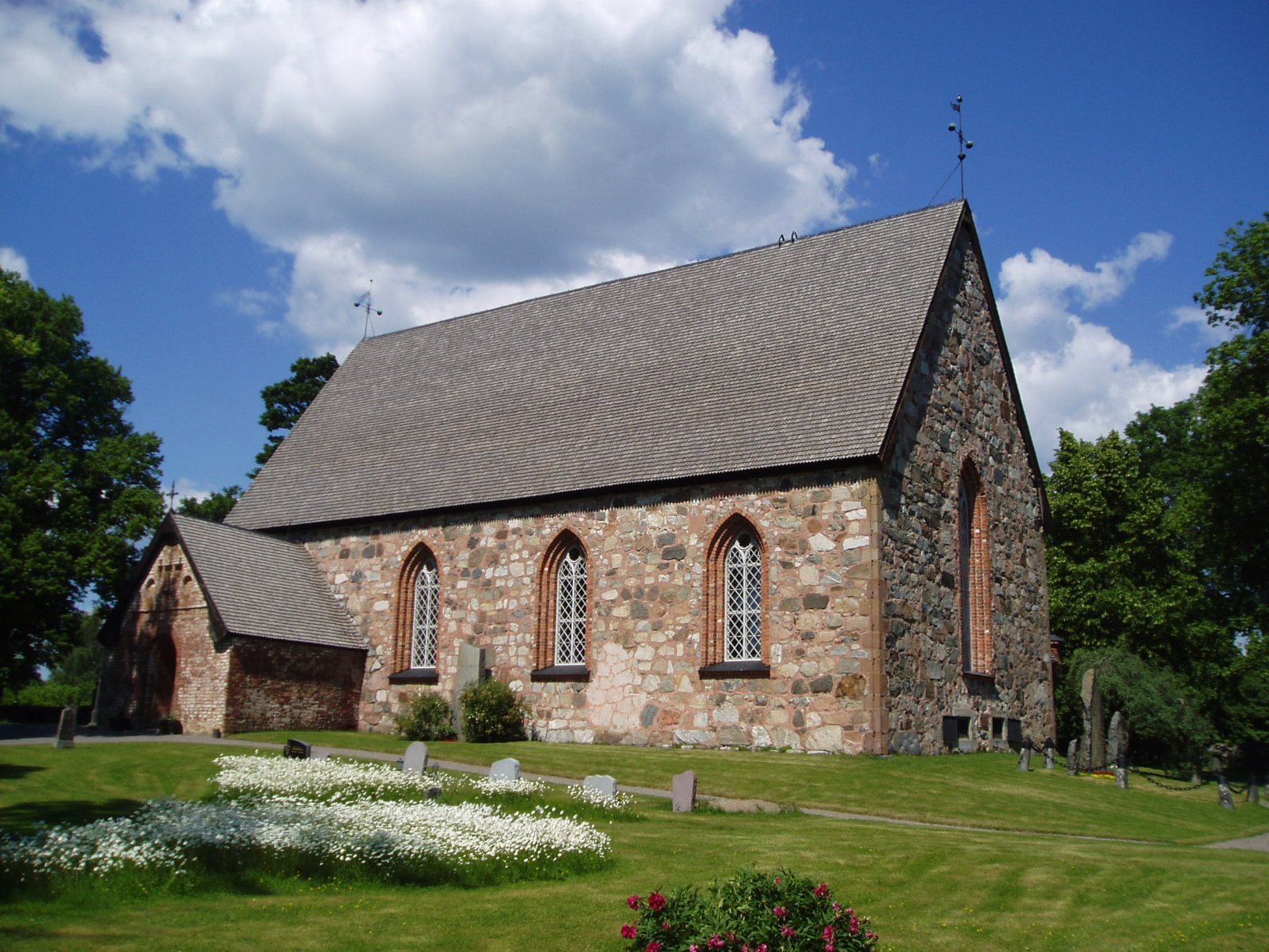
Håtuna Church is a medieval church in Bro, Sweden, whose present form largely dates to a rebuilding in the first quarter of the 14th century. A wooden church probably stood at Håtuna in the 11th century. It was replaced in the 12th century, probably late in the century, by a small stone church in the Romanesque style, a medieval European architectural style. The stone church was consecrated during that century.
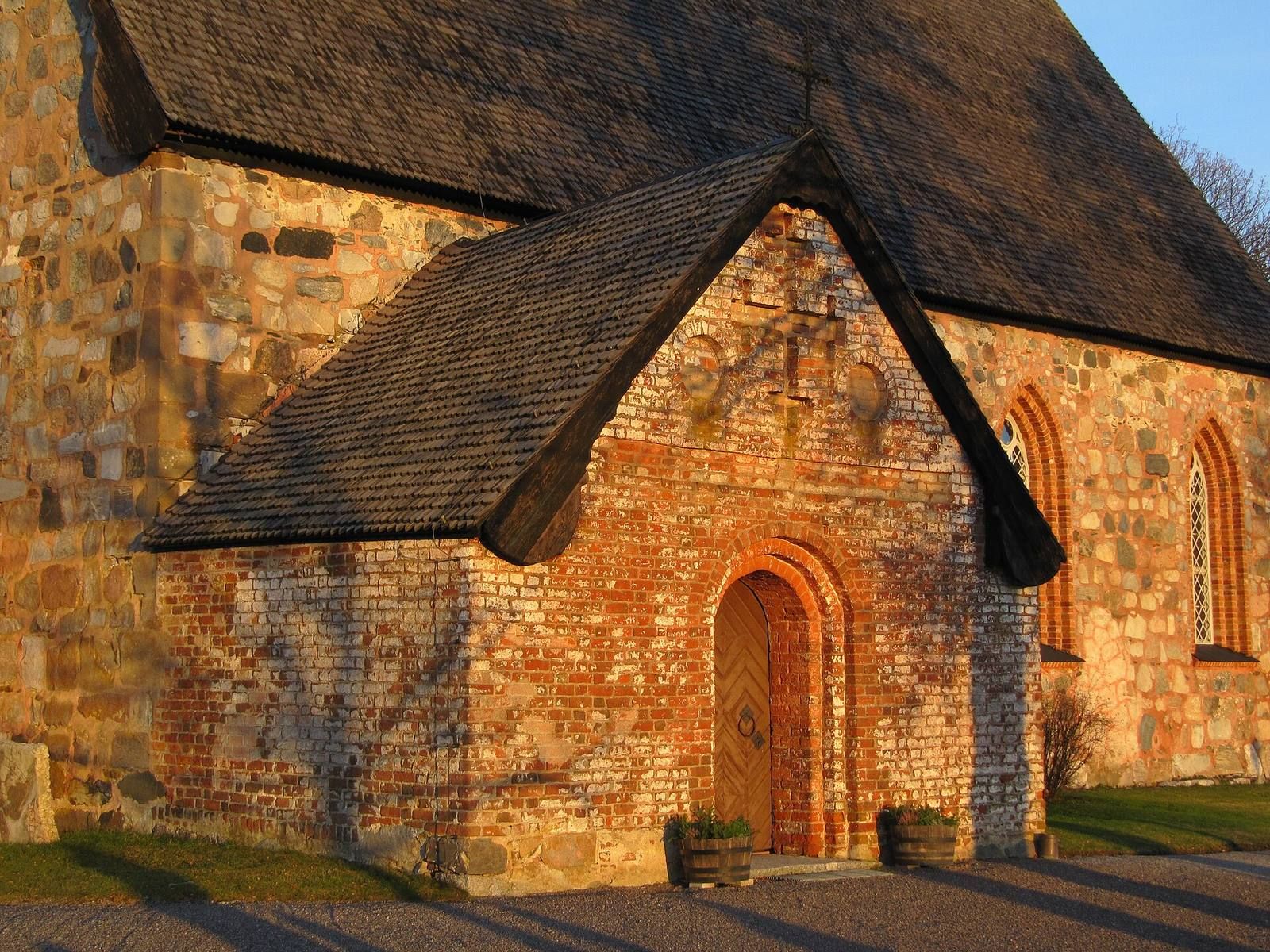
The present church emerged from a major rebuilding in the early 14th century, with a sacristy among the additions. Håtuna was also the site of an old royal seat, which King Birger, generally identified as Birger Magnusson, sold to Uppsala Cathedral in 1311. During the Middle Ages, Håtuna Bay reached farther inland, connecting the church area with Lake Mälaren. Brick vaults and a porch were added to the church in the third quarter of the 15th century.
Changes from the 17th to the early 19th century
Windows were opened in the nave’s north wall in 1691. Around 1700, the spire on the church tower blew down and was not replaced; the tower’s remaining sections were demolished during the 19th century. A court venue near the church continued in use until 1707, while the hill where the later bell tower stands had previously served as an execution site.
A detached bell tower was built nearby in 1735–36 as a less costly alternative to rebuilding the church tower. Two buttresses were added on the church’s northwest side in 1800.
Restorations and later changes
A major restoration directed by architect Adrian C. Peterson took place in 1873. It added a chapel at the west end and an organ gallery, replaced the sacristy with a new brick structure, enlarged the window openings, and blocked the south entrance.
Work in 1919–20, following a proposal by Professor Martin Olsson, uncovered medieval wall paintings and relaid the floors. The chancel window was bricked up, the south entrance reopened, and the west entrance blocked. The western porch became a burial chapel.
Håtuna Church belongs to the Church of Sweden, Sweden’s Lutheran national church, and the Diocese of Uppsala, a regional church jurisdiction. It served Håtuna parish until 2010, when that local church community was incorporated into Bro parish.
Remains
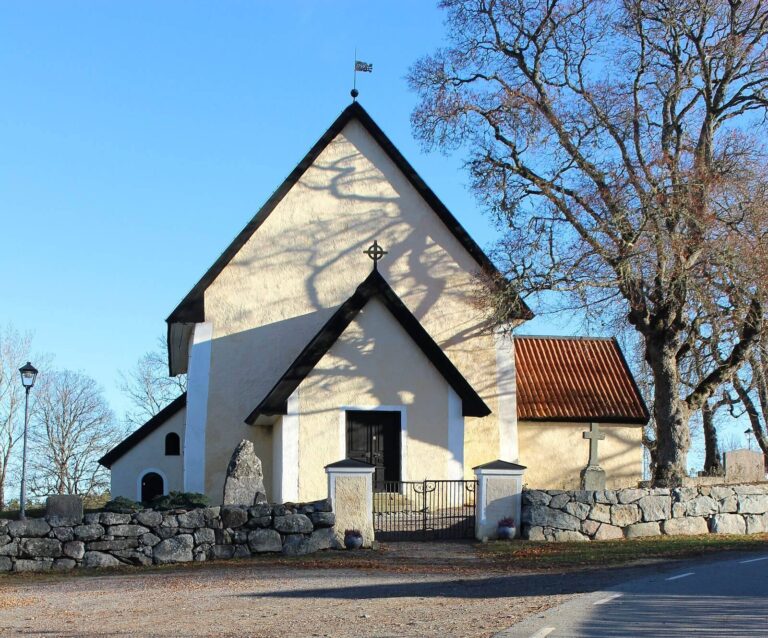
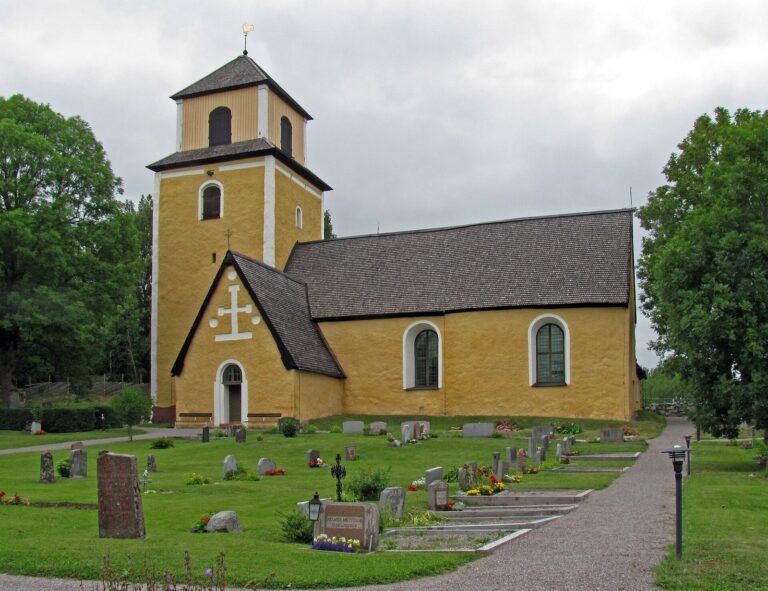
The church stands on the slope of an esker, a long ridge of sand and gravel deposited by meltwater beneath a glacier, beside county road 269. The road forms part of the old route between Stockholm, Häggeby, and Skokloster Church. Håtuna is a large hall church, with a broad unified interior rather than a raised central nave above lower side aisles. Its nave and chancel are equal in height and width; the walls combine grey stone and brick beneath a steep gabled roof. An attached sacristy is on the northeast side, a porch on the southwest, and a burial chapel occupies the western end. The northwest corner retains wall sections from the earlier grey-stone church. The original wooden ceiling formed a barrel vault, a continuous tunnel-shaped ceiling, supported by a circular roof truss. Later brick vaults lowered the ceiling from 13 metres to 10 metres, while the original truss survives in the attic.
Interior furnishings
Medieval decoration and sculpture
Medieval wall paintings remain partly visible, and a consecration cross, a mark associated with a church’s dedication, appears on the south wall. A Swedish-made triumphal crucifix, a large crucifix associated with Christ’s triumph over death, dates to the second quarter of the 14th century and hangs on the north wall. Eight wooden sculptures from about 1450 came from a medieval altarpiece.
Baptismal font and pulpit
The baptismal font combines a sandstone foot in the Romanesque style, dating to about 1200, with a bowl of reddish, marble-like limestone from the second half of the 13th century. The present pulpit dates from the 1870s and was rebuilt in 1920. Its predecessor was donated in 1690 by Baroness Catharina Sparre of Håtunaholm, and wooden sculptures from that pulpit survive.
Altar and organ
The altar retable, a decorative structure behind the altar, was donated in 1674. Its oil painting shows Jesus on the cross with Mary, John the Apostle, Moses, and John the Baptist; an upper painting depicts the burial of Jesus. The organ stands on the western gallery. Built in Stockholm in 1821 by Pehr Zacharias Strandh to a design by Carl-Gustaf Blom-Carlsson, it was rebuilt in 1925 with 18 sound controls, two keyboards, and a separate foot-operated pedal division. Part of the earlier facade remains, and the organ was renovated in 1940.
Churchyard and detached bell tower
Bell tower
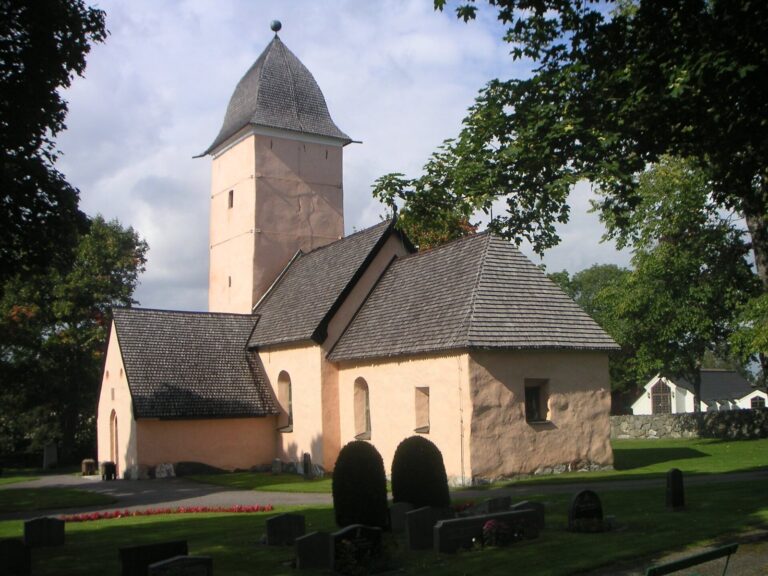
The detached bell tower stands on a nearby hill a few hundred metres from the church. Master builder Stenius built it in 1735–36, and it underwent extensive renovation in 1795. Its three bells include a large bell cast in Stockholm by Gerhard Meyer in 1769, a middle bell made by Jurgen Putensen in 1641, and a small bell dated 1658 on its neck. A crucifix is on the north side of the tower and a Madonna on the south side.
Cemetery gate
A brick gate on the southeast side of the churchyard was built in 1691–92 as part of an earlier churchyard wall.
Runestones
Runestones are inscribed stones often used to commemorate people or events. Runestone U 660 has stood in the porch since 1932. U 655 stands outside the churchyard wall; it was re-erected there in 1874 after serving as a threshold stone. U 658 is also associated with the church.