Egersund Church: A Wooden Parish Church in Norway
Site at a Glance
- Country
- Norway
- Primary era
- Early Modern
- Eras represented
- Early Modern
- Civilizations
- Denmark–Norway
- Site type
- Religious
- Remains
- Church
On this page12 sections
History
Egersund Church is a wooden church in Egersund, Norway, on a site used for worship since the early Middle Ages, perhaps from the 11th century. Its present form developed through the enlargement of a church built in the 17th century, and it served as an election church during Norway’s first national elections in 1814.
Medieval origins
The earliest church on the site may have been a stave church, a medieval timber building supported by upright posts, dedicated to St. Mary. A papal letter of 1292 names it as St. Mary’s Church of Egersund, indicating that it was established by then. The church stood at Aarstad beside the harbour.
Seventeenth-century rebuilding
About 1623, the earlier church was demolished and replaced on the same site by a wooden building with a lengthwise plan. Work began around that year, and the new church was consecrated in 1634. Its architect is unknown.
Ownership and enlargement
In 1726, King Frederick IV of Denmark and Norway sold the church to the town judge and two local businessmen during a church auction. The sale helped meet debts from the Great Northern War, a conflict fought from 1700 to 1721 involving Denmark-Norway and other European powers. The parish later bought the church back.
From 1785 to 1788, the German carpenter Ludvig Feyling enlarged and remodeled the building, changing its lengthwise plan to a cross-shaped one. The expansion made it the second-largest church in Stavanger County at the time.
National elections and later use
In 1814, the church was used for Norway’s first national elections. The parish chose electors, who then met at county level to select representatives for the Norwegian Constituent Assembly, the body convened that year to draft the country’s constitution.
Restoration and redecoration between 1927 and 1940 aimed to bring the church closer to its 17th-century appearance. Egersund Church remains an active Evangelical Lutheran church of Norway parish, serving as one of two churches in Egersund parish. The parish belongs to Dalane deanery, a subdivision of the Diocese of Stavanger, and the church is automatically protected as a Norwegian cultural heritage site.
Remains
Building and setting
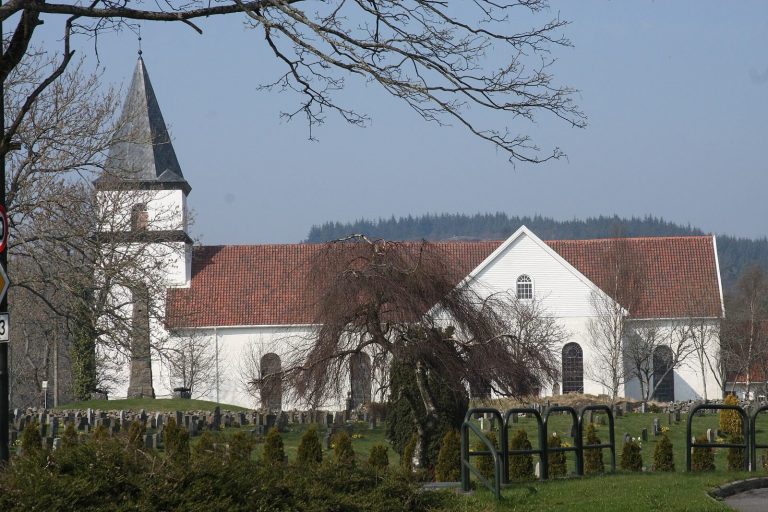
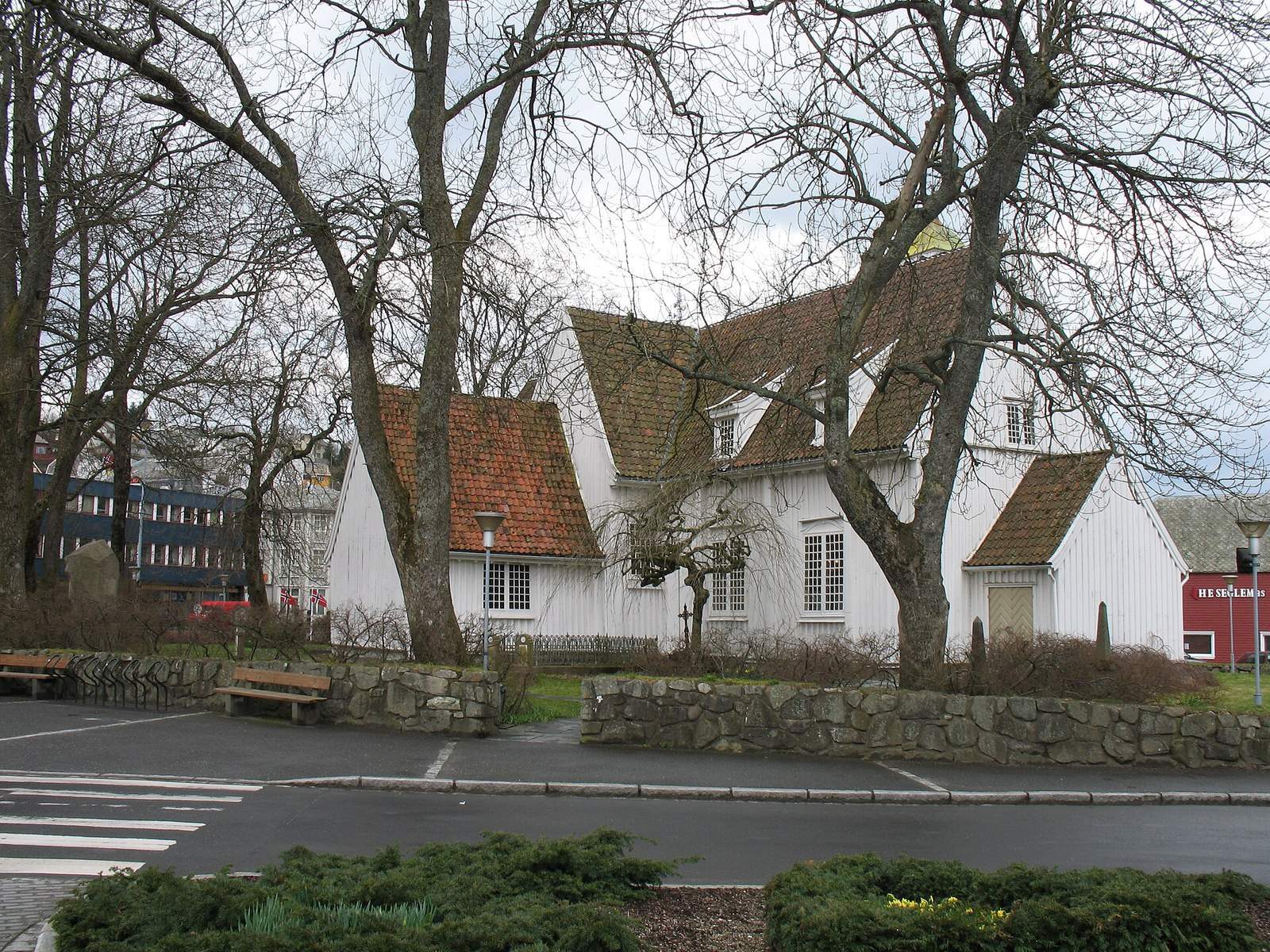
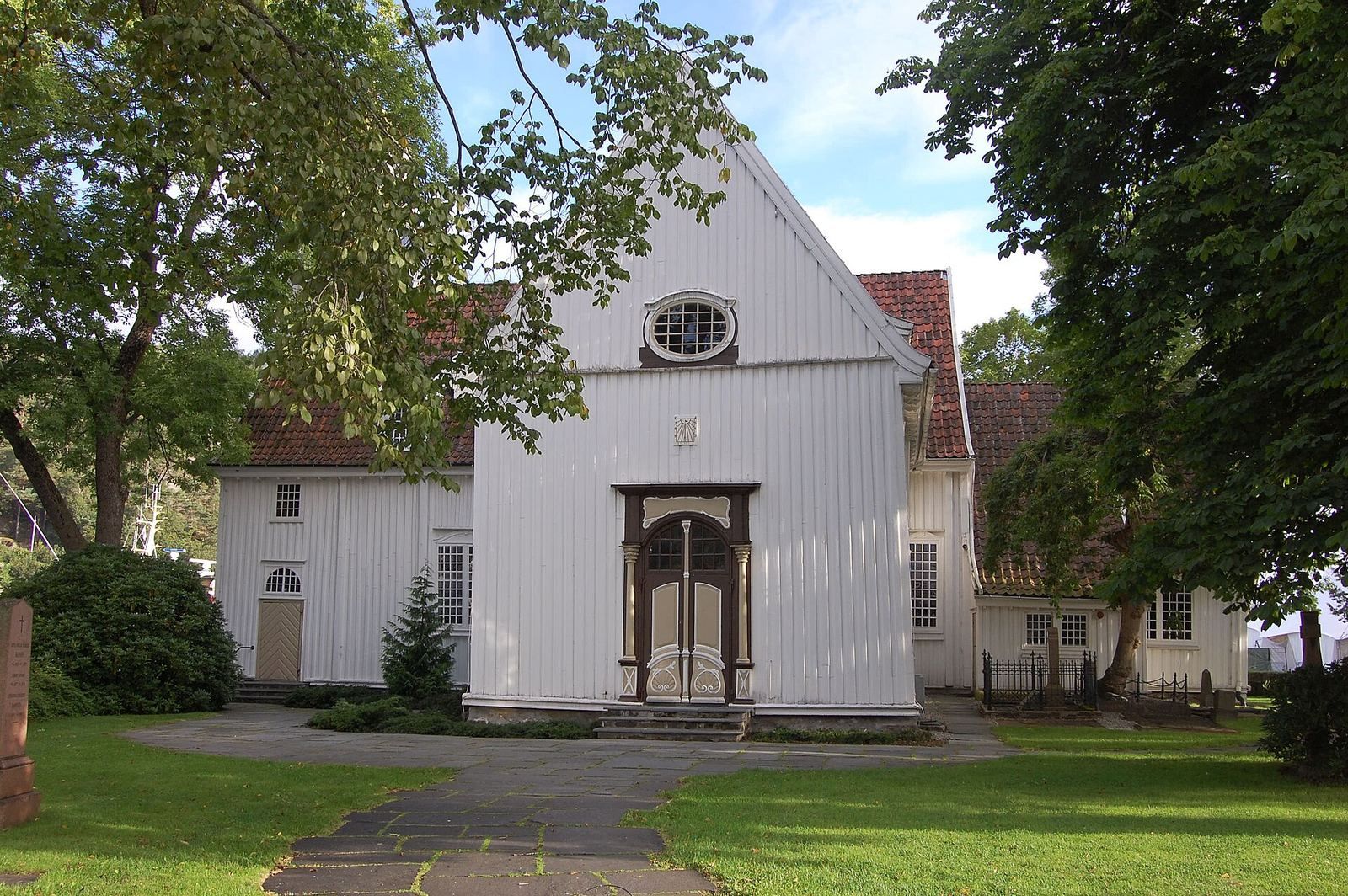
The white-painted timber church is built with log construction and has a cross-shaped plan, with arms extending north and south. A tower stands at the west end, while the choir, the area around the altar, occupies the east end and terminates in a straight wall. The roof was raised, the ceilings were vaulted, and galleries on two levels run around the interior perimeter. An entrance is on the south side, and the building seats about 1,090 people. The church stands beside the town square in central Egersund. The area in front of it was once called Lahedlå, meaning “built-up quay.” An old legend calls the site Heidningholmen and suggests it may have been a pre-Christian place of worship.
Interior furnishings
Pulpit
A pulpit from the 17th century survives in the church. A newer pulpit was mounted over it; the older one was found behind it in 1940 and restored.
Baptismal font
The baptismal font bears the carved date 1583. Its actual age is uncertain, but it is described as the oldest object in the church.
Altarpiece
The altarpiece dates to 1607. Jørgen Kaas and his wife, Mette Banner, donated it, and the Stavanger painter Peter Reimers painted and signed the work.
Organ
The organ was made by Rieger Orgelbau and dates from 2002.