Venngarn Castle: A Swedish Baroque Estate and Royal Residence


Site at a Glance
- Rating
- 4.2
- Popularity
- Medium
- Country
- Sweden
- Primary era
- Early Modern
- External website
- Open
- Eras represented
- Early Modern
- Civilizations
- Swedish
- Site type
- Domestic
- Remains
- Castle
On this page9 sections
History
Medieval estate and royal ownership
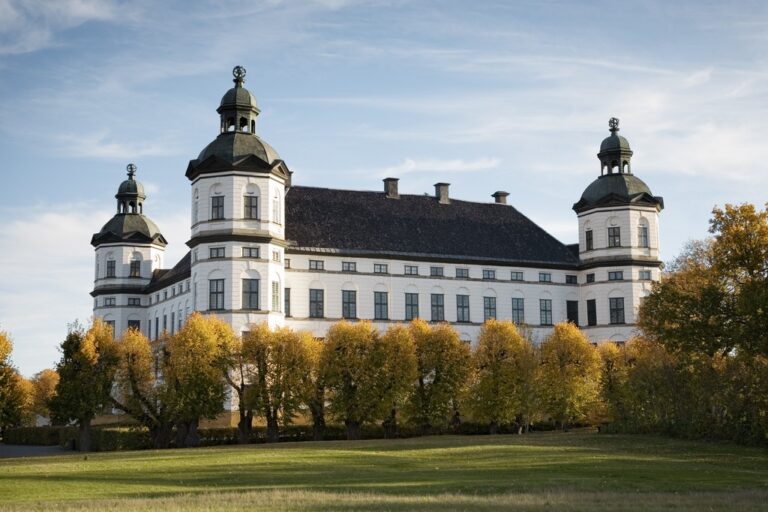
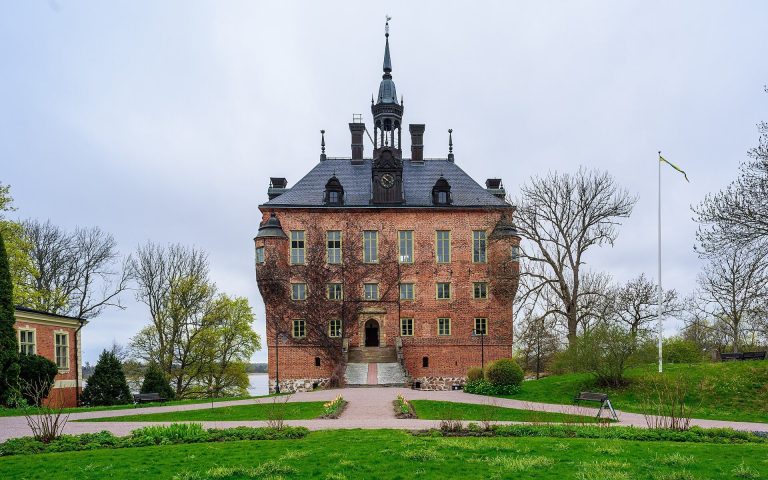
Venngarn Castle is a non-fortified residence complex in Sweden, located a few kilometres north of Sigtuna in Uppland. The estate is documented from at least the twelfth century and became associated with the noble Banér family during the fifteenth century. In 1441, it was given to Cecilia Haraldsdotter Gren after her marriage to a member of the Banér family. The estate later passed to her daughter, Sigrid Eskilsdotter Banér, the maternal grandmother of King Gustav Vasa, and entered the Swedish royal house through her in 1555.
The first permanent main building was constructed after Venngarn came into royal possession and was enlarged during the 1570s. In 1568, the estate was given to Princess Sophia of Sweden after her marriage. It served as one of her residences alongside Ekolsund Castle. During the 1590s, Venngarn was frequently used by her adult son, Gustav of Saxe-Lauenburg, who lived from 1570 to 1597.
Magnus Gabriel de la Gardie and the Baroque reconstruction
Venngarn passed to Count Frans Berendt von Thurn in 1619. His son, Heinrich von Thurn, sold the estate to the statesman Magnus Gabriel de la Gardie in 1653 for 50,000 Reichstalers. This purchase began the period in which the castle acquired its greatest splendour.
De la Gardie, who lived from 1622 to 1686, was Sweden’s Lord High Chancellor, the senior official who headed the central government. He also served as head of government during the minority of Charles XI and was among Sweden’s most influential politicians. Income from his many estates supported a household of several hundred people. At Venngarn, the principal building took its present form between 1663 and 1670, following drawings by the architect Jean de la Vallée. The castle was largely complete around 1670, and foreign artists and craftsmen were employed to decorate its interiors.
Crown administration and later institutional use
After Charles XI assumed governmental power, de la Gardie’s political influence declined. Under the Swedish Reduction, a policy that returned or confiscated noble estates to strengthen Crown control of land and finances, he was required to surrender all his estates to the Crown. He was permitted to remain at Venngarn until his death on 26 April 1686. The castle was then administered by the Crown and rented out, while its chapel was left untouched.
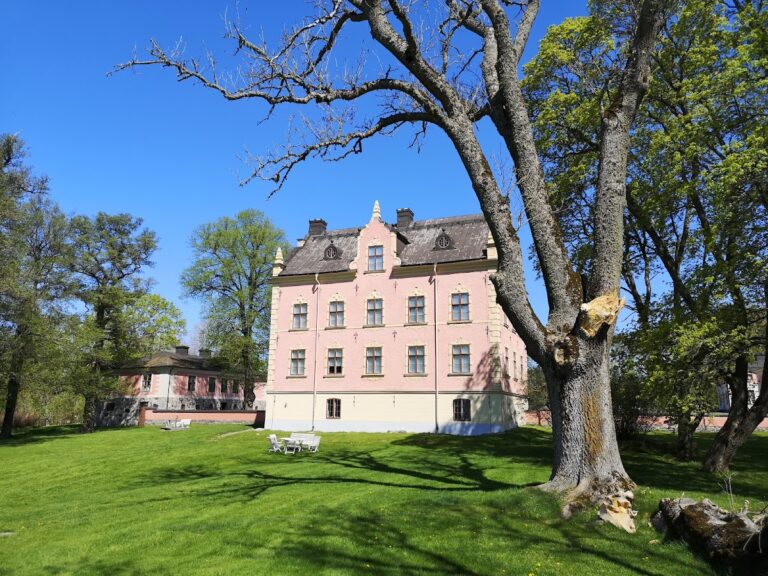
Venngarn later served at various times as the residence of the governor of Uppland and for other purposes. From 1916, the castle and surrounding farm buildings housed a state institution for people undergoing treatment for alcoholism. Difficult-to-educate young people were also accommodated there temporarily. The institution was phased out in 1983. The philanthropic Lewi Pethrus Foundation subsequently acquired the estate, followed by Wenngarn AB in 1997, and the estate was offered for sale from 2007. Venngarn has been protected as a state-listed historic building since 1935, a Swedish legal designation for buildings of national cultural importance.
Remains
Principal building and courtyard
Venngarn’s principal building is arranged as a central block with two wings that enclose a small courtyard. The complex is non-fortified, reflecting its primary use for residence and representation rather than military defence. Its present form belongs chiefly to the rebuilding carried out under Magnus Gabriel de la Gardie between 1663 and 1670, when the medieval and royal estate was transformed into a seventeenth-century Baroque residence. The Baroque period was a European artistic and architectural era known for elaborate decoration, dramatic allegory, and religious or dynastic themes.
Interior spaces
Castle chapel
De la Gardie refurbished the castle chapel and probably commissioned Jean de la Vallée as its architect. From the courtyard gate, the chapel is reached by a short flight of stairs descending into the building. This entrance uses a door originally intended for servants who served the court and park. The count and countess instead had direct access from their apartments to the aristocratic gallery.
The chapel contains approximately 100 seats and preserves a richly decorated Baroque interior. Allegorical paintings cover the doors of the pews, the galleries, the pulpit, and the altar. Their religious themes reflect de la Gardie’s outlook, presenting human life as an unstable valley of suffering and sorrow while offering consolation and hope through a longing for eternity. In 1655, responsibility for the decoration was entrusted to Måns Andersson, a Stockholm guild master, and his German journeyman Christijan Hoppe. Accounts identify Carlinus as chiefly responsible for the chapel’s decoration.
The organ gallery contains a portable pipe organ whose façade bears the date 1653. The instrument was originally intended to be taken to a battlefield. The organ gallery and the aristocratic gallery were built only a few decades apart but remain separate. On the south wall, the pulpit stands at exactly the same height as the aristocratic gallery, enabling the preacher to face the count and countess directly. Its staircase is built into the outer wall. Because the chapel was left untouched after the Crown took over Venngarn in 1686, it remains one of the best-preserved church interiors from Sweden’s imperial period, the seventeenth- and early eighteenth-century era when Sweden was a major European power.
Disa Hall
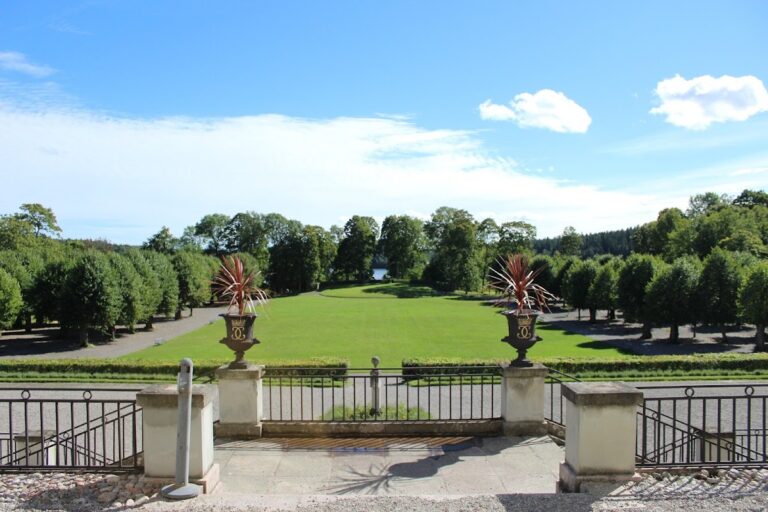
The Disa Hall occupies the castle’s uppermost storey and overlooks the castle park. Its name comes from eight paintings illustrating the Disa saga, a legendary Scandinavian story about Disa. The paintings include the version associated with Johannes Messenius’s comedy about Disa, written in honour of Queen Christina of Sweden. They were probably produced in the early 1680s by Lorenz Wolter after a design by David Klöcker Ehrenstrahl. Wolter was a painter active in Sweden, while Ehrenstrahl served as a Swedish court painter.