Große Harzburg: An Imperial Fortress in Saxony
Site at a Glance
- Popularity
- High
- Country
- Germany
- Primary era
- Medieval
- Eras represented
- Medieval, Modern
- Civilizations
- German, Holy Roman Empire
- Site type
- Military
- Remains
- Castle
On this page17 sections
History
The Große Harzburg, also known as Harzburg, was a medieval fortress on the Großer Burgberg above Bad Harzburg, Germany. King Henry IV ordered its construction between 1065 and 1068 as part of a castle-building program in Saxony. Bishop Benno II of Osnabrück designed it. The fortress was meant to assert royal authority in Saxony and defend the nearby imperial palace at Goslar and the Rammelsberg mines. Goslar had been a favored residence of Henry’s father, Emperor Henry III, and the new castle took shape amid growing conflict between Henry IV and Saxon nobles.
Royal fortress and Saxon Rebellion
Harzburg served as an imperial fortress and housed a collegiate church, a church served by a community of clergy. Henry brought numerous relics to the church and had the remains of his brother, Duke Conrad II of Bavaria, and his young son Henry reburied in a family crypt there.
When the Saxon Rebellion, an uprising against Henry IV by Saxon nobles, began in 1073, the king fled from Goslar to Harzburg with the imperial regalia, ceremonial objects that represented a ruler’s authority. Otto of Nordheim and Bishop Burchard II of Halberstadt led the besiegers. The attacking force was said to number 60,000, while the garrison had 300 men. A later legend held that Henry escaped down the well and through a secret passage, dropping his crown into the shaft. The explored course of the passage makes an escape that way very unlikely.
Under the Treaty of Gerstungen, signed on 2 February 1074, Henry agreed to have his castles partly dismantled. At Harzburg he ordered the walls and towers pulled down but left the buildings standing. Local peasants plundered and destroyed the castle in the spring, desecrating the church and royal family crypt. The destruction gave Henry grounds to renew his campaign against the rebels. He defeated them on 9 June 1075 at the Battle of Homburg on the Unstrut, also called the Battle of Langensalza. Pope Gregory VII then imposed a ban on the devastated site.
Rebuilding and imperial tenure
The castle was rebuilt after Henry the Lion was deposed in 1180. Emperor Frederick I arranged the work through the Counts of Wohldenberg, who held Harzburg and related imperial property as a fief, land or rights held under obligations to a superior lord. Otto IV completed the rebuilding. After losing power, Otto withdrew to Harzburg and died there on 19 May 1218. By then, the fortress had lost its immediate role as an imperial stronghold, following the transfer of the imperial regalia to the Hohenstaufen side.
The designation castrum imperiale, meaning “imperial castle,” was applied to Harzburg again in 1222. A system of imperial fiefs helped maintain its imperial status until 1269, when the Counts of Wohldenberg pledged their fief to the Counts of Wernigerode. The associated holdings included imperial forest between Harzburg and Goslar, manors in Bovingerode, Westerode, Bündheim, Lochtum, Harlingerode and Vienenburg, and a service-noble seat at Sudburg.
Changing ownership and decline
Ownership changed repeatedly in the later Middle Ages. Around 1370, Duke Otto of Brunswick-Göttingen occupied Harzburg during the War of the Lüneburg Succession and entrusted it to Hans von Schwicheldt, despite protests from the Counts of Wernigerode. In the early fifteenth century, Hans’s three sons held the castle as a pledge and used it as a base for raids into Brunswick, Hildesheim and Halberstadt.
Harzburg’s importance diminished, and a proposed rebuilding in the sixteenth century was abandoned because of its cost. The castle changed hands several times during the Thirty Years’ War but was not damaged in those transfers. Changes in warfare had made this kind of fortification obsolete, and demolition of the remaining ruins began in 1650.
Name and nearby support sites
The settlement below the Großer Burgberg was first called Neustadt. As spa tourism grew, it adopted the castle’s name and became Bad Harzburg in 1892. Medieval forms of the castle’s name included Hartesburg and Harzesburg. The name derives from the Harz mountains, whose name is thought to come from Hart and to be related to hardt, meaning “mountain forest.”
Krodotal, formerly called Schulenrode, served the castle as a supply farm. It may also have been a second base for the collegiate community associated with the church at Harzburg.
Remains
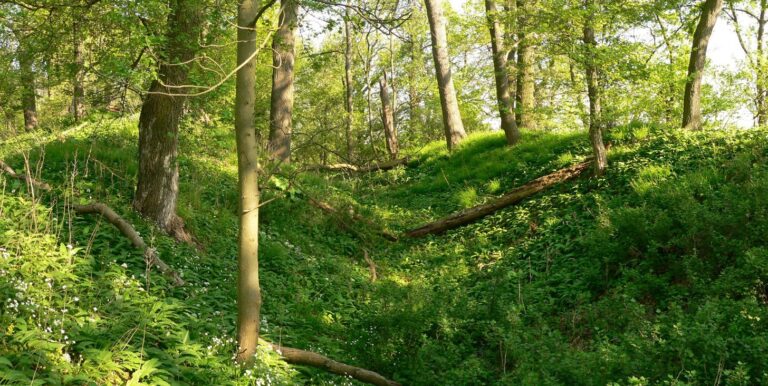
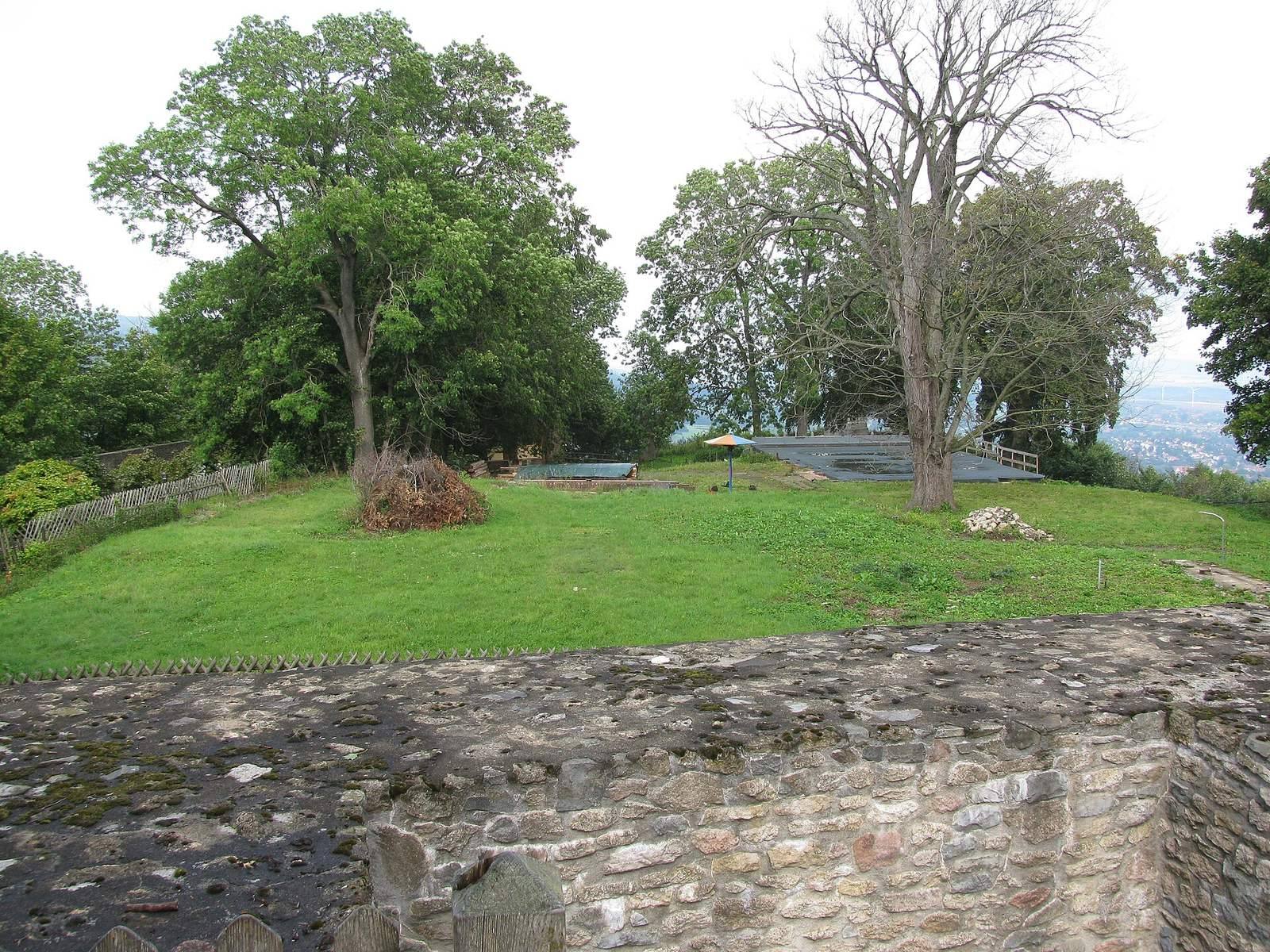
The castle occupied the long summit of the Großer Burgberg, about 483 metres above sea level, overlooking Bad Harzburg and the Radau valley. Steep slopes protected three sides of the hilltop. The site lies north of the Kleiner Burgberg, about 436 metres high, and east-southeast of the Sachsenberg, which rises to about 546 metres. The enclosure measured roughly 55 by 220 metres. A deep ditch, about 10 metres wide, crossed the ridge neck and separated a smaller eastern area from a larger western one.
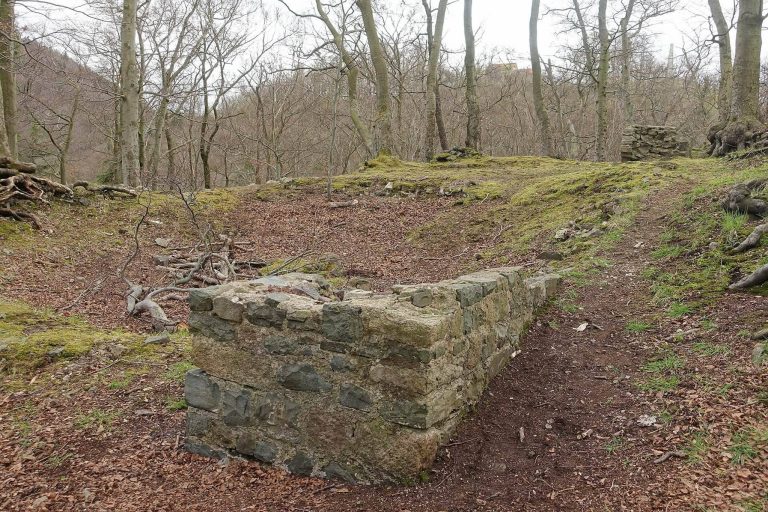
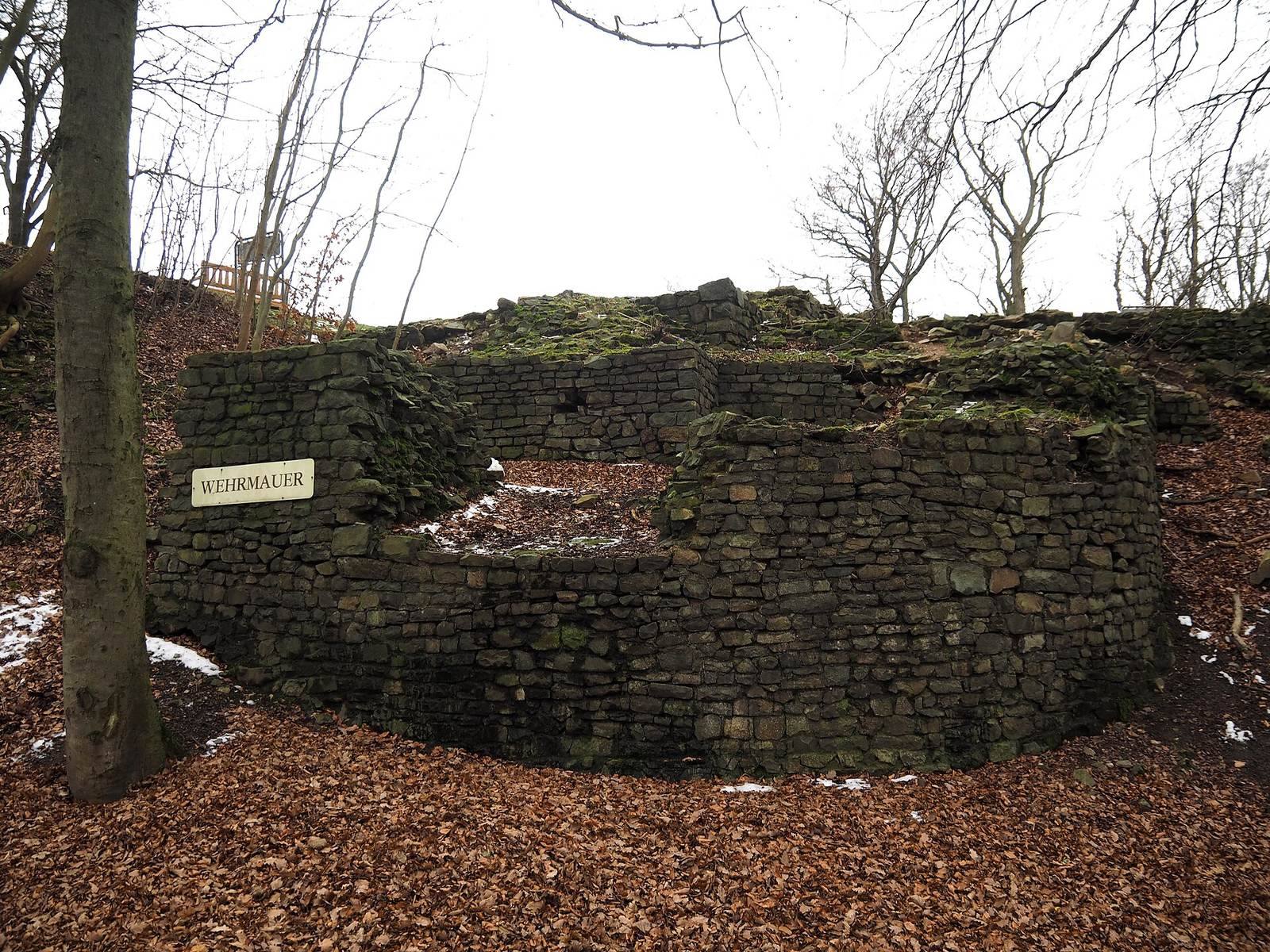
A ring wall, originally about 10 metres high, enclosed the complex. A further defensive enclosure guarded the eastern approach from the saddle leading toward the Sachsenberg. Ditches and outer banks strengthened the steep north and south sides, becoming less pronounced toward the west. Fragments of foundations and towers, along with traces of ditches and ramparts, mark the surviving site. A modern stone bridge crosses the main ditch between the two sections.
Buildings and entrances
Eastern entrance and core
The southeastern entrance had a gate chamber. Just inside it stood a principal defensive tower; farther east was a two-wing building modeled on a donjon, a fortified central tower that could also serve as a residence. Its outer corner faced the direction of attack. Walls probably separated this group from the rest of the castle, creating a core enclosure. A residential hall divided into three rooms stood along the north side.
Church and service buildings
The western part of the enclosure probably held the original collegiate church complex, likely built using timber framing. Other buildings in the castle included a chapel and a residence. An administrative building combined a brewery with a chamber.
Cross-wall tower and western gate
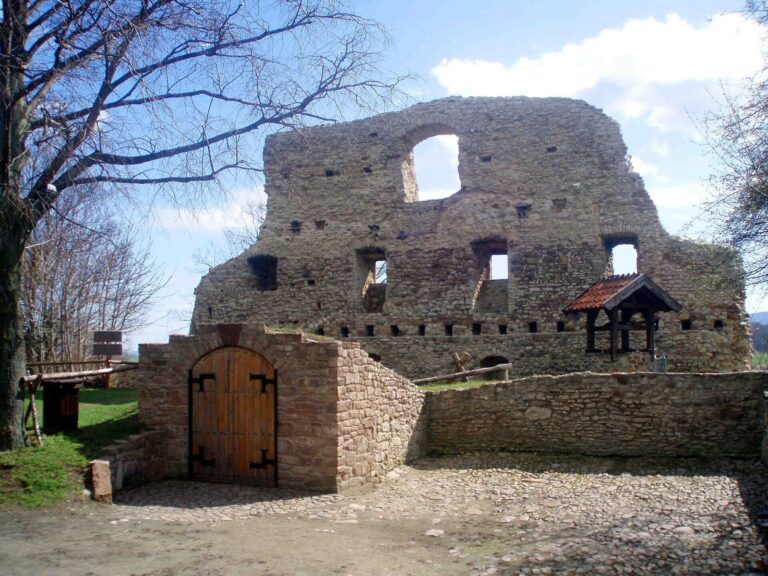
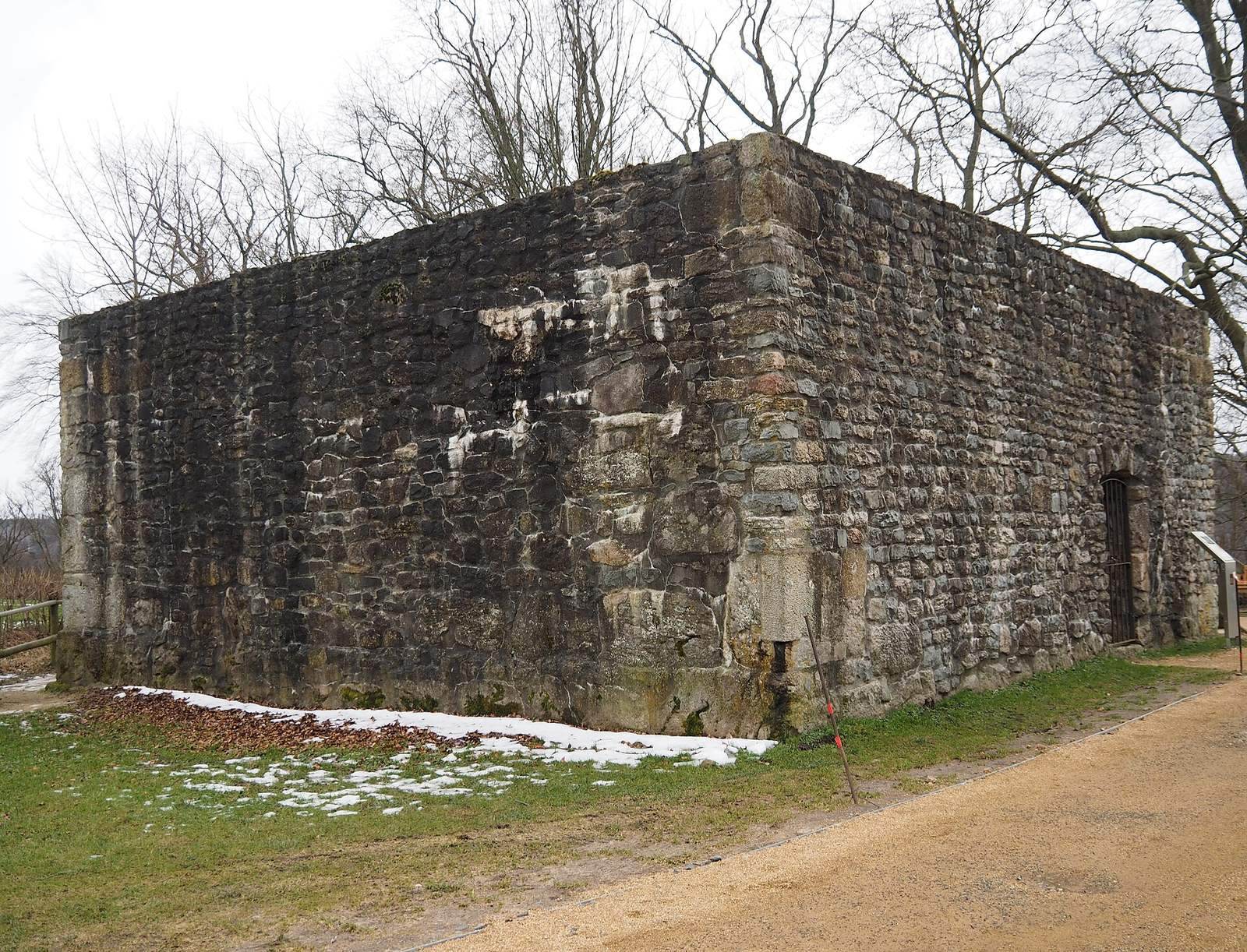
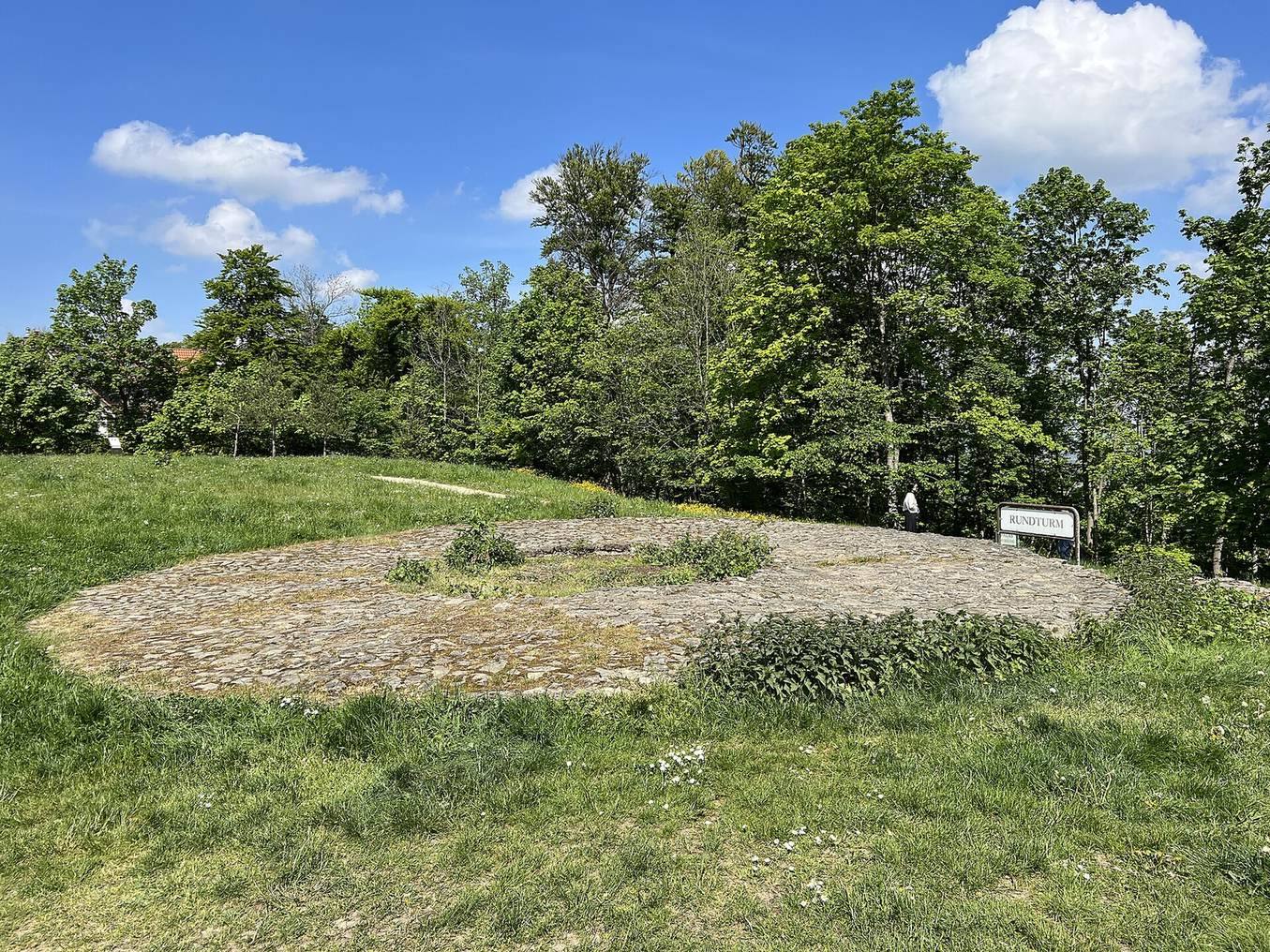
Harzburg had two principal defensive towers. One stood centrally in the cross-wall and dates to the rebuilding associated with Frederick I and Otto IV. Its square exterior measures 9.35 by 9.45 metres, and its walls are 3.85 metres thick; the tower has been partly rebuilt in modern times. A later approach entered through an outer gate enclosure and gatehouse at the western corner. Identified remains also include a gate foundation, a rebuilt tower foundation, a round-tower foundation and a section ditch.
Well and water supply
The castle well
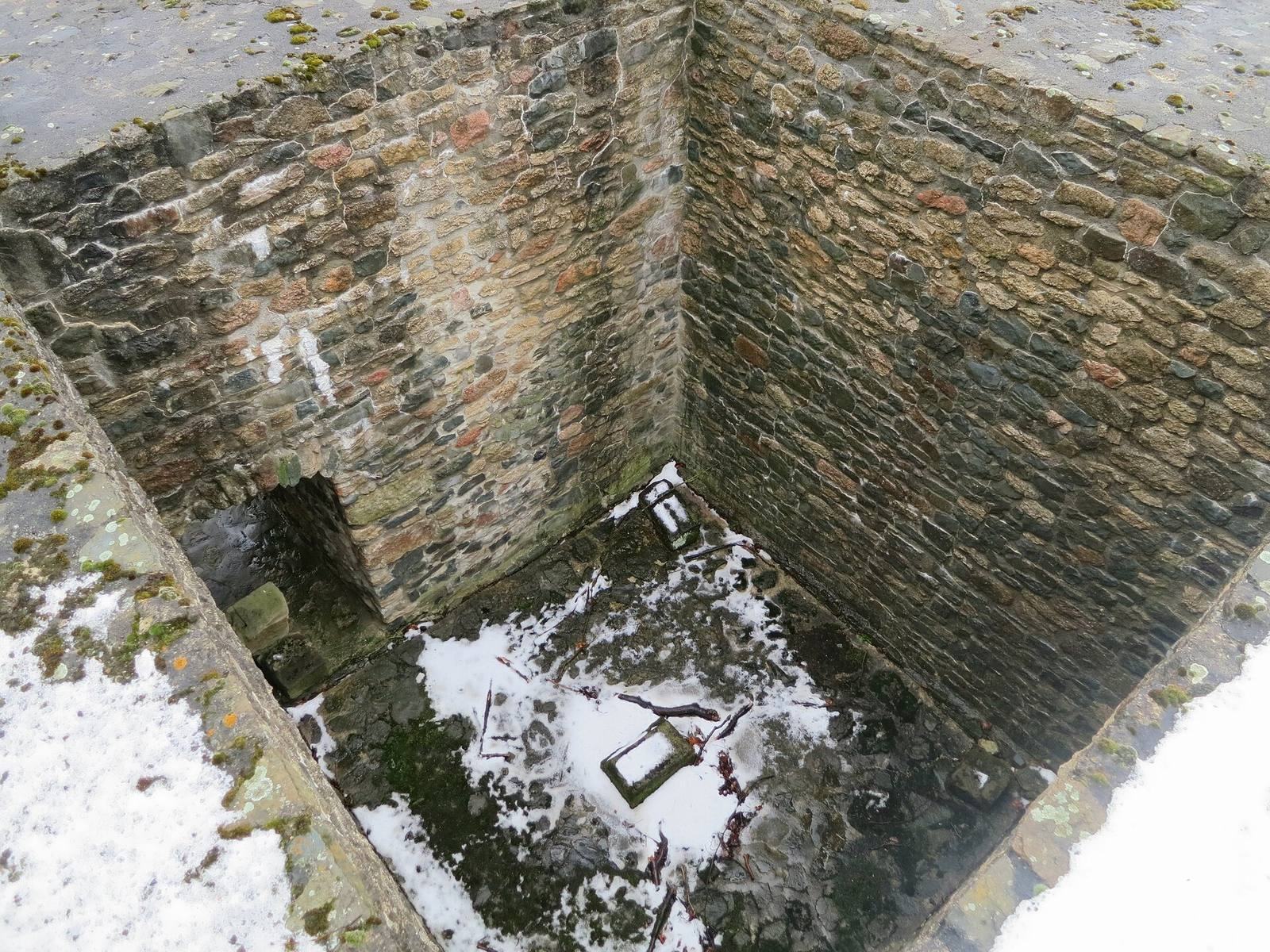
The well lies outside the enclosed area, at the northeastern corner of the western section on the north slope. It is 57 metres deep. Its upper shaft is nearly square, with arched joints in the masonry and a north-to-south width of about 3 metres. Masonry lines the first 8.15 metres, from the hilltop’s elevation of about 483 metres above sea level down to bedrock. Below that point, the shaft continues unlined through hornfels, a hard rock formed by heat near an igneous intrusion.
Water routes and underground passage
The enclosed forest spring called Sachsenbrunnen may have supplied drinking water, carried several hundred metres to the castle through wooden pipes. The well may instead have reached groundwater, or served as a cistern filled through a ditch and tunnel. A possible link to clay pipes that brought water from Kleine Spüketal, about 1.2 kilometres east, has not been established.
Investigations in 1966 to 1968 found rubble 42 metres down but did not reach the well’s bottom. They explored a passage branching north about 12 metres below the surface. A cross-passage driven in 1968 from the north slope made 18 metres of the route passable, with temporary supports. The passage is about 0.65 metres wide and 1.70 metres high, and a water channel runs along its floor. It leads into a covered trench lined with stones.
Nearby fortifications
Kleine Harzburg
The nearby Kleine Harzburg has remains on the Kleiner Burgberg. How it related to the Große Harzburg remains uncertain.
Sachsenberg enclosure
On the Sachsenberg, a rampart-and-ditch enclosure measuring about 60 by 95 metres is now barely discernible. Its date and purpose are uncertain. It may have been a siege work raised by the Saxon rebels in 1073, or an unfinished outer defense for Harzburg.
Memorials on the castle grounds
A 19-metre Canossa Column stands at the northern edge of the plateau. Erected in 1877, it commemorates Chancellor Otto von Bismarck and the 800th anniversary of Henry IV’s journey to Canossa in 1077 to seek release from excommunication. Its erection took place during the Kulturkampf, a nineteenth-century political and cultural conflict in Germany over the state’s relationship with the Catholic Church. The grounds also contain a Bismarck Elm reputed to be more than 200 years old, a Harz folktales memorial hall built between 1928 and 1932, and a modern statue of Krodo, a figure regarded in Harz tradition as a supposed pagan deity.