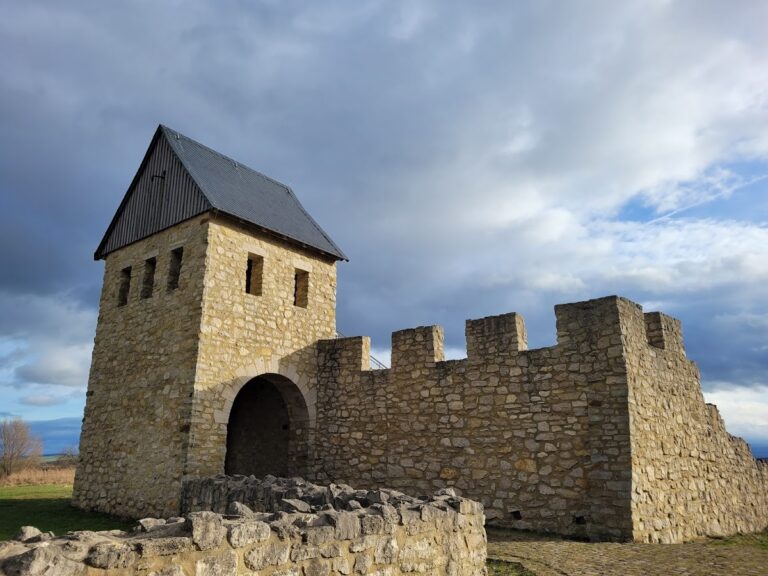
Burgruine Vienenburg: A Noble Hilltop Castle in Germany


Site at a Glance
- Rating
- 4.2
- Popularity
- Low
- Country
- Germany
- Primary era
- Medieval
- External website
- Open
- Eras represented
- Medieval, Early Modern
- Civilizations
- Holy Roman Empire
- Site type
- Military
- Remains
- Castle
On this page8 sections
History
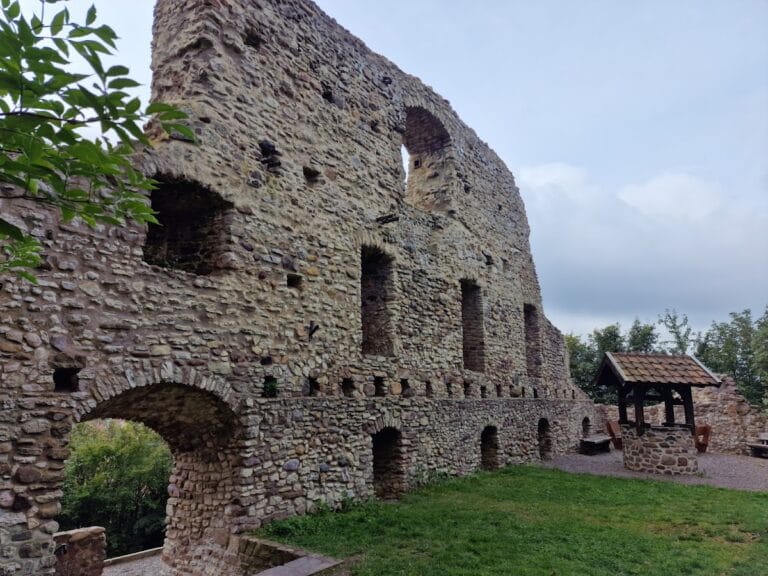
Burgruine Vienenburg is the ruin of a noble hilltop castle in Germany, near Goslar, dating to around 1300. Its origins are uncertain, although a disputed tradition says that its builders reused stones from Harliburg after that castle was demolished in 1291. The castle was built to protect the interests of Count Burchard VII of Wernigerode’s relative, Bishop Siegfried II of Hildesheim, in an area important for regional communications.
Foundation and medieval ownership
The castle first appears in a surviving record from 1306, when Count Burchard issued a charter there. In 1341, he pledged Vienenburg to the city of Goslar. The castle passed to the bishops of Hildesheim in 1367, and further pledges followed during later phases of its medieval history.
After the Hildesheim Diocesan Feud, a conflict that resulted in territorial changes involving the Bishopric of Hildesheim, the bishopric ceded Vienenburg in 1523 to Duke Henry II of Brunswick-Wolfenbüttel. The transfer placed the castle under the authority of a sixteenth-century territorial prince of the House of Welf.
War, administration, and secularization
During the Thirty Years’ War, the imperial commander Albrecht von Wallenstein directed military operations in the Harz foreland from Vienenburg. The castle returned to the Bishopric of Hildesheim in 1643 and remained under its authority until 1802.
In 1647, the bishopric granted the Vienenburg administrative district to Field Marshal Johannes Ernst, Baron von Reuschenberg zu Setterich, in recognition of his service. Until about 1720, the administrative office and the title of Drost, an official responsible for governing a territorial district, passed by inheritance within the von Reuschenberg family. Several of the family’s sons lived at Vienenburg Castle more often than at their ancestral castle of Setterich.
Secularization in 1802 transferred church possessions and territories to secular authorities. Vienenburg then passed to Prussia and became a state-owned estate. Parts of the castle were dismantled, and their stones were reused in estate buildings. The principal tower was renovated in 1853 and 1854 and again in 2010. It survives as an observation tower.
Remains
Setting and defenses
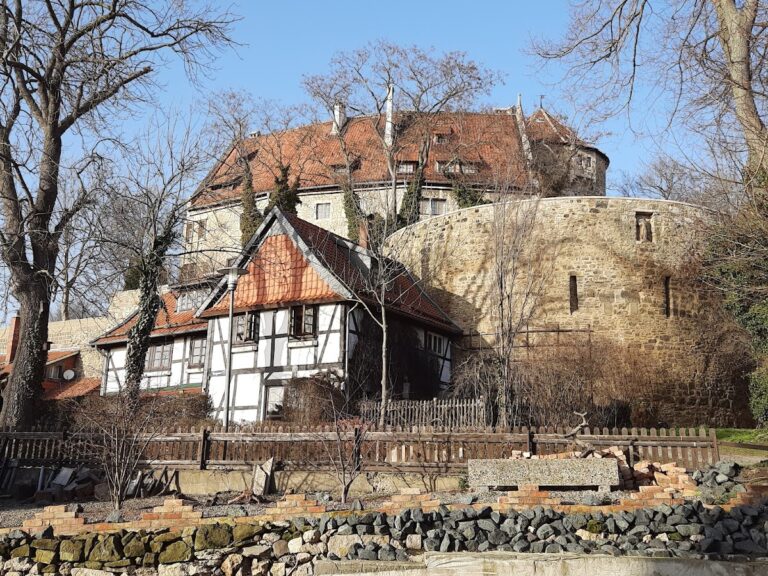
Burgruine Vienenburg occupies a promontory on a ridge about 165 metres above sea level. Steep slopes descend north and west toward the Oker valley. The irregular castle site measures approximately 85 by 125 metres at its greatest extent. On the eastern side, access crossed a neck ditch cut through the land connection between the promontory and the surrounding ground.
An enclosing curtain wall, roughly one metre thick, surrounds the site. Estate buildings adjoin its inner face, and some are partly old in origin, with half-timbered upper stories rising above the wall. The gatehouse stands on the eastern side and contains a stone bearing the coat of arms of Hildesheim, dated 1725. A former gate on the southern side is also known.
Central castle buildings
Principal tower
The central principal fortified tower is round and approximately 24 metres high. Its entrance is raised eight metres above courtyard level, while the walls measure 2.63 metres in thickness and the tower has a diameter of about eight metres. Renovation campaigns in 1853 and 1854 and in 2010 preserved the tower as an observation structure.
Residential building
The foundations of the demolished principal residential building survive beside the tower. The building measured approximately eight by 20 metres and had a round stair tower attached to its northeastern side. The tower and residential building probably stood within a separate ditch, which has since disappeared.
Nearby sites