Hakone Shrine: A Shinto Sanctuary of Lake Ashi and Mount Komagatake


Site at a Glance
- Rating
- 4.5
- Popularity
- Low
- Country
- Japan
- Primary era
- Early Modern
- External website
- Open
- Eras represented
- Early Modern, Modern
- Civilizations
- Japanese, Tokugawa
- Site type
- Religious
- Remains
- Sanctuary
On this page13 sections
History
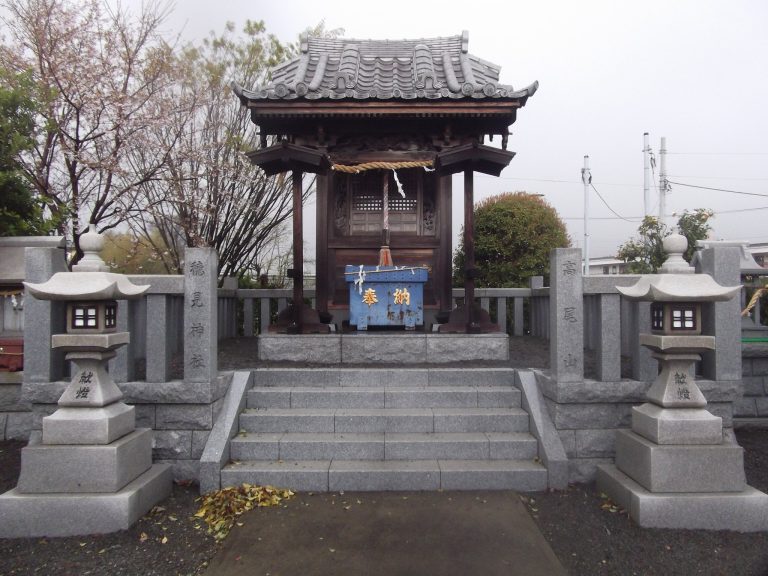
Hakone Shrine is a Shinto shrine in Japan, located at Motohakone beside Lake Ashi in Hakone, Kanagawa Prefecture. Its present lakeside form dates to 1667 and follows the Gongen-zukuri style, in which the main sanctuary and worship hall are joined by an intermediate structure. The shrine, formerly known as Hakone Gongen and Sansho Daigongen, venerates Hakone Okami, the collective name for three kami, or sacred beings in Shinto: Ninigi-no-Mikoto, Konohanasakuya-hime, and Hoori-no-Mikoto.
Mountain origins and early traditions
Religious practice on Mount Hakone reaches back to ancient mountain worship, particularly at Mount Kamiyama. A tradition preserved in the 1191 Origin and Preface of Mount Hakone identifies the summit of Mount Komagatake as a sacred rock precinct from which Mount Kamiyama could be worshipped at a distance. Hakone Mototsumiya, the inner shrine on Mount Komagatake, continues this connection with the mountain sanctuary.
Several traditions explain the shrine’s beginnings. One places its first sanctuary on Mount Komagatake during the reign of Emperor Koshō and attributes the act to the religious figure Shōsen. Another credits the Buddhist priest Mangan with restoring the lakeside shrine in 757 and enshrining three sacred figures as the Three Hakone Gongen. Gongen describes a premodern Buddhist-Shinto understanding in which a kami appeared as a Buddha or bodhisattva, reflecting the close combination of the two religious traditions at Hakone.
The early religious landscape also incorporated Daoist, or immortalist, ritual practices. One origin account calls Mount Hakone Tairokuzan and associates it with the deity Taizan Fukun. Another legendary tradition, preserved in the illustrated Origin Scroll of Hakone Gongen, says that the three Hakone deities and the two Izu Gongen came from foreign royal figures who reached Japan from India.
Buddhist administration and the Kuzuryu tradition
Hakone Gongen was closely associated with Tōfukuji, which had nearly fallen into ruin before Mangan’s restoration. Tōfukuji later became Kongōō-in, the bettō institution that administered Hakone Gongen. A bettō was the chief administrator of a Buddhist temple or of a Buddhist institution overseeing a shrine-temple complex.
Mangan is also associated with the tradition of the nine-headed dragon, or Kuzuryu, said to have afflicted the people living around Lake Ashi. He supposedly subdued the creature, established a shrine at the site of the present Kuzuryu Shrine Main Shrine, and enshrined the dragon as a guardian deity. This tradition remains part of Hakone’s religious identity.
Samurai patronage and reconstruction
During the Kamakura period, the Kamakura shogunate protected and supported Hakone Shrine, which became especially important to the samurai class. Together with Izusan Shrine, it formed the Two Gongen. Pilgrimages also linked it with Mishima Taisha in the Two-Shrine or Three-Shrine pilgrimage traditions.
The Azuma Kagami relates that Minamoto no Yoritomo received help from the shrine’s administrator after his defeat at the Battle of Ishibashiyama during the Genpei War, the conflict that brought the Minamoto and Taira clans into contention for control of Japan. After becoming shogun, Yoritomo became a patron of the shrine. Samurai devotion continued under the Later Hōjō clan and through the Sengoku period, an era of prolonged warfare among competing regional powers.
Hakone Gongen was burned during Toyotomi Hideyoshi’s conquest of Odawara in 1590. Tokugawa Ieyasu subsequently rebuilt the shrine, granted it revenues of 200 koku, and issued a vermilion-seal document protecting its lands from interference. The Tokugawa shogunate continued this support.
From shrine-temple complex to modern sanctuary
Kongōō-in Tōfukuji remained the administrative center of Hakone Gongen until the Meiji separation of Buddhism and Shinto. The bettō then entered secular life and became a Shinto priest, while the institution was renamed Hakone Shrine. The shrine was classified in 1928 as a Kokuhei-shōsha, a modern state category for nationally significant Shinto shrines whose offerings had formerly been associated with the central government.
The Hakone Komagatake Ropeway opened in April 1963 between Hakone-en and the summit of Mount Komagatake. In 1964, Hakone Mototsumiya was rebuilt on the summit through a donation from Tsutsumi Yasujiro and thereafter served as the inner shrine for pilgrims. A new Kuzuryu Shrine was established within the grounds of Hakone Shrine in 2000, receiving a divided spirit from the Main Shrine so that both shrines enshrine the same divine presence.
The annual cycle preserves several older religious traditions. Hakone Shrine’s main festival takes place on August 1, while a fire festival is held on Mount Komagatake on October 24 as a continuation of rites associated with worship of Mount Kamiyama. The February Setsubun festival combines ritual purification, bean throwing, and the expulsion of demons on Lake Ashi. At the Kuzuryu shrines, the main festival is held on June 13, monthly rites take place on the thirteenth day at the Main Shrine and on the fifteenth day at the New Shrine, and the Lake Water Festival is held on July 31.
Remains
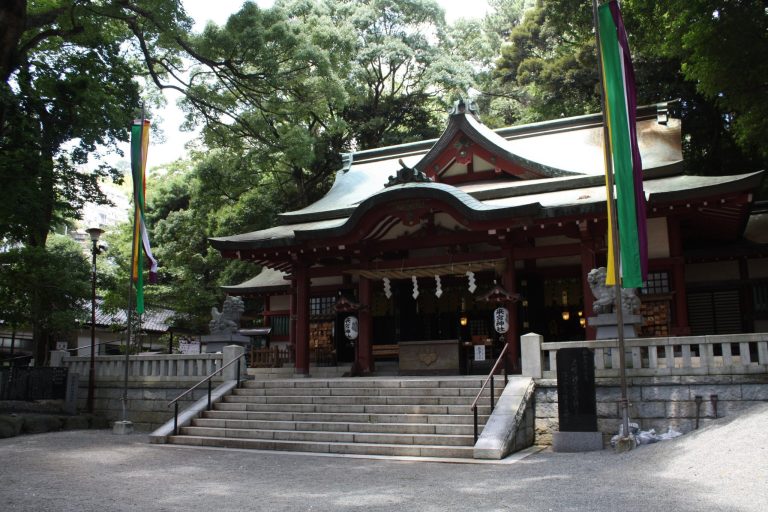
The shrine complex extends from the main or lowland shrine, called the Satomiya, on the shore of Lake Ashi to Hakone Mototsumiya on the summit of Mount Komagatake. The term Satomiya distinguishes the lakeside sanctuary from an inner shrine located at a sacred mountain site. The traditionally sacred summit formed the earliest religious precinct, while the present main shrine represents the later lakeside development. The main sanctuary’s surviving form dates to 1667 and uses the connected arrangement of Gongen-zukuri.
Lakeside shrine precinct
Peace Torii
The Peace Torii stands in Lake Ashi in front of the shrine. Erected in 1952, it commemorated the signing of the San Francisco Peace Treaty and the investiture ceremony of Crown Prince Akihito, the future Emperor Akihito. Its plaque was added in 1964 to mark the Tokyo Olympics and the shrine’s 1,200th anniversary. The word “Peace” on the plaque was written by Yoshida Shigeru.
Treasure hall
A treasure hall within the shrine grounds contains materials and cultural artifacts associated with Hakone Shrine and its history. The nationally designated collection includes the color-painted Illustrated Origin Scroll of Hakone Gongen on paper, two wooden sacred images depicting a seated male deity and a seated female deity, and a wooden seated image of Mangan. It also includes a short sword with a red-wood hilt and two iron hot-water cauldrons bearing inscriptions dated 1268 and 1283. These objects are displayed or made available for viewing in the hall.
Mountain and dragon shrines
Hakone Mototsumiya
Hakone Mototsumiya stands on the summit of Mount Komagatake as the inner shrine of Hakone Shrine. It contains the Three Kami of Creation, three primordial kami associated in Shinto cosmology with the emergence and ordering of the universe, as well as the Hakone deities. Its position preserves the shrine’s connection with the mountain worship centered on the sacred heights of Hakone.
Kuzuryu Shrine Main Shrine
The Kuzuryu Shrine Main Shrine lies outside the grounds of Hakone Shrine, within Hakone Kuzuryu-no-Mori at Hakone-en. It occupies the site associated with Mangan’s tradition of subduing and enshrining the nine-headed dragon of Lake Ashi. Benzaiten Shrine and Hakuryu Shrine are also located within the same forest.
Kuzuryu Shrine New Shrine
The Kuzuryu Shrine New Shrine is a subordinate shrine within the Hakone Shrine grounds, adjoining the worship hall. Its deity is the divided spirit of the deity enshrined at the Main Shrine, giving the two Kuzuryu shrines the same divine presence while placing the New Shrine within the principal lakeside complex.