Haburman Bridge: A Medieval Artuqid Bridge in Türkiye


Site at a Glance
- Rating
- 4.5
- Popularity
- Low
- Country
- Turkey
- Primary era
- Medieval
- Eras represented
- Medieval
- Civilizations
- Unclassified
- Site type
- Infrastructure
- Remains
- Bridge
On this page8 sections
History
Artuqid Construction
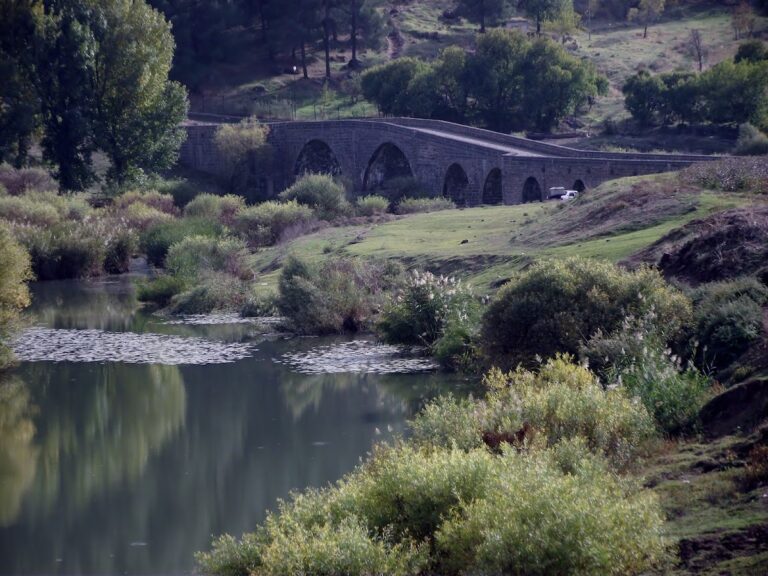
Haburman Bridge, also known as Çermik Bridge, is a medieval bridge in Çermik, Türkiye, built under the Artuqids, a Turkmen dynasty that ruled parts of southeastern Anatolia and Upper Mesopotamia. It crosses Sinek Creek, a tributary of the Euphrates. An inscription states that Zübeyde Hatun, an Artuqid princess and daughter of Necmeddin Alpi ibn Timurtaş of the Mardin branch, commissioned the bridge in 1179.
Repairs and Later Use
The bridge was repaired several times over the centuries. Its last major restoration took place in 1927 under Çermik District Governor Hikmet Bey and Mayor Rifat Bey. After a new bridge was constructed, Haburman Bridge was closed to vehicle traffic in 2010.
Remains
Bridge Form and Openings
Haburman Bridge extends for approximately 107 metres, with a roadway about 5.60 metres wide. The deck slopes downward toward both ends. Its three openings consist of a broad central arch and a smaller auxiliary opening on each side, allowing water to pass through the structure during flooding.
Central Arch
The central arch has an opening approximately 19.50 metres wide and rises about 12.50 metres high. It forms the principal span across Sinek Creek.
Side Openings
The two side openings are approximately 5.30 metres and 7.30 metres wide. Together with the central arch, they create the bridge’s three-part structure.
Construction Materials
Limestone forms the principal construction material of the bridge, while brick appears in selected sections of the structure.