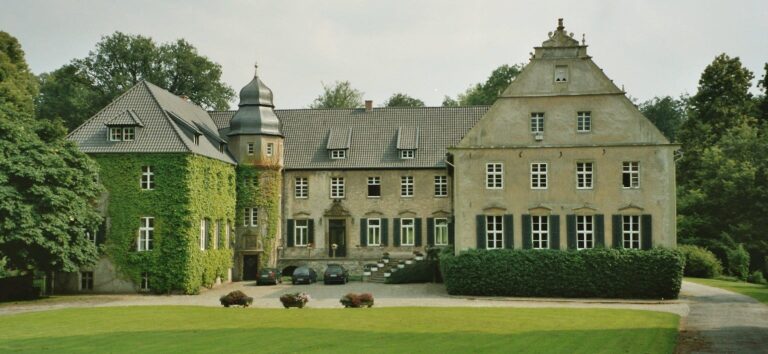
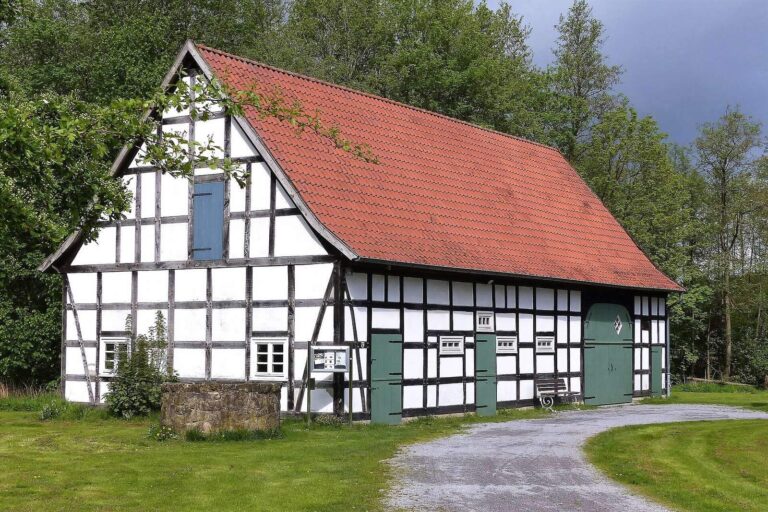
Gut Sondermühlen: A Former Castle and Manor Estate in Melle, Germany
Site at a Glance
- Popularity
- Medium
- Country
- Germany
- Primary era
- Early Modern
- Eras represented
- Early Modern
- Civilizations
- Holy Roman Empire
- Site type
- Military
- Remains
- Castle
On this page14 sections
History
Medieval origins and consolidation
Gut Sondermühlen is a former castle complex and manor estate in Melle, Lower Saxony, Germany. Its origins are disputed. The present owners identify 1350 as its first written mention, while the fief register for that year records Hermann Wulf and Nikolaus von Gesmele each receiving a farm, two houses, and the mill at Nordenfelde. A fief was land or rights granted by a lord to a vassal. In the fifteenth century, Johann and Lubbert von Arnholte and Johann von Vincke are named as lords of a fief called Sundermühle in Nordenfelde.
The estate is generally dated to 1479, when the knight Ebbeke von Vincke brought together several nearby properties owned by his ancestors. After his death, two generations of the Vincke family held the estate. The name Sondermühlen comes from Sundern, an early medieval term for privately owned land; a mill apparently formed part of the property. The estate was also called Gut Sundermühlen into the nineteenth century. Its recorded rank was lower nobility, a lesser tier of the aristocracy.
Von Nehem ownership and political change
The von Nehem family held Sondermühlen from 1558 to 1778, spanning seven generations. After the last von Nehem died, ownership passed rapidly between several parties. In 1796, bankruptcy proceedings led to its sale to the Osnabrück cathedral chapter, the corporate body of clergy attached to the cathedral.
After secularization, the transfer of church property to secular authorities or owners, the estate passed to the Electorate of Brunswick-Lüneburg. During Napoleon’s rule, it was divided and granted to several French officers. The Congress of Vienna, the settlement that reorganized Europe after the Napoleonic Wars, transferred it to the Kingdom of Hanover. These were successive political forms of the Hanoverian state, and most of the estate thereafter remained state-owned.
Poets and modern ownership
The German poet Friedrich Leopold, Count of Stolberg (1750–1819), lived at Sondermühlen in the final years of his life. After his death, his widow, Countess Sophie Charlotte Eleonore von Redern (1765–1842), engaged the poet Luise Hensel as her companion and as governess to her daughters. Hensel lived at the estate from 1821 to 1823.
The estate’s lands are now divided among former leaseholders and rural cottagers. Its woods are state-owned and belong to the Palsterkamp Forestry Office. In 1972, Count Clemens von Platen Hallermund bought the remaining estate for his daughter Sabine and her husband, the economist Karl-Friedrich von Richthofen. Sabine restored the derelict property and continues to live there.
Remains
Moated castle island
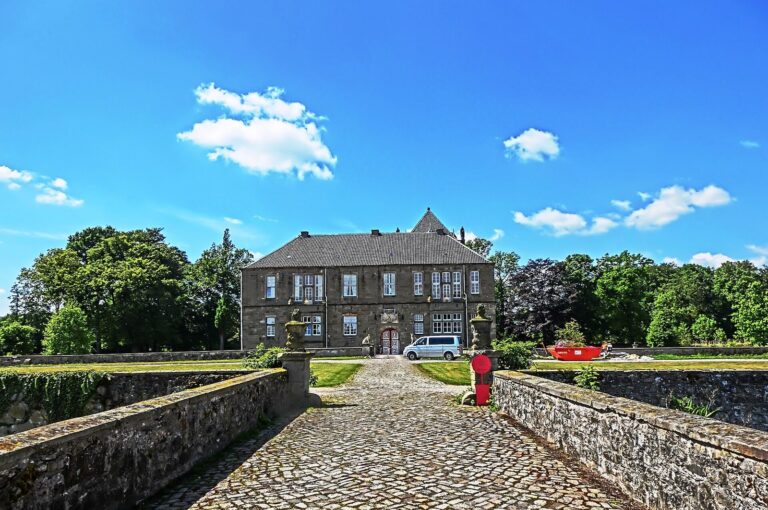
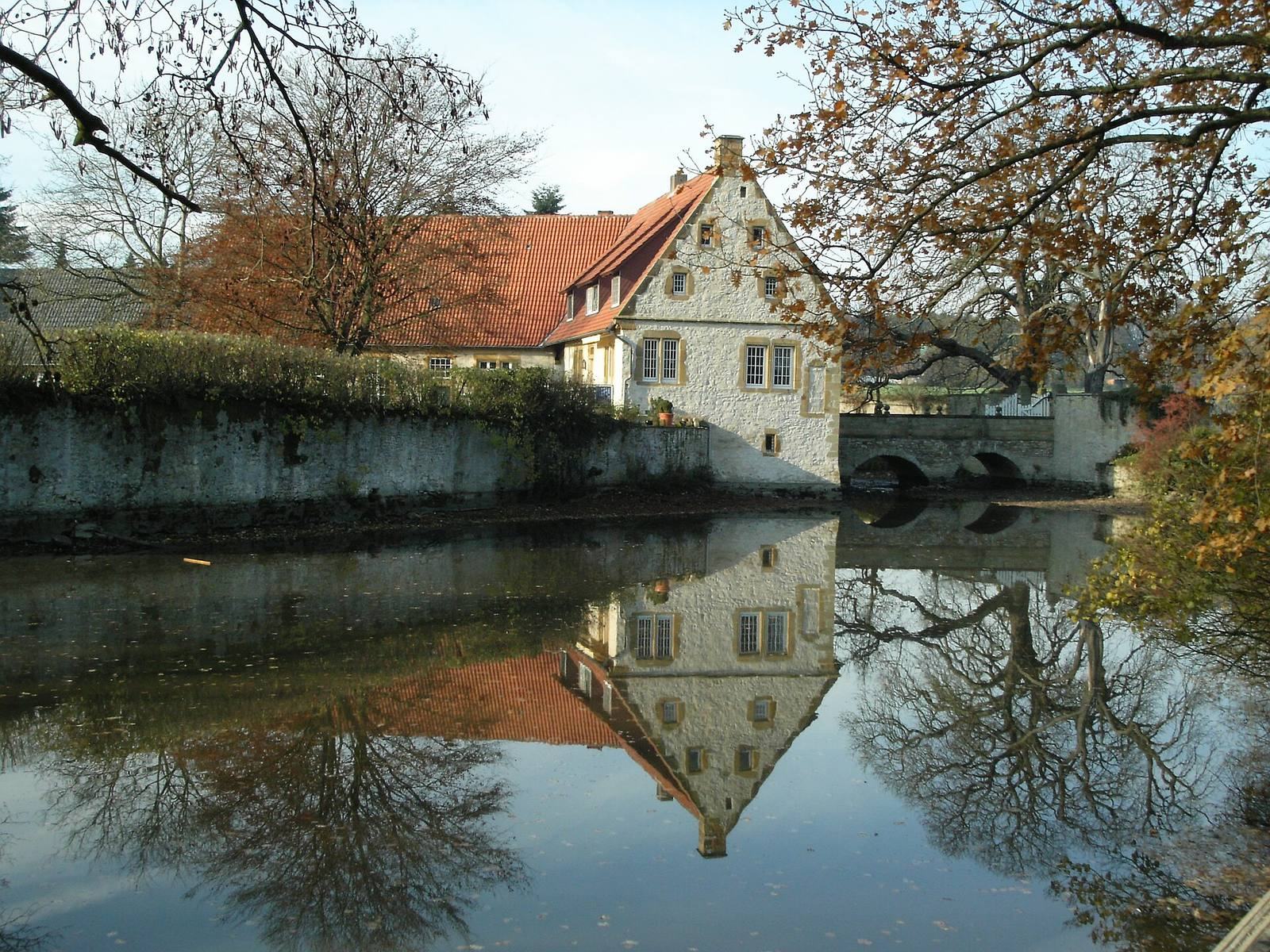
The former castle is a lowland castle, a fortified residence on low ground protected by water. Its irregularly shaped island is encircled by a moat fed by the Violenbach, which broadens into a pond-like area on the eastern side.
Chapel
The surviving chapel dates to 1587 and stands on the castle island.
Gatehouse and bridge
A gatehouse and bridge on the island date to 1682. A bakehouse and brewery adjoin the gatehouse.
Service wing
The surviving service wing was probably built in the sixteenth century.
Manor house
The manor house was demolished in 1841–42.
Water and grounds
Watermill and millpond
A watermill and its millpond occupy the southeastern part of the estate.
Garden island
A plan from 1841 shows a rectangular garden island surrounded by a moat in the northeastern part of the estate.
Approach avenue
An avenue leading toward the estate commemorates Friedrich Leopold, Count of Stolberg.