Gumbazi Sayidon Mausoleum: A Timurid Burial Monument in Shahrisabz
Site at a Glance
- Popularity
- Low
- Country
- Uzbekistan
- Primary era
- Medieval
- Eras represented
- Medieval
- Civilizations
- Timurid
- Site type
- Burial
- Remains
- Tomb
On this page5 sections
History
Gumbazi Sayidon Mausoleum is a Timurid burial monument in Shahrisabz, Uzbekistan, commissioned in 1437–1438 by Mirzo Ulugbek, a ruler and astronomer of the dynasty founded by Timur. The Timurids ruled parts of Central Asia and neighboring regions, and Ulugbek was Timur’s grandson.
The mausoleum may have replaced a cemetery associated with the Sayid dynasty and may have been intended for Timurid princes and their families. Sayyids are traditionally understood as descendants of the Prophet Muhammad. Inscriptions dating from the fifteenth to eighteenth centuries name the Termez Sayyids Amir Abdul Muani, Muhammad Sayid, and Magrufjan Muani, describing them as descendants of Ulugbek. These names are associated with the mausoleum’s popular name, Sayidlar Gumbaz.
Along with the mausoleum of Shamsuddin Kulol, a Sufi religious figure, Gumbazi Sayidon formed a religious and ideological center in Shahrisabz. The mausoleum remains under state protection.
Remains
Setting, plan, and exterior
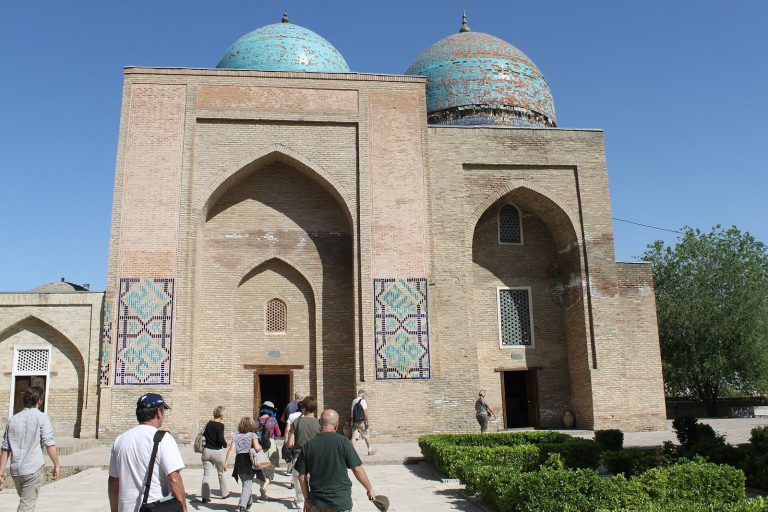
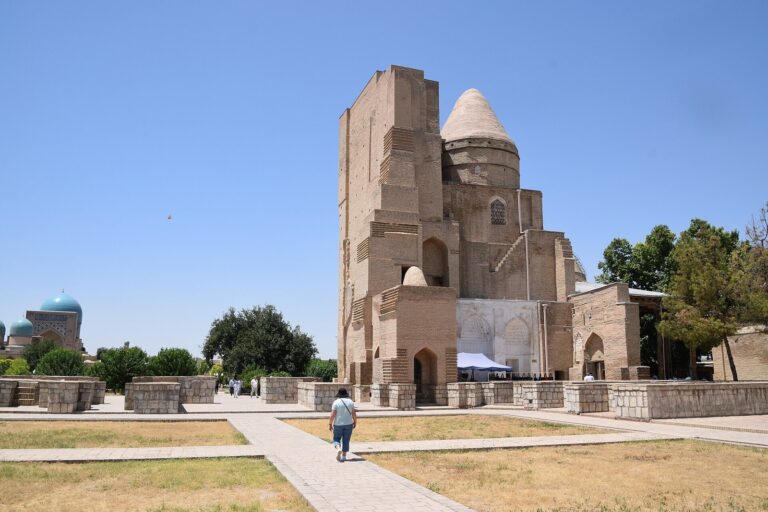
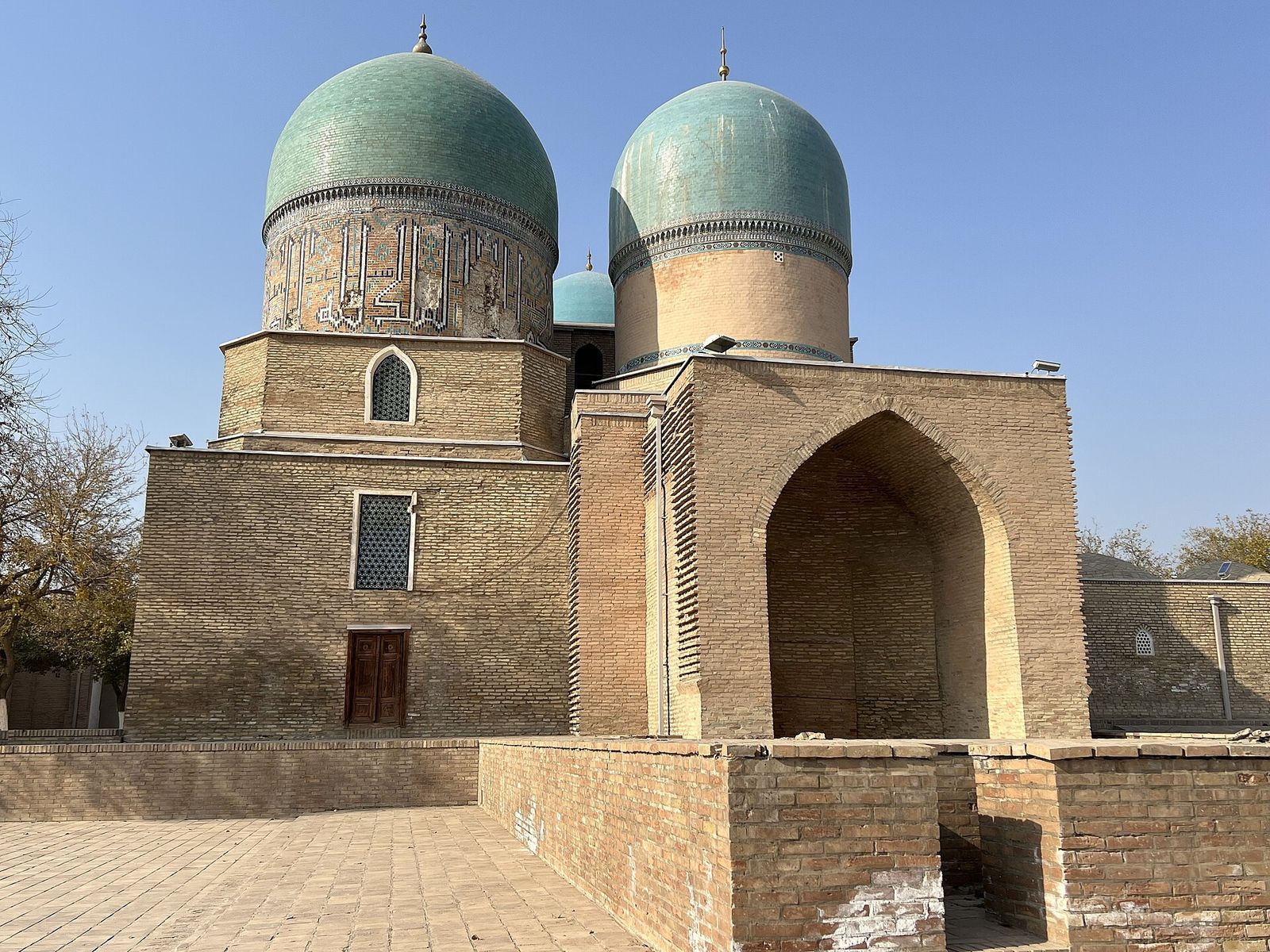
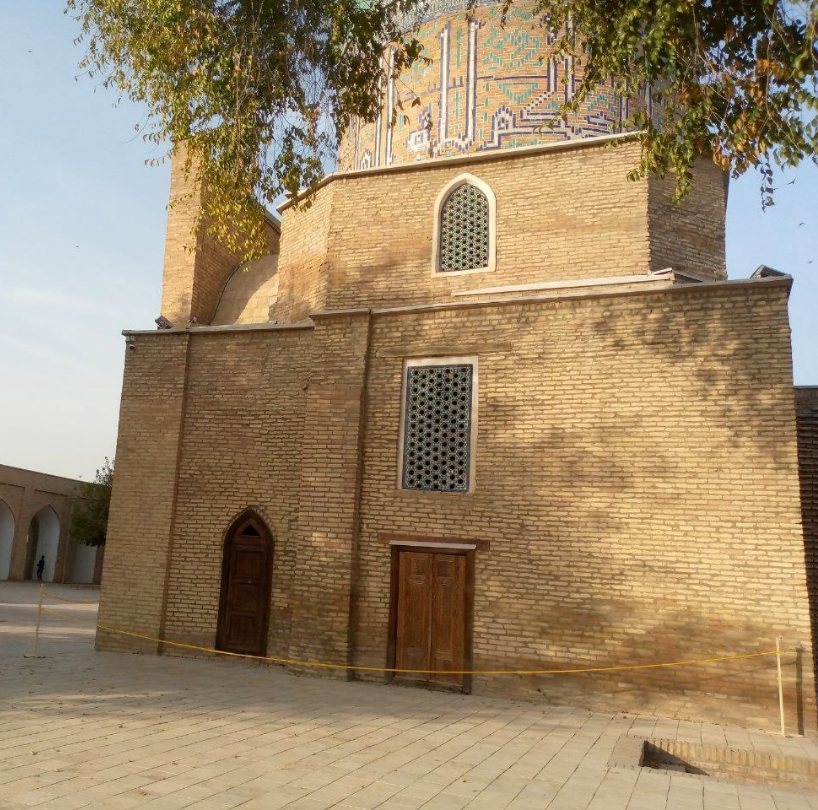
The mausoleum stands in the southern part of Dorut Tilavat, a historic religious complex, south of Shahrisabz’s central square and opposite the Kuk Gumbaz Mosque. It is the complex’s smallest mausoleum. The square building measures 9 by 9 m externally and 5.75 by 5.75 m inside. A square base supports an eight-sided, prism-shaped drum beneath the dome. The entrance portal and outer dome collapsed; the dome was later restored, and a surviving section of the portal carries girih, or geometric interlace, ornament.
Interior decoration
The tiled dome drum bears Kufic inscriptions, an angular style of Arabic script, among geometric interlace and vegetal designs. Circular wall piers have interlace patterns with twelve- and six-sided forms. Two rows of arches run along the interior walls, with openings and broad niches in the upper corners. Blue hexagonal panels cover the central hall’s floor, while fine red and blue paintings decorate its walls. The mausoleum’s form has been compared with the Qazizoda Rumi Mausoleum, and its ornament with the Bibi Khanim Mosque and the Shah-i-Zinda funerary complex in Samarkand.
Burial structures
Four tomb structures known as saghanas, built over graves, lie beneath the brick wall on the western side. Three are attributed to sons of Amir Abdul Muani: Muhammad, Said, and Marufkhon. The fourth has no known ownership.