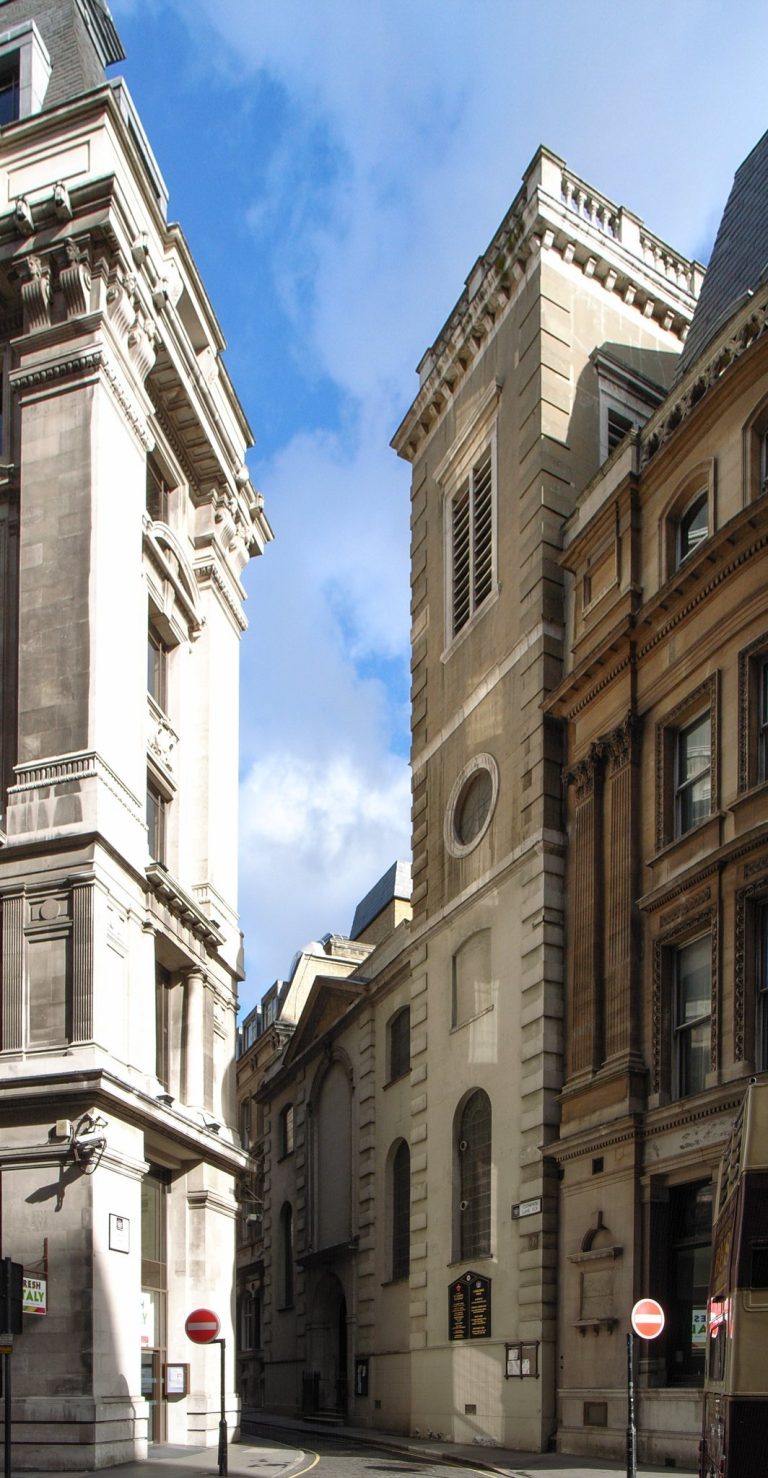
Guildhall Art Gallery: London’s Civic Art Gallery and Roman Amphitheatre Site
Site at a Glance
- Rating
- 4.7
- Popularity
- Medium
- Country
- United Kingdom
- Primary era
- Classical
- External website
- Open
- Eras represented
- Classical, Modern
- Civilizations
- Roman
- Site type
- Entertainment
- Remains
- Amphitheatre
On this page7 sections
History
Guildhall Art Gallery is an art gallery in London, United Kingdom, created to display the growing art collection of the City of London Corporation. Its first building was completed in 1885, during the Victorian period, after successful local-authority galleries in Liverpool, Manchester, and Leeds encouraged the project. The gallery’s creation reflected the period’s increasing public interest in art and established a civic setting for the City’s collection.
Origins and Victorian expansion
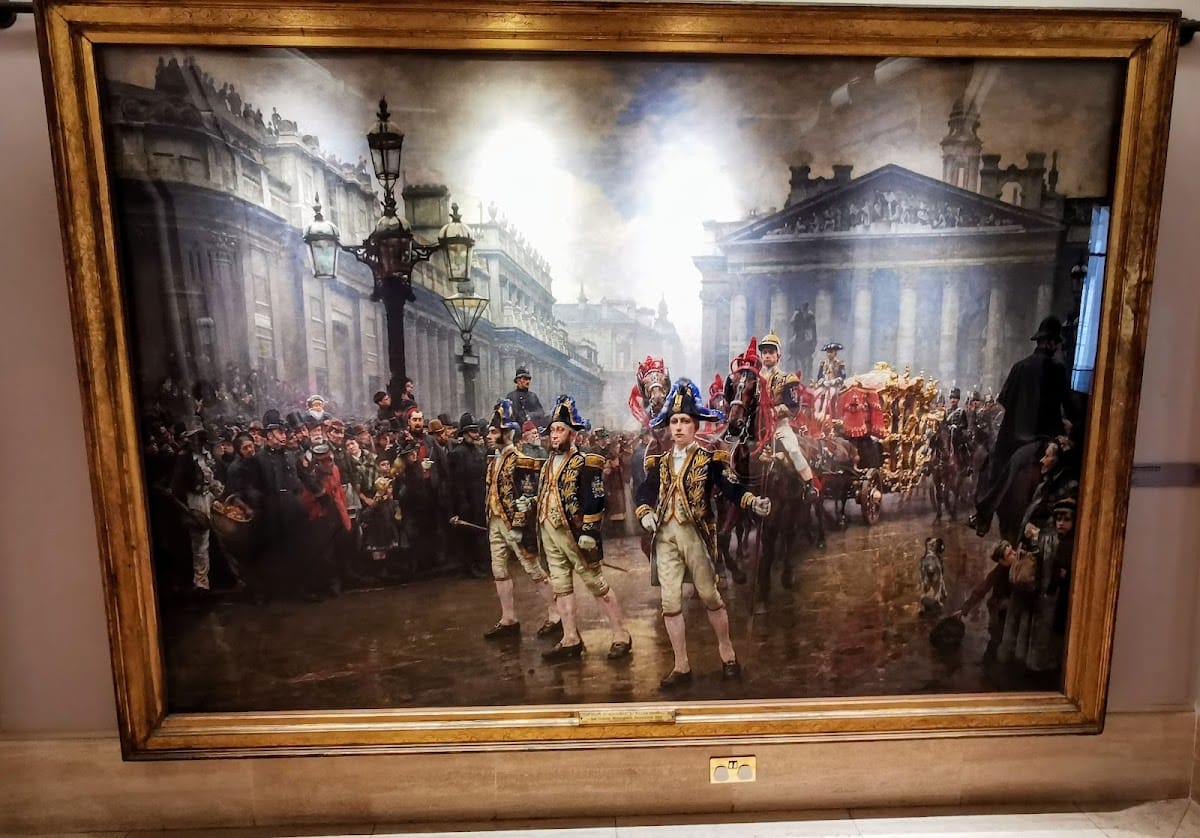
The City of London Corporation had commissioned and collected portraits since 1670, originally displaying them in Guildhall. During the nineteenth and twentieth centuries, donations and bequests broadened the collection beyond portraits to include history paintings and other genres. In 1902, businessman and art collector Charles Gassiot left more than 100 paintings to the gallery. This bequest greatly enlarged its Victorian holdings and included works by Clarkson Stanfield, David Roberts, John Everett Millais, William Dyce, and James Tissot.
Alfred Temple, the gallery’s first director, shaped its early programme through popular and influential exhibitions. During his leadership, the institution also expanded its holdings of contemporary nineteenth-century paintings, strengthening its role as both a municipal collection and an exhibition venue.
War, temporary use, and redevelopment
The original gallery was almost entirely destroyed by fire during a severe air raid on 10 May 1941. Much of the collection had already been moved to underground storage in Wiltshire, but 164 paintings, drawings, watercolours, and prints were lost, along with 20 sculptures. The destruction altered both the gallery’s building and the character of the surviving collection.
A temporary structure was erected on the cleared site in 1946. It served as a ceremonial venue and exhibition space, showing selected works from the collection and hosting art-society exhibitions. It also provided a setting for the annual Lord Mayor’s Art Award and the City of London Art Exhibition. Between 1952 and 1972, major loan exhibitions addressed subjects including Canaletto in England, David Roberts, Samuel Scott, and Sir James Thornhill.
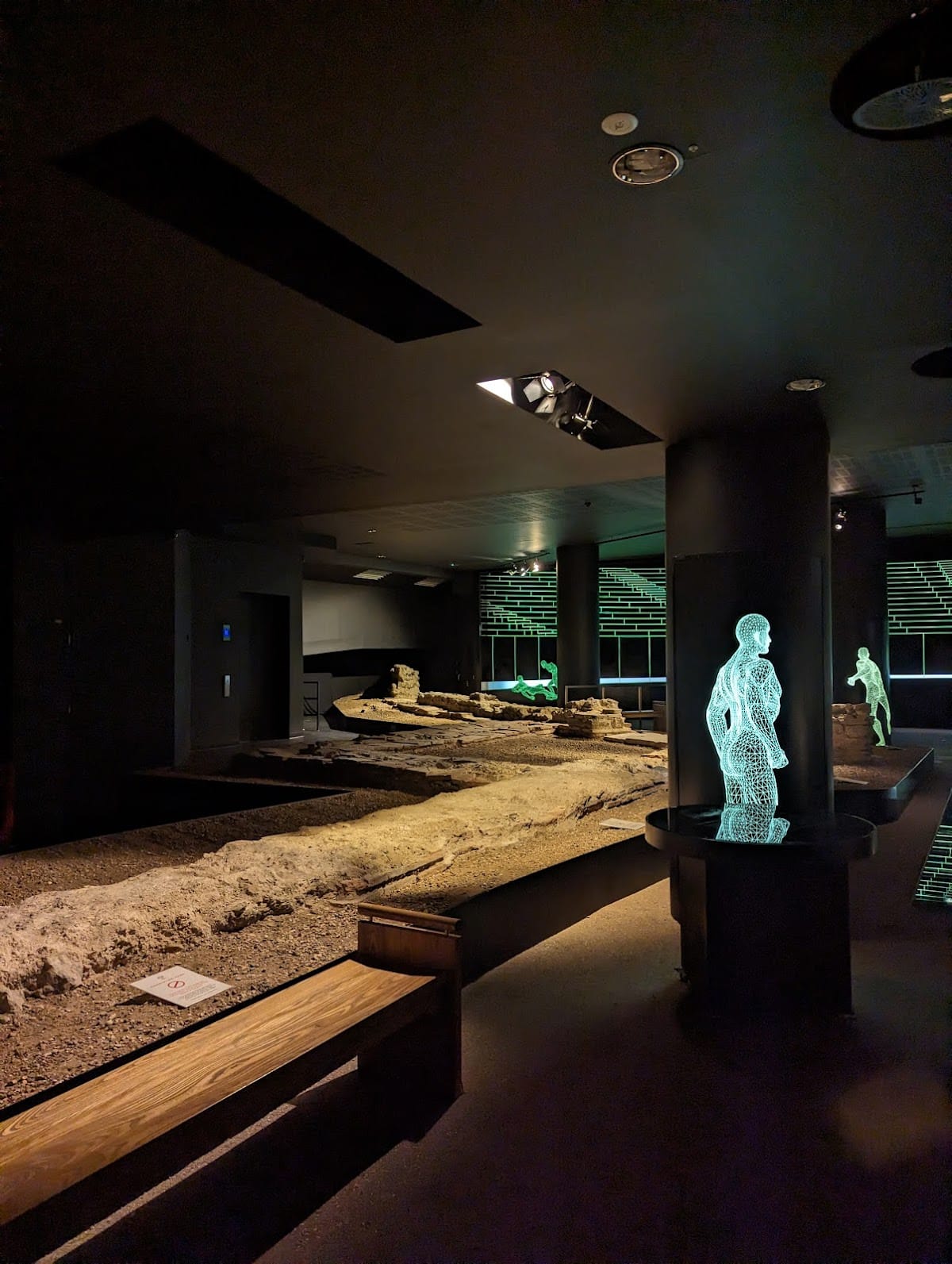
In 1985, the City of London Corporation decided to redevelop the site and add a new gallery at lower levels. The remaining parts of the original building were demolished in 1987. Soon afterward, the Museum of London Archaeological Service discovered the remains of London’s Roman Amphitheatre beneath the site. The design was consequently revised so that the archaeological remains could be incorporated into the new building. The present gallery opened to the public in August 1999, while the Roman Amphitheatre opened to visitors in 2002.
The collection today
For the fifteenth anniversary of the gallery’s reopening, the displays were rehung in late 2014. The new arrangement doubled the number of paintings on display and introduced a different curatorial selection. The present collecting policy concentrates on works directly connected with London through their artists or subjects. Exhibitions and public programmes likewise focus on London and aim to represent the city’s population. Associated with the City of London Corporation, the institution holds approximately 4,000 works.
Remains
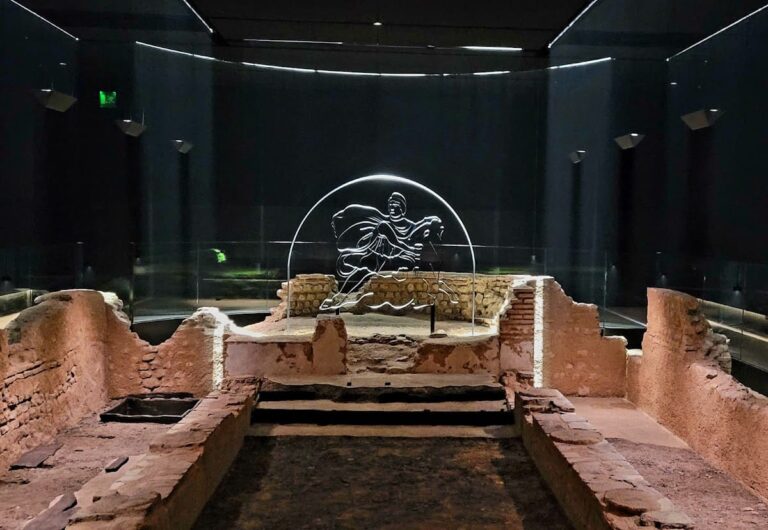
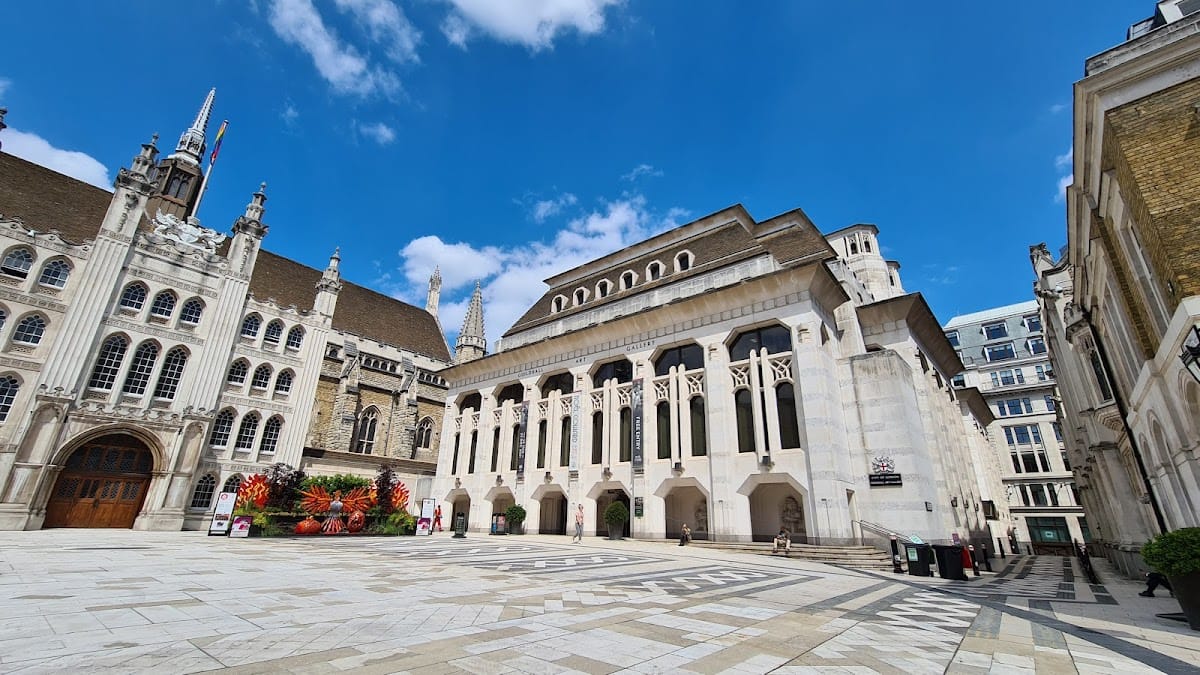
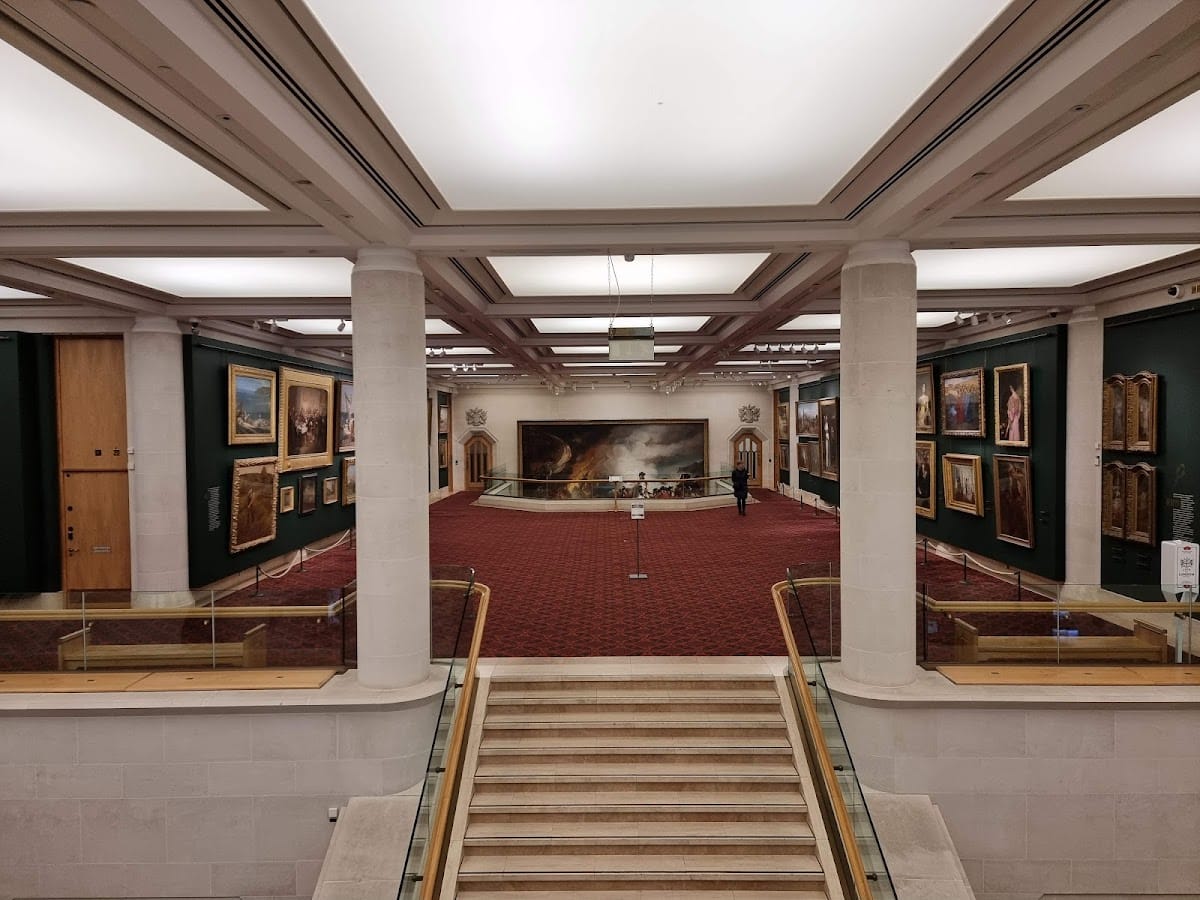
The present Guildhall Art Gallery is a stone building designed to harmonize with the adjacent historic Guildhall, with which it is internally connected. Designed by Richard Gilbert Scott, the building was created to house approximately 4,000 works and extends into lower levels that incorporate part of London’s Roman Amphitheatre. The surviving Roman structure remains in its original location beneath the gallery and is presented there as an archaeological feature.
Gallery building and displayed works
The stone gallery forms part of a connected civic complex with Guildhall. Its design followed the redevelopment of the site in the late twentieth century and accommodates both the art collection and the archaeological remains below. Richard Gilbert Scott had previously worked on the restoration of Guildhall and had designed the Guildhall Library and West Wing, completed in 1974.
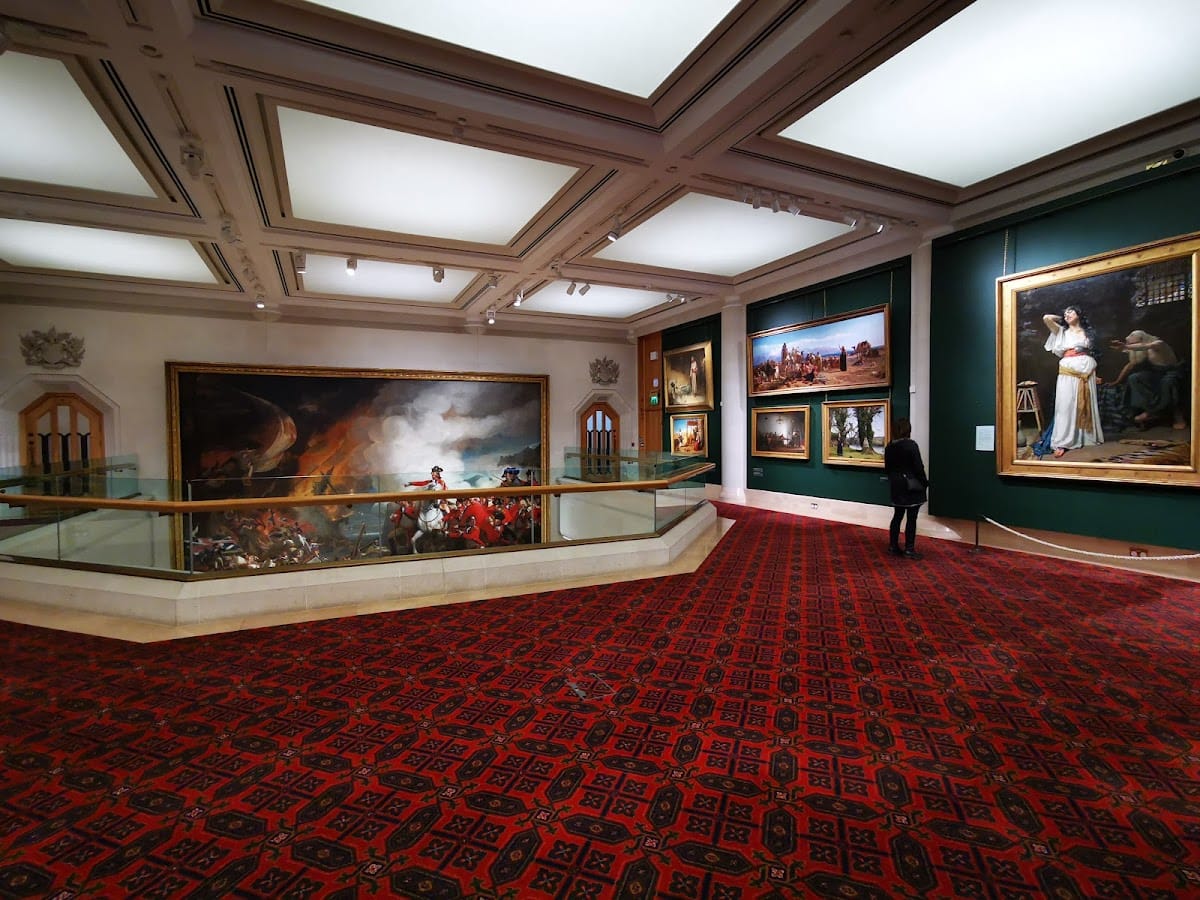
John Singleton Copley’s large historical painting The Defeat of the Floating Batteries at Gibraltar, September 1782 occupies a prominent position in the entrance hall. Painted in 1791, the work is part of the gallery’s presentation of historical art within its civic setting.
Roman Amphitheatre
Part of London’s Roman Amphitheatre survives in situ beneath Guildhall Art Gallery. A Roman amphitheatre was a large public arena used for spectacles and performances in the Roman world. The remains stay in their original location rather than having been moved, and the lower levels of the present gallery were designed to display them as an archaeological feature. Their discovery after the demolition of the earlier gallery directly shaped the form of the building that replaced it.