St George’s Chapel in Templin: A Late Medieval Hospital Chapel
Site at a Glance
- Popularity
- Very Low
- Country
- Germany
- Primary era
- Medieval
- Eras represented
- Medieval, Modern
- Civilizations
- Holy Roman Empire, Kingdom of Prussia, Margraviate of Brandenburg
- Site type
- Religious
- Remains
- Chapel
On this page14 sections
History
Medieval origins and later religious use
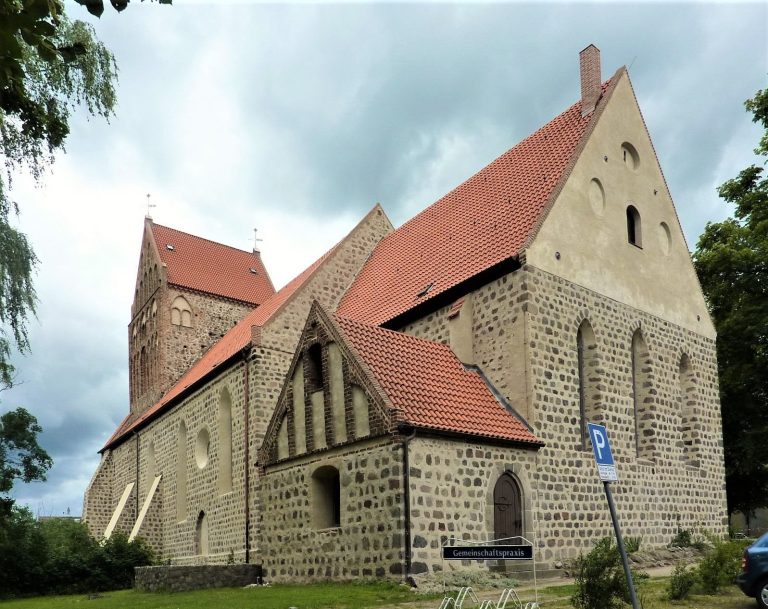
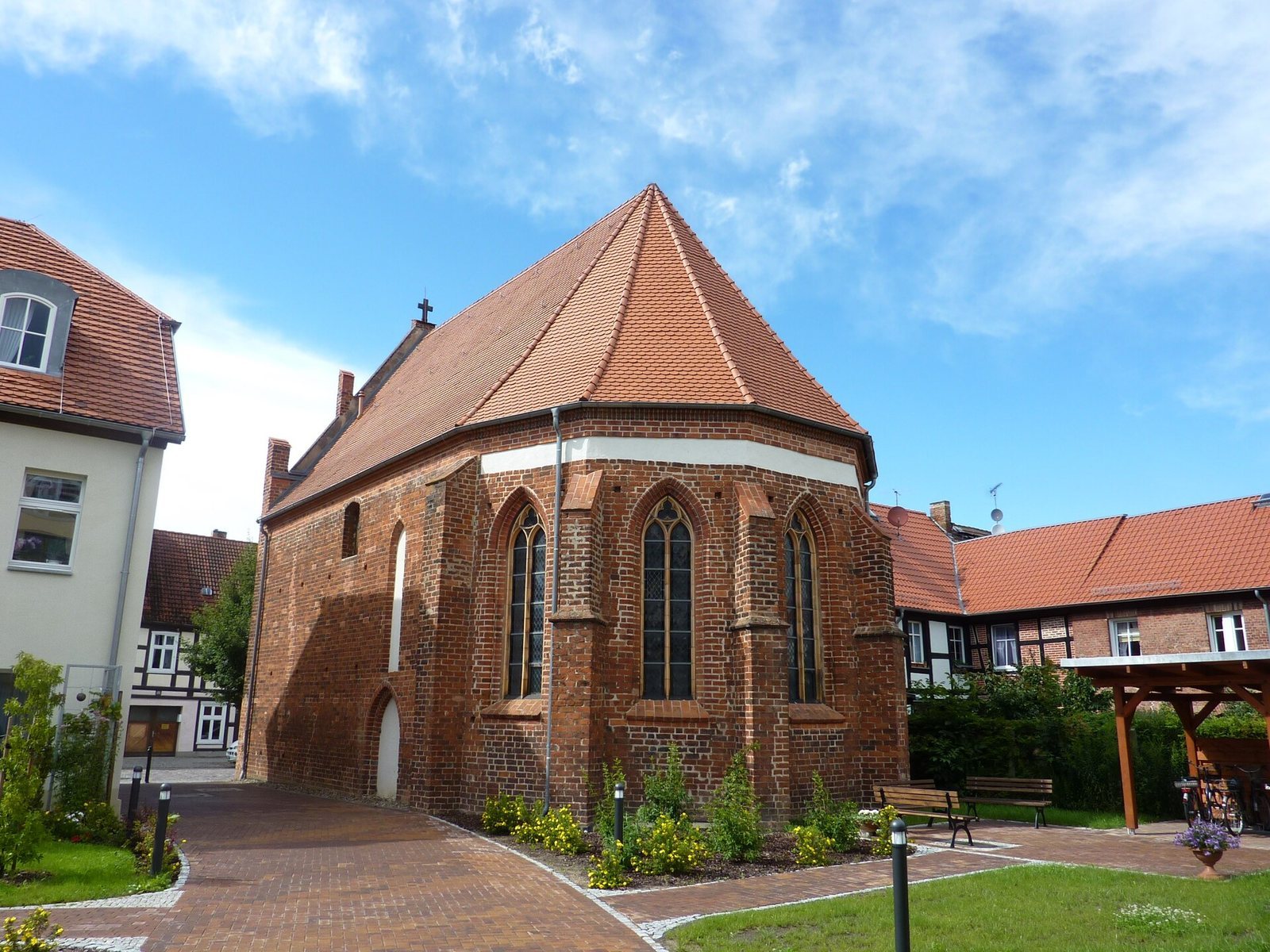
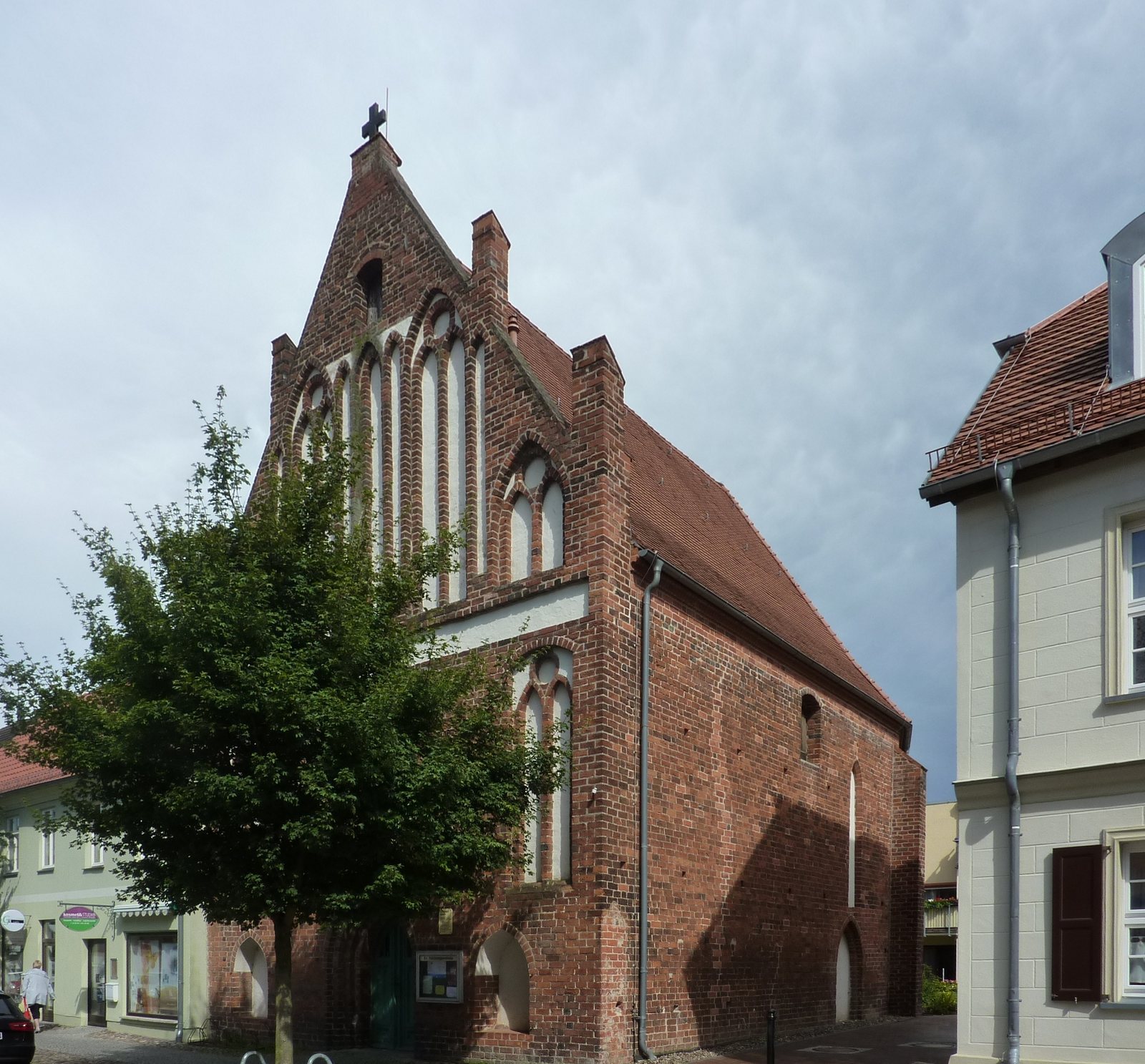
St George’s Chapel is a Brick Gothic church in the southern part of Templin’s old town, Germany, probably built in the late Middle Ages to serve the neighboring Hospital of the Holy Spirit. It is Templin’s oldest surviving building. The chapel was associated with a Conventual Franciscan monastery, a branch of the Franciscan order, and may also have been run by Franciscans.
In 1539, the chapel became a Beguine house. Beguines were women who lived in religious communities without taking the formal vows of a traditional monastic order. The building survived several fires in Templin, including the major fire of 1735. French Reformed worship took place in the chapel by the 18th century, and the Catholic congregation continued to use it until 1886.
Occupation, restoration, and continuing care
During the French occupation under Napoleon, troops took possession of the chapel. From 1806 to 1808, they used it for storage and as a stable. After the building fell out of use, its condition worsened. In the mid-19th century, superintendents Neumann and Bartsch, senior regional clergy, and Pastor Johann Gottfried Niedlich (1805–1872) helped halt its deterioration.
Restoration work took place from 1862 to 1866. Worship resumed, and the chapel was solemnly consecrated on 2 May 1866. A St George Foundation has supported its upkeep since the 19th century. Further repairs followed in 1936 and 1963; a new roof was installed in 1993, and its structure was repaired in 1996–1997 after it began to rot.
Since 1976, the Berlin-Brandenburg State Committee for Inner Mission, a Protestant social-welfare movement, has held legal responsibility for the chapel, while the Evangelical congregation of Templin has the right to use it. The chapel is affiliated with the Evangelical Church of Berlin-Brandenburg-Silesian Upper Lusatia and the Oberes Havelland church district. An adjacent home for older people continues the welfare tradition of the former hospital.
Remains
Layout and brick architecture
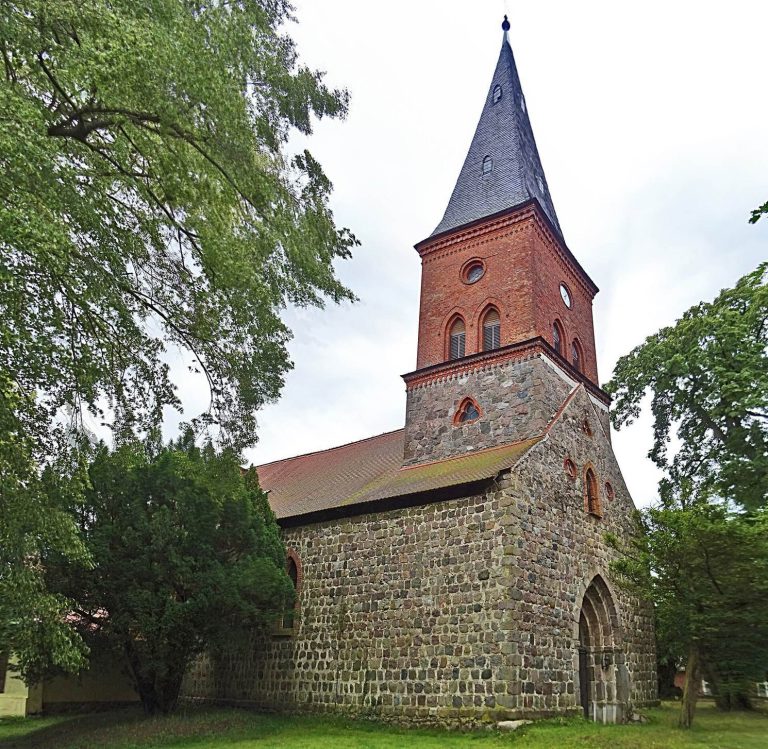
The chapel is built of brick in the Brick Gothic style. Its plan consists of a single main hall divided into two interior sections and a polygonal chancel, the area around the altar. Buttresses support the chancel’s angled exterior walls.
Street-facing façade
The entrance is centered in the gable facing Berliner Straße, just north of the Berlin Gate. A three-stepped pointed-arch doorway is framed by alternating glazed and unglazed bricks. Above it, ornamental brickwork divides a window into three sections. Low pointed-arch panels flank the doorway, with paired tall, narrow pointed panels above them. Slender decorative panels extend up the gable, which is crowned by four small vertical ornaments, now fragmentary.
Interior
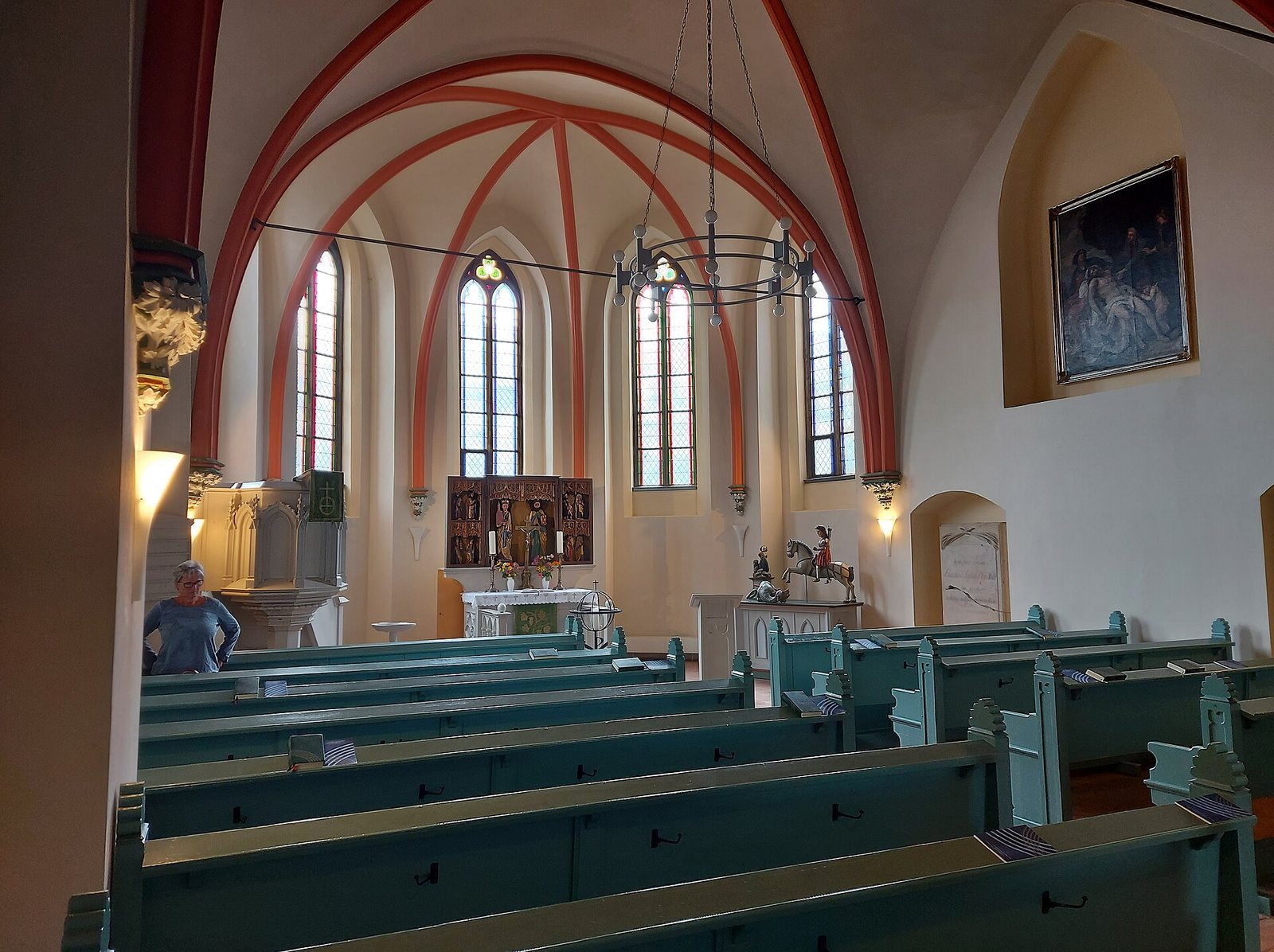
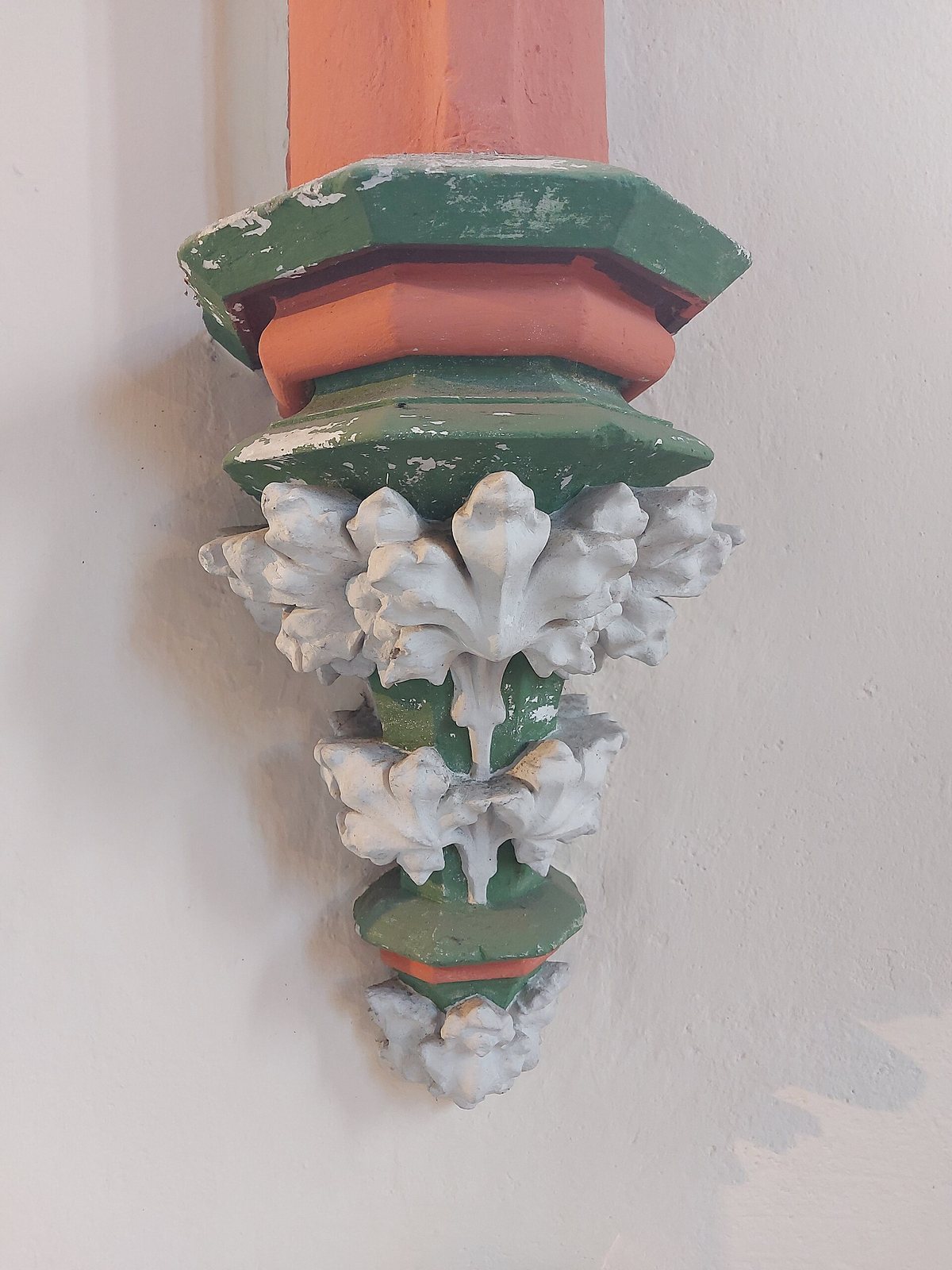
The main hall has two cross-rib vaulted ceilings, supported by intersecting ribs. The chancel has a vault over its five-sided end. The ribs are painted red and rest on projecting supports decorated with foliage; one such support is identified as a 14th-century feature. Paired tall, narrow pointed panels decorate the side walls. In the chancel, ornamental window patterns form paired pointed openings topped by three-lobed shapes.
Furnishings and devotional art
Altarpiece
A late-Gothic carved altarpiece with folding wings survives in the chapel, although its origin is uncertain and it was probably not made for this building. Its case and arrangement are not original. Local tradition connects it with a former St Gertrude’s Chapel outside the town gates, but little evidence supports that attribution. The ten saint figures include images in the central shrine probably representing St Barbara and possibly the Apostle Thomas. Figures on the left wing probably include the Apostles James the Younger and Peter, another St Barbara, and perhaps St Catherine. The right wing shows St Pantaleon in oriental-style dress and St Hedwig; below are the Archangel Michael and the charitable saints Hedwig and Elisabeth of Thuringia.
St George and the dragon
A wooden sculpture group from the early 16th century depicts St George defeating a dragon. It illustrates the legend in which George rescues a king’s daughter from sacrifice, overcomes the dragon, and leads the threatened city to Christianity.
Christ as the Man of Sorrows
A late-medieval carving in a niche in the south wall shows Christ as the Man of Sorrows, seated after his condemnation.
Painting of the Lamentation
A copy of Anthonis van Dyck’s Lamentation of Christ hangs on the south wall. Johann Gottfried Niedlich (1766–1837), an ornament draftsman, history painter, and drawing teacher at the Berlin Academy of Arts, painted it. He was distinct from Pastor Johann Gottfried Niedlich (1805–1872), who helped preserve the chapel. The painting was intended as an altarpiece and originally stood in a Gothic altar in a side niche; it now occupies that niche and is regarded as particularly valuable.
Memorial and later furnishings
An inscribed gravestone commemorates Ernestina Sophia Dennstaedt, the wife of a Templin mayor, who died in 1803. The western gallery, pulpit, altar rails, baptismal stand, and pews date from the chapel’s reopening around 1866. The organ on the gallery was made in 1980 by the Alexander Schuke workshop.
Former hospital cemetery
The former hospital cemetery is now used as a garden.