Aperlae: An Ancient Lycian City and Purple-Dye Center
Site at a Glance
- Popularity
- Medium
- Country
- Turkey
- Primary era
- Classical
- Eras represented
- Iron Age, Classical, Medieval
- Civilizations
- Lycian
- Site type
- City
On this page10 sections
History
Aperlae was an ancient Lycian city at Sahilkılınçlı in Türkiye, founded between the late fourth and early third centuries BC and occupied until the end of the seventh century AD. Its coastal economy is thought to have depended chiefly on producing costly purple dye from murex snails. The city belonged to a political association with Simena, Isinda, and Apollonia, but played little part in wider political history.
Founding and Lycian association
The Stadiasmus, an ancient route itinerary that gives distances in stadia, places Aperlae 60 stadia west of Somena and 64 stadia west of Andriace. Somena has been tentatively identified with Simena, a place mentioned by Pliny. The city’s name also appears in variant forms: Ptolemy, a Greco-Roman geographer, gives Aperrae, while Pliny gives Apyrae. An inscription found at the head of Hassar Bay confirms Aperlae as a local name, and coins of the Roman emperor Gordian III bear another variant. The association of Aperlae, Simena, Isinda, and Apollonia is also described as a sympolity, a political association of cities, headed by Aperlae.
Roman and Byzantine administration
As part of the Roman province of Lycia, Aperlae had a bishopric subordinate to the metropolitan see of Myra, the provincial capital. The bishopric ranked among the more prominent subordinate sees and appears fifth in the Notitiae Episcopatuum, Byzantine catalogues of bishoprics and their rank. This catalogue was compiled under Emperor Heraclius around 640. In 1933, the Catholic Church nominally restored the diocese as a titular see, an ecclesiastical title without a resident bishop, using the Italian form Aperle.
Local conditions encouraged reliance on the sea: difficult inland terrain made farming challenging, while murex snails provided the raw material for purple dye. The dye came from a gland in the mollusks and was said to be worth twenty times its weight in gold. At the time, this color was used only by Roman aristocrats. An experiment in 1909 estimated that 12,000 snails were needed to produce 1.4 grams of dye.
Abandonment and later study
Aperlae was abandoned as Muslim conquests began, amid declining coastal security and threats from pirate raids and Arab corsairs. Repairs to one church in the late period of occupation suggest that a small group of squatters or remaining inhabitants may have stayed after the city was abandoned. Aperlae was never rebuilt or resettled. A University of Maryland team surveyed the site in 1996, and its findings pointed to purple-pigment production as a principal source of livelihood.
Remains
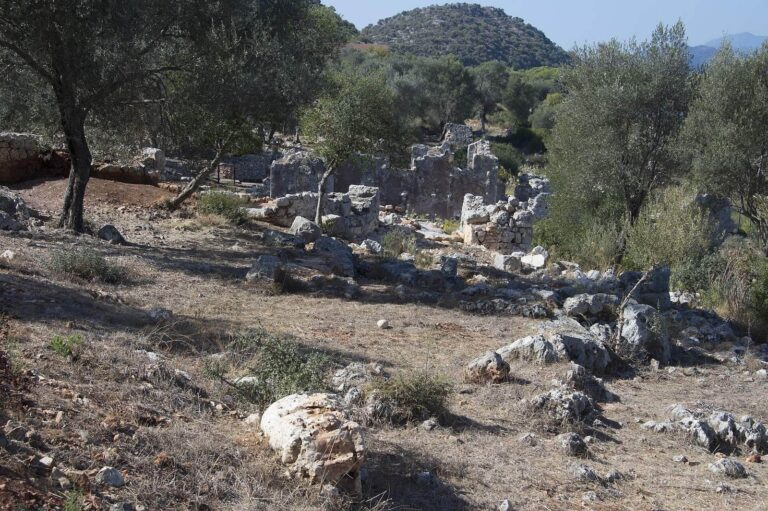
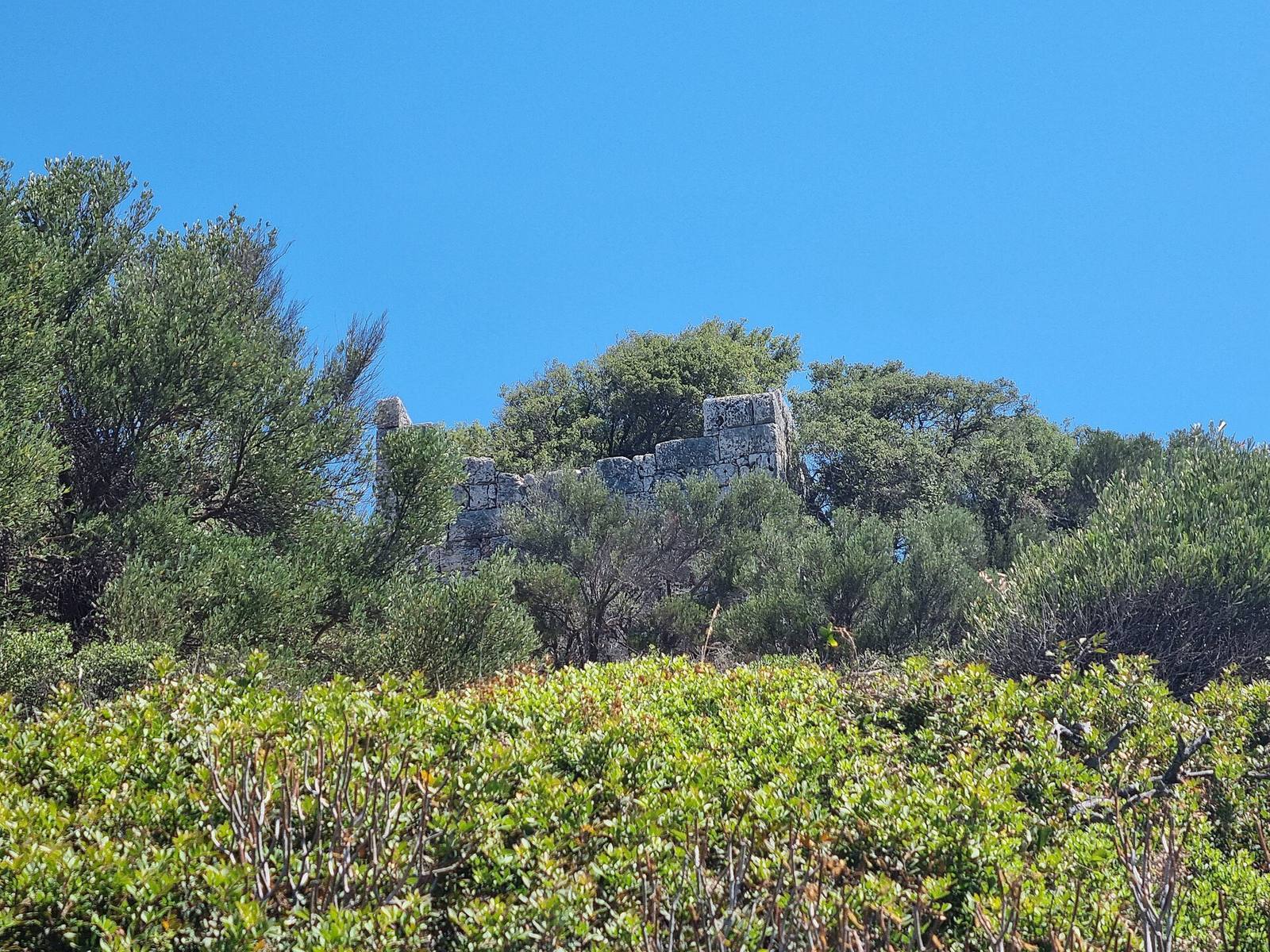
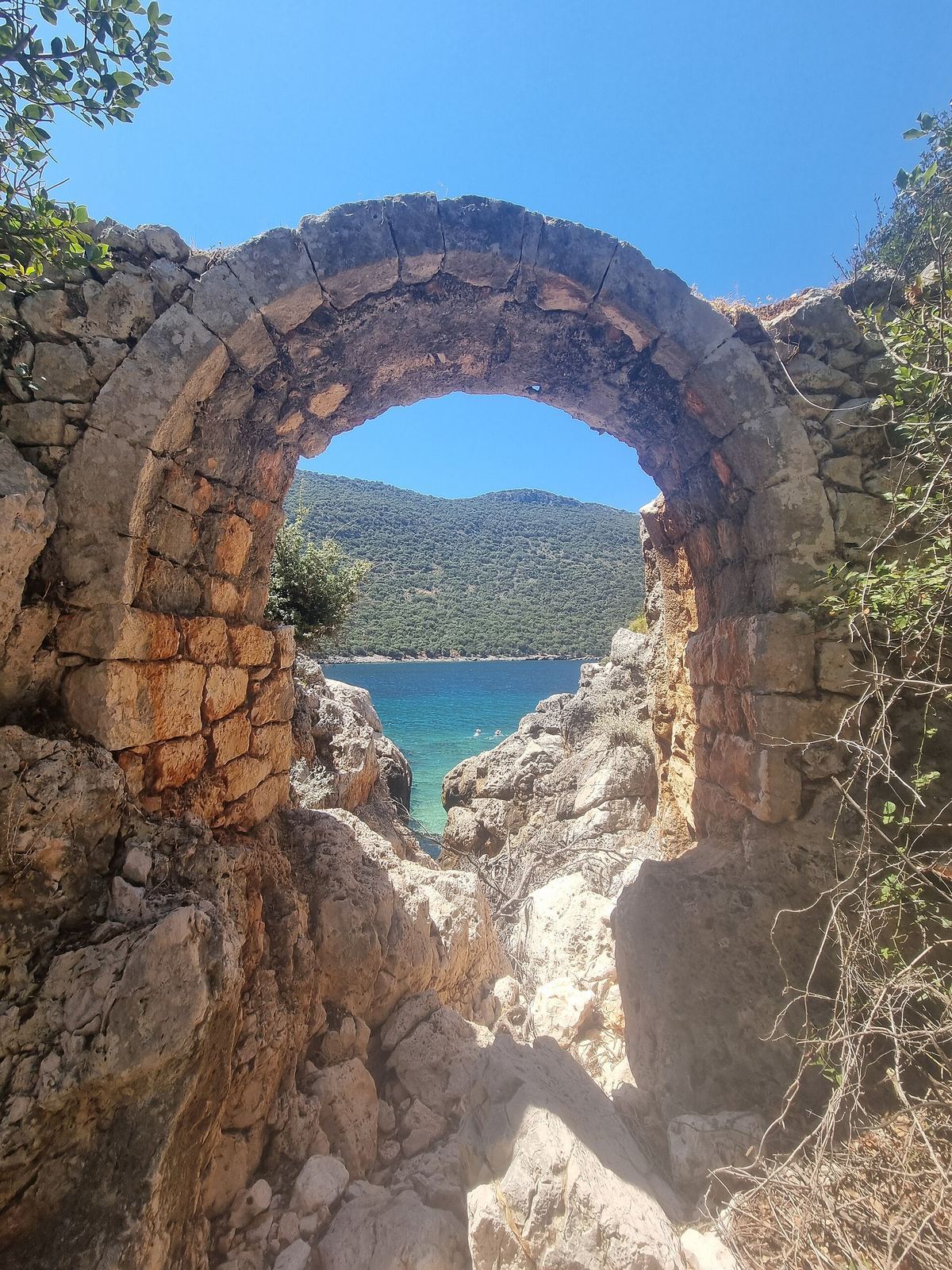
The remains occupy a slope between the mountains and the coast, with parts of the ancient settlement extending beneath the water. The bay offered ships little shelter during storms, and the area had no reliable freshwater source. Numerous cisterns indicate that residents collected rainwater. Ruined structures survive both on land and underwater, where earthquakes sent parts of buildings and other remains down the slope into the sea.
Settlement and harbor
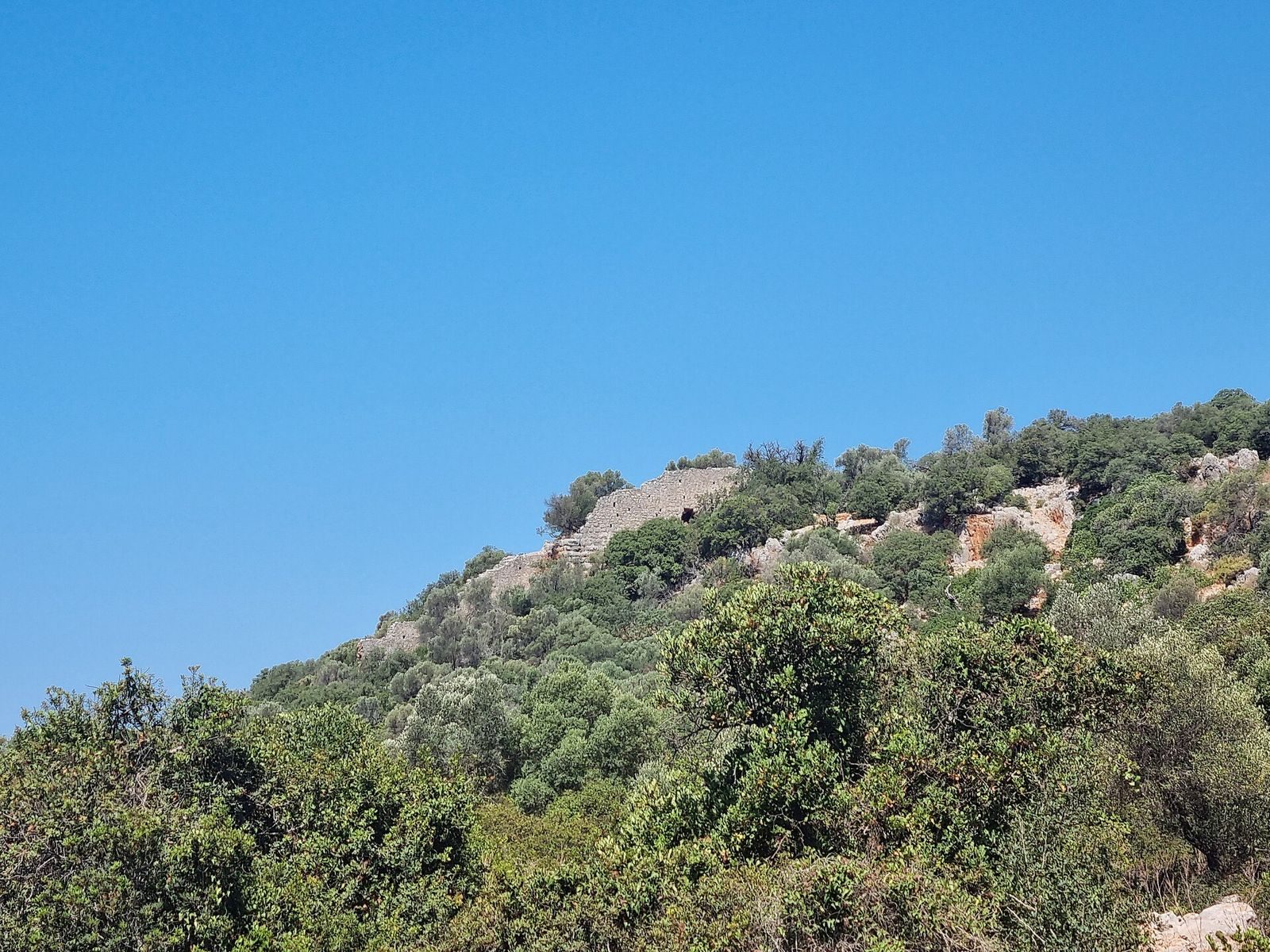
Sections of the city walls and harbor installations remain on land. The rudimentary harbor included a jetty, while a feature in shallow water has been identified as a possible breakwater. Underwater remains include scattered foundation blocks, a quay and pier, 14 principal wall structures, and 16 spaces. Some south-facing parts of the ancient settlement are now submerged.
Purple-dye production
Shell deposits
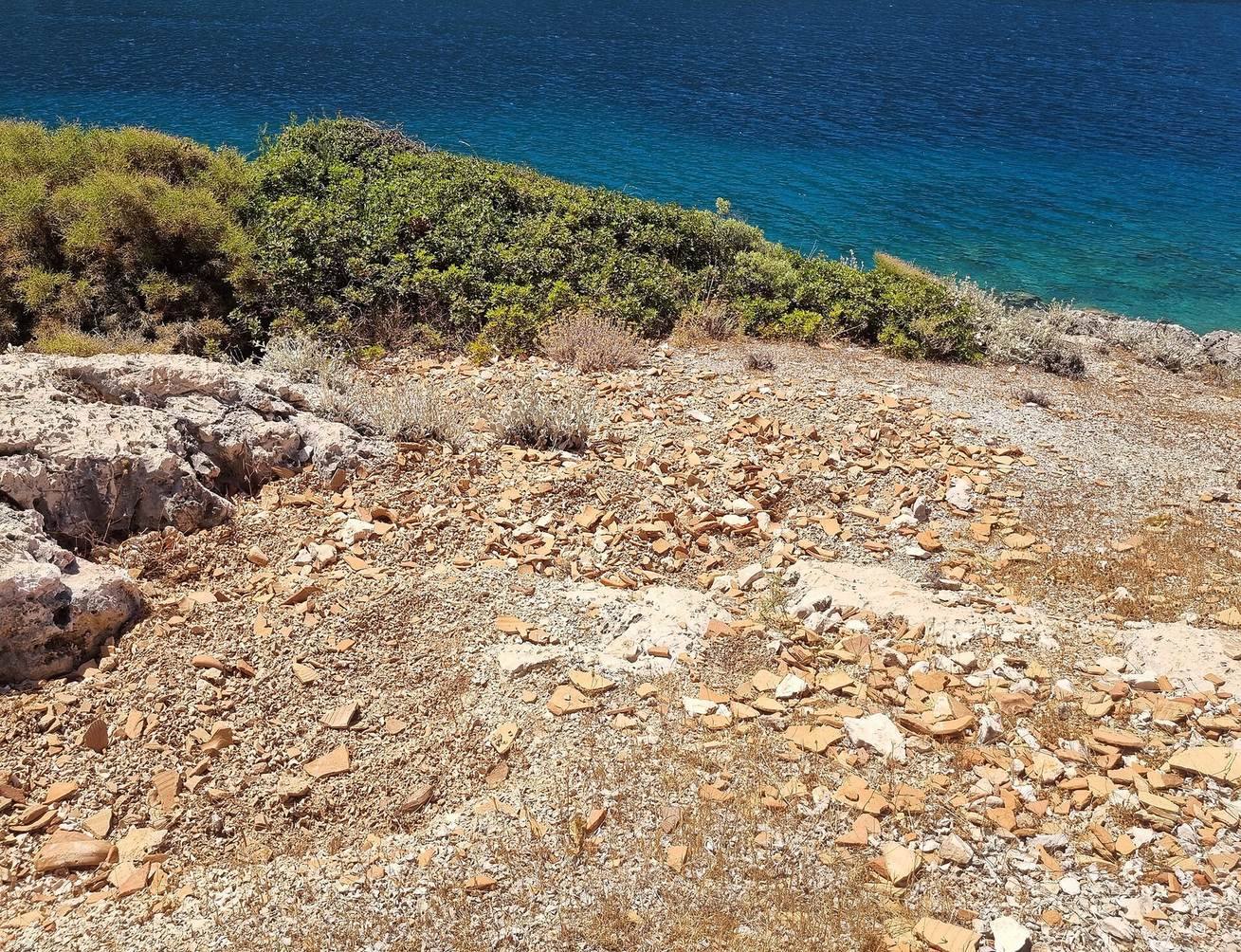
Large deposits of murex shells occupy two parts of the city and cover about 1,600 square metres in total. Other mollusk shells found among them suggest that the murex were gathered with nets rather than collected by hand. Shells were also mixed into building mortar and concrete, while large quantities were discarded in the sea.
Underwater processing features
Underwater research in 2009 identified structures interpreted as dye workshops and basins. Three ceramic-lined vats in the submerged district may have held live snails until enough had been gathered for processing.
Churches and funerary remains
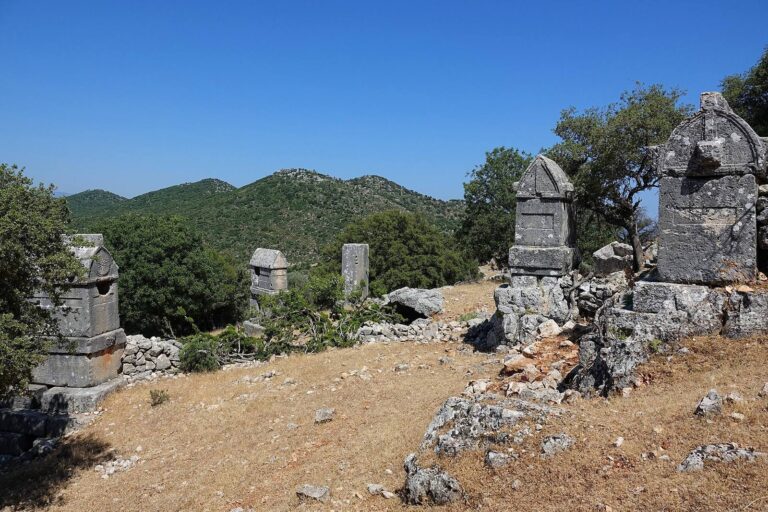
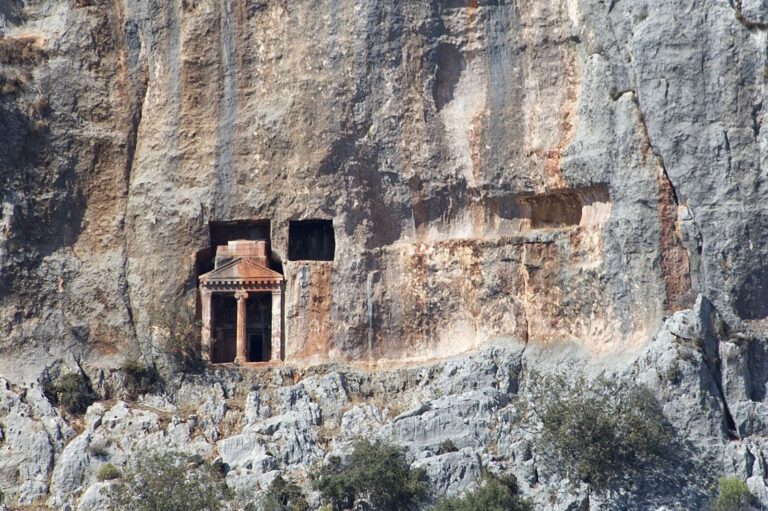
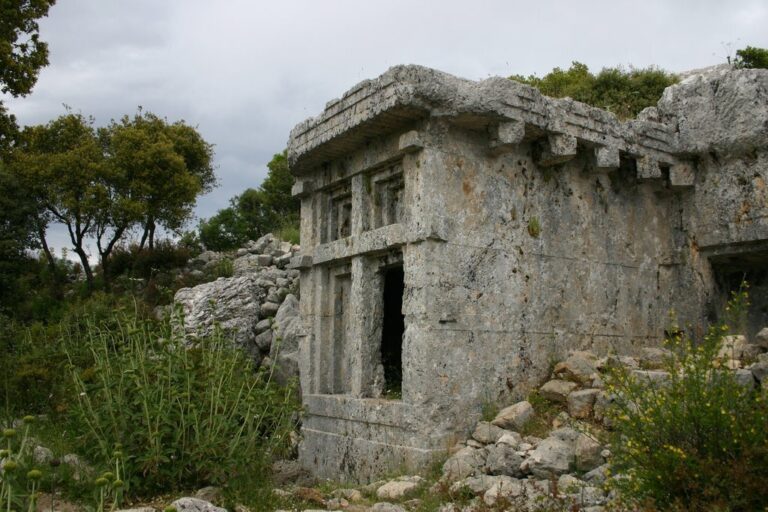
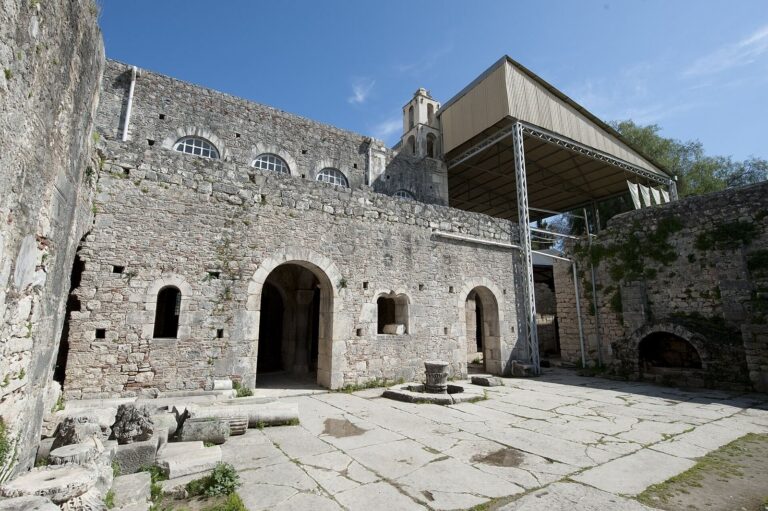
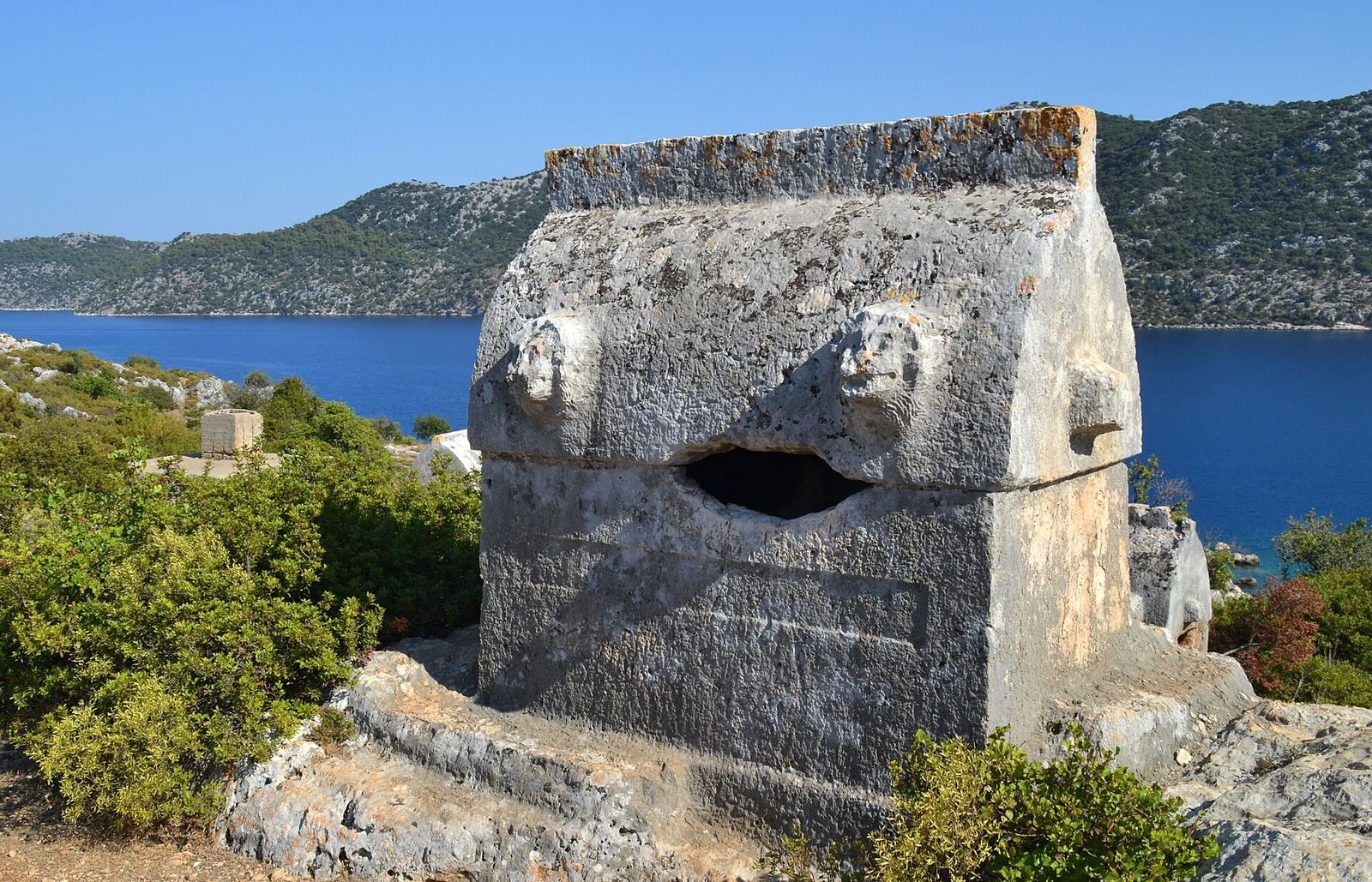
Aperlae had four churches and numerous tombstones. Blocks from churches and a chapel are scattered underwater, among the other submerged remains.