Goldbusch: A Neolithic Megalithic Tomb on Rügen
Site at a Glance
- Popularity
- Very Low
- Country
- Germany
- Primary era
- Stone Age
- Eras represented
- Stone Age
- Civilizations
- Unclassified
- Site type
- Burial
- Remains
- Tomb
On this page7 sections
History
Goldbusch is a Neolithic megalithic tomb near Lake Sellin on Rügen, Germany. Its builders were farming communities of the Funnelbeaker culture, a Neolithic farming culture of northern and central Europe named for its funnel-shaped pottery. They built the tomb around 3150 BC, within the broader 3500 to 2800 BC date range. Goldbusch is a great dolmen, a burial structure made from large stones, and the only one of 43 tombs shown on an 1829 map to survive in part.
Neolithic use
Farming communities used the tomb for several centuries. The dead were probably left outdoors for an extended period before their bones and grave goods were placed together in the burial chamber.
Early records and excavation
The 1829 map placed the group of tombs along a little more than two kilometres between Altensien and Seedorf. In 1969, archaeologist Ewald Schuldt led an excavation at Goldbusch. The chamber’s supporting stones rested on the ground rather than being sunk into it. This was interpreted as a sign of later construction than that of early tombs, whose upright stones were sometimes set deep into the ground.
Remains
Burial chamber and passage
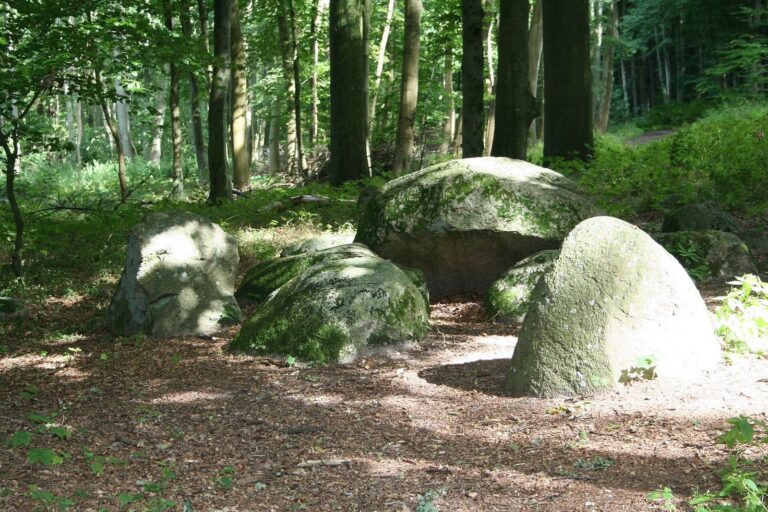
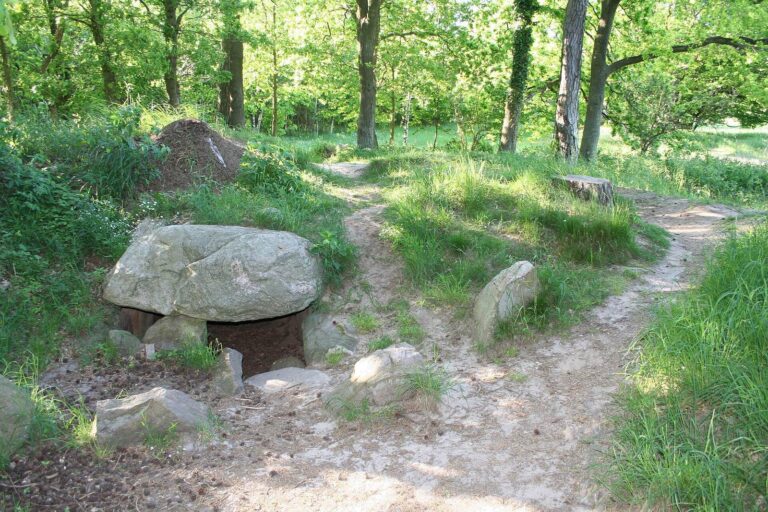
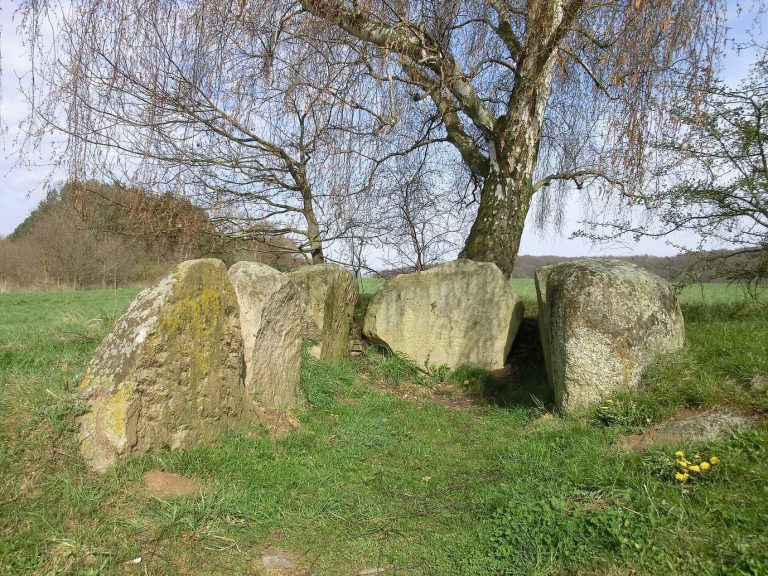
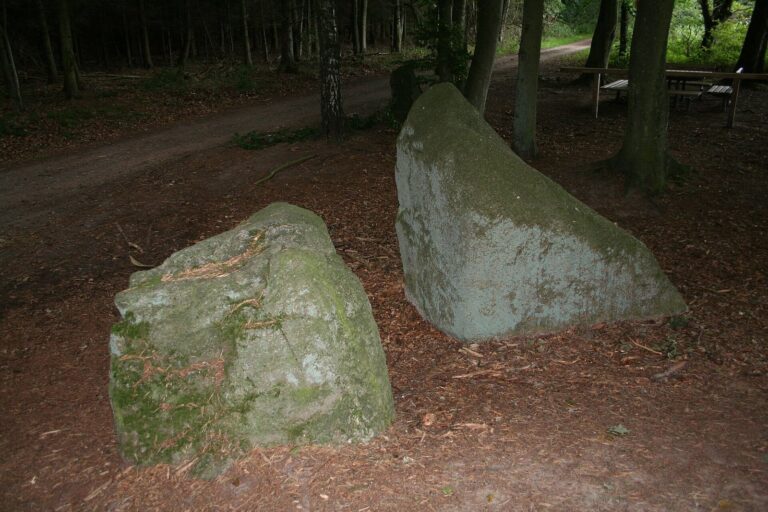
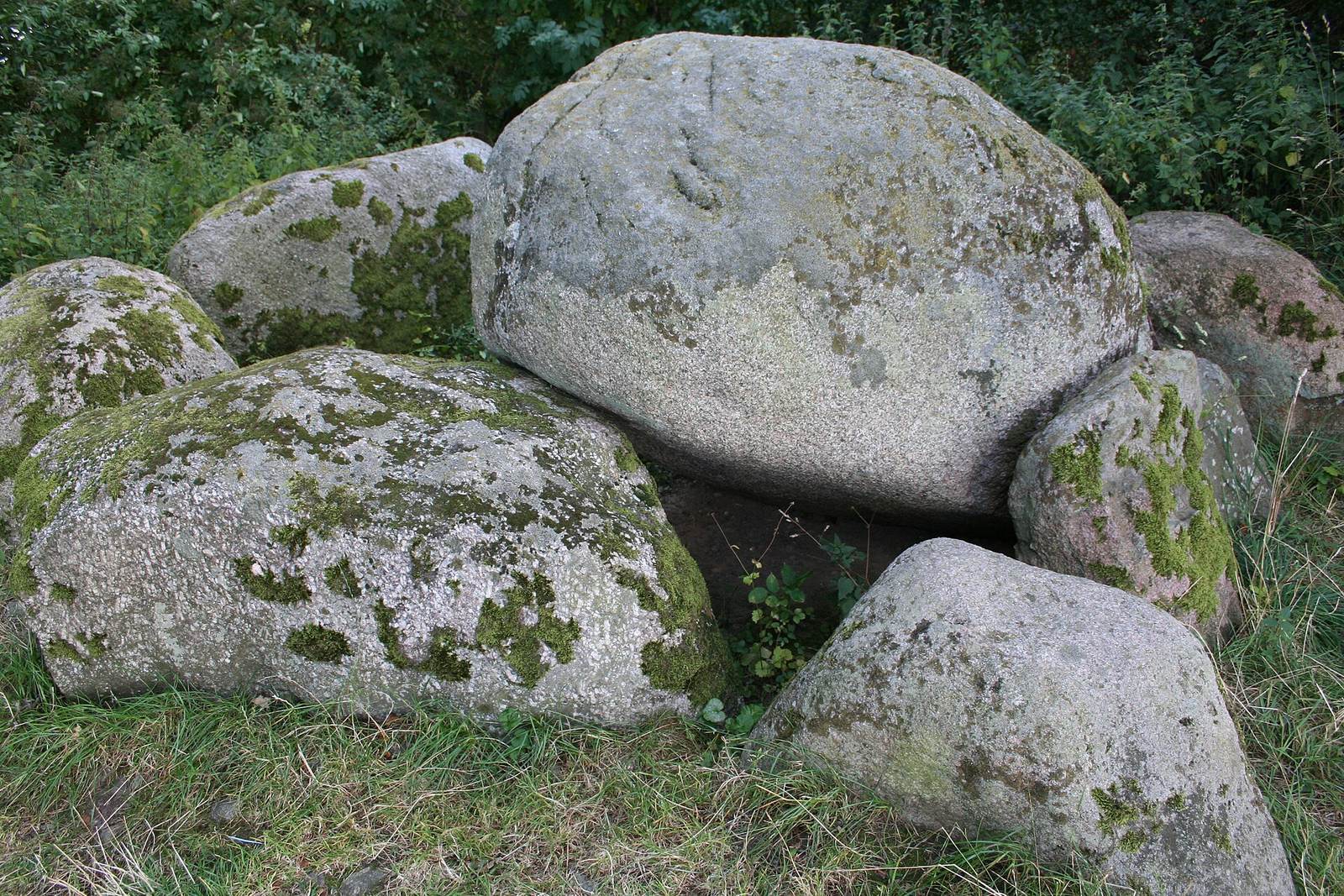
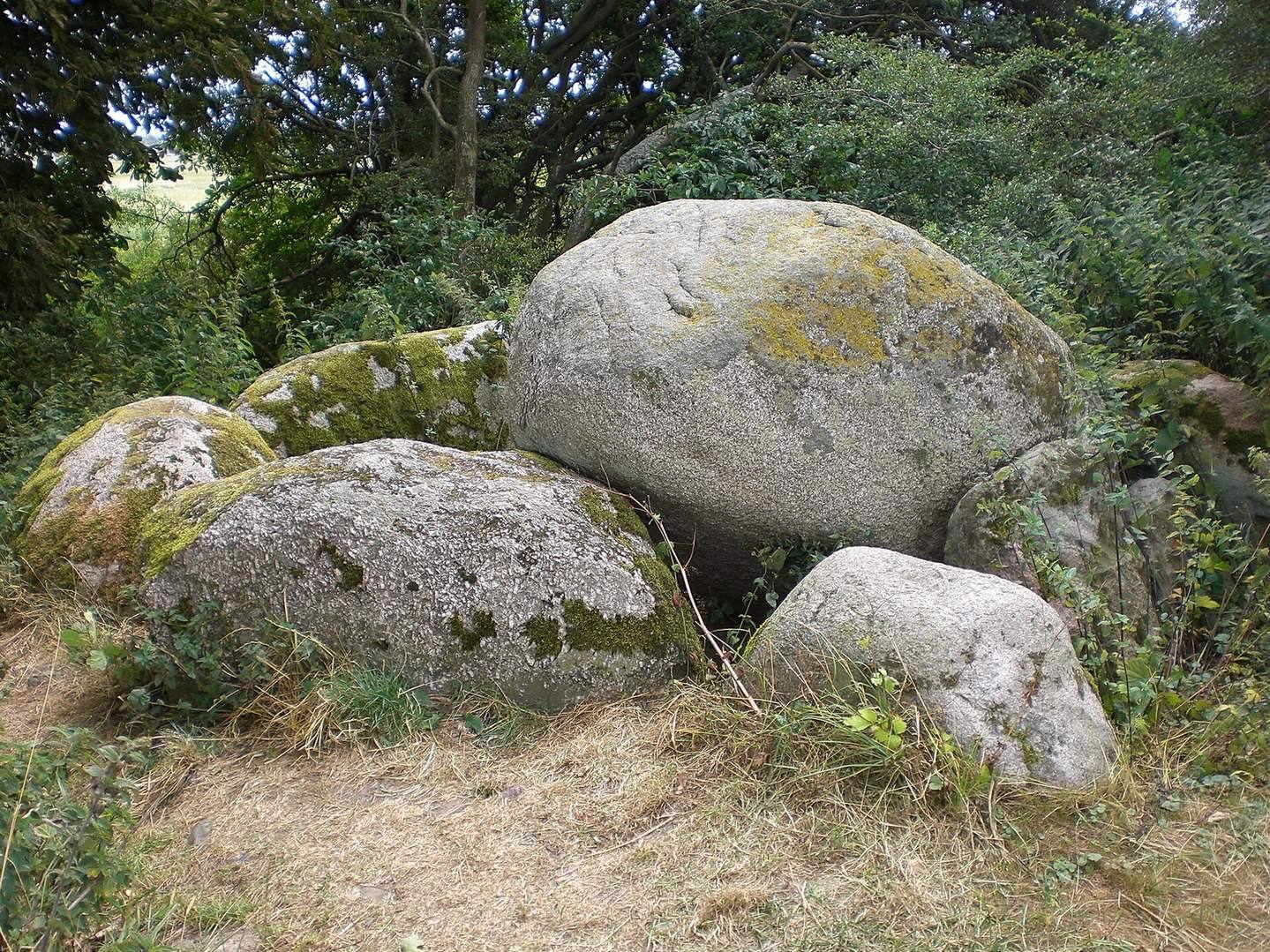
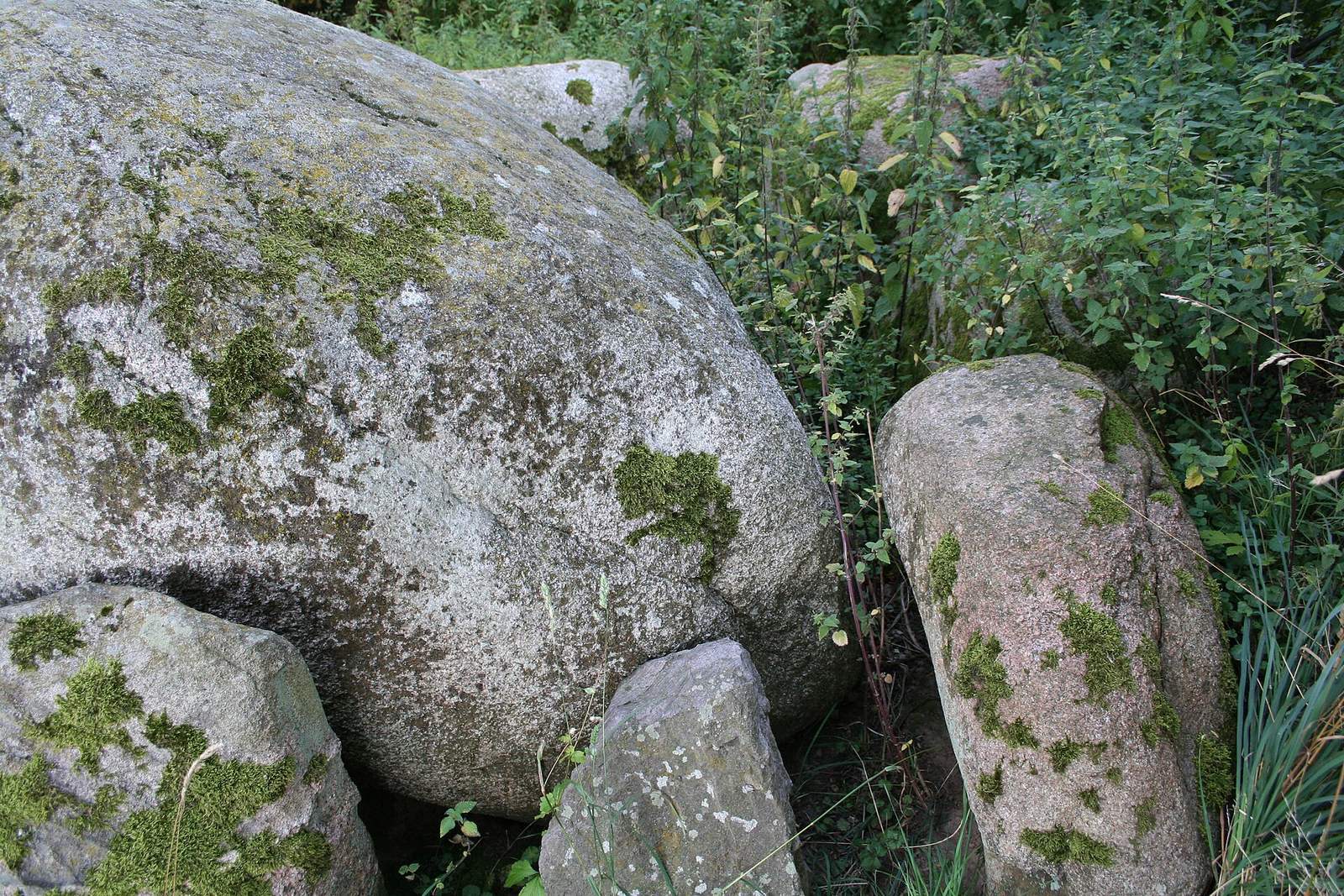
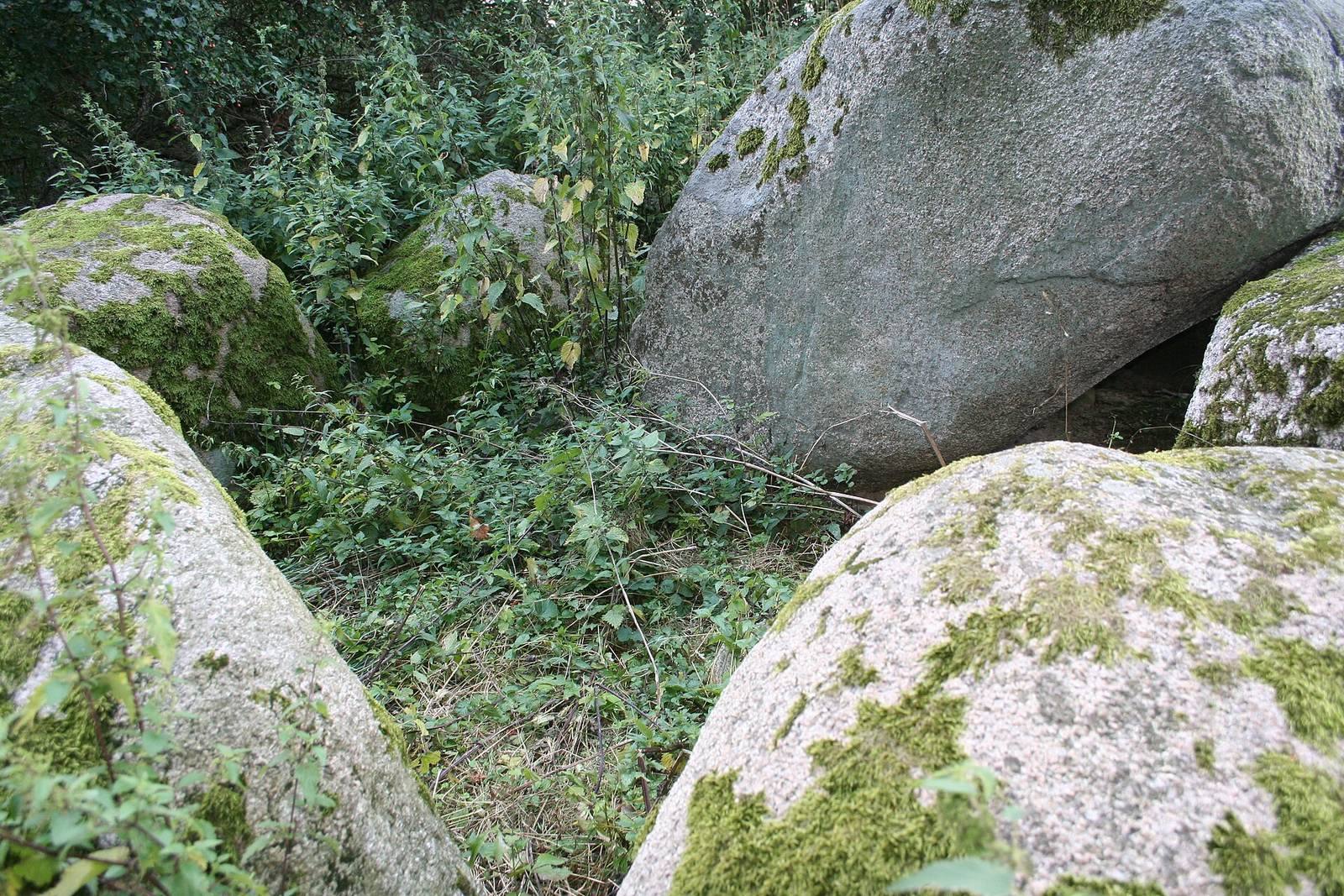
Goldbusch lies between Altensien and Moritzdorf, near the shore of Lake Sellin. Its east-west burial chamber measures about 3.5 metres long, 2.4 metres wide and 1.2 metres high. Seven large stones and one smaller stone form the side walls. Three capstones originally rested on them, and one survives. At the time of the 1969 excavation, it had slipped into the chamber. Its surface bears 27 shallow cup marks, or small cup-shaped depressions in the stone. A narrow passage made of red sandstone slabs enters at the western short end and points southwest. A single large stone forms the opposite short end.
Mound and enclosure
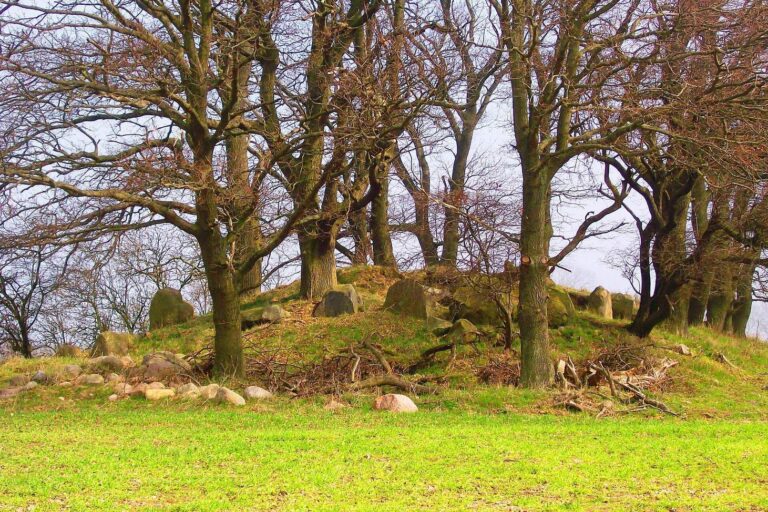
An earth mound once covered the entire chamber and may have been capped with rounded stones. Comparable tombs often had a trapezoidal enclosure of standing stones around them. A similar enclosure may have surrounded Goldbusch.
Excavated objects
Excavation finds included flint arrowheads, six flint axes, a hollow chisel, pottery fragments and two decorated pottery vessels.