Abbey of Valbenoîte: A Cistercian Monastery in Saint-Étienne
Site at a Glance
- Rating
- 4.2
- Popularity
- Very Low
- Country
- France
- Primary era
- Medieval
- External website
- Open
- Eras represented
- Medieval, Early Modern, Modern
- Civilizations
- French
- Site type
- Religious
- Remains
- Church
On this page10 sections
History
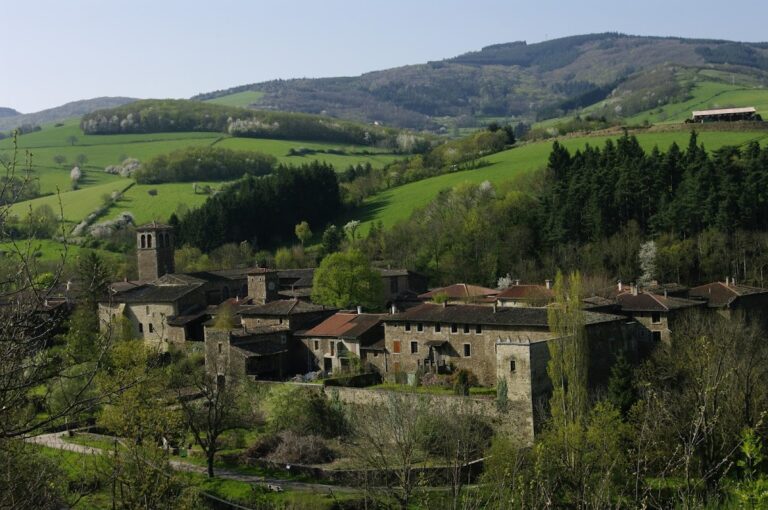
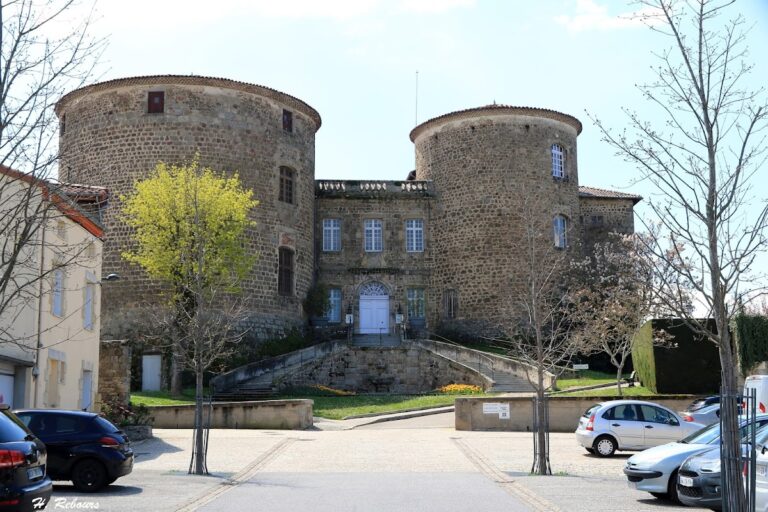
The Abbey of Valbenoîte is a former Cistercian abbey in Saint-Étienne, France, founded around 1184 by Guy II, Count of Forez. The Cistercians were a reform branch of Western monasticism that followed the Benedictine rule strictly and supported communal religious life through productive estates. Its church, begun in 1222, belongs to the Romanesque tradition, while the surviving complex also preserves later medieval and early modern phases.
Foundation and early development
Valbenoîte was established on marshy ground that required drainage and improvement. Its foundation probably followed the political settlement that separated Forez from Lyonnais in 1173, after conflict between the Count of Forez and the Archbishop of Lyon. The new monastery was a daughter house of Bonnevaux in Dauphiné and ultimately belonged to the wider Cistercian family of Cîteaux.
A papal privilege was probably granted between June and September 1184. An act from the same year records donations made under Guy II’s protection in the presence of his son Renaud, who later became Archbishop of Lyon, and with the participation of Jean Belles-mains, Archbishop of Lyon. Hugues de Bonnevaux, Jean Maret, the first abbot of Valbenoîte, Brian de Lavieu, and Pons de Saint-Priest are associated with the foundation and its early gifts. Some details in these documents have been regarded as later interpolations.
The abbey acquired lands and estates at L’Oeuvre, Graix in the Pilat, Pleiney, Verney, Pleney, Saint-Julien-Molin-Molette, and other places. Villelma of Roussillon added land at the Champ de l’Orme in the parish of Saint-Étienne-de-Furan in 1195. In 1222, Guy IV of Forez laid the first stone of the abbey church and promised lasting protection for the monastery and its possessions. An act of 1243 confirmed holdings at Furet, Les Forges, Pleney, La Gerbodière, and Bois Farost.
Jurisdiction and medieval destruction
Valbenoîte developed both religious and seigneurial functions. A transaction dated 6 July 1323 defined the respective jurisdictions of the monks and the lord of Saint-Priest. The abbey exercised seigneurial justice over part of Saint-Étienne and Graix and received a portion of the tithe from Saint-Cyr-les-Vignes. It also served as a burial place for the lords of Jarez and Durgel, as well as the lords of Saint-Priest-en-Jarez and Saint-Chamond.
English and Navarrese troops damaged or burned the abbey in July 1359. The four monks then living there fled, and the community remained away for an extended period. The abbey was rebuilt and fortified later in the fourteenth century, allowing the monks eventually to return.
Wars, reconstruction, and dissolution
Huguenot forces sacked Valbenoîte in May 1570, reportedly under Gaspard de Coligny, a leading Huguenot commander during the French Wars of Religion. By this time the monastery was under commendatory administration, a system in which an outside holder received the abbey’s revenues and directed its administration without necessarily living as a member of the community. Reconstruction began in 1576 and continued into the seventeenth century.
Only four monks remained by 1753, when closure was under consideration. A fire destroyed part of the buildings in 1779. The abbey was dissolved during the French Revolution, and its buildings were sold as national property in 1790. The number of monks expelled at the dissolution is uncertain.
Parish church and educational use
The former abbey church became a Catholic parish church at the beginning of the nineteenth century and was enlarged in 1820. It later became associated with the parish of Saint-Benoît and the Diocese of Saint-Étienne. Since 2022, Saint-Benoît has been united with the parish of Saint-Étienne under the joint dedication Saint-Étienne-Saint-Benoît.
In 1846, the Marist Brothers, a Catholic teaching congregation founded to provide Christian education through schools and boarding institutions, took over the church and opened a school and boarding institution. After the flood of 1849, they left Valbenoîte for Saint-Chamond. The former abbey complex subsequently remained in educational use as the Notre-Dame de Valbenoîte school group. The church was listed as a historic monument in France in 1949, with the protection applying to the building except for its facade and bell tower.
Remains
Former abbey church
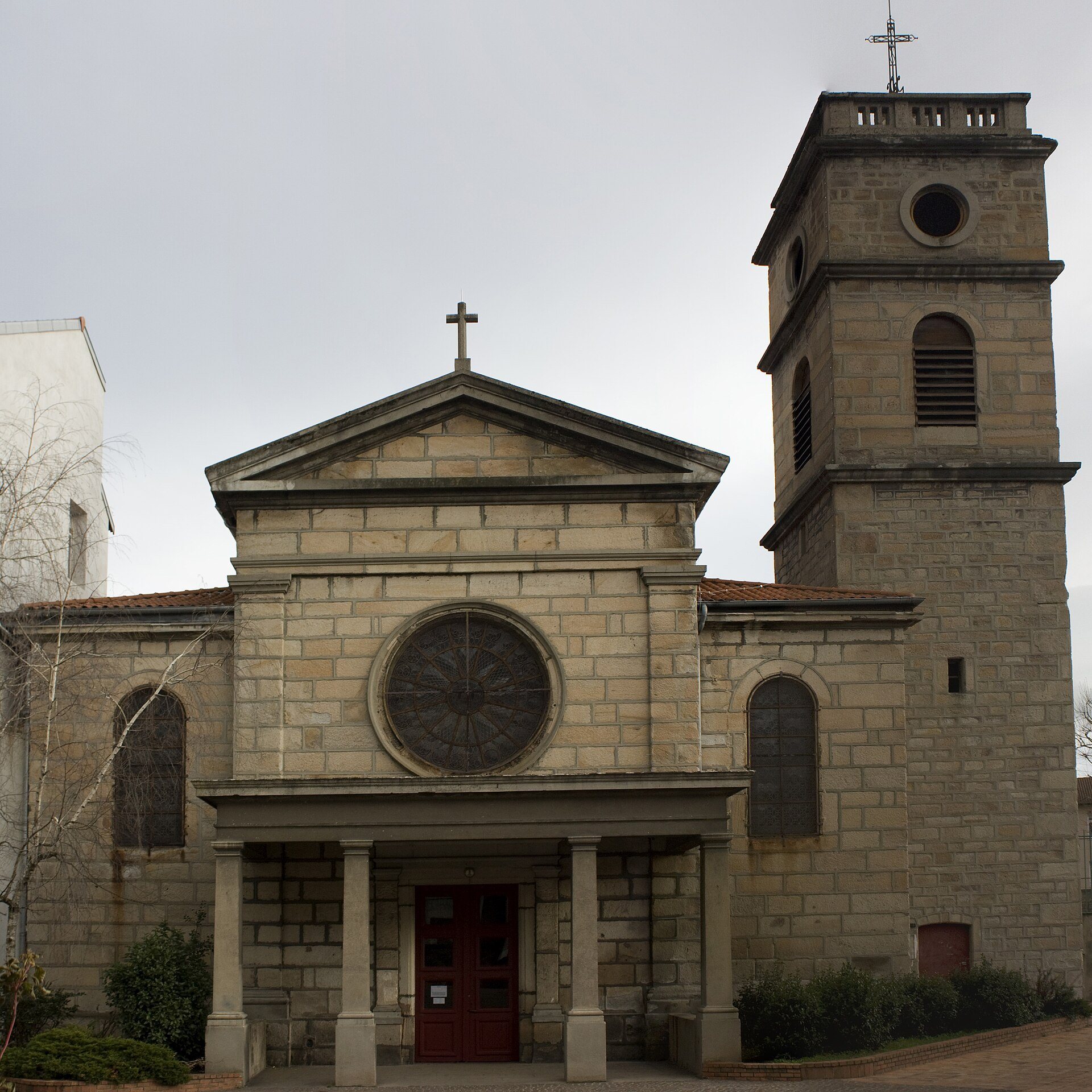
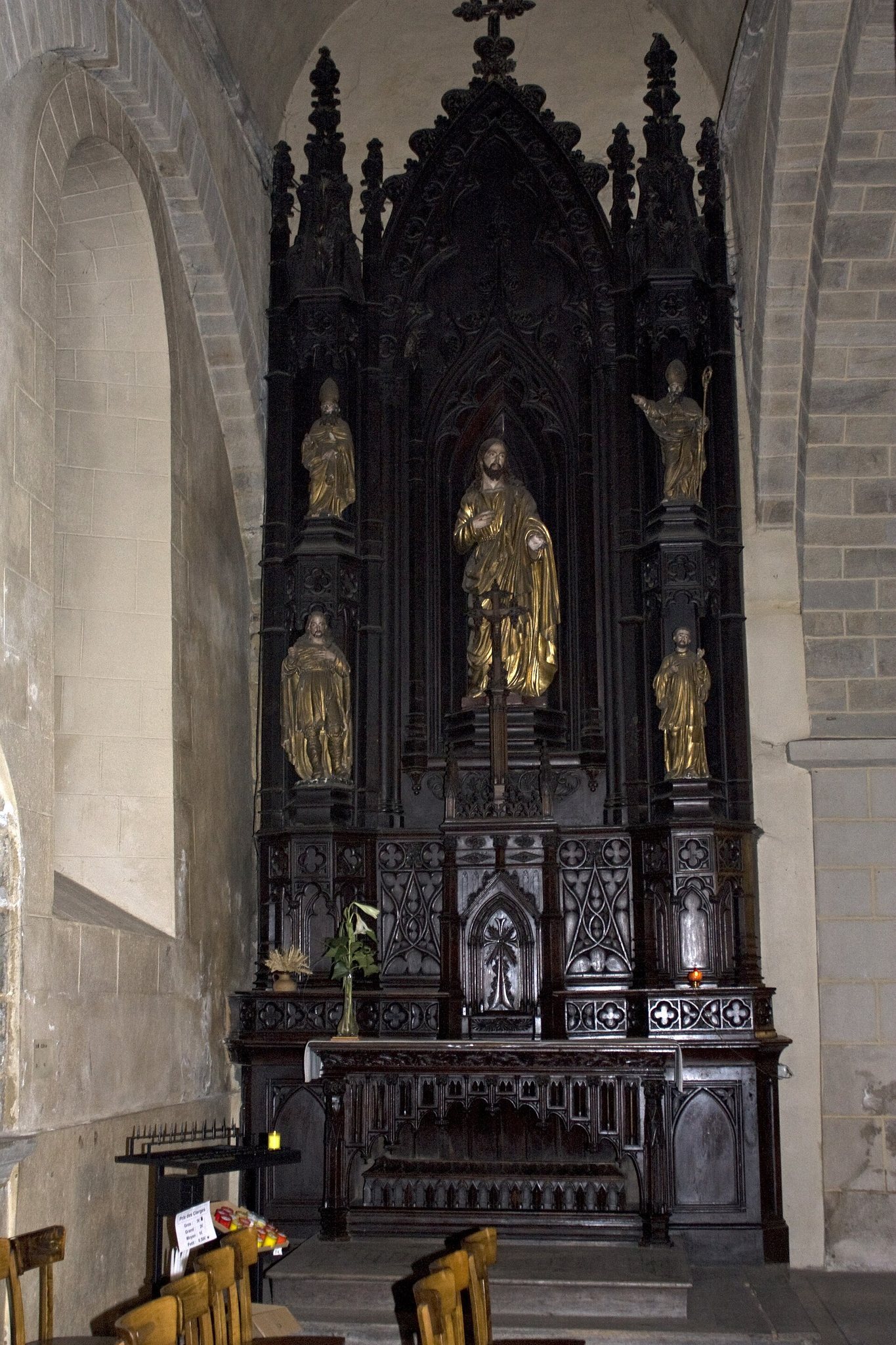
The surviving former abbey church has a central nave flanked by two aisles. It was begun in 1222 for the Cistercian community, and its Romanesque fabric was altered during later centuries. Much of the remaining structure dates from the seventeenth and eighteenth centuries, while the facade and the first bay of the nave belong to the nineteenth century. The building’s present form therefore combines the medieval foundation with substantial later rebuilding and alteration.
Nave and vaults
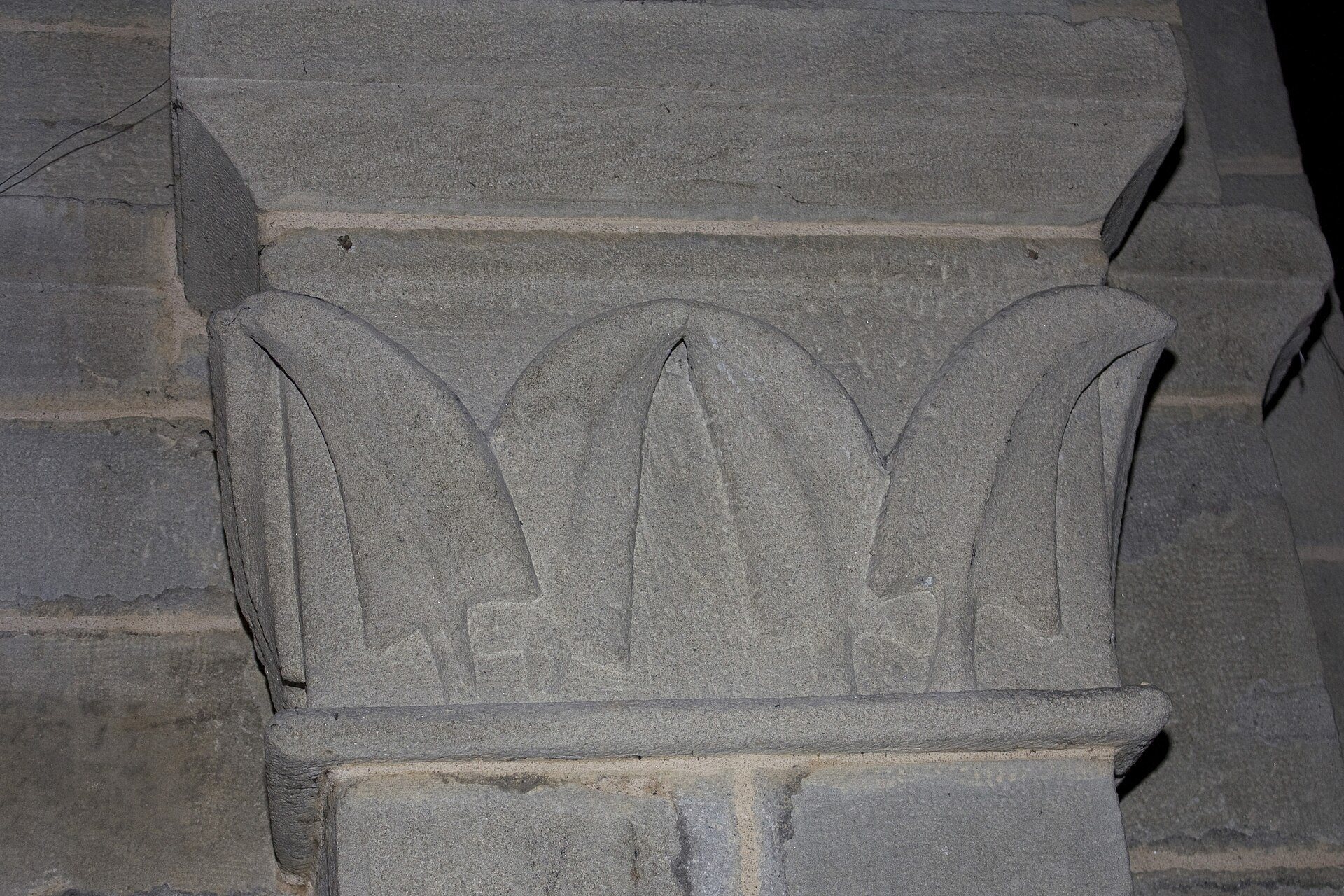
The earlier barrel vaults had pointed profiles associated with Cistercian architecture. During the fifteenth century they were replaced by groin vaults, formed by the intersection of two barrel vaults. Columns engaged against cruciform piers carry capitals carved with stiff water-leaf foliage that ends in small flowers. Above them are abaci with a hollowed molding, giving the interior supports a clearly articulated architectural treatment.
Apse and later fabric
The apse is semicircular inside and covered by a half-dome vault. On the exterior it has a polygonal form, with a cornice decorated by sculpted medallions. The facade and bell tower are later additions, and both are excluded from the historic-monument protection granted in 1949. Around 1850, the floor was raised by 1.80 metres to protect the church from flooding by the Furan.
Organ
The church contains a historic Cavaillé-Coll organ built in 1859 and modified several times afterward. It belongs to the building’s nineteenth-century history, alongside the later facade, bell tower, altered nave entrance, and the changes made when the former abbey church served as a parish and educational institution.