Goldbeck Castle: A Medieval Stronghold in Brandenburg
Site at a Glance
- Rating
- 3.9
- Popularity
- Low
- Country
- Germany
- Primary era
- Medieval
- Eras represented
- Medieval
- Civilizations
- Holy Roman Empire
- Site type
- Military
- Remains
- Castle
On this page7 sections
History
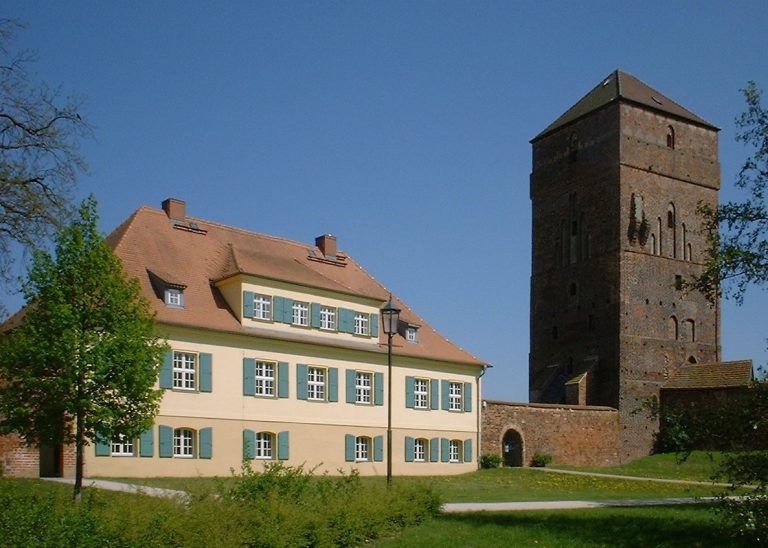
Goldbeck Castle is a medieval stronghold on the southern edge of Goldbeck, a locality of Wittstock/Dosse in Brandenburg, Germany. Built around 1300 by the Counts of Lindow-Ruppin, it was intended to secure their rule in the Lordship of Ruppin.
Early records and construction
Goldbeck is first recorded in 1247 as belonging to the Lords of Werle, a ruling family in medieval Mecklenburg. In 1276, after the Lords of Werle were defeated in a conflict with Otto V of Brandenburg, the area passed to the Counts of Lindow-Ruppin, who ruled the Lordship of Ruppin. The counts also recognized the bishops of Havelberg as feudal overlords, church officials who held authority over land. The castle itself appears in a document in 1325.
Changes in authority
In 1424, the castle served as a residence for Hans von Bosel and Klaus von Königsmark, nobles described as robber knights, a term for nobles involved in or accused of predatory raiding. After the Counts of Lindow-Ruppin died out, the castle passed in 1524 as a bishop’s fief to Joachim I, the Brandenburg elector, a prince entitled to vote in the election of the Holy Roman Emperor. Around 1548, Elector Joachim II appointed Johann Gans Edler von Putlitz as its administrator.
Alteration and later use
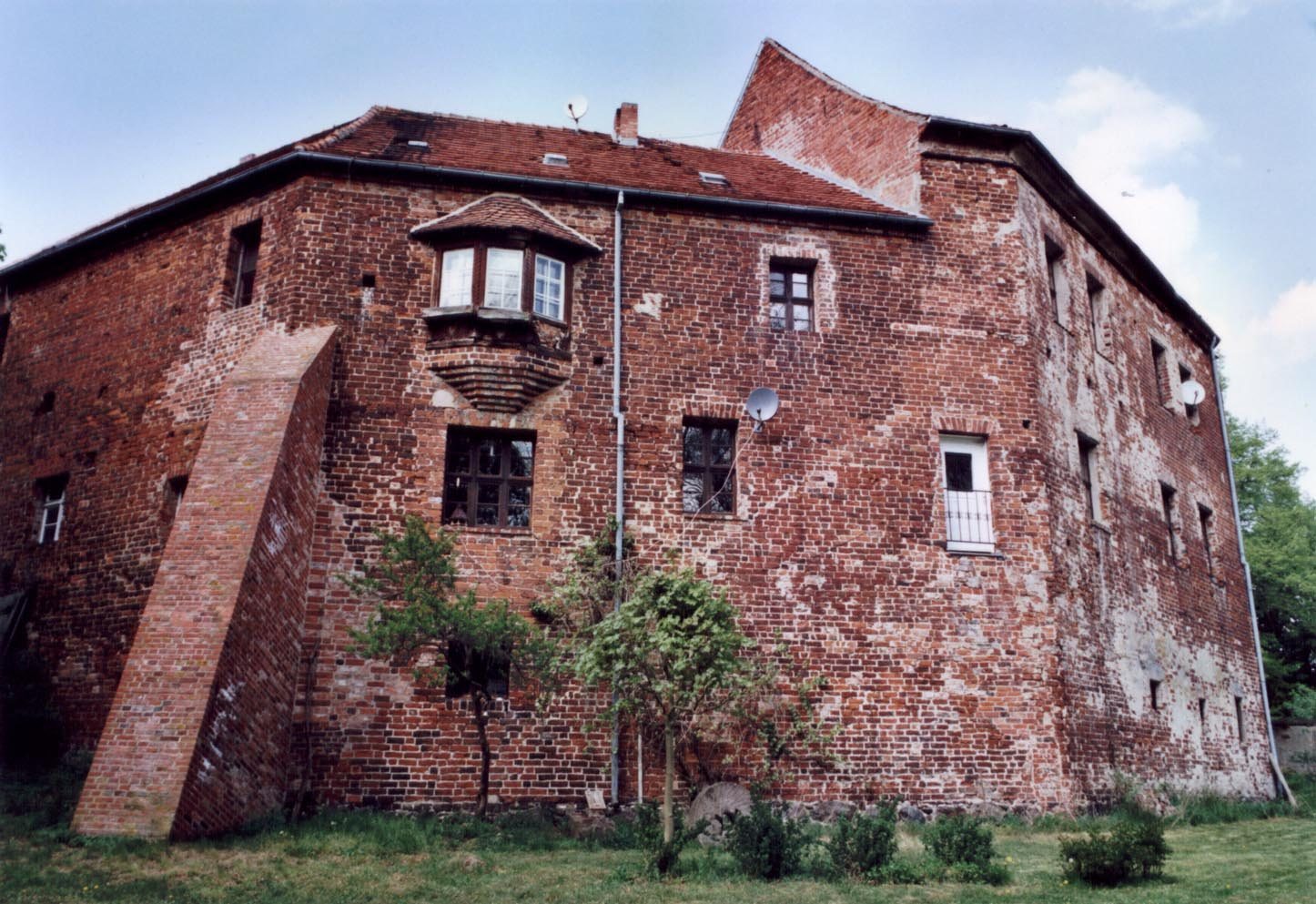
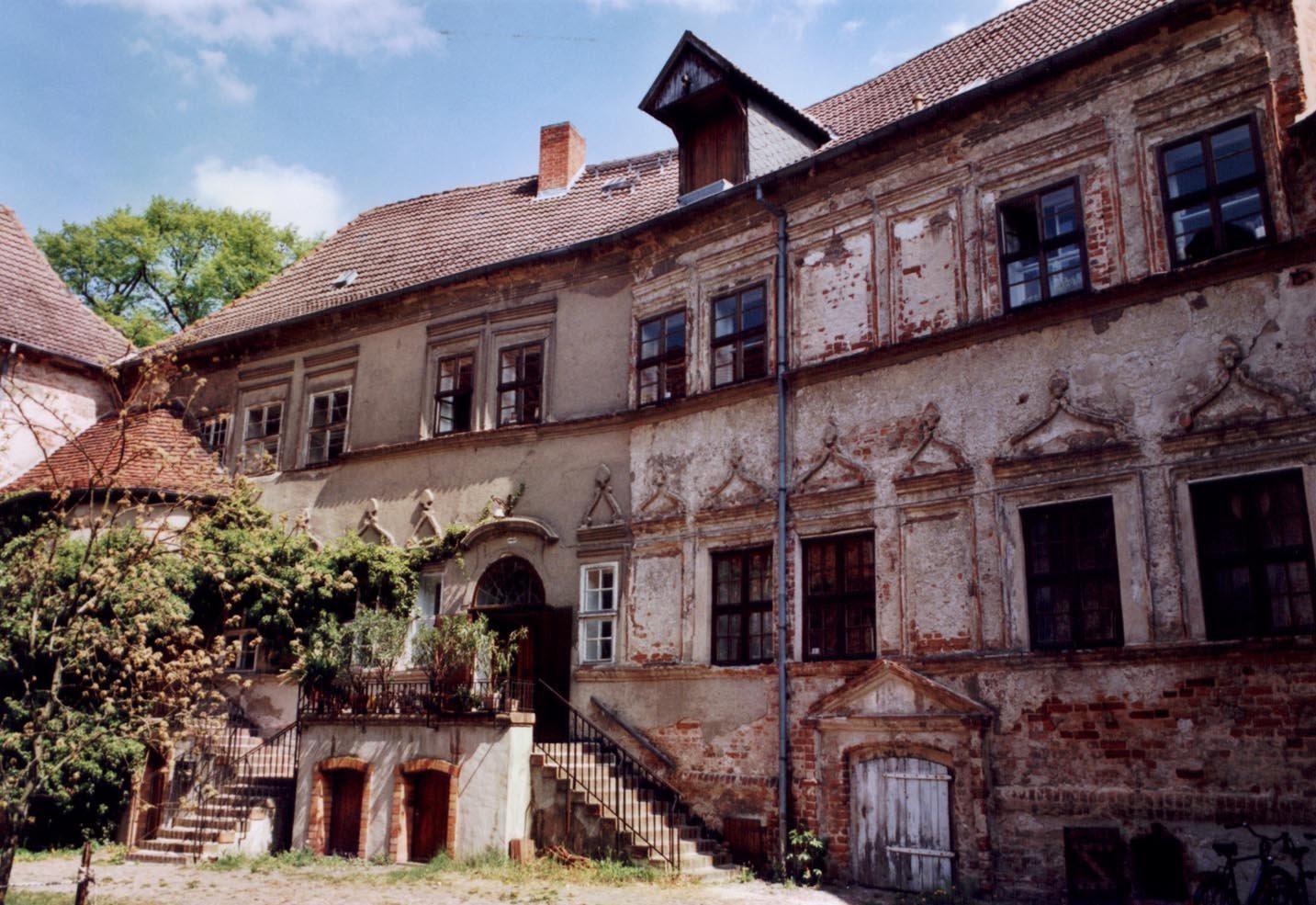
The castle was altered repeatedly over the centuries as tastes changed. From the mid-1980s, visual artists adapted it for use as studio apartments for the Association of Visual Artists of the German Democratic Republic, East Germany’s state from 1949 to 1990.
Remains
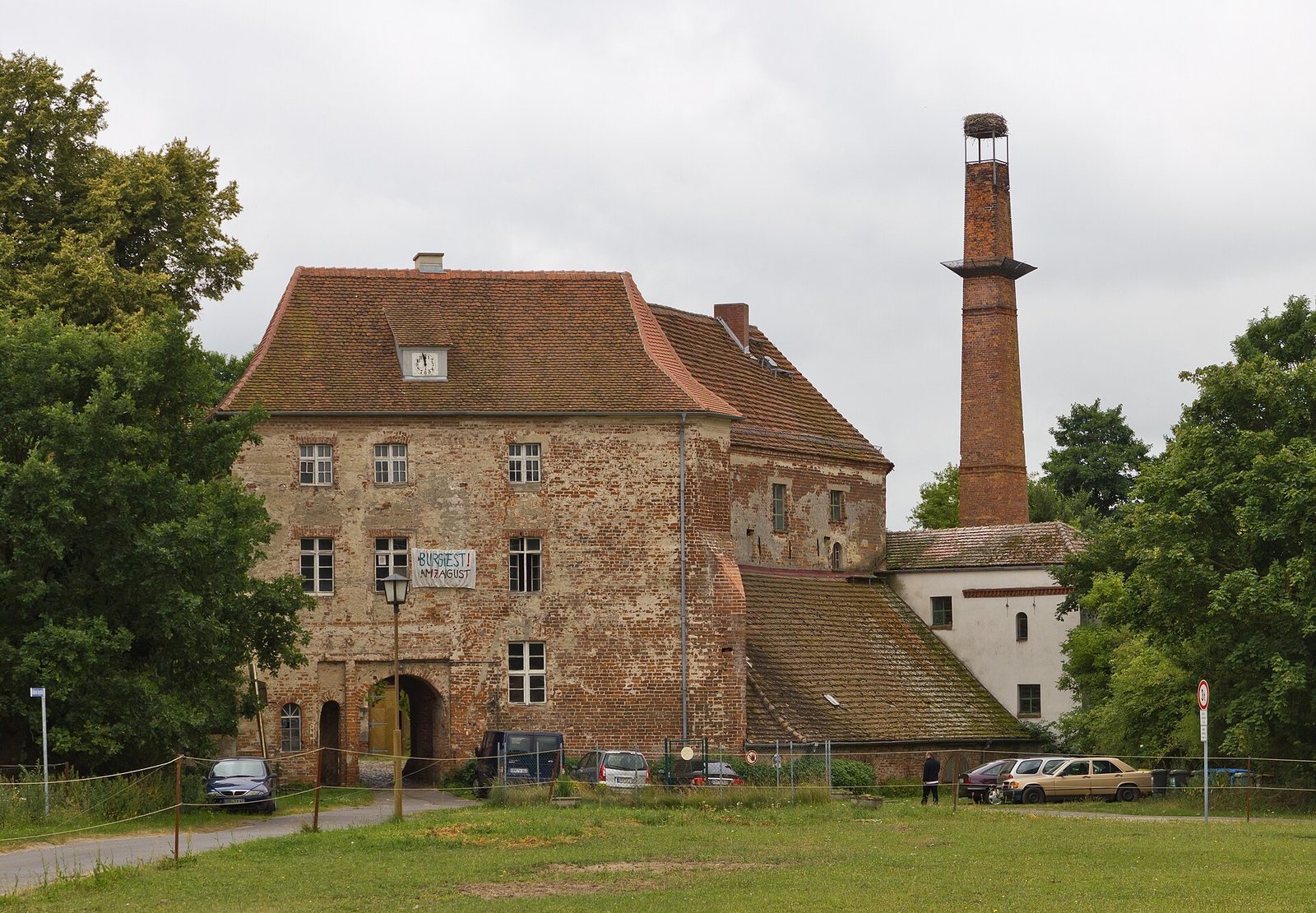
Goldbeck is a lowland castle, built on relatively level ground rather than a hilltop. Its former defensive layout included a moat and gates.
Moat and terrain
The moat is dry today. It was formerly supplied by the Dosse River.
Gates and courtyard
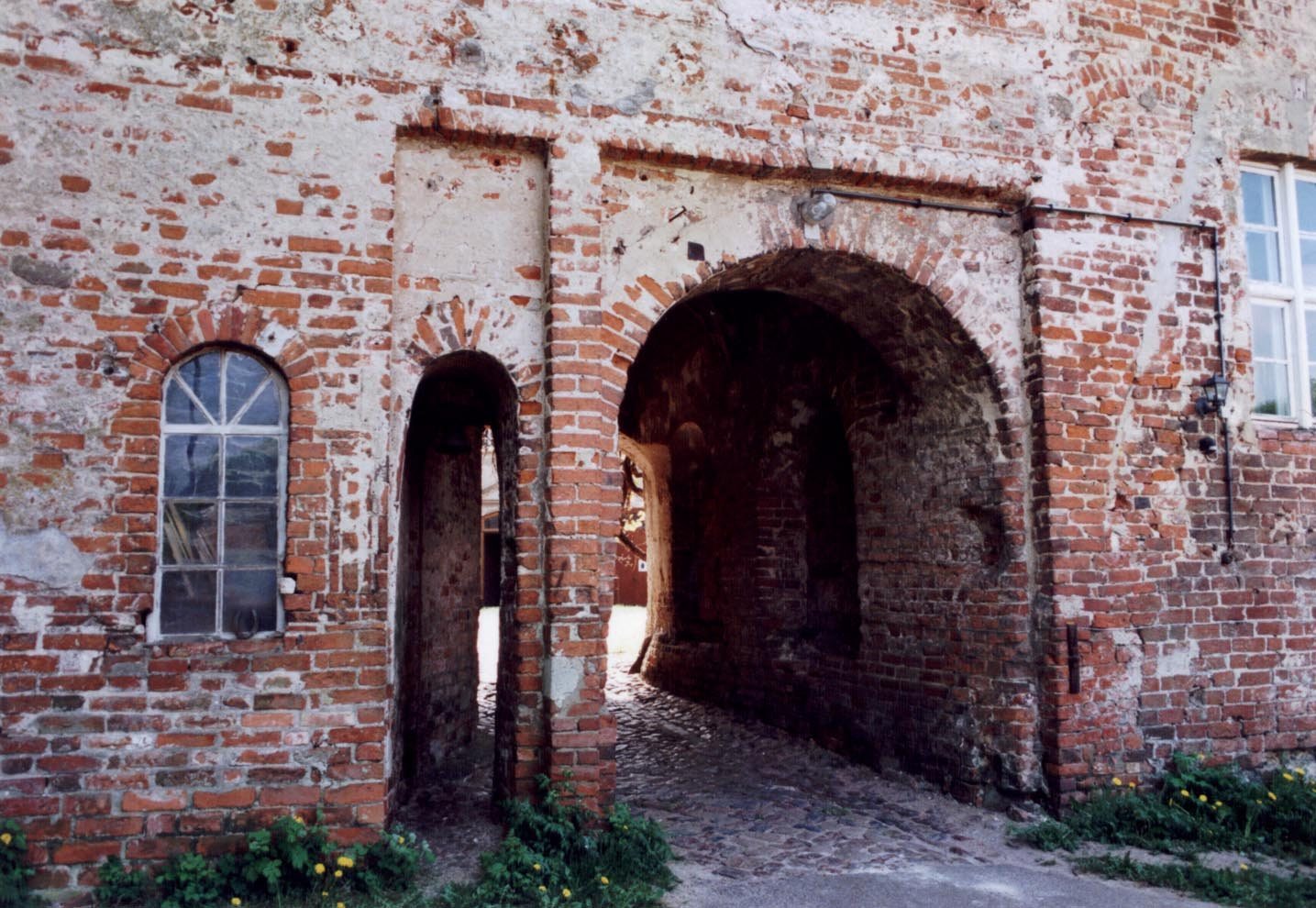
A narrow wicket gate, a small passage for one person, stands beside the main gate. It is the only surviving one-person wicket gate of its type in Brandenburg. Another gate is on the eastern side. From the courtyard, the eastern gate and the south side are visible.