Gulbishche Burial Mound: An Early Old Rus Burial Site in Chernihiv
Site at a Glance
- Popularity
- Medium
- Country
- Ukraine
- Primary era
- Medieval
- Eras represented
- Medieval
- Civilizations
- Kievan Rus
- Site type
- Burial
- Remains
- Burial Mound
On this page8 sections
History
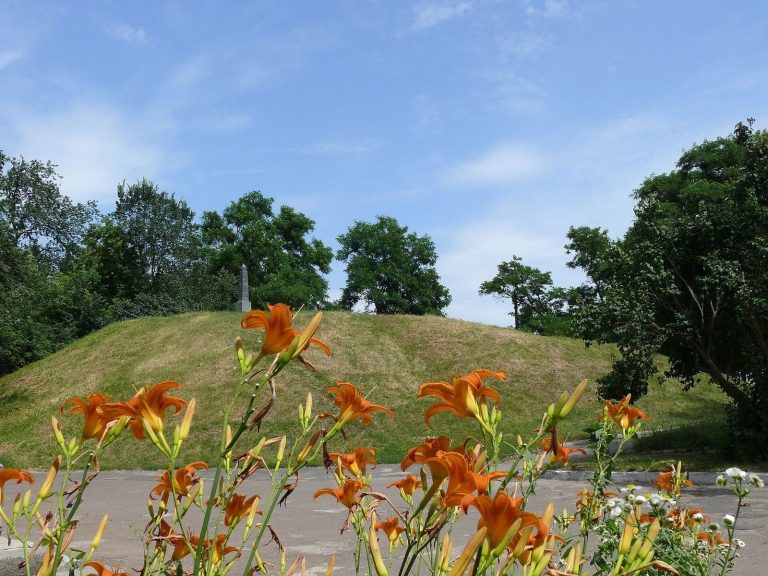
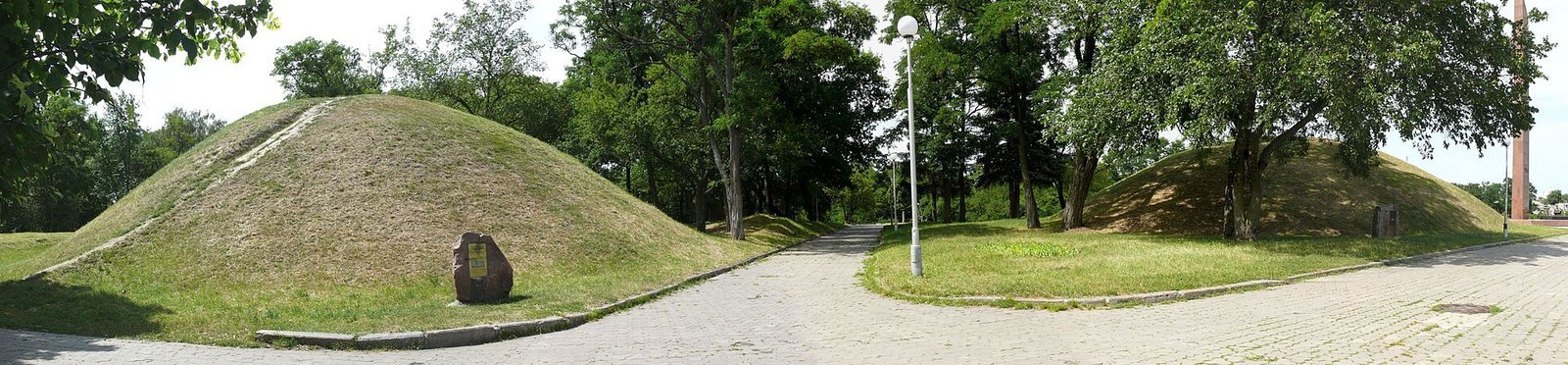
The Gulbishche burial mound in Chernihiv, Ukraine, dates to the early tenth century and belongs to Old Rus, the medieval East Slavic polity and cultural region. It is both the earliest and largest mound in the Boldin Hills burial ground, and forms part of the archaeological complex known as the Necropolis of the Ancient City of Chernihiv. Ukraine designates it an archaeological monument of national cultural heritage.
Burial traditions
The mound was originally called Gulebedishche, a name linked to a revelry custom performed at funerals in neighboring mounds. Participants released a falcon to hunt swans. The medieval East Slavic epic The Lay of Igor’s Campaign connects the custom with Boyan, its prophetic singer. The mound’s popular association with a heroic burial has been explained as an expression of affection for its imagined occupant, while the revelry itself was considered a custom of ordinary people.
Excavation and interpretations
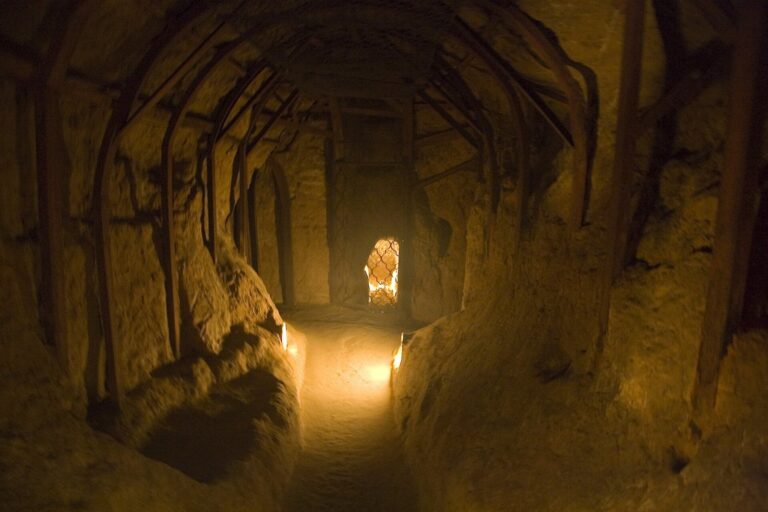
Archaeologist Dmitry Samokvasov’s expedition first excavated the mound in 1872. The work cut it down to about one-third of its height, then opened a shaft-pit 14 m across, with exploratory cuts from the east and north.
Some historians and specialists in ancient weapons have proposed that the warrior buried at Gulbishche was Ilya Muromets, a legendary hero of East Slavic epic. Their argument draws on traditions associating Ilya with events around Chernihiv and on the story that he later withdrew to Kyiv Pechersk Monastery, an Orthodox monastic complex in Kyiv. Relics attributed to Ilya were examined by anthropologist and archaeologist Mikhail Gerasimov. The identification of the buried warrior with the legendary hero remains a theory.
The sword’s size prompted debate about the warrior’s stature. Samokvasov, Boris Rybakov, Anatoly Kirpichnikov, and Vladimir Sedov were among those who argued that the grave belonged to a man of exceptional height. One estimate held that a warrior would need to be at least 215 cm tall to wield the sword freely. A later assessment by O. Dubinets compared it with 67 known Old Rus swords and found it rare, but not unique. The hilt length fell within a group representing 26.9 per cent of the sample, while its blade weight fell within a group representing 28.6 per cent. Dubinets suggested that long swords might have suited mounted fighting and that the buried warrior was a horseman.
Rybakov also considered the grave’s stirrups one and a half times larger than usual. Later measurements found that stirrups 14 cm wide made up 44 per cent of known examples, and wider ones were also known.
Remains
The surviving earth mound measures 22 m in diameter and stands 6 m high; its original height was 8.6 m. Excavation revealed burials of a man, a woman, and a horse. One human skeleton was thought likely to belong to an armed retainer, a member of a ruler’s or leader’s following. The objects accompanying the burials were associated with a pagan cremation rite.
Weapons and armor
Helmet and chain-mail fragments
A Chernihiv-type helmet was found at a depth of 8 m within a mass of metal. It had a cap-shaped metal base, a copper finial, and a semicircular copper plate at the front. Other iron fragments were identified as chain mail, fused together by fire and later oxidation.
Sword
The sword measured 126 cm overall, including its hilt; its blade was 105 cm long and 6.5 cm wide. Earlier measurements differed: Samokvasov gave an overall length of about 124.46 cm, while Rybakov, using Samokvasov’s description, reported a blade length of 103.46 cm. They compared it with Western European two-handed swords and with a shorter sword carrying an identical hilt. The massive hilt had silver inlay and three rows of stones, and the blade bore the mark ULFBERH+T, found on a group of early medieval swords. Tenth-century Old Rus swords usually measured 85–90 cm, and this one was described as larger than other Old Rus swords discovered. Measurements were taken after the blade had been cleared but before it was lifted. During lifting, its upper section broke into several large pieces and the area near the point crumbled into rust fragments. The hilt and blade fragments were recovered for study.
Other grave goods
A vessel containing ram bones was among the burial objects. Fur found with the burial showed traces of burning before it was placed in the grave and was interpreted as a bag for food offerings at the funeral feast. That interpretation was linked to a line in which Ilya Muromets describes a horse as food for wolves and as carrying provisions for a funeral feast. Other finds included a late ninth-century Samanid dirham, a coin associated with a dynasty that ruled parts of Central Asia and Iran during the ninth and tenth centuries, as well as a fire striker, comb, knife, hammer, nails, wooden-bucket remains, and fragments of a bronze pitcher. Beads, glass ingots, gold and silver buttons, large bronze pendants, a bronze ring, and silver belt buckles were also recovered. A horn bears an image interpreted as a fight between a warrior and another figure whose whistling is represented as wind-like, an episode associated with Ilya Muromets and Nightingale the Robber. The excavation finds are held at the State Historical Museum in Moscow.