Georgskirche: A Late-Medieval Fortified Church in Germany
Site at a Glance
- Rating
- 4.7
- Popularity
- Very Low
- Country
- Germany
- Primary era
- Medieval
- External website
- Open
- Eras represented
- Medieval, Early Modern, Modern
- Civilizations
- German, Holy Roman Empire
- Site type
- Religious
- Remains
- Fortified Church
On this page14 sections
History
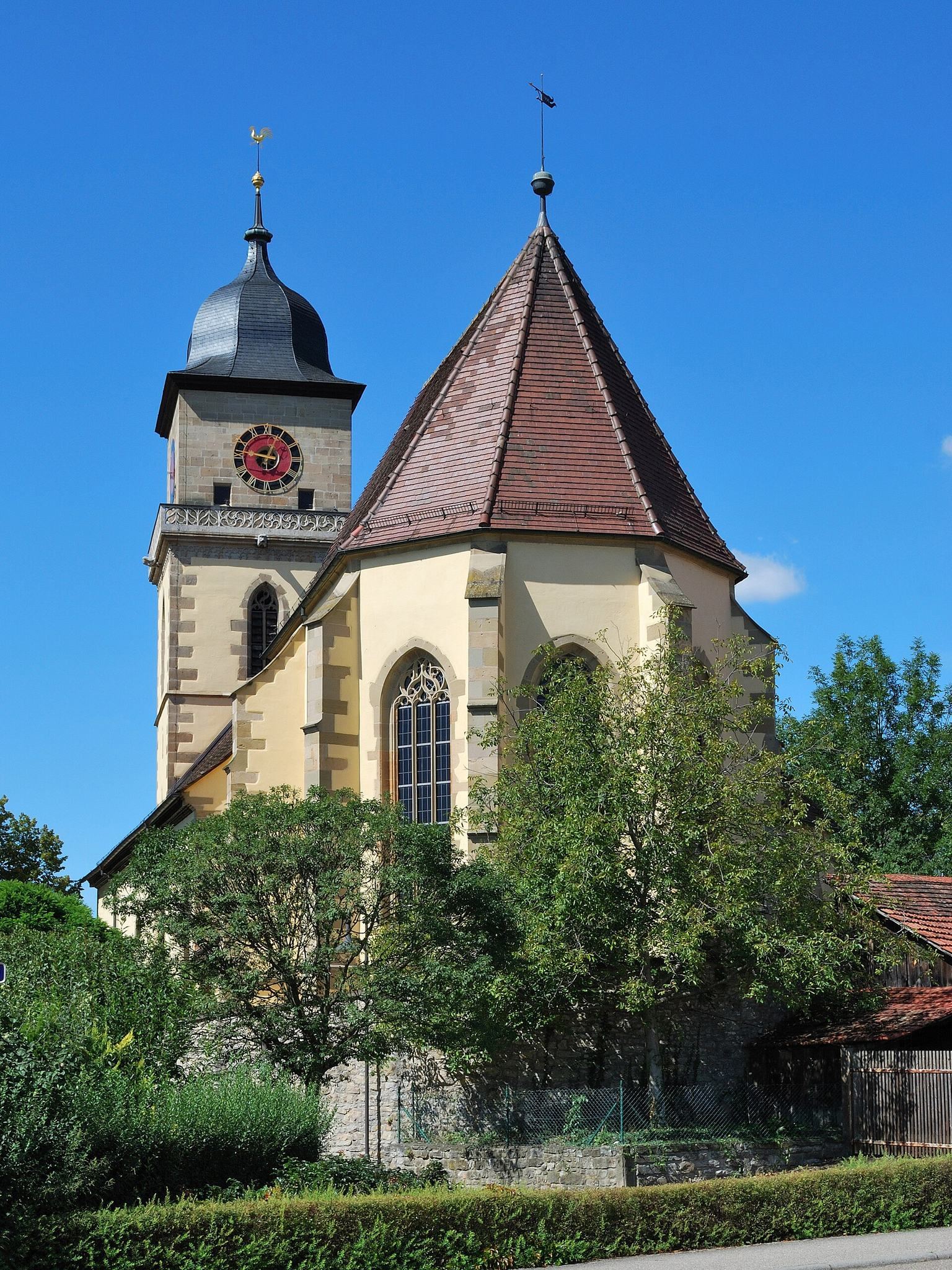
Georgskirche is an Evangelical, late-medieval fortified church in Schwieberdingen, Germany, with origins in the thirteenth century. Its present form developed through enlargement and remodeling between 1436 and 1515, including a Gothic choir built between 1495 and 1498. The church also reflects the long influence of the von Nippenburg family in Schwieberdingen’s religious and local affairs.
The von Nippenburg family
By at least the fourteenth century, the von Nippenburg family held increasing influence over the church. On 9 February 1359, the ministerial Fritz von Rumelshausen, a medieval official of the service nobility, sold his feudal and allodial properties in Nippenburg, Hemmingen, Münchingen, and Schwieberdingen to Fritz von Nippenburg for 225 pounds Heller. Allodial property was hereditary land held as an owner’s possession rather than as a feudal grant.
In 1368, Fritz von Nippenburg was rector of the church at Schwieberdingen and benefited from its revenues. On 30 August 1428, Hans von Nippenburg received a farm at Schwieberdingen, among other possessions, as a fief from Count Ludwig of Württemberg. Members of the family continued to hold ecclesiastical offices: Friedrich was chaplain in 1516, while Lorenz died as the church’s pastor in 1518. Their influence is also reflected in several family tomb monuments inside the church, including the monument to Ludwig von Nippenburg, who died in 1498.
Late-medieval rebuilding
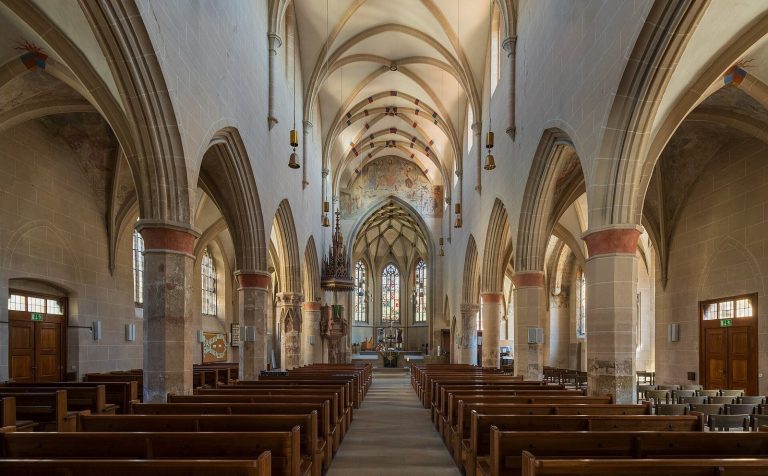
The church was remodeled and enlarged between 1436 and 1515 during the reign of Count Eberhard im Bart, a late-medieval ruler of Württemberg associated with major church-building reforms in the territory. The princely master builder Peter von Koblenz strongly influenced the design and built the Gothic choir between 1495 and 1498. The choir vault was completed in 1498.
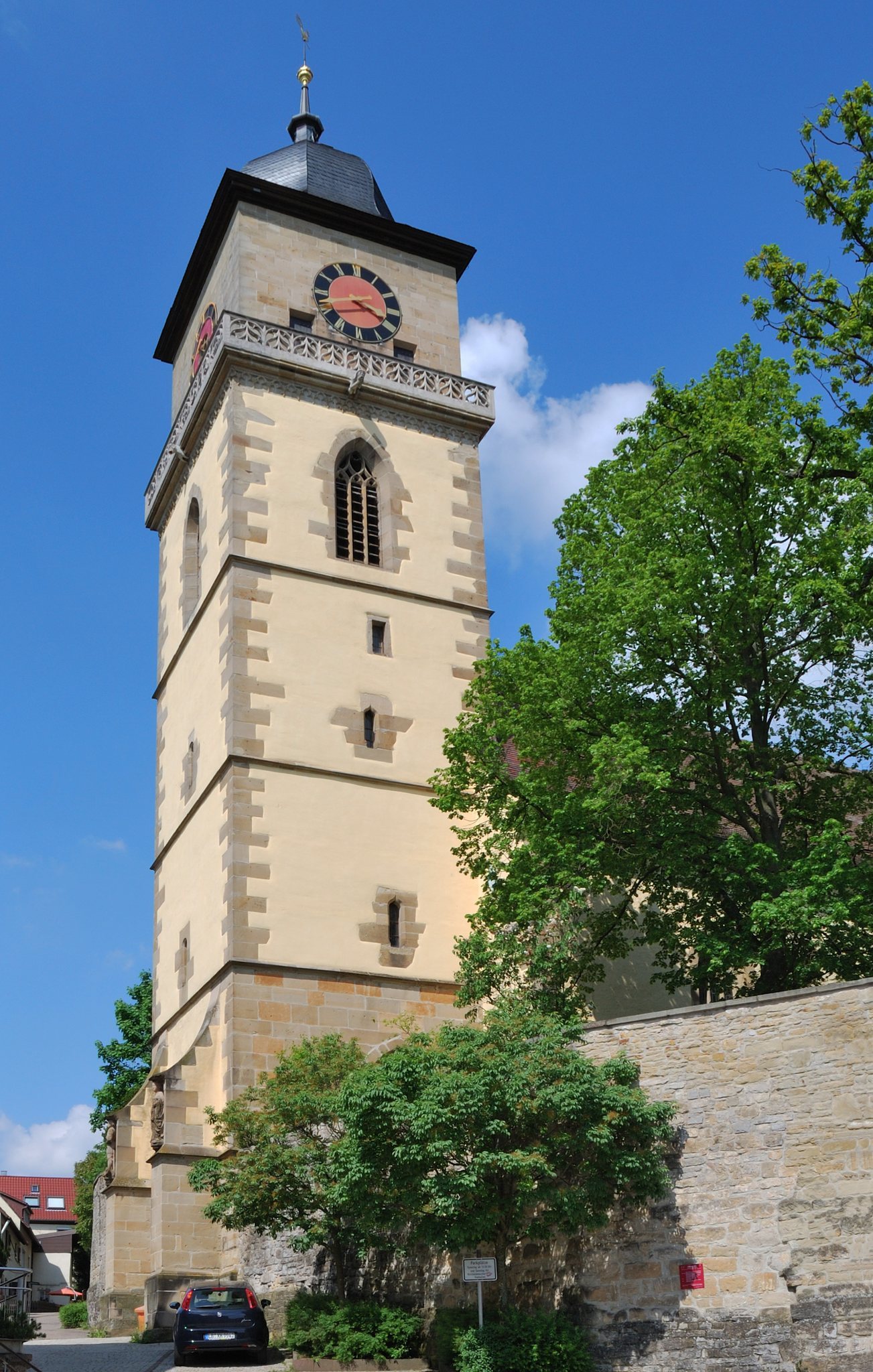
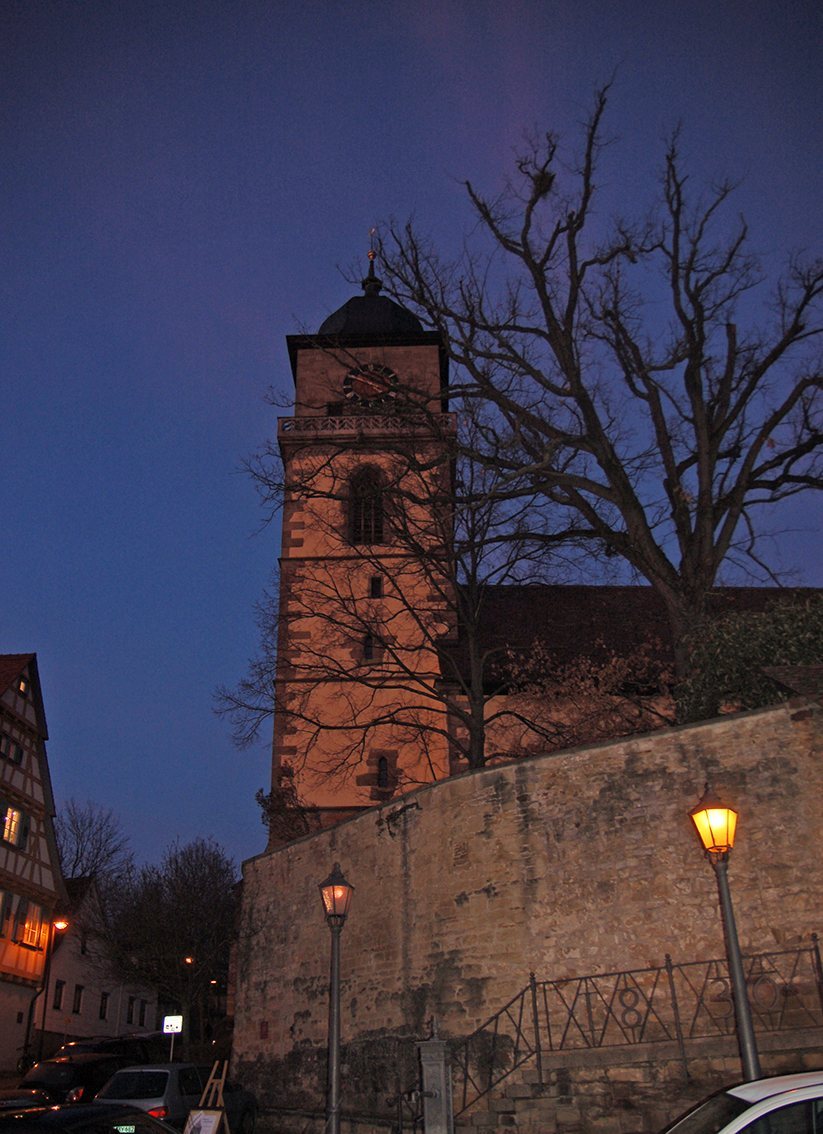
The tower was initially built around 1515 with a pointed roof. A severe lightning strike destroyed its upper part in 1795, after which the tower was rebuilt with the roof it has today.
The organ and modern conservation
The Schwieberdingen congregation inaugurated its first organ at Christmas in 1723. Built by the Heilbronn organ builder Johann Michael Schmahl, it remained in service until 1848. In 1850, the church acquired an organ made in 1782 by Johann Eberhard Walcker as his first work for the Ludwigsburg Garrison Church. After enlargement by two stops, the instrument was bought for 1,322 gulden and installed with 13 stops.
In May 1944, the organ pipes faced requisition for wartime purposes, but a report by the Walcker firm prevented their confiscation. The organ case entered the monument register of the Württemberg State Office for Monument Preservation in 1949. Woodworm infestation led to major cleaning in 1953, when three unusable stops were replaced. The organ was completely rebuilt in 1964 and 1965, with the console turned and a second manual added, producing 25 speaking stops and one tremulant.
During the following two decades, the Mixtur stop became difficult to play and highly susceptible to faults. The weakness of its material also complicated tuning and voicing, while the Cimbel and Basszink stops developed similar problems. The entire installation was overhauled in 1986, when each division received a reed stop and the Mixtur in the Great division was replaced. The church was renovated inside and out in 1996. In summer 2016, the Michael Mauch firm of Schwäbisch Hall cleaned and restored the organ, replacing the poorly accessible Hintersatz in the Pedal division with a Quinte 5 1/3′ and the Flöte 4′ with a Trompete 8′.
Remains
Georgskirche retains the defensive character of a late-medieval fortified village church, a church adapted to provide defensive shelter through substantial walls, a defensible enclosure, or a strong tower. Its surviving architectural form belongs chiefly to the rebuilding carried out between 1436 and 1515. The 43-metre tower, Gothic choir, nave frescoes, tomb monuments, and historic organ form the principal physical elements described within the church.
Medieval church fabric
Gothic choir
The choir, the area around the main altar, was built between 1495 and 1498 under Peter von Koblenz. It is Gothic, a medieval architectural style associated with pointed arches, ribbed vaults, and large windows. Its vaulted ceiling was completed in 1498 and forms part of the late-medieval architectural character that survives in the church.
Church tower
The church tower rises 43 metres. Built around 1515 with a pointed roof, it was altered after lightning destroyed its upper section in 1795. Its present roof therefore belongs to the post-lightning rebuilding rather than to the tower’s original design.
Nave frescoes
Frescoes on the sides of the nave, the main space for the congregation, were uncovered again in 1962. Their rediscovery returned medieval painted decoration to view within the church interior.
Tomb monuments
Friedrich von Nippenburg, known as Moira
One of the oldest tombstones appears to refer to Friedrich von Nippenburg, known as Moira, who is documented in 1332 and 1333. The monument was probably not created during his lifetime. Instead, it was inserted into the church in the late fifteenth century as a historicizing work.
Rosa von Rüppurr and her sons
A tomb monument probably dating from the 1570s stands on the north wall of the nave. It commemorates Rosa von Rüppurr, born von Gültlingen, and her sons Caspar, Sebastian, Philipp Jacob, and Balthasar.
Friedrich von Nippenburg and his wives
A family tomb monument probably dating from the 1590s commemorates Friedrich von Nippenburg, who died on 19 August 1591, together with his two wives. Benedicta, born von Nippenburg, died on 3 June 1562, and Kunigunda, born Göler von Ravensburg, died on 20 November 1598. Benedicta came from the Unterriexingen branch of the von Nippenburg family. Kunigunda was the daughter of Albrecht Göler von Ravensburg, who died in 1542, and Dorothea von Liebenstein, who died in 1562.
Walcker organ
The 1782 Walcker organ was built for the Ludwigsburg Garrison Church before its installation at Georgskirche in 1850. Following later alterations, the instrument had 13 stops. The rebuilding of 1964 and 1965 added a second manual and expanded it to 25 speaking stops and one tremulant. The 2016 restoration also changed the Pedal division by installing a Quinte 5 1/3′ in place of the Hintersatz and a Trompete 8′ in place of the Flöte 4′.