Schloss Unterriexingen: Medieval Castle and Palace Complex in Germany
Site at a Glance
- Rating
- 4.8
- Popularity
- Low
- Country
- Germany
- Primary era
- Medieval
- External website
- Open
- Eras represented
- Medieval, Early Modern, Modern
- Civilizations
- Holy Roman Empire
- Site type
- Domestic
- Remains
- Castle
On this page8 sections
History
Schloss Unterriexingen is a medieval castle and later palace complex near Markgröningen in Germany. Probably built around 1100, it developed during the Staufer period, when the Hohenstaufen dynasty held imperial power in much of the German lands, and was first mentioned in the late twelfth century. The fortress was associated with the Lords of Riexingen and probably helped control timber transport on the Enz and the road that followed the river.
The Lords of Riexingen
The Lords of Riexingen appear in monastery records dating from 1080 to 1120. Their castle probably formed part of a wider Staufer-period complex. The family died out in 1506, after which several noble houses held local authority, including the Freiherren von Urbach, von Sachsenheim, von Winterstetten, von Nippenburg, von Sternenfels, and von Lützelburg, as well as the Schertlin von Burtenbach and Leutrum zu Ertingen families. Freiherren were members of the lower-ranking baronial nobility.
Divided lordship and noble memory
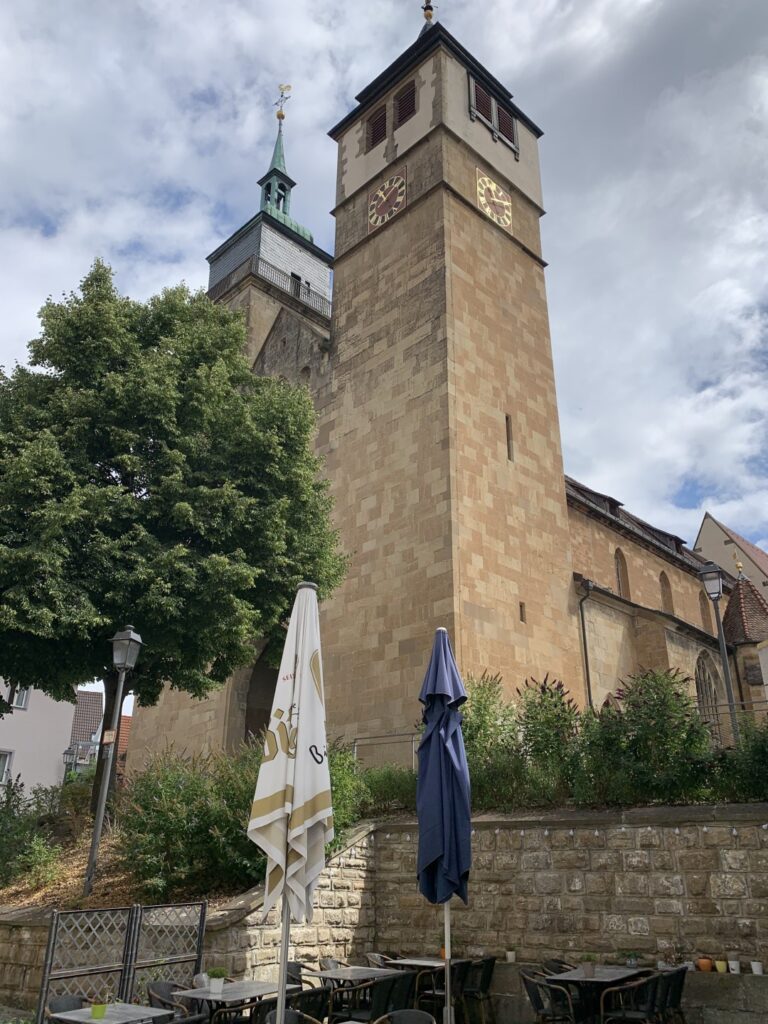
By 1396 at the latest, Unterriexingen was divided between changing noble lordships and the House of Württemberg. Residents were subject either to the local lordship or to Württemberg, with the Glems initially serving as a natural boundary according to the location of their houses. Local nobles used the Frauenkirche as their burial church. Among its surviving epitaphs is the oldest, commemorating Friedrich Osterbrunn von Riexingen, who died in 1394.
From castle to palace
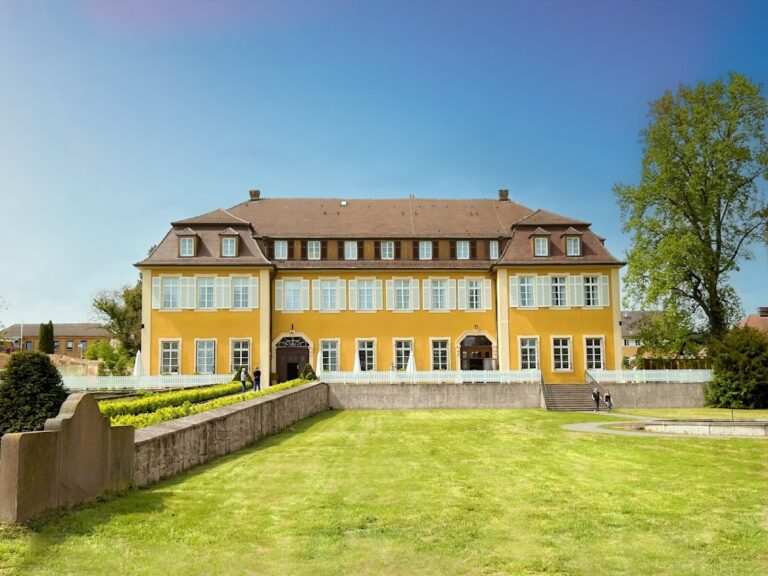
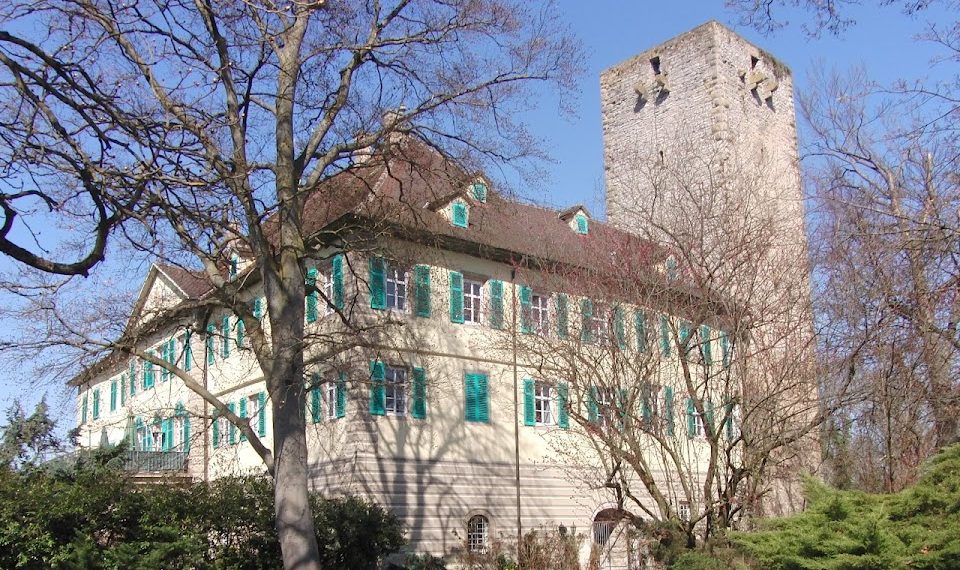
The Leutrum zu Ertingen family held the local lordship from 1717 to 1763 and again from 1815. From 1884, the family held the title of counts. During the second half of the eighteenth century, they enlarged the medieval complex into a palace by incorporating the stone house and keep. Alterations begun in 1815 gave the buildings their Classicist appearance. In 1806, when Württemberg became a kingdom, the local noble family came under the authority of the king established with Napoleon’s backing.
In 1995, Nikolaus Prince of Ratibor opened a pet-boarding facility in the palace. The establishment accommodates dogs, cats, birds, and small animals, giving the historic complex a later use within its surviving buildings.
Remains
Terrace and palace wings
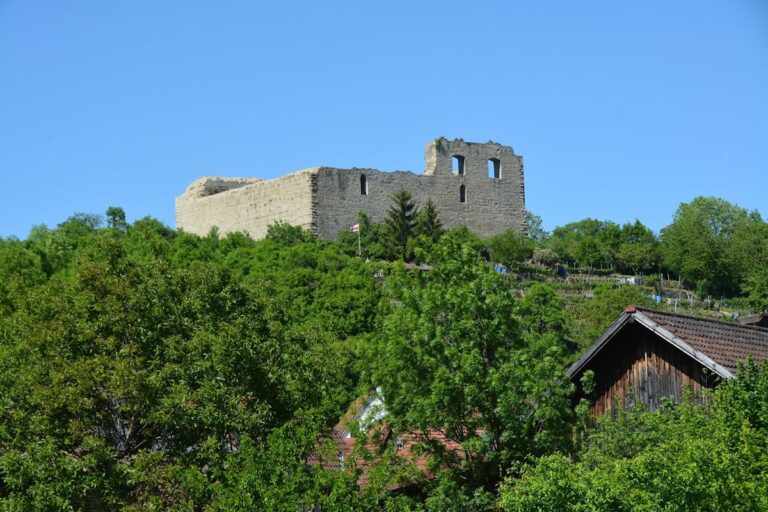
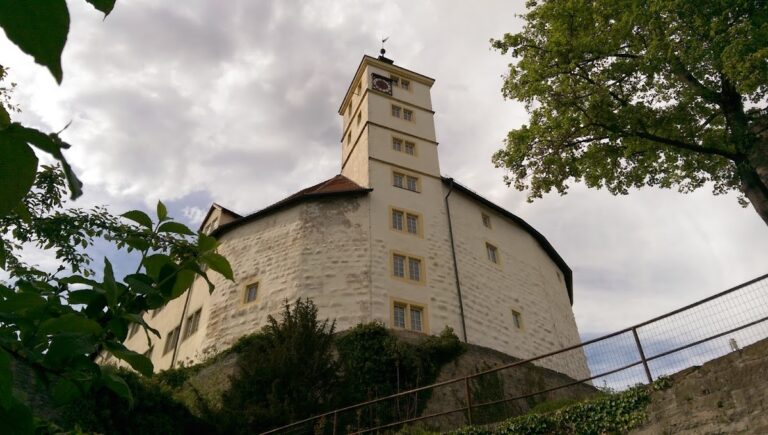
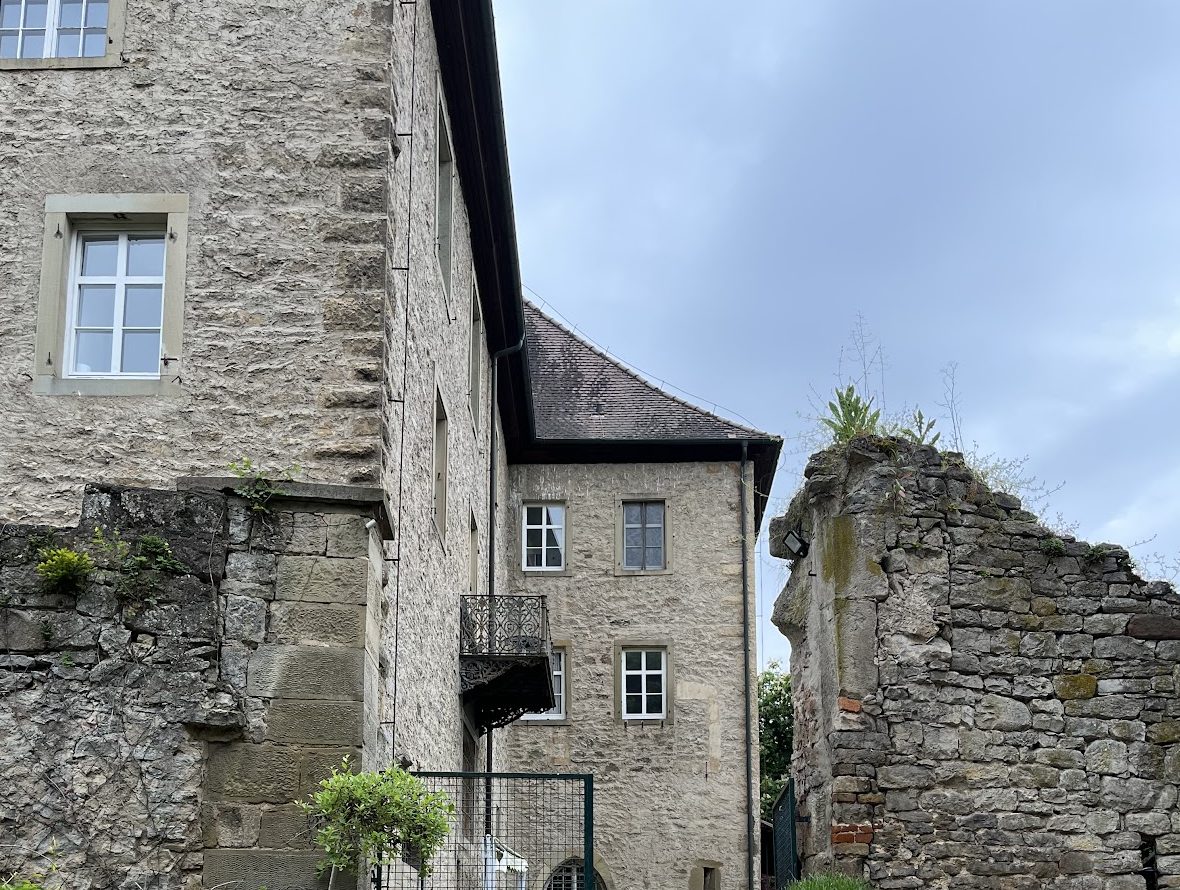
The complex occupies a high terrace in the Enz valley at the northeastern edge of Unterriexingen, on the river’s right bank. The medieval castle stood along the northern edge of the terrace and was protected by a ditch on three sides. The surviving buildings comprise the keep, a stone house, and a palace addition on the west. The palace has three storeys and is joined on one side to the old square keep. Medieval architectural elements remain visible both outside and inside the palace wings. Much of the construction uses bossed ashlar, masonry made from carefully shaped stone blocks with projecting outer faces.
The medieval keep
The keep is a massive square tower with bossed masonry at its corners. A nineteenth-century description gives its height as 92 Zoll and records walls 10 Zoll thick in the lower sections, narrowing to 3 Zoll at the battlements. The tower was originally a shell tower, meaning that its substantial outer walls enclosed an interior fitted with wooden floors and ladders rather than a permanent stone structure. The stairs described in 1856 had been installed by Carl Friedrich Ludwig von Leutrum, who died in 1852. Apart from the upper storey, which has windows, the tower is pierced only by loopholes. The same 1856 description mentioned a fir tree growing from the battlements and views across the Enz valley toward the plateau near Nussdorf.
Park and estate buildings
The palace park covers about 40,000 square metres, extending around the palace and along the slopes of the Enz valley. Former manorial farm buildings survive south of the castle, while a wine press building was demolished. The complex is also known as Riexingen Castle.
Nearby sites