Gallo-Roman Temple in the Halatte Forest: An Ancient Healing Sanctuary
Site at a Glance
- Rating
- 4.5
- Popularity
- Very Low
- Country
- France
- Primary era
- Classical
- External website
- Open
- Eras represented
- Iron Age, Classical
- Civilizations
- Celtic, Roman
- Site type
- Religious
- Remains
- Temple
On this page7 sections
History
The Gallo-Roman temple in the Halatte forest is an ancient healing sanctuary in France, near Senlis, built by a Gallo-Roman community around the middle of the first century AD. Its religious use continued from an earlier Celtic place of worship until the beginning of the fifth century, when the region was undergoing early Christianization.
The earlier Celtic sanctuary
The Roman-period temple replaced or developed from an earlier Celtic sanctuary. That place of worship included a sandstone megalith, a wooden structure surrounded by palisades, and a foundation deposit. The deposit contained a cut head, a vessel, and Celtic coins that were no longer in circulation, indicating established ritual activity before the Roman-period building.
The Gallo-Roman sanctuary
A healing sanctuary was erected around the middle of the first century AD as a fanum, a Gallo-Roman temple type that combined Roman architectural forms with local Celtic religious traditions. Coins, offerings, ancient brooches known as fibulae, rings, personal ornaments, and animal bones point to repeated offerings by a regular worshipping population.
The temple was abandoned at the beginning of the fifth century during the early Christianization of the region. After abandonment, its stone was quarried for building, and the site was later covered by the forest.
Excavation and protection
Archaeological excavations took place in 1873–1874 and again from 1996 to 1999. The finds include 42 Gallic coins and more than 1,000 mostly bronze Roman coins, dating from the reign of Tiberius to those of Gratian and Magnentius. These emperors provide chronological markers for the sanctuary’s Roman-period activity. The recovered objects are exhibited at the Museum of Art and Archaeology in Senlis. The entire temple has been protected as an officially listed French historic monument since 14 September 2007.
Remains
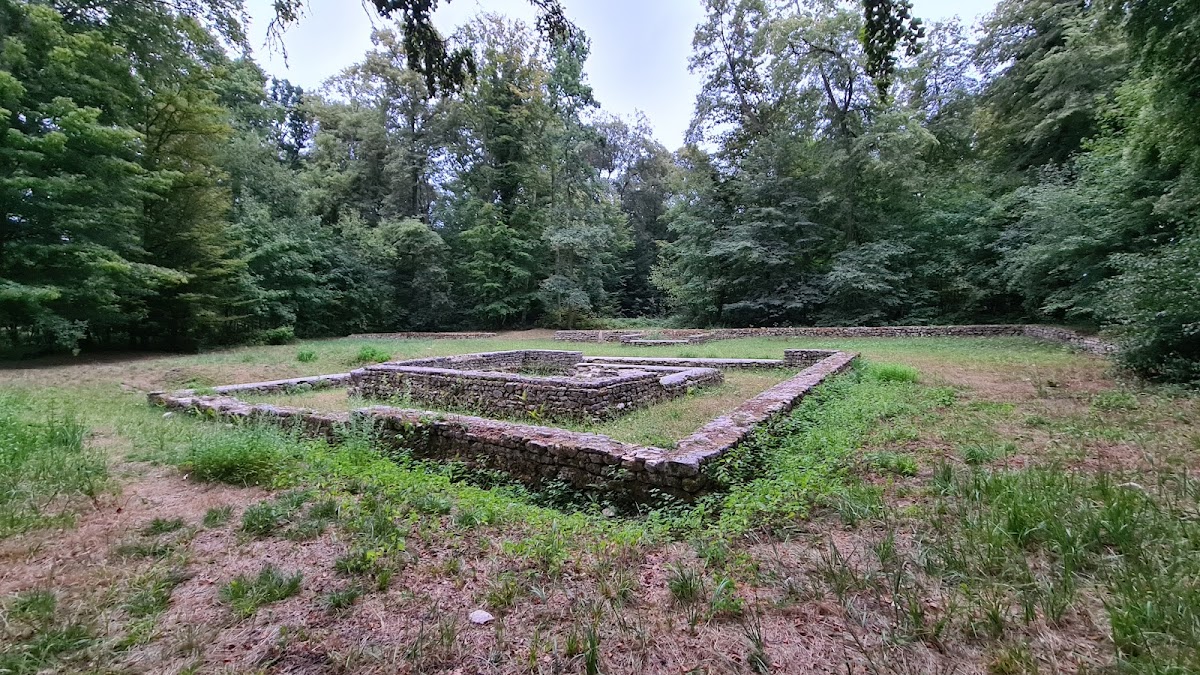
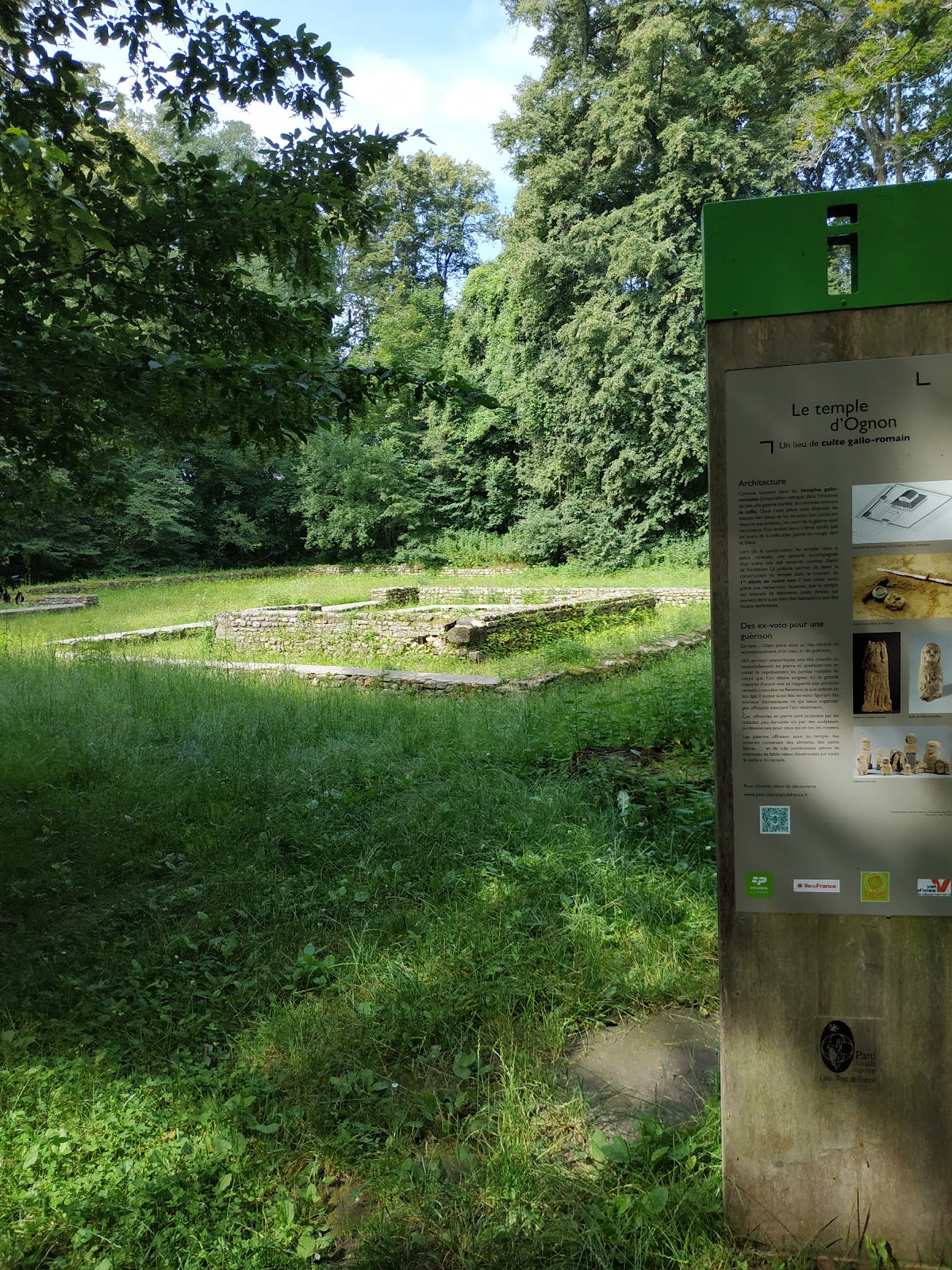
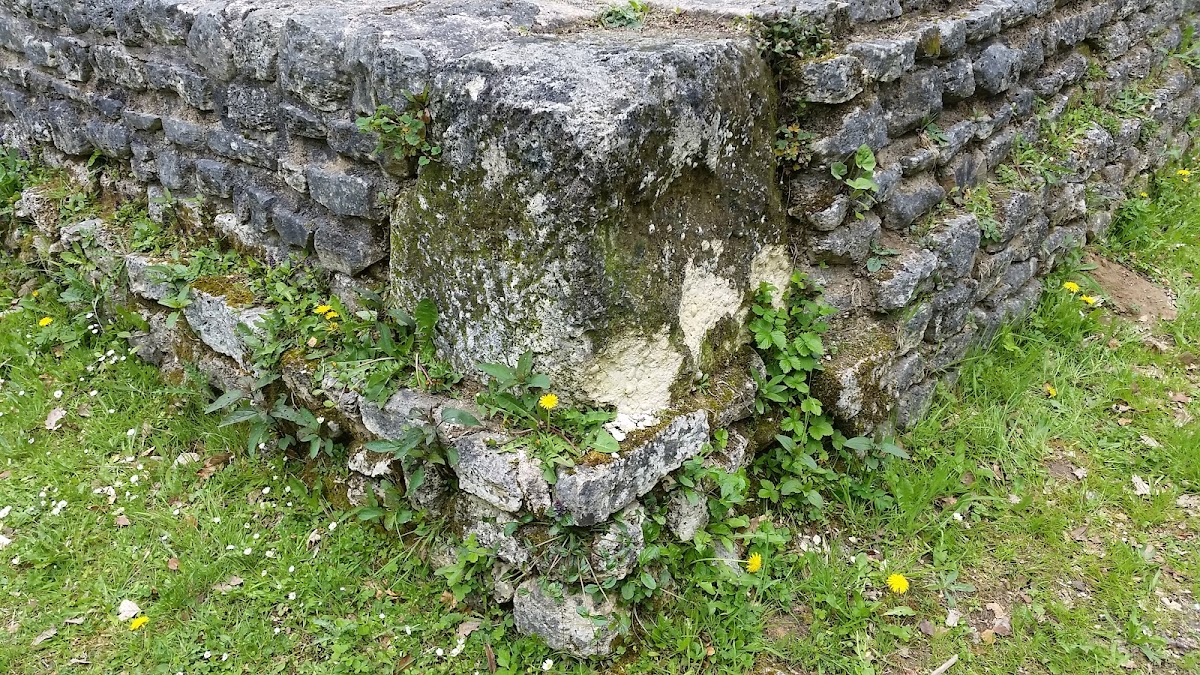
The surviving temple is represented by wall foundations rising approximately 0.5 to 1 metre above the ground. These foundations preserve the extent and layout of the fanum, while the earlier sanctuary is associated with a sandstone megalith, a wooden construction, and enclosing palisades.
Temple foundations
The visible foundations define the plan of the religious building and show its surviving construction at ground level. They are the principal remains of the Roman-period sanctuary and retain the physical outline of the site after its later dismantling for building stone.
Ritual and archaeological finds
Objects associated with the sanctuary include coins, ex-votos, offerings made to a deity in fulfillment of a vow or in connection with a request such as healing, fibulae, rings, personal ornaments, and animal bones. The excavated coins and other movable finds are preserved at the Museum of Art and Archaeology in Senlis rather than at the forest ruin.