Galgenberg in Vahlberg: A Prehistoric Burial Mound and Medieval Execution Site
Site at a Glance
- Popularity
- Very Low
- Country
- Germany
- Primary era
- Bronze Age
- Eras represented
- Stone Age, Bronze Age
- Civilizations
- Unclassified
- Site type
- Burial
- Remains
- Burial Mound
On this page12 sections
History
Prehistoric construction
Galgenberg in Vahlberg is a prehistoric burial mound in Klein Vahlberg, Germany, begun around 1800 BC at the transition from the Late Neolithic, the later Stone Age, to the Early Bronze Age, when bronze was in use. Its earliest phase covered two burials in which the dead were placed with their bodies bent, associated with the Bell Beaker culture, a prehistoric culture linked to distinctive bell-shaped pottery. A third burial held an uncremated body without grave goods.
In the Late Bronze Age, the mound was raised to about half its present height, and another person was buried on a bed of stones. It was later built up to its current height. An excavation in 1907 clarified the mound’s successive construction and burial sequence.
Early medieval burials
In the first half of the seventh century, a woman was buried within the mound. This was the Merovingian period, when a Frankish dynasty ruled much of western Europe. A later burial, in the seventh or eighth century, placed cremated remains on the mound’s summit.
The woman’s grave location and form, the mound’s size, and the quality of her grave goods suggest that she belonged to the upper social stratum of the local population. She may have been an Alemannic woman, one of the peoples of early medieval Europe, who brought jewelry from her homeland. Her grave goods point to contacts with the southern German cultural sphere.
Execution site and protection
During the Middle Ages and early modern period, the mound was used as an execution site with a gallows. Since March 1945, it has been protected as a natural monument, a legal status for a feature valued for its natural significance.
Remains
Mound and landscape
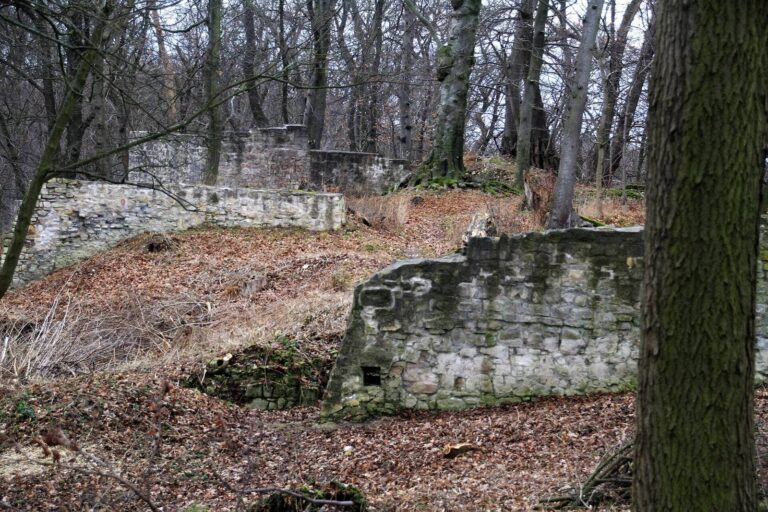
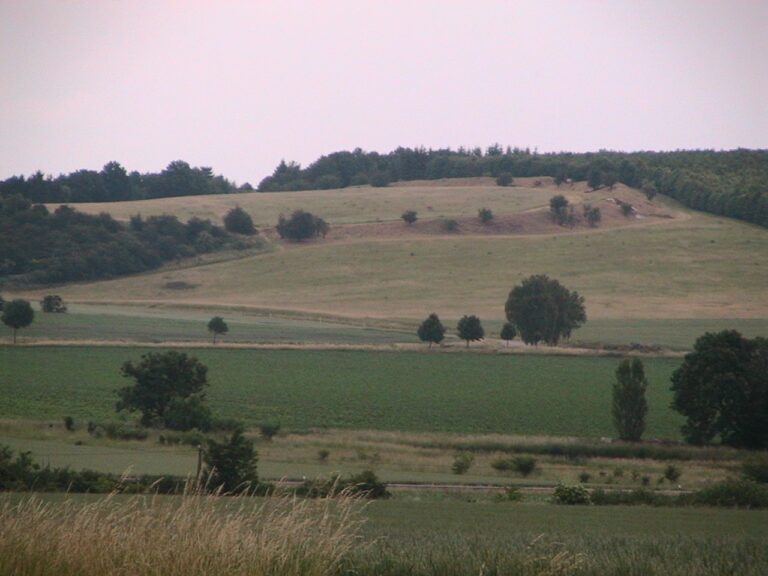
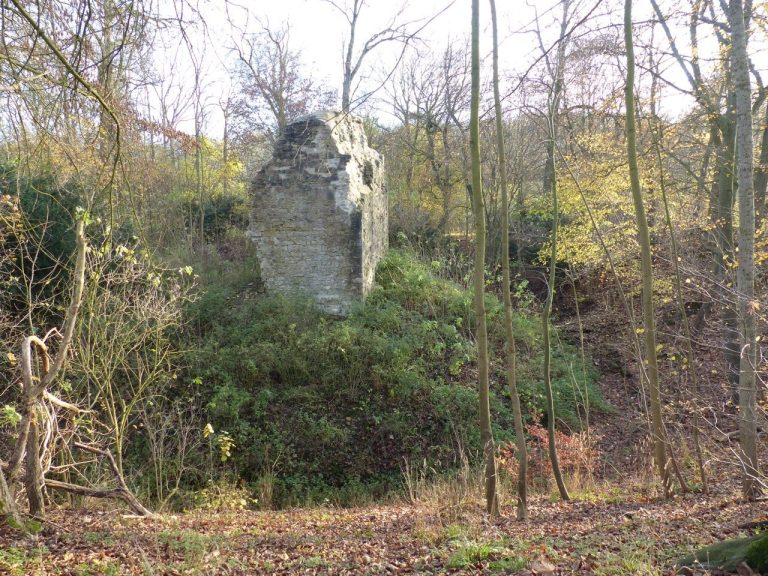
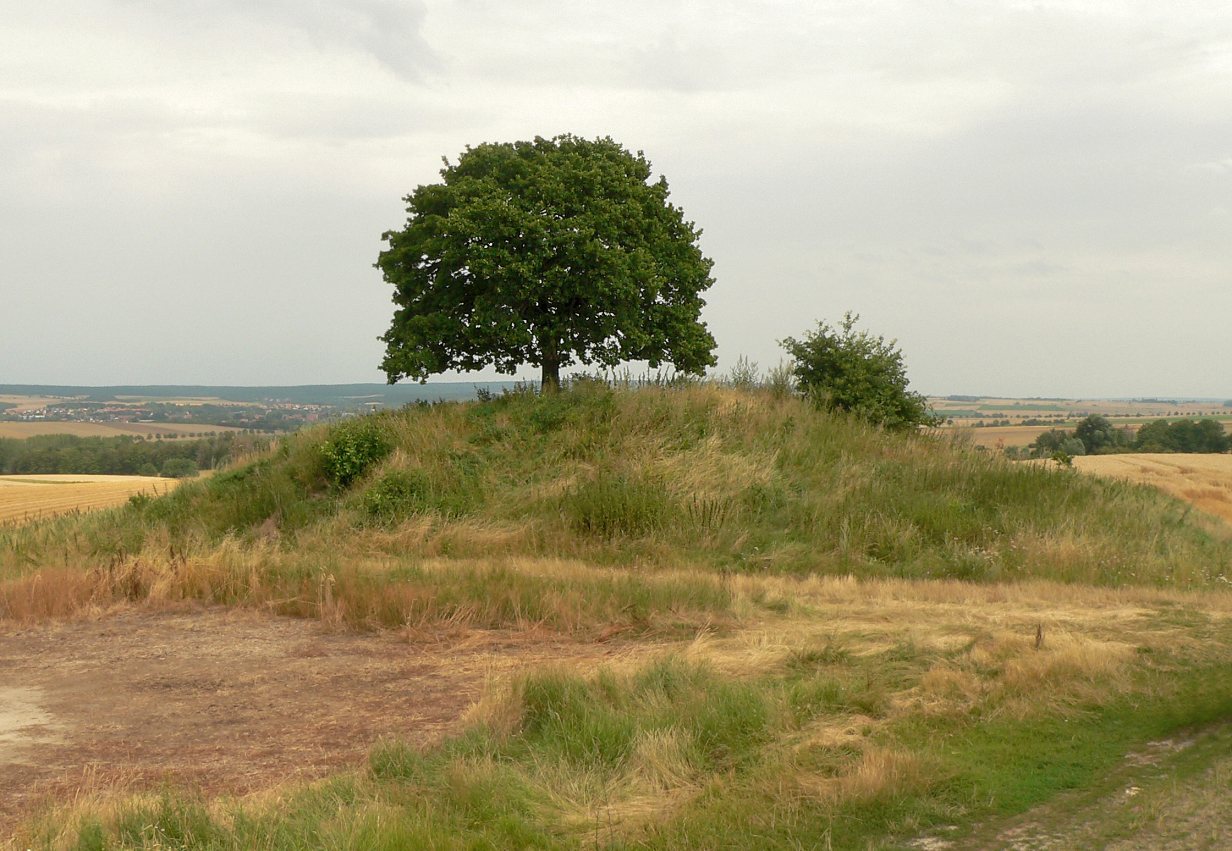
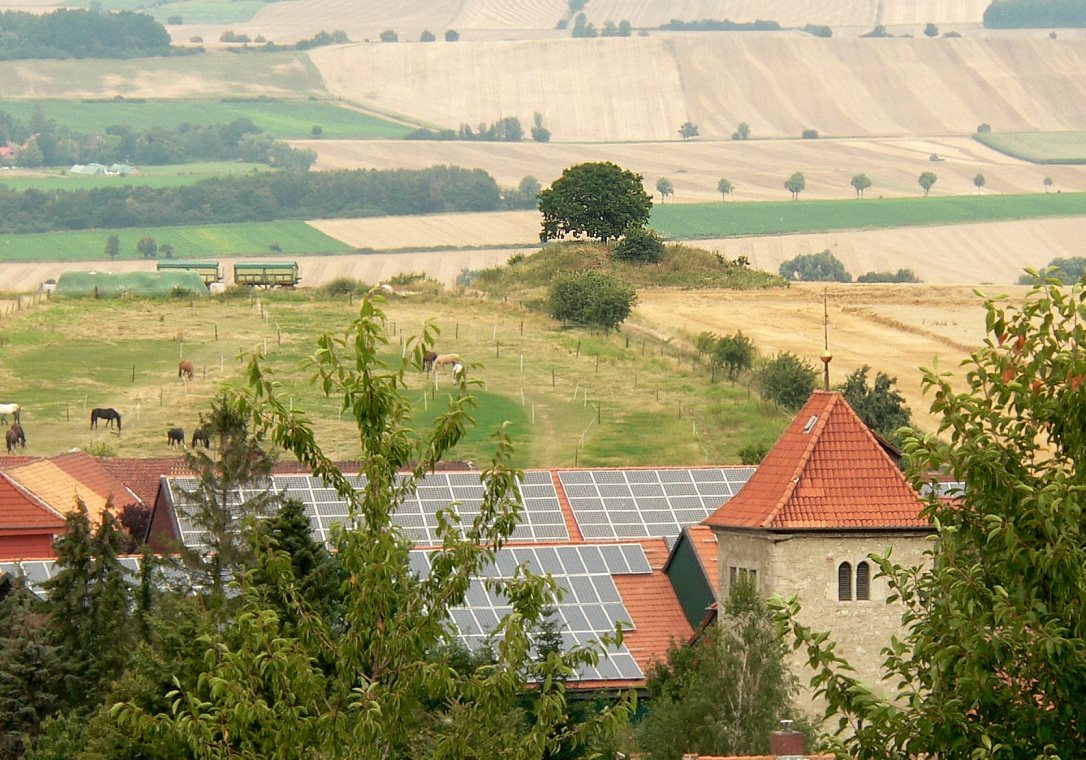
Galgenberg is about 20 metres in diameter and 4 metres high. It stands on a slight rise on a projecting spur, with a broad view across the Braunschweig region. The mound has a line of sight to Meescheberg, and the group’s raised positions made its burial places prominent in the landscape. An oak now grows on Galgenberg.
The surrounding burial group
Galgenberg belongs to a group between the Elm and Asse ranges that is described as princely graves, meaning elite burials rather than necessarily the graves of rulers. The group includes Meescheberg, south of Klein Vahlberg, which is 4 metres high and 45 metres across; a burial mound at Evessen; and the partly destroyed Muspott near Eilum. Two other mounds near Evessen, excavated in the eighteenth century, have since been removed.
Burial levels and the woman’s grave
The mound contains several burial levels. The woman’s grave lay 1.4 metres above the bed of stones and 2.2 metres below the mound surface. She was about 1.57 metres tall and slender.
Objects from the woman’s grave
Vessels and fittings
Among the grave goods were a pot with rounded sides and a flat base, and a nearly decayed wooden vessel with bronze-sheet fittings around its rim. Two further fittings of gilded bronze sheet carried interlaced patterns.
Beads and iron objects
The grave also contained blue and yellow glass beads, an oval iron buckle frame, chain-link-shaped iron objects, and a hook key that may have belonged to a group of items hung from a belt.
Fittings for securing clothing
Two buckles with shield-shaped pins and rectangular fittings, together with a solid-cast strap end of gilded bronze, formed a set of fittings for straps used to secure trousers around the calves. The strap end has animal-style ornament, a pattern formed from stylized animal shapes. Such sets were worn by wealthy Frankish and Alemannic women.