Heungcheonsa: A Royal Memorial Temple in Seoul
Site at a Glance
- Rating
- 4.4
- Popularity
- Low
- Country
- South Korea
- Primary era
- Early Modern
- Eras represented
- Early Modern, Modern
- Civilizations
- Unclassified
- Site type
- Religious
- Remains
- Monastery
On this page14 sections
History
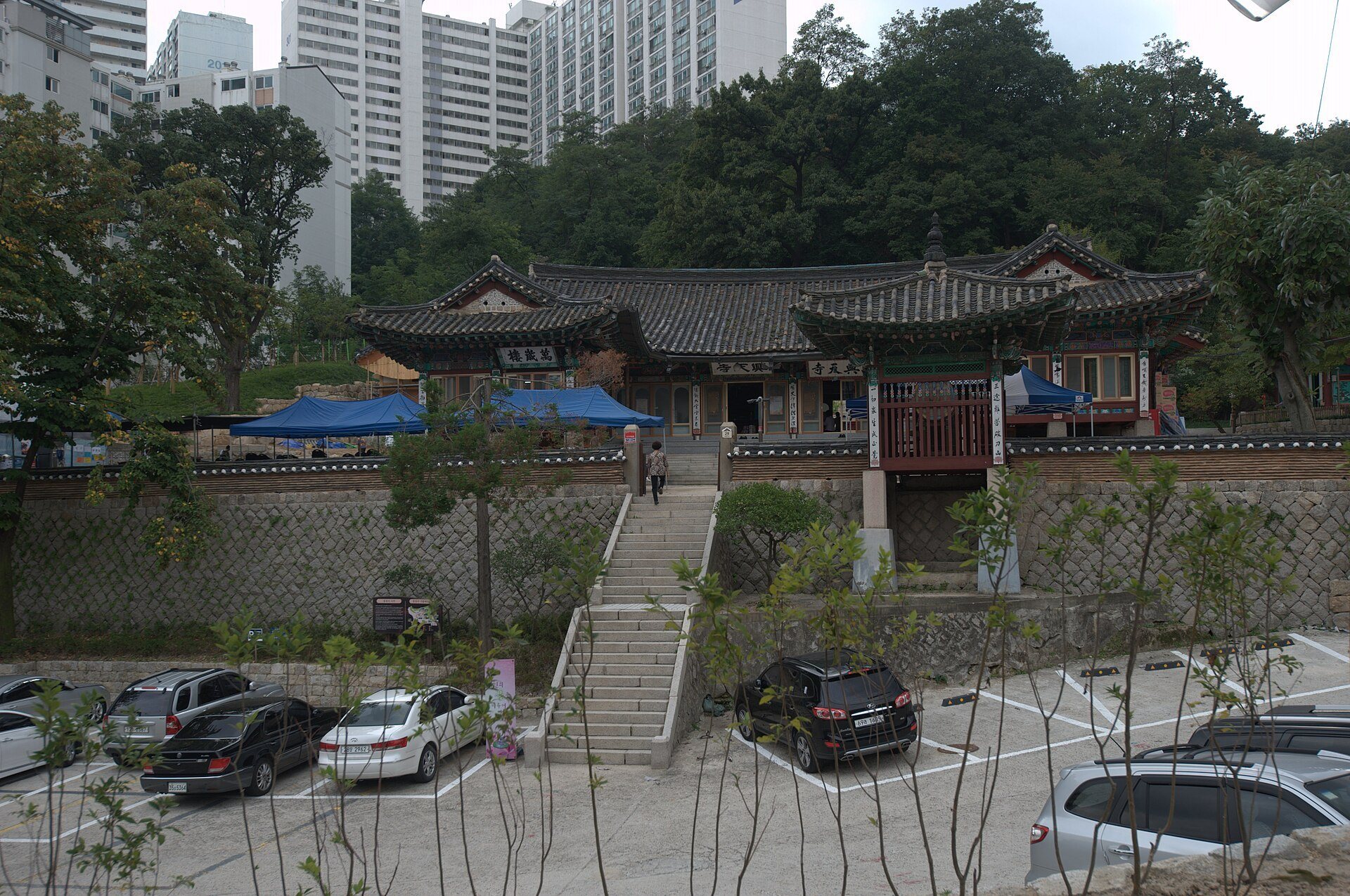
Heungcheonsa is a Korean Buddhist temple in Donam-dong, Seongbuk District, Seoul, South Korea. Founded in 1397 during the Joseon dynasty, it was established by King Taejo as a memorial temple for Queen Sindeok and became closely associated with her tomb and royal rites.
Foundation under King Taejo
Queen Sindeok died in 1396, and Taejo ordered her tomb to be created west of Gyeongbokgung in Hwanghwabang. He then commissioned Heungcheonsa to conduct prayers for her posthumous welfare. The temple’s first predecessor is also dated to 1396, while the principal foundation took place in 1397. Its original complex was completed in slightly less than a year.
Taejo personally inspected the construction, supplied food for the laborers, and held memorial rites for the queen before the works were finished. He also conducted Ullambana assemblies, Buddhist ceremonies for the dead, at the temple. After his abdication, he instructed King Jeongjong to complete the construction. The temple was known in connection with Queen Sindeok’s tomb as Jeongneungsa and later took the name Sinheungsa after a relocation.
Royal administration and Buddhist authority
In 1403, King Taejong reduced the land and slaves assigned to Heungcheonsa. He also moved Queen Sindeok’s tomb outside the capital because burial within the capital contravened regulations, reduced the status of her memorial rites, and dismantled the tomb’s ritual hall. Materials from that building were reused in the Taepyeonggwan reception building.
Royal connections nevertheless continued. Rainmaking rites took place at Heungcheonsa in 1406, 1411, and 1413, while Taejo’s request ensured that memorial ceremonies for Queen Sindeok continued. The temple’s reliquary hall was repaired, and assemblies for reciting the Golden Letter Lotus Sutra were held there.
In 1408, Heungcheonsa was transferred from the Jogye tradition to the Hwaeom branch of Buddhist learning. When Joseon Buddhism was reorganized in 1424 into doctrinal and meditative schools, the temple became the central administrative temple of the Seon school, the Korean tradition of Buddhist meditation, with authority over Seon temples throughout the kingdom. It underwent extensive rebuilding in 1429.
Royal ceremonies and foreign embassies
Heungcheonsa served religious and diplomatic functions during the fifteenth century. Japanese monks staying in Korea were lodged there in 1419 and 1423, and Ming envoys were escorted to the temple in 1427, 1428, 1430, and 1431. The site also hosted royal longevity ceremonies, prayers for the recovery of Queen Consort Sim, rites to bring or stop rain, and temporary receptions for foreign envoys.
In 1425, the temple bell was moved to the southern gate for secular timekeeping. Its signals marked the evening curfew and the reopening of the city gates. The reliquary hall was repaired eight years later, and King Sejong ordered its extensive reconstruction in 1435. Officials and Confucian scholars repeatedly urged that the temple be moved outside the capital or that its repairs be stopped, but Sejong continued to protect it because of its connection with Taejo.
A bronze bell was presented to Heungcheonsa in 1461. Repairs were permitted to continue in 1467 even while other public construction was suspended. Kings Yejong and Seongjong maintained the established rain rites and continued to use the temple for receiving Japanese envoys.
Destruction, relocation, and rebuilding
Heungcheonsa burned in 1504. The reliquary hall survived the fire but was destroyed in another blaze six years later. The ruined site remained unused for a period, after which King Jungjong permitted houses to be built there.
In 1569, the temple was rebuilt by royal order at the former site of Hamchujeong and renamed Sinheungsa. In 1669, the Confucian scholar and political figure Song Si-yeol petitioned for Queen Sindeok’s restoration to the royal ancestral shrine. Earlier records and petitions were presented, her posthumous title and honors were restored, and she was again enshrined as Taejo’s queen.
Monks including Seongmin, Gyeongsan, and Gyeongsin moved and rebuilt the temple near Jeongneung in 1794. New buildings followed during the nineteenth century. Chilseonggak was founded in 1846, Jeokjoam in 1849, Geuknakbojeon was completed in 1853, and Myeongbujeon in 1855.
With the support of the Heungseon Daewongun, the father of King Gojong and regent during his early reign, Daebang and monks’ quarters were built and the temple was extensively reconstructed in 1865. It then resumed the name Heungcheonsa. A 42-armed image of Avalokiteshvara, the Mahayana Buddhist bodhisattva associated with compassion, was enshrined in 1891, and Myeongbujeon was repaired in 1894.
Heungcheonsa is now affiliated with the Jogye Order of Korean Buddhism and belongs to its First District as a branch temple of Jogyesa. Daebang Hall has been designated a National Registered Cultural Heritage of South Korea.
Remains
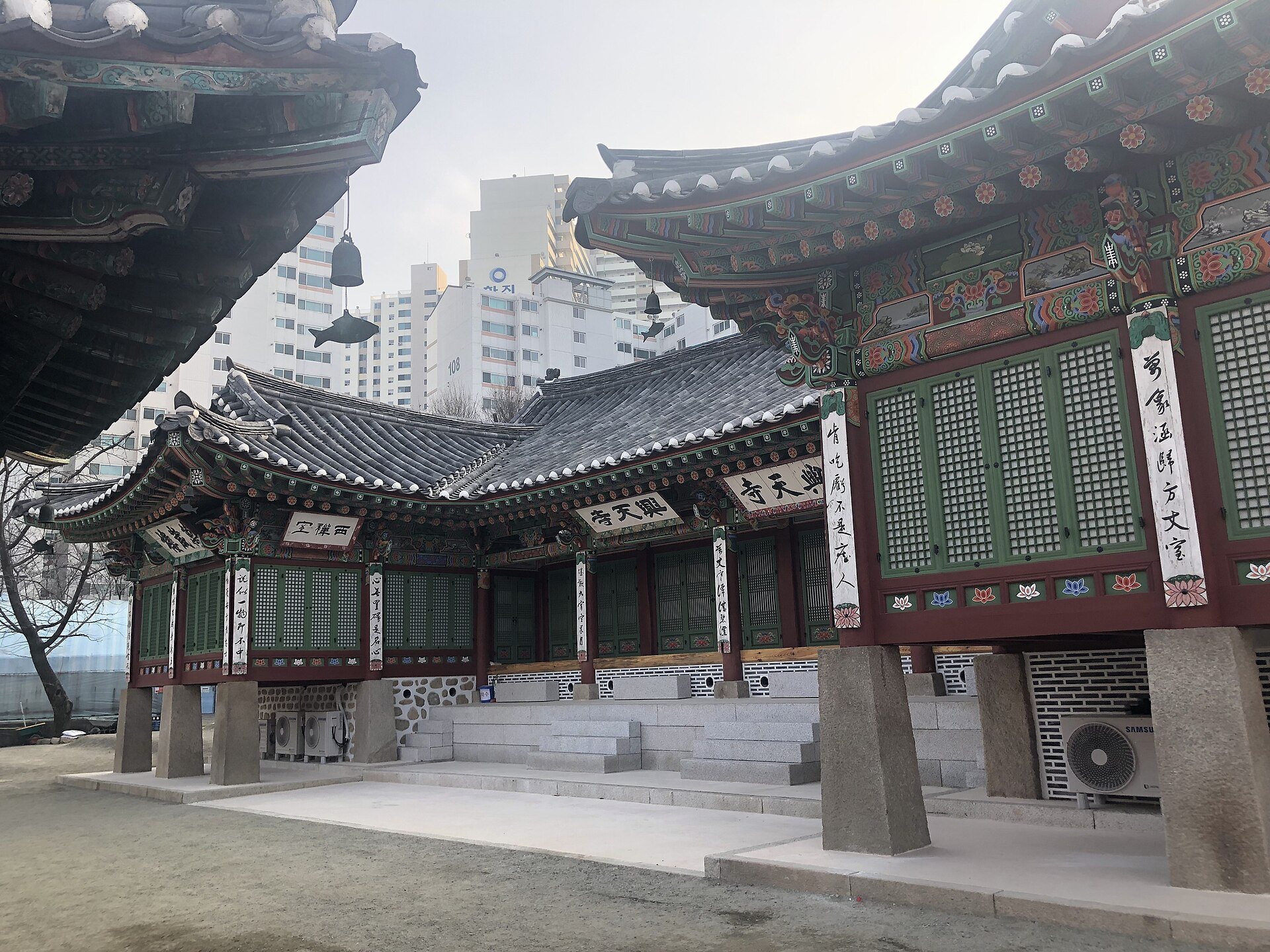
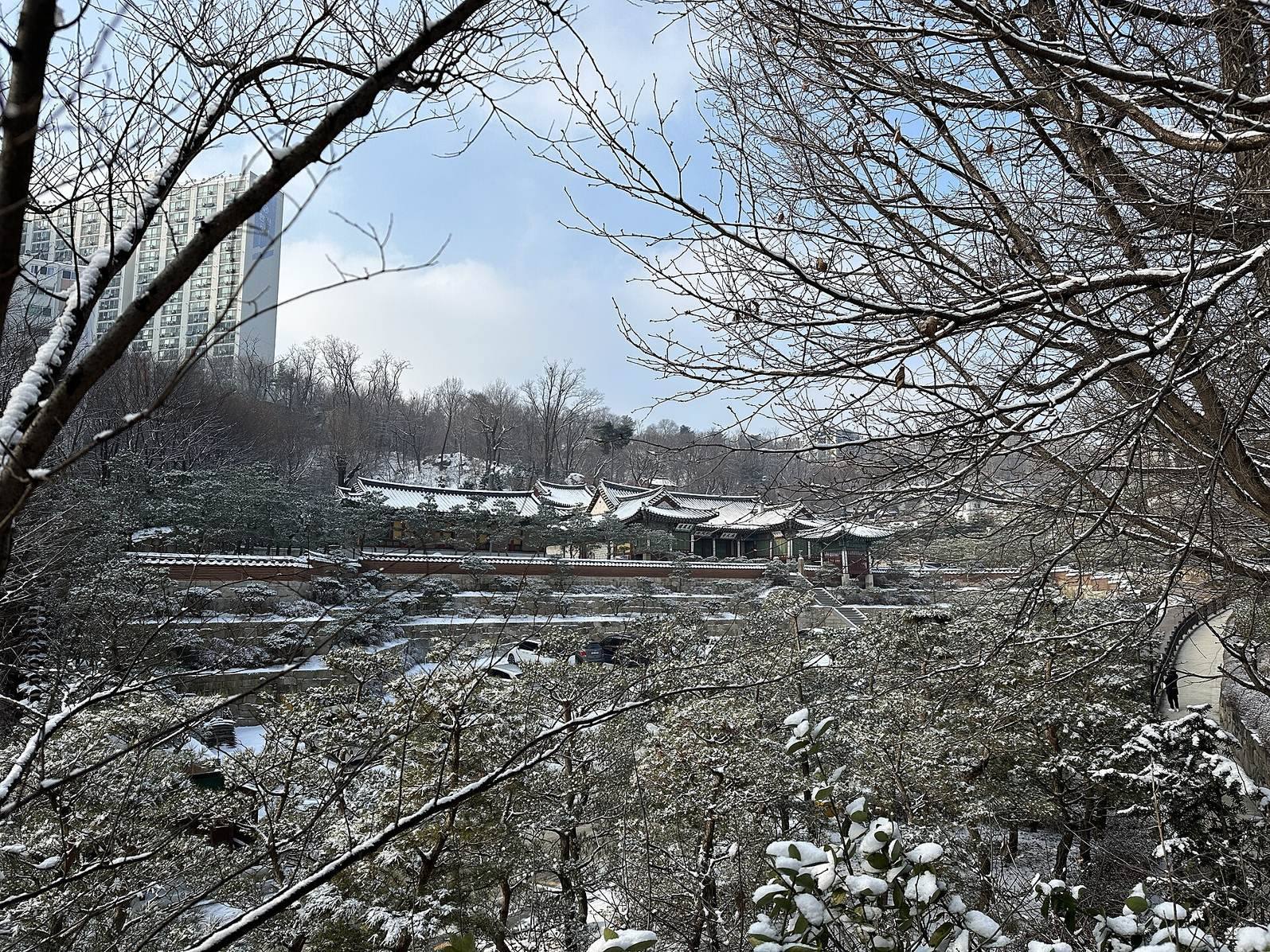
The present Heungcheonsa complex occupies the site near Jeongneung established through the 1794 relocation and reconstruction. Its buildings include Daebang Hall, monks’ quarters, Chilseonggak, Jeokjoam, Geuknakbojeon, and Myeongbujeon. The earlier complex was much larger, containing about 170 kan, or traditional Korean architectural bays, together with Buddhist halls, living quarters, a main gate, corridors, kitchens, and bathrooms. Taejo granted the temple approximately 1,000 gyeol of farmland.
Principal buildings
Daebang Hall and monks’ quarters
Daebang Hall belongs to the nineteenth-century reconstruction supported by the Heungseon Daewongun. It stands within the current temple complex with the monks’ quarters, which were also built during the extensive rebuilding of 1865. Daebang Hall is a National Registered Cultural Heritage of South Korea.
Geuknakbojeon and Myeongbujeon
Geuknakbojeon was completed in 1853, while Myeongbujeon was completed in 1855 and repaired in 1894. Myeongbujeon is associated with paintings and images connected with Ksitigarbha, a bodhisattva linked with the protection of beings in the afterlife, and the Ten Kings, judges of the dead in East Asian Buddhist belief.
Chilseonggak and Jeokjoam
Chilseonggak was founded in 1846 and Jeokjoam was built in 1849. They form part of the group of buildings established or reconstructed after the temple moved near Jeongneung in 1794.
Earlier structures and surviving objects
Reliquary hall
A three-story reliquary hall, a building for enshrining Buddhist relics, was begun north of the temple in 1398 and completed in 1399. It was repaired and extensively rebuilt during the Joseon period. The hall survived the 1504 fire but burned in 1510.
Bells
The temple bell was moved to the southern gate in 1425 so that it could transmit curfew and gate-opening signals. A large Heungcheonsa bell was later transferred to Deoksugung Palace, where it remains and is designated National Treasure No. 1460.
Images, paintings, and scriptures
Heungcheonsa’s cultural-property holdings include paintings and images associated with Ksitigarbha and the Ten Kings, a Medicine Buddha painting, wooden seated bodhisattva and Buddha images, a gilt-bronze seated thousand-armed Avalokiteshvara, ritual banners, Buddhist scriptures, and paintings associated with the temple’s halls. The 42-armed Avalokiteshvara image installed in 1891 is also part of the temple’s religious and artistic heritage.