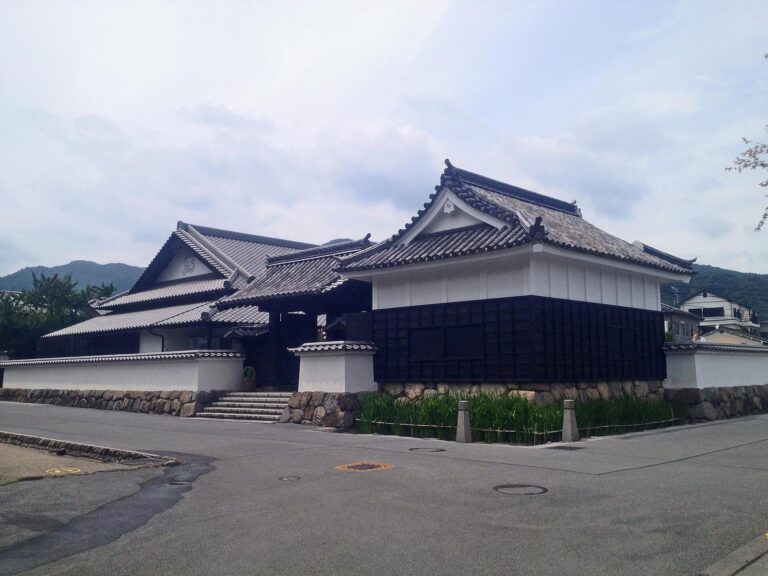
Funai Castle: A Japanese Castle and Seat of Successive Lords
Site at a Glance
- Popularity
- High
- Country
- Japan
- Primary era
- Early Modern
- Eras represented
- Early Modern
- Civilizations
- Tokugawa, Toyotomi regime
- Site type
- Military
- Remains
- Castle
On this page8 sections
History
Funai Castle, also known as Ōita Castle, was a Japanese castle built on level ground at the mouth of the Kawahara River in Japan between 1597 and 1599. Fukuhara Naotaka is credited with its construction, begun after he abandoned the Ōtomo residence. The first phase included the Honmaru, the innermost enclosure, and the Ni-no-maru and San-no-maru, successive enclosures.
Foundation and early succession
Tradition says that after the Ōtomo, a samurai clan, were deposed, Hayakawa Nagatoshi received the castle, which later passed to Fukuhara. When Fukuhara was exiled, Hayakawa regained control. He had backed the losing faction at the Battle of Sekigahara, a major conflict fought in 1600, and took his own life after its defeat.
Successive castle lords
In 1601, Takenaka Shigetoshi received Funai Castle with an income of 20,000 koku, a traditional measure of rice yield used to express the economic scale of a lord’s domain. He oversaw repairs from 1602 to 1611, including the construction of a multi-storey keep. Hineno Yoshiaki became lord in 1634 with the same income.
In 1658, Matsudaira Tadaaki, from a collateral branch of the Matsudaira house known as the Ōgyū-Matsudaira, took control with an income of 22,000 koku. His descendants remained at the castle until 1868. The Yamazato-no-maru enclosure was used for tea ceremonies, Noh, a traditional form of Japanese musical drama, and moon viewing.
Damage and rebuilding
A fire in 1743 and earthquakes in 1769 and 1854 damaged or destroyed many castle buildings. Air raids in 1945 caused further destruction. Some components were rebuilt during the nineteenth century.
Remains
Enclosures and defensive works
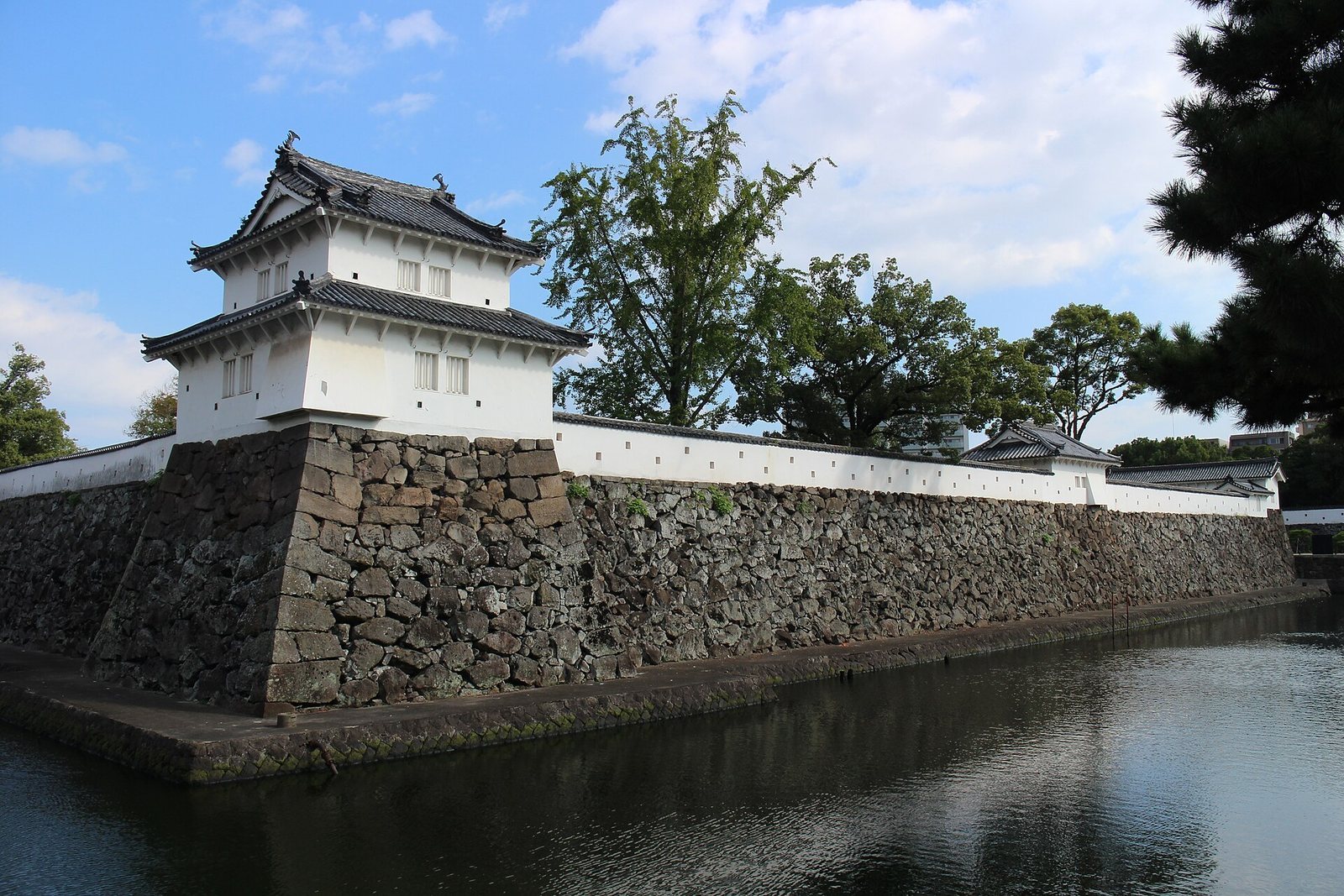
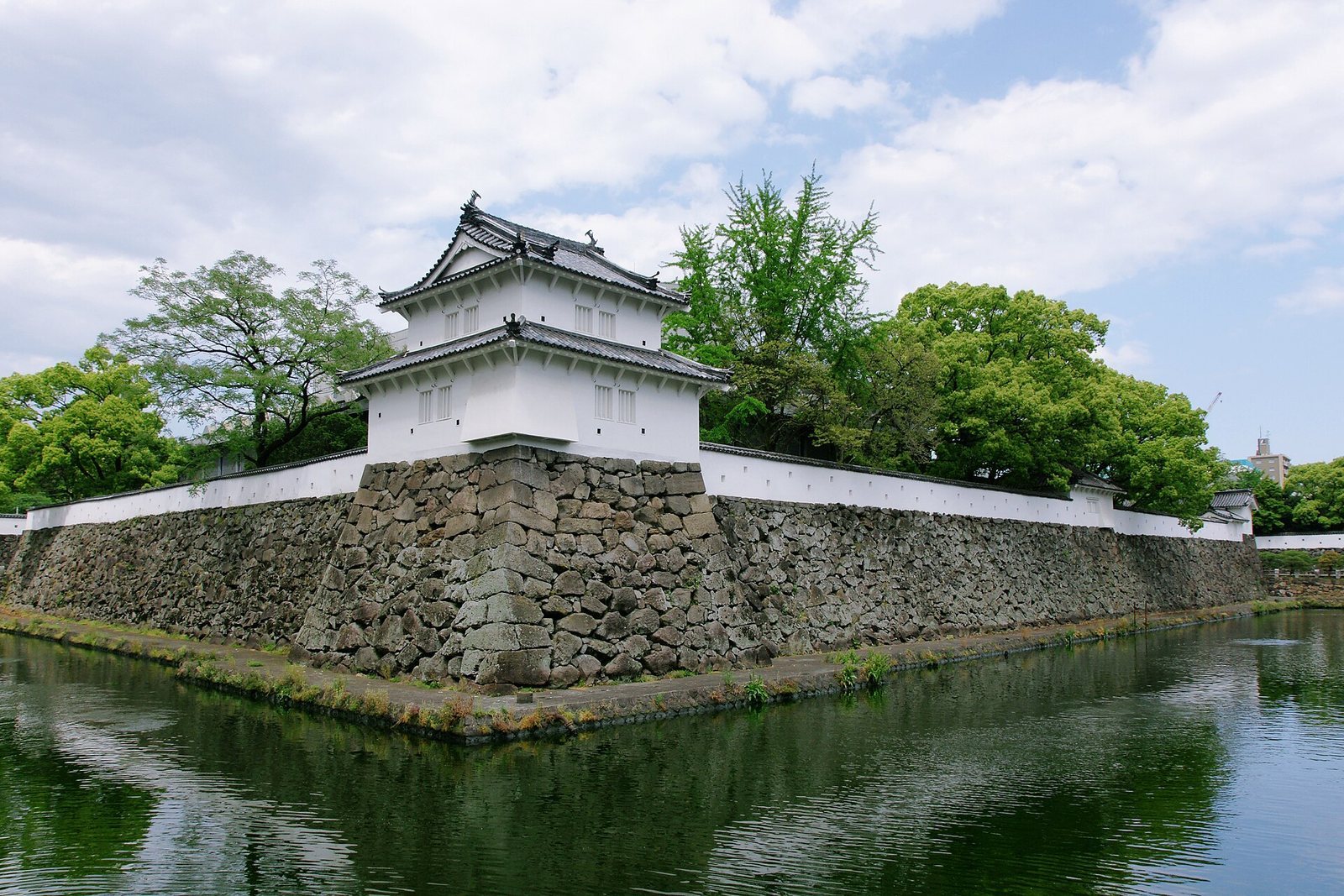
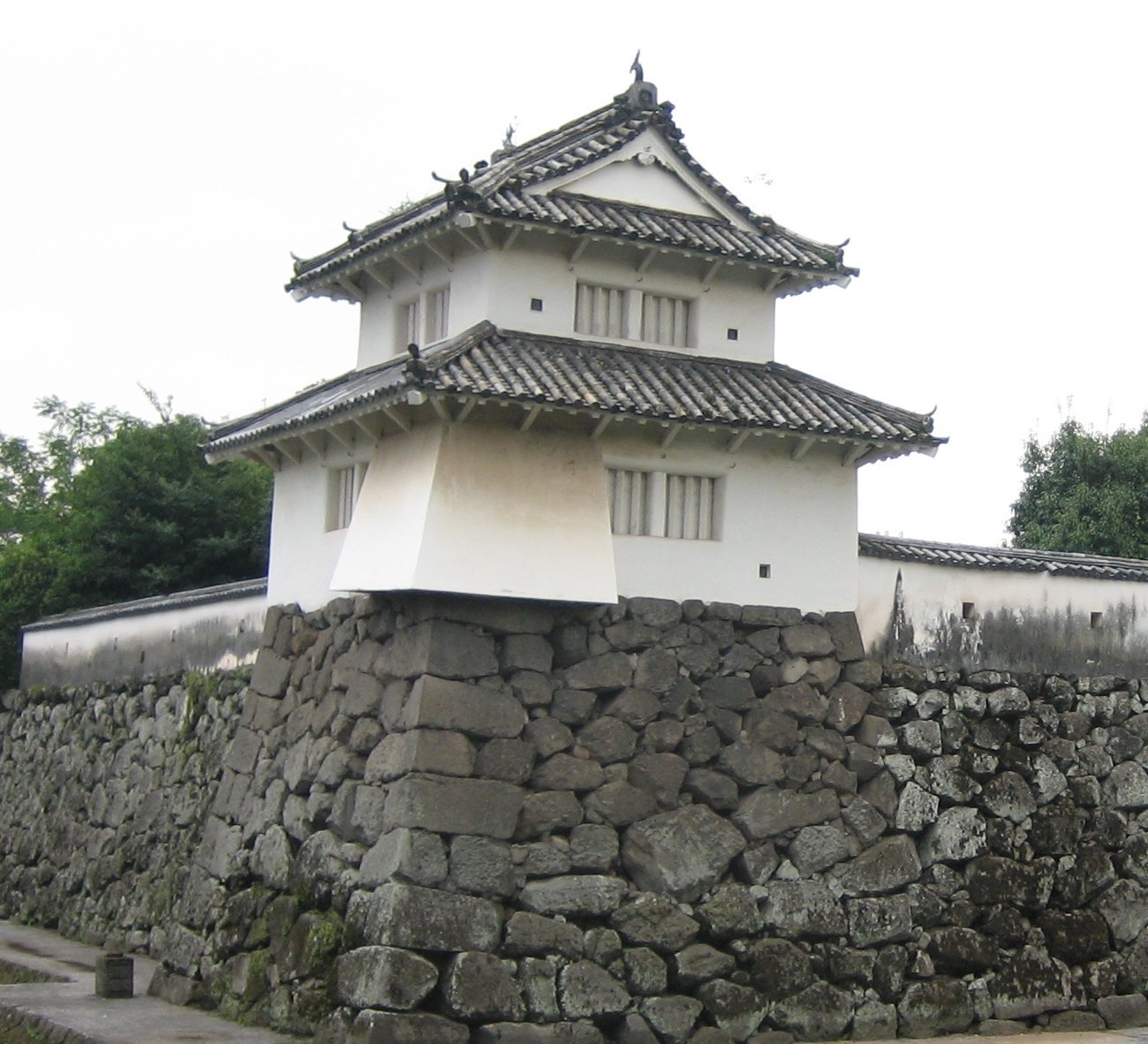
Funai Castle’s remains reflect its former layout as a level-ground fortress. The innermost Honmaru formerly bordered Ōita Bay to the north and was protected by the Ni-no-maru and Yamazato-no-maru. A moat divided the Ni-no-maru into a western section, the Nishi-no-maru, and an eastern section, the Higashi-no-maru. Stone walls and a multi-storey keep defended the Honmaru and Ni-no-maru. At the keep’s base, irregularly shaped blocks were used alongside neatly cut stones at the corners. Sections of stone and plaster walls and parts of the moat survive.
Towers and main gate
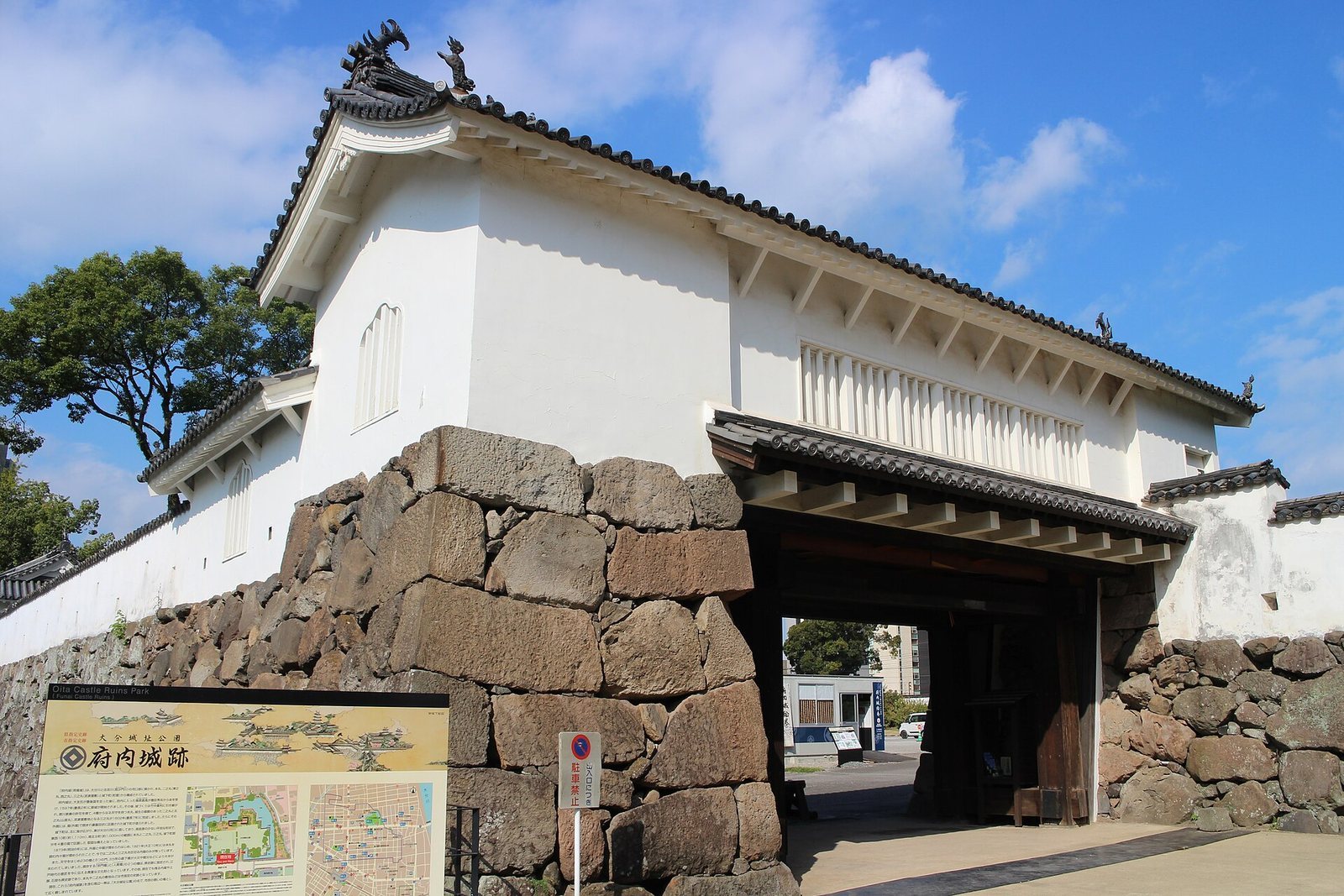
Castle towers, known as yagura, formed part of the defenses. The Shūmon-yagura and Hitojichi-yagura remain, while the Tōchaku-yagura and Ōte-mon, the main gate, are reconstructions.
Rōkakyō bridge
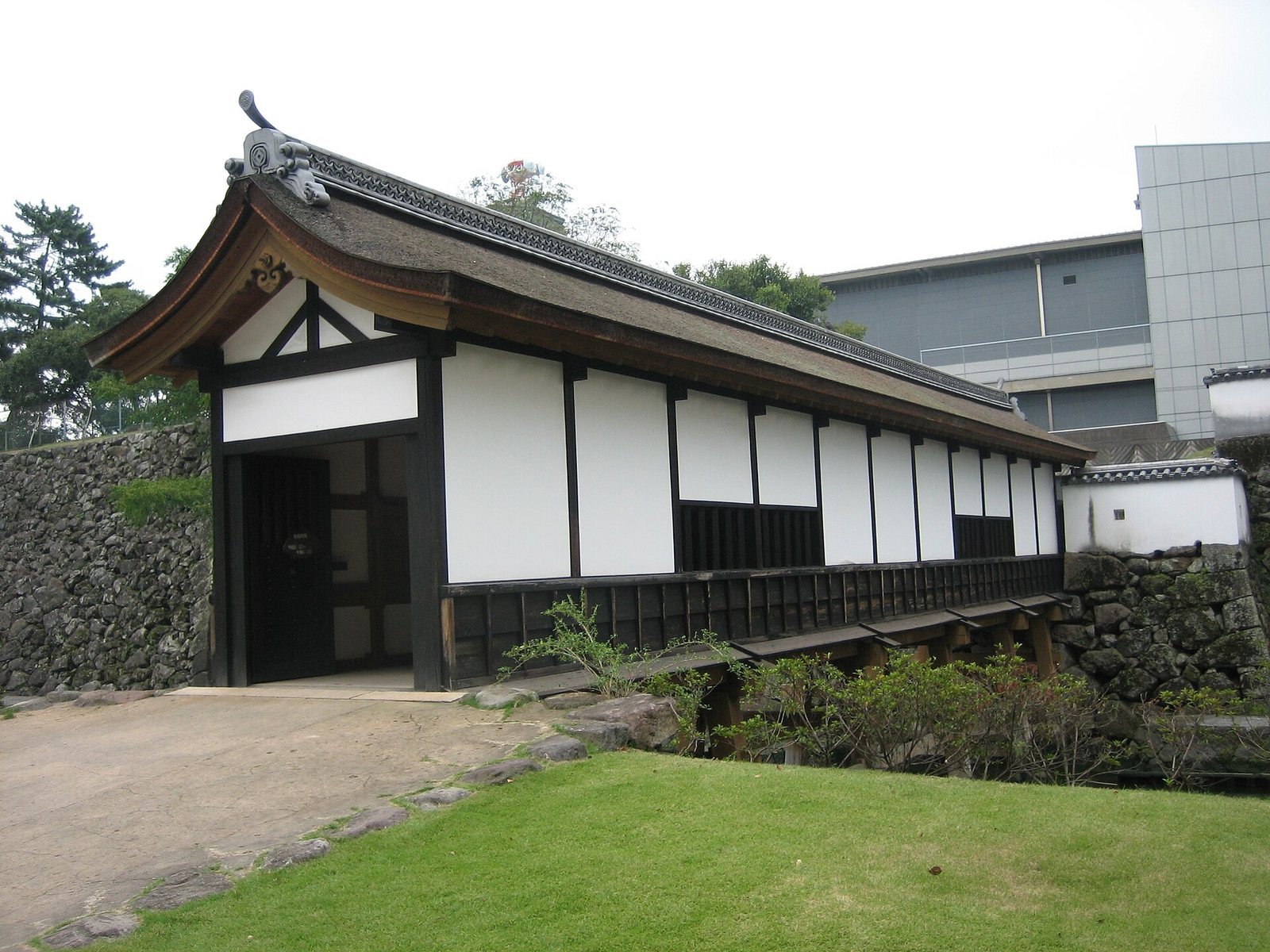
The covered Rōkakyō bridge, reconstructed in 1995, connects Yamazato-no-maru with Nishi-no-maru. Historical drawings depicting a bridge at Ōte-mon served as a guide for the reconstruction.