Hachiman Kamado Shrine: A Historic Shinto Shrine in Beppu, Japan
Site at a Glance
- Rating
- 4.3
- Popularity
- Low
- Country
- Japan
- Primary era
- Unclassified
- External website
- Open
- Eras represented
- Unclassified
- Civilizations
- Unclassified
- Site type
- Religious
- Remains
- Sanctuary
On this page8 sections
History
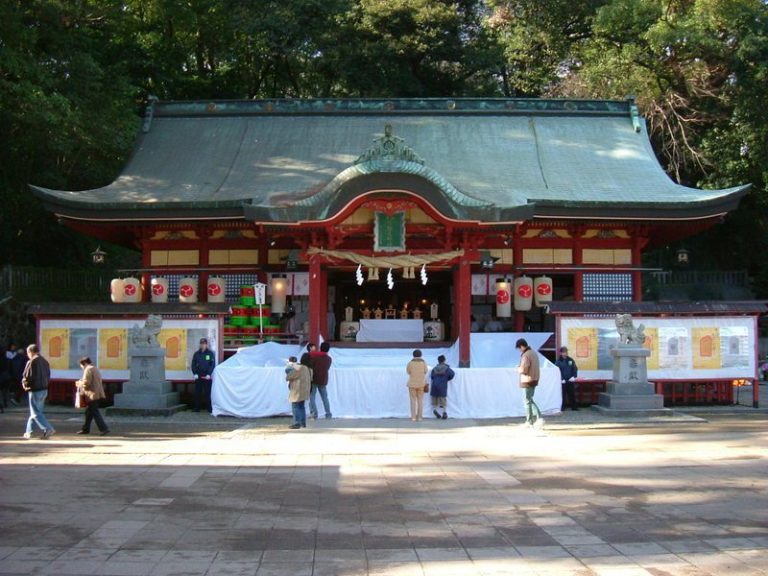
Hachiman Kamado Shrine is a Shinto shrine in Beppu, Japan, traditionally founded in AD 727 and associated with Hachiman, a deity linked especially with Emperor Ojin and regarded as a protector of the imperial realm and warriors. The shrine stands within the traditions of early Japanese imperial history and remains connected with the worship of 36 sacred beings, or kami.
Early Imperial Traditions
The shrine’s earliest traditions reach back to the reign of Emperor Nintoku, conventionally dated to AD 312–399. During a westward expedition, the legendary imperial prince Yamato Takeru and Empress Jingu are said to have established a temporary palace at Kameyama in Kamado Estate. There, they enshrined 33 kami, understood in Japanese religious tradition as deities or sacred spiritual presences.
The principal deities now associated with Hachiman Kamado Shrine are Emperor Ojin, Emperor Chuai, and Empress Jingu. Jingu is traditionally regarded as the consort of Chuai and the mother of Ojin. Together with 33 additional kami, these figures form the shrine’s traditional total of 36 enshrined deities.
The Traditional Foundation in AD 727
The shrine traditionally dates its foundation to March 15, AD 727, during the Jinki era, the Japanese era name used from AD 724 to 729. According to this account, the spirits of Emperor Chuai and Emperor Ojin descended from Usa in Buzen Province to Hojomine in Kamado Estate. They then moved to Mount Ogoshi, where they were enshrined at Kamado Shrine.
In AD 826, the spirit of Empress Jingu was brought from Usa, a historic locality in present-day Oita Prefecture associated with the major Hachiman shrine Usa Jingu. Following this addition, the shrine was understood to enshrine 36 kami and became known as Hachiman Kamado Shrine.
Alternative Foundation Tradition
A different account appeared in the 1803 Gazetteer of Bungo Province. Rather than assigning the foundation to the events of AD 727, it attributed the shrine’s establishment to Otomo Yoshinao, a medieval Japanese military leader traditionally regarded as the first head of the Otomo family. Yoshinao lived from 1172 to 1223.
Turtle Traditions
The shrine’s identity is also associated with the turtle. In AD 848, a white turtle was captured in a river in Oita District and presented to Emperor Ninmyo. The event was treated as auspicious, and the era name was changed to Kashō. The river has been identified either with a watercourse in present-day Kamegawa, Beppu, or with the Oita River in the Yufu and Oita area.
These turtle associations are connected with the shrine’s traditional foundation during the Jinki era, its location in Uchikamado, and its buildings on Kameyama. A turtle-themed mascot of the J.League football club Oita Trinita is regarded as having its birthplace at the shrine. At the beginning of the year, the club’s managers and players traditionally perform victory prayers there.
Remains
Mountain Precinct and Stone Steps
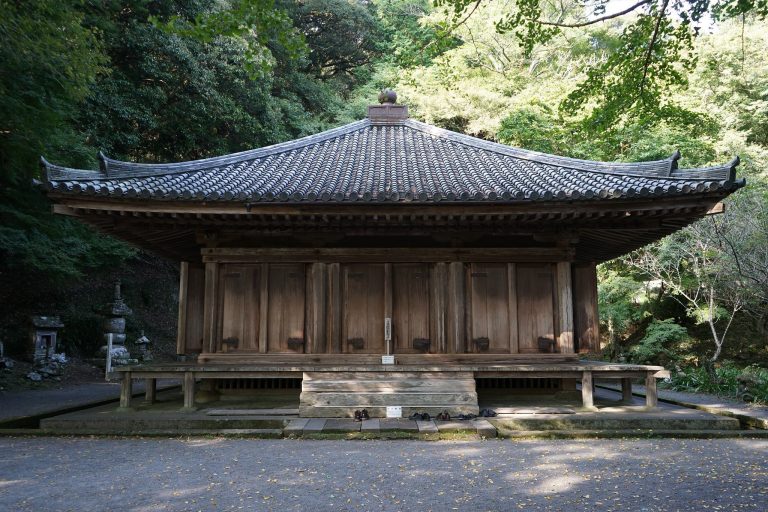
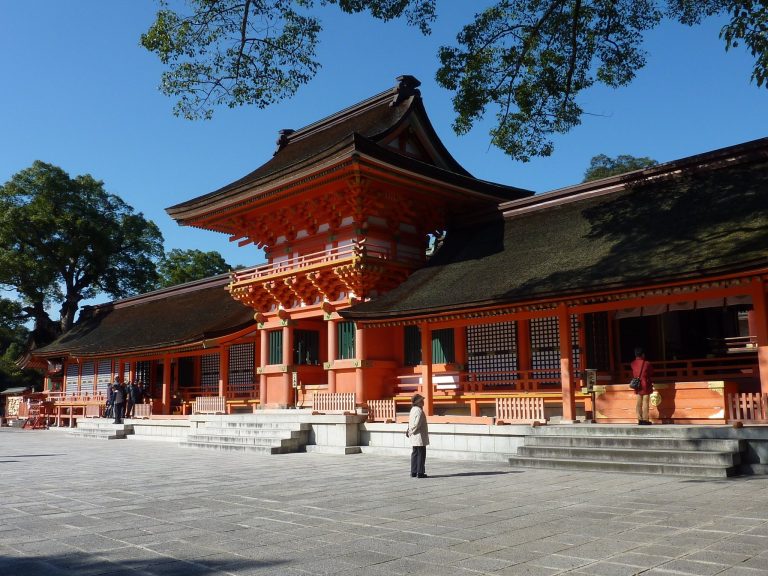
Hachiman Kamado Shrine stands in Uchikamado, Beppu, while its buildings occupy Mount Kameyama. The precinct includes a flight of 99 stone steps, which forms one of its defining physical features. The lower steps are carefully constructed, whereas the upper steps are more roughly made.
This arrangement is linked to a local ogre tradition. An ogre agreed to build 100 steps in a single night but fled at dawn after completing only 99. A stone sandal said to have been left behind by the departing ogre remains within the shrine precinct, connecting the legend with a surviving object.
Sacred Turtle
A sacred turtle statue also stands in the precinct. Tradition holds that a person may receive a wish by stroking the statue while facing the direction considered favorable. The statue gives physical form to the turtle associations that link the shrine with the white turtle presented to Emperor Ninmyo in AD 848 and with the shrine’s traditions of place and foundation.