Kamezuka Kofun: A Keyhole-Shaped Burial Mound in Japan
Site at a Glance
- Rating
- 4.2
- Popularity
- Low
- Country
- Japan
- Primary era
- Classical
- External website
- Open
- Eras represented
- Classical
- Civilizations
- Yamato
- Site type
- Burial
- Remains
- Burial Mound
On this page11 sections
History
Kamezuka Kofun is a keyhole-shaped burial mound in Japan, located in Ōita City and built during the Kofun period, an era associated with large elite tombs and powerful regional leaders. Constructed in the Toyokuni area from the end of the fourth century to the first half of the fifth century, probably in the early fifth century, it is among the largest kofun in Ōita Prefecture, together with Ogumayama Kofun.
Burial of an Amabe Leader
Tradition identifies the mound as the tomb of Amabe no Kimi, a title associated with the supposed leader of the Amabe people. The Nihon Shoki, one of Japan’s earliest major historical chronicles, describes the establishment of an Amabe community or organization in this area. That reference supports the interpretation that a leader of the Amabe people may have been buried at Kamezuka Kofun, although the identification remains traditional rather than certain.
Recognition of the Kofun Cluster
Residential development and later surveys of nearby burial mounds revealed that Kamezuka Kofun belonged to a wider group, now known as the Kamezuka Kofun Cluster. Extensive looting in antiquity destroyed the stone coffin and removed most of the grave goods, but the mound itself retained a relatively well-preserved form.
Preservation and Presentation
Little maintenance had taken place around the mound before the 1990s. After Kamezuka Kofun was designated a National Historic Site on March 28, 1996, large-scale preservation and restoration created Kamezuka Kofun Park and incorporated the mound into a broader heritage and tourism project. The adjacent Amabe Kofun Museum was established as part of this effort, displaying finds from the mound and using dioramas to explain kofun from different parts of Ōita Prefecture.
Remains
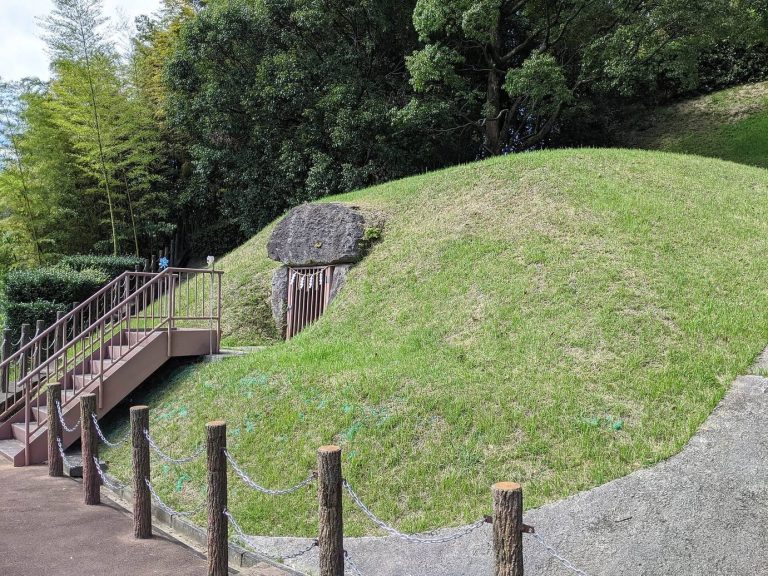
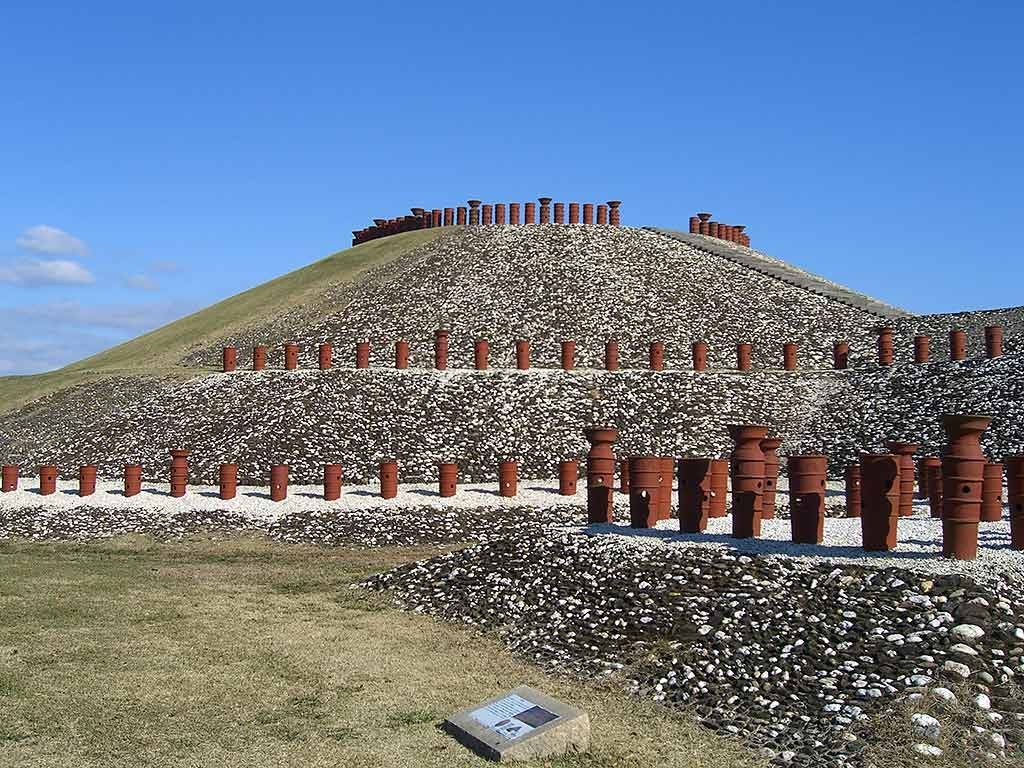
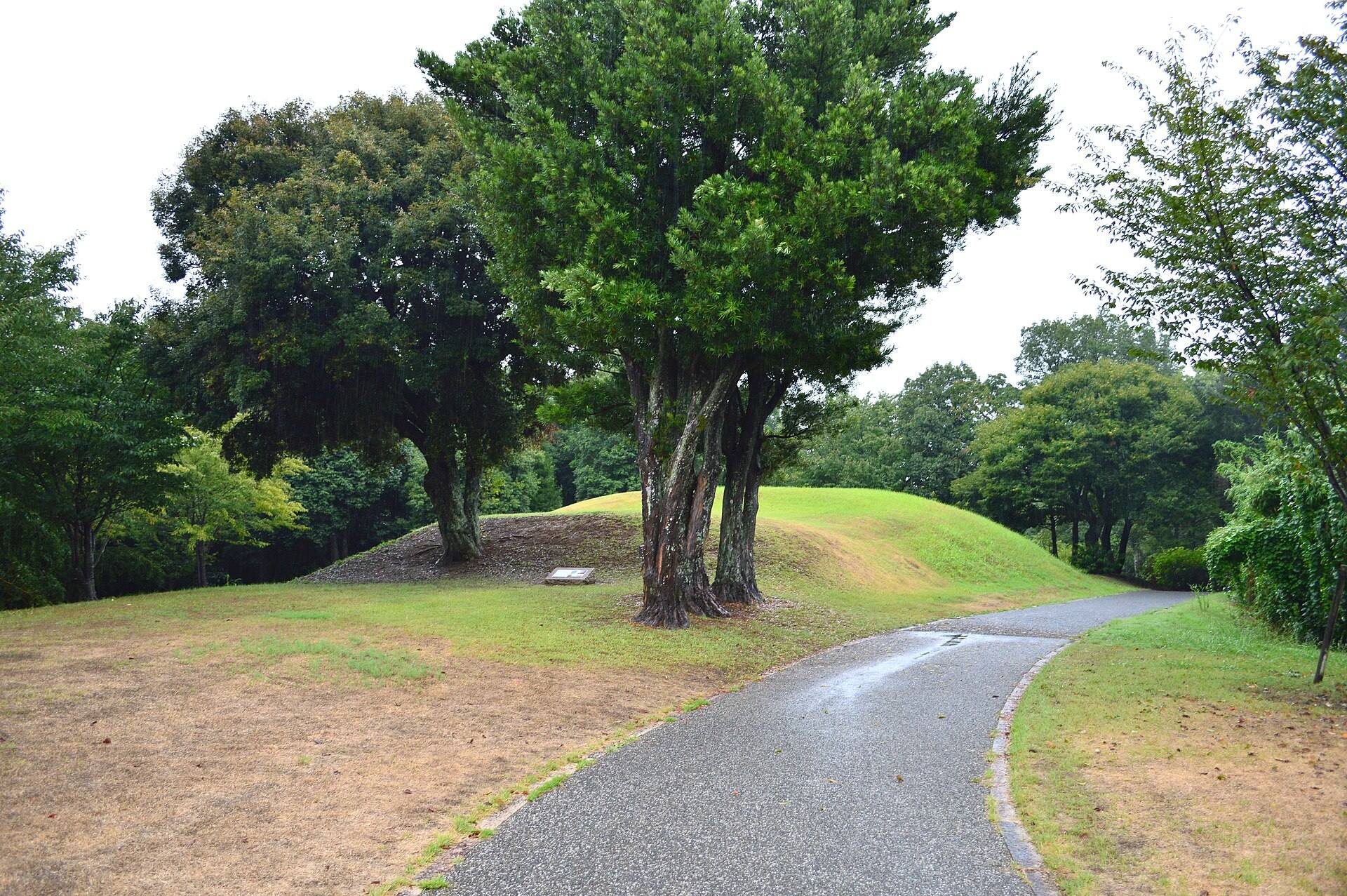
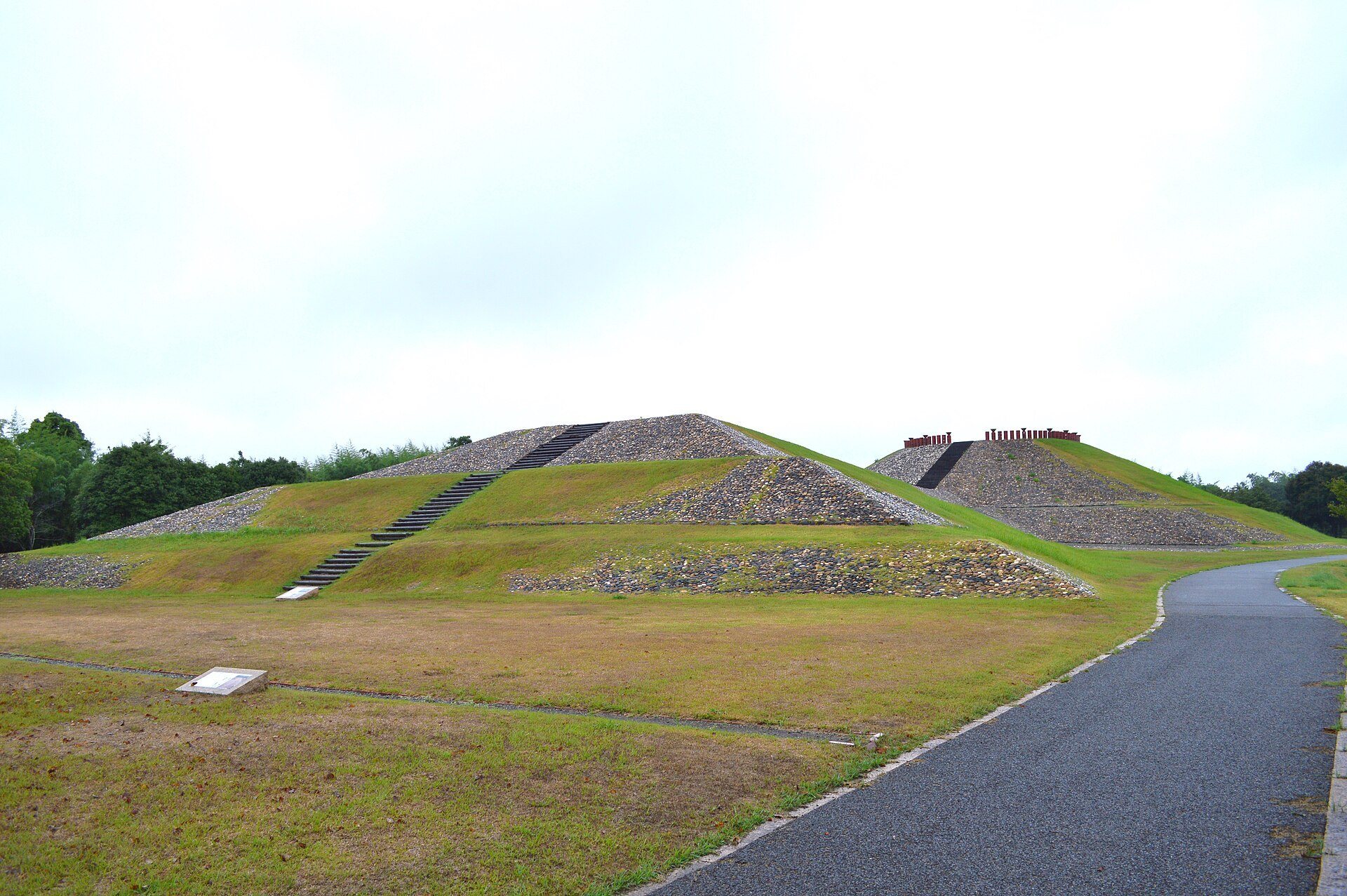
Kamezuka Kofun stands on a hill on the western bank of the mouth of the Nyu River, in the Sato area of Ōita City. Its three-tiered form is a zenpō-kōen-fun, a keyhole-shaped mound made from a square front section joined to a circular rear section. The mound measures 116 meters in length overall. Its south-facing front section is 52 meters long and 7 meters high, while the circular rear section is 64 meters across and 10 meters high.
Mound Structure and Surface Features
Keyhole-Shaped Mound
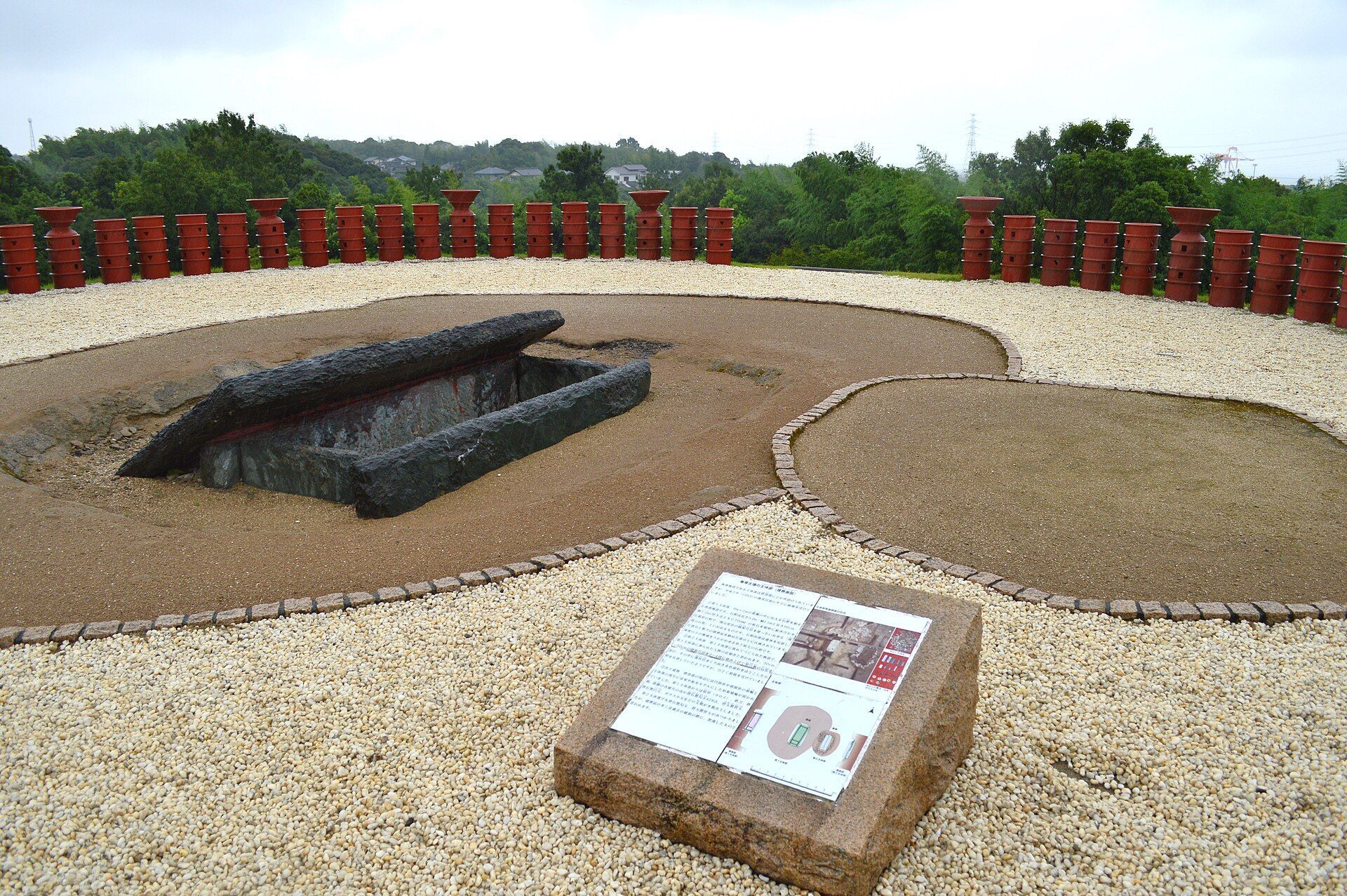
A projecting platform extends from the western side of the junction between the front and rear sections. White quartz fukiishi, or stones laid over the mound’s surface, once covered the structure, while cylindrical haniwa, clay objects commonly arranged around or on burial mounds, surrounded it. Replicas of these surface features have been placed on parts of the mound to represent its presumed original appearance.
Burial Facilities and Grave Goods
Stone Coffins
Two burial facilities were built at the summit of the front section. The first held a large box-shaped stone coffin assembled from slabs approximately 3.2 meters long. A second facility was later added on its eastern side. Both had been robbed in antiquity, and the first coffin was destroyed, but surviving fragments reveal the richness of the original burials.
Surviving Objects
Fragments of short armor and iron swords were found with talc magatama, jasper tubular beads, and small glass beads. These surviving objects indicate that the burials originally contained numerous grave goods and provide evidence of the status associated with the mound’s occupants.
Amabe Kofun Museum
The Amabe Kofun Museum beside the mound contains displays of the excavated objects. Its dioramas illustrate kofun from across Ōita Prefecture, providing a wider setting for understanding the mound’s form and the burial tradition to which it belongs.