Fuji Omuro Sengen Shrine: A Mount Fuji Worship Shrine in Japan


Site at a Glance
- Rating
- 4.1
- Popularity
- Very Low
- Country
- Japan
- Primary era
- Early Modern
- External website
- Open
- Eras represented
- Early Modern, Modern
- Civilizations
- Japanese, Tokugawa
- Site type
- Religious
- Remains
- Sanctuary
On this page9 sections
History
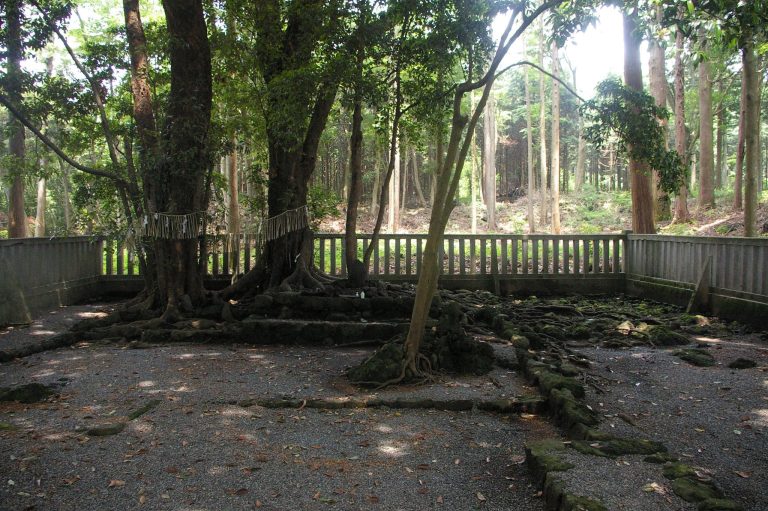
Fuji Omuro Sengen Shrine is a Shinto shrine in Japan, traditionally founded in 699 by Fujiwara no Yoshitada of the Fujiwara clan. Associated with the worship of Mount Fuji, it is regarded as the oldest shrine in the mountain area and was formerly known as Omuro Sengen Myojin. The name “Omuro” is linked to rituals held within an area enclosed by stone pillars.
Foundation and Medieval Development
In 958, Emperor Murakami, who ruled Japan from 946 to 967, established a satomiya, or shrine at the foot of a sacred mountain, on the southern shore of Lake Kawaguchi. This lower sanctuary made worship more convenient for the shrine’s parishioners while maintaining the connection with the mountain sanctuary above.
During the medieval period, the shrine developed through ties with Shugendo, a Japanese mountain religious tradition combining ascetic practices with elements of Buddhism and Shinto. In the early modern period, it was also connected with Fuji-ko, confraternities whose members followed worship and pilgrimage practices focused on Mount Fuji.
Sengoku and Early Modern Administration
During the Sengoku period, an era of civil warfare among competing military powers, the shrine received the veneration of the Takeda clan. Kosano Echigo-no-kami, the hereditary holder of the shrine’s betto office, helped maintain the sanctity of the precinct through the support of the Oyamada clan. He received exemptions from certain duties and authorization to carry out mountain-guard duties. The Takeda clan also entrusted him with jurisdiction over other Sengen shrines in neighboring provinces. “Kosano Echigo-no-kami” was a hereditary name shared by successive officeholders, rather than the name of a single individual.
The present main sanctuary was built in 1612 by Torii Naritsugu, a retainer of the Tokugawa family. During the Meiji period, the shrine changed its name from Komuro Sengen Shrine to Fuji Omuro Sengen Shrine. Two other shrines, in Shimoyoshida and Ōmyōjin in Fujiyoshida, were likewise renamed Komuro Sengen Shrine.
Modern Reorganization
In 1925, the shrine was elevated to prefectural-shrine status. In 1971, it became a Beppyo Shrine, a shrine given special status within the institutional classification of the Association of Shinto Shrines. In 1973, the main sanctuary was transferred from Mount Fuji’s second station to land adjoining the satomiya, and an Okumiya was built at the former main-shrine site. The shrine now forms part of the UNESCO World Heritage property “Fujisan, sacred place and source of artistic inspiration.”
Remains
The shrine is divided between two precincts. The Okumiya occupies the former main-shrine site at the second station of Mount Fuji’s Yoshida climbing trail, while the satomiya stands in Katsuyama beside Lake Kawaguchi. The mountain precinct lies within Fujiyoshida but is an exclave of Katsuyama, which belongs to Fujikawaguchiko. The principal deity is Konohanasakuya-hime, a deity traditionally associated with Mount Fuji.
The Two Precincts
Okumiya
The Okumiya is the shrine’s inner or upper sanctuary, associated with the remote sacred setting on Mount Fuji. It occupies the site of the former main shrine at the second station of the Yoshida climbing trail. Its position preserves the shrine’s direct physical connection with the mountain worship that shaped its history.
Satomiya
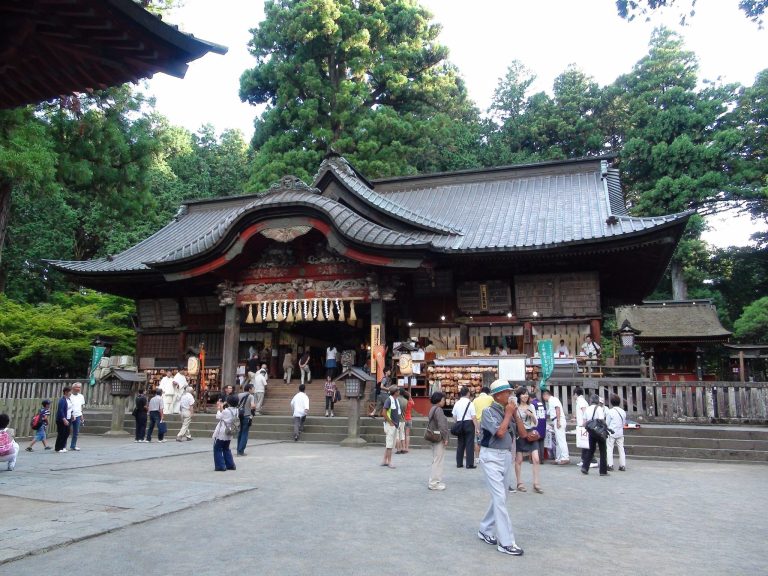
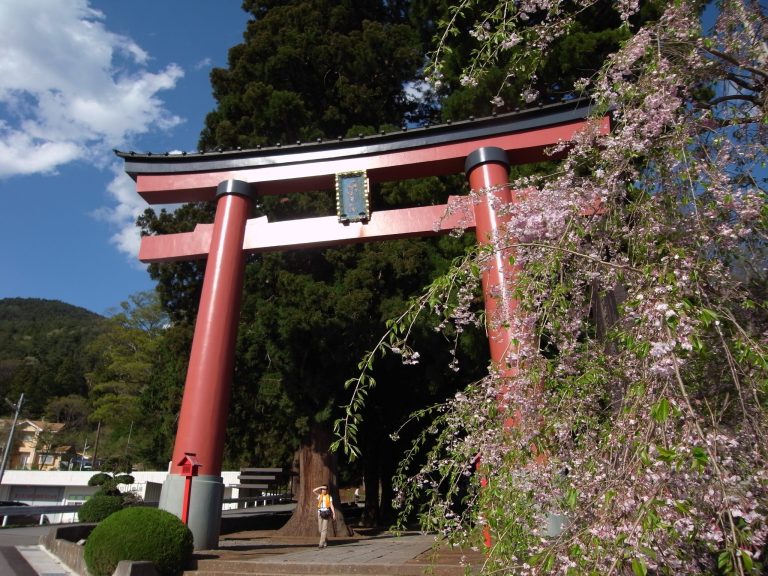
The satomiya occupies the lower precinct in Katsuyama on the shore of Lake Kawaguchi. The Katsuyama Folklore Museum stands to its right and presents exhibitions on the history of Katsuyama. The lower sanctuary forms the accessible lakeside counterpart to the upper mountain precinct.
Main Sanctuary
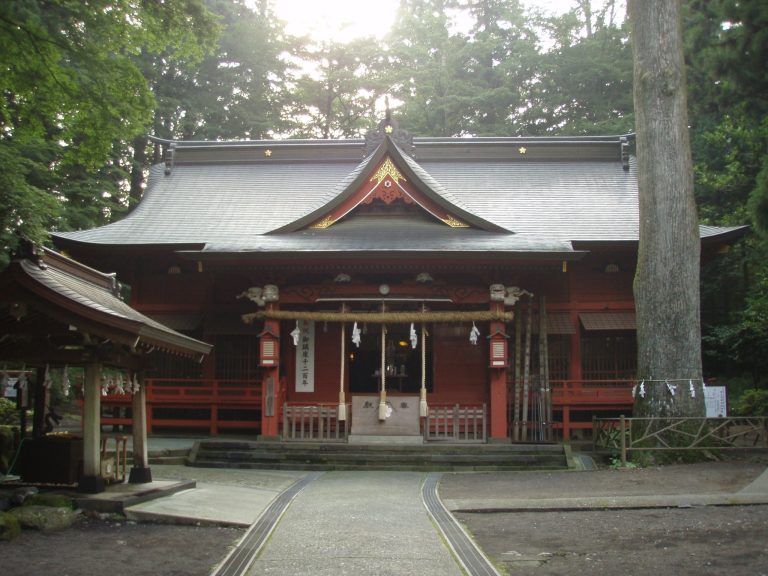
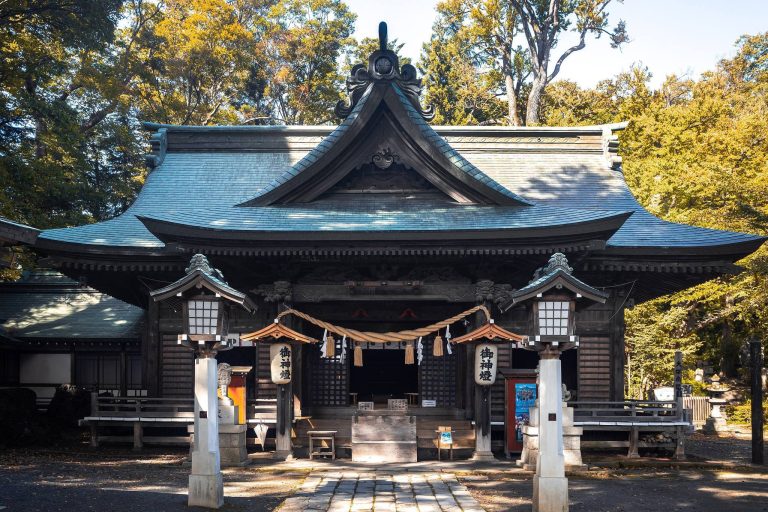
The main sanctuary is a one-bay building in the irimoya style, which combines a central gabled roof with hipped slopes. A curved karahafu gable covers the projecting entrance porch. The roof is clad in copper sheets modeled on cypress-bark roofing, and the design displays characteristics associated with Momoyama-period architecture, the elaborate style of the late sixteenth and early seventeenth centuries. After four major repairs, the sanctuary now stands beside the satomiya and is designated an Important Cultural Property of Japan.