Higashiguchi Hongu Fuji Sengen Shrine: Guardian of the Subashiri Mount Fuji Route


Site at a Glance
- Rating
- 4.3
- Popularity
- Medium
- Country
- Japan
- Primary era
- Medieval
- External website
- Open
- Eras represented
- Medieval
- Civilizations
- Unclassified
- Site type
- Religious
- Remains
- Sanctuary
On this page8 sections
History
Higashiguchi Hongu Fuji Sengen Shrine, also known as Subashiri Sengen Shrine, is a Sengen Shrine in Japan established in 807 in the Gongen-zukuri style. Sengen Shrines are Shinto shrines devoted to Mount Fuji and deities associated with the mountain and protection from volcanic danger. The shrine stands at the starting point of the Subashiri trail and became the principal religious centre of Mount Fuji’s eastern ascent route.
Origins and foundation
In 802, an eruption on Mount Fuji’s eastern foothills prompted the establishment of a ritual site at Subashiri. Prayers were offered there to calm the volcano. After the eruption ended on the first day of the Monkey in the fourth month, a shrine building was reportedly constructed at the site in 807 as an act of thanksgiving.
The shrine’s principal deities include Konohanasakuya-hime, a Shinto goddess associated with Mount Fuji, blossoms, and protection from fire; Okuninushi, a major deity associated with the land and its governance; and Hikohohodemi-no-Mikoto, a figure in Japan’s mythological imperial genealogy.
The Edo-period pilgrimage route
During the Edo period, Higashiguchi Hongu Fuji Sengen Shrine served as the main shrine for the Subashiri ascent of Mount Fuji. It prospered alongside Subashiri village, which functioned as a post town and transportation junction on the route connecting Suruga and Kai provinces.
The chief priest organized Subashiri’s oshi, religious guides and pilgrimage specialists who arranged worship and climbing journeys to Mount Fuji. The guides received protection from the Odawara domain and the Yoshida family of Kyoto, and their activities extended throughout the Kanto region.
The 1707 Hoei eruption almost completely burned down Subashiri village and severely damaged its agriculture. The community consequently relied more heavily on activities connected with Mount Fuji climbing, including the oshi system. In 1749, the chief priest and the Odawara domain organized an oshi association to regulate this work. It had 17 members, comprising 12 established oshi and five influential farmers who also served as guides. Only these members were authorized to act as oshi and to receive treatment equivalent to that of Shinto clergy.
Modern status and commemoration
After the Meiji Restoration, the shrine was first classified as a Village Shrine, one category within Japan’s prewar state system for ranking Shinto shrines. It was elevated to Prefectural Shrine status in 1887.
In 2007, the shrine commemorated the 1,200th anniversary of its enshrinement. A museum was established on the second floor of the shrine office as part of the anniversary program. In 2013, the shrine became one of the component assets of the UNESCO World Cultural Heritage property Fujisan, sacred place and source of artistic inspiration. The Subashiri ascent route was registered separately as another component asset.
Remains
Shrine complex
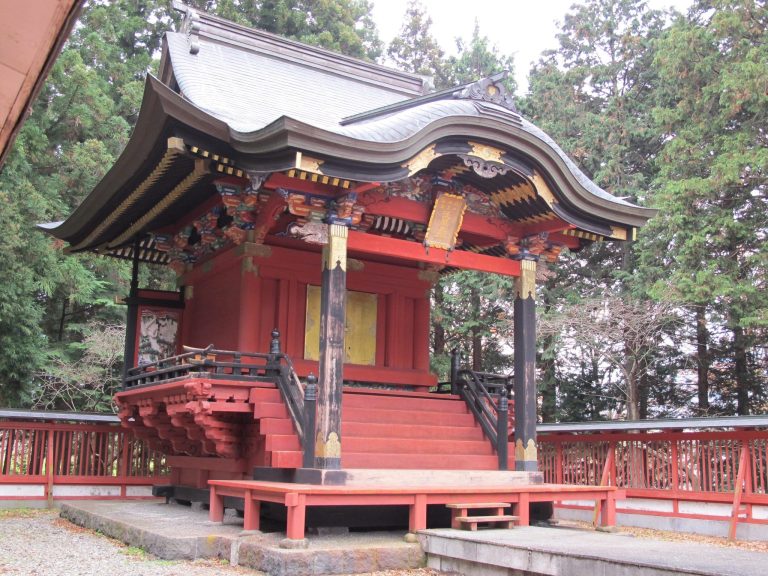
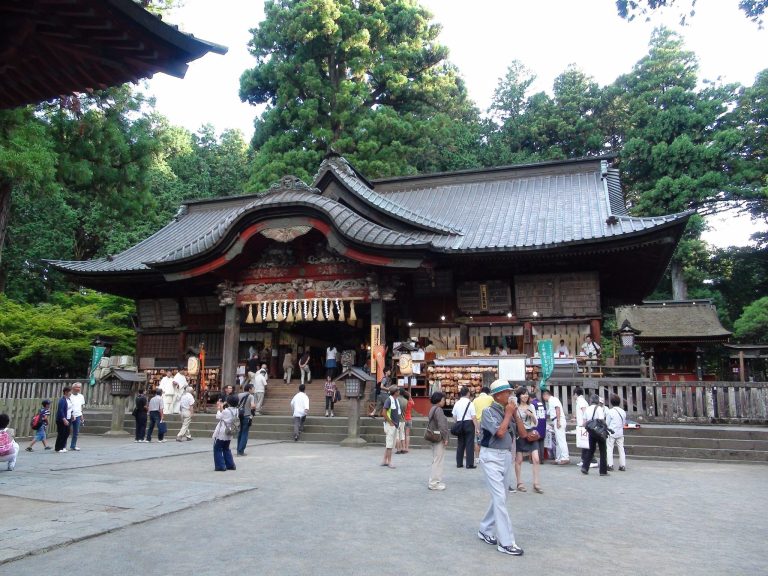
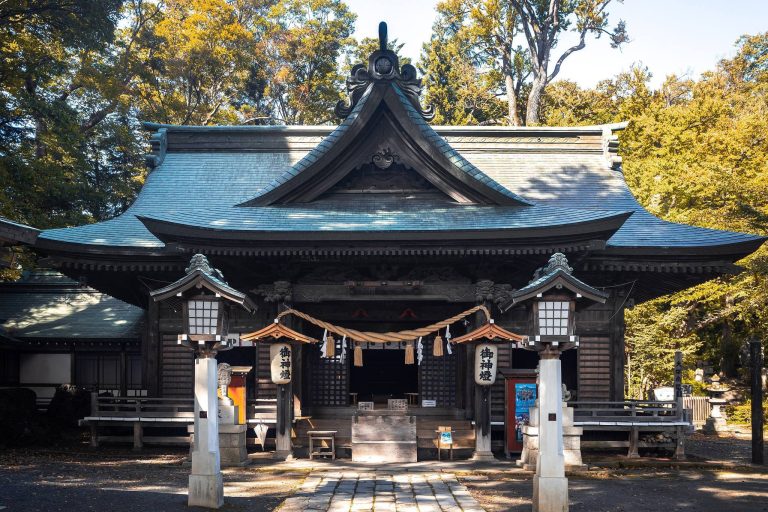
The complex occupies the starting point of the Subashiri Mount Fuji trail. Its principal buildings are arranged as a main sanctuary, an offering hall, and a worship hall. The main sanctuary follows the Gongen-zukuri layout, in which the sanctuary and worship hall are connected by an intervening offering space to form a joined architectural composition.
Main sanctuary
The main sanctuary is the central building of the complex and uses the Gongen-zukuri architectural arrangement. Its connected relationship with the offering hall and worship hall expresses the shrine’s formal composition at the beginning of the Subashiri ascent route.
Shrine office museum
The second floor of the shrine office contains a commemorative museum established for the 1,200th-anniversary program in 2007. It displays materials related to Fuji pilgrimage confraternities, organized groups of worshippers who undertook or supported journeys to Mount Fuji, together with treasures of the shrine.