Fujairah Fort: A Historic Defensive Stronghold in the United Arab Emirates
Visitor Information
Google Rating: 4.4
Popularity: Medium
Official Website: www.fujairahtourism.ae
Country: United Arab Emirates
Civilization: Early Modern
Site type: Military
Remains: Fort
History
Fujairah Fort, located in the municipality of Fujairah within the United Arab Emirates, was constructed by the local inhabitants in the early 16th century. Its origins trace back to a period between 1500 and 1550 AD, as determined through carbon-14 dating methods. Serving as a critical defensive structure, the fort played an essential role in protecting the surrounding settlement from foreign incursions.
Between 1650 and 1700 AD, the fort was either rebuilt or expanded to reinforce its defensive capabilities. During its active use, Fujairah Fort stood as a military stronghold, with guards stationed in its towers to maintain vigilance against potential attackers. Its strategic position and robust walls helped repel incursions, including those by Portuguese and British forces. In fact, the fort witnessed direct conflict with the British Royal Navy in 1925 when three of its towers were damaged amid anti-slavery campaigns, an attack that led to a bombardment and a subsequent fine imposed on the ruling Sheikh Hamla.
Throughout its history, Fujairah Fort was also involved in regional political and tribal conflicts. At one point, it was occupied by Wahhabi forces, marking a period when the fort served not only as a military installation but also as a base of control for shifting local powers. The fort’s history thus reflects its importance as a center of defense, governance, and resistance over several centuries.
Remains
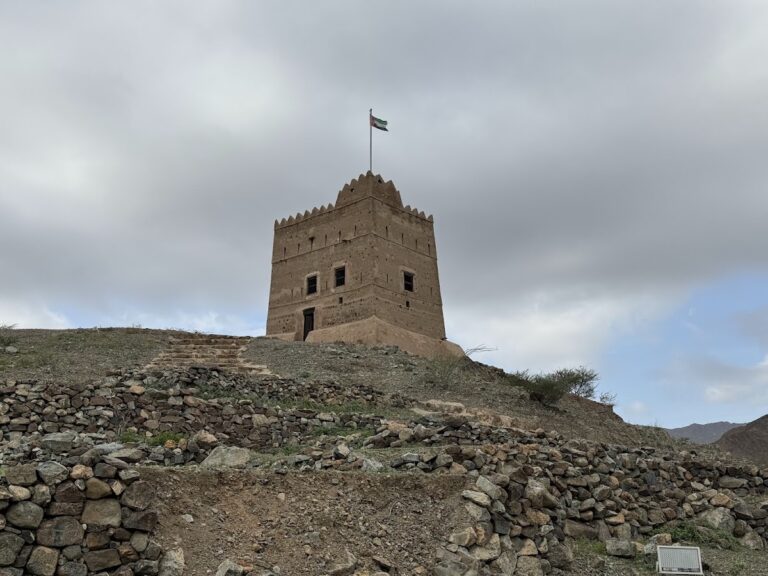
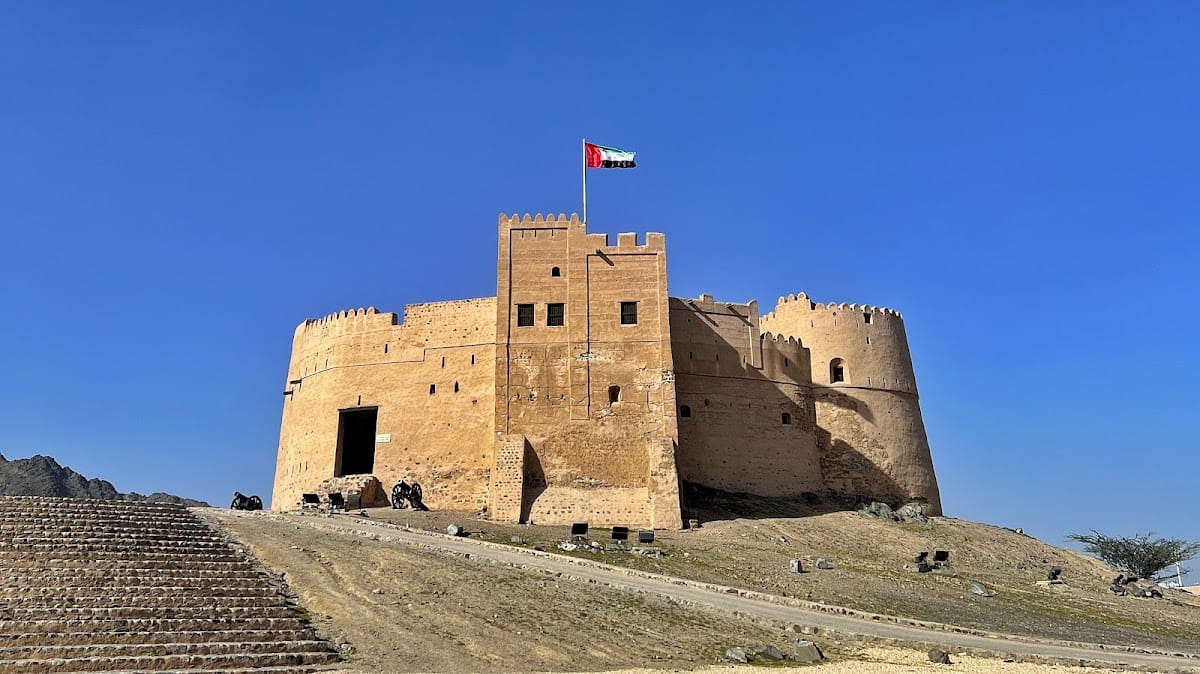
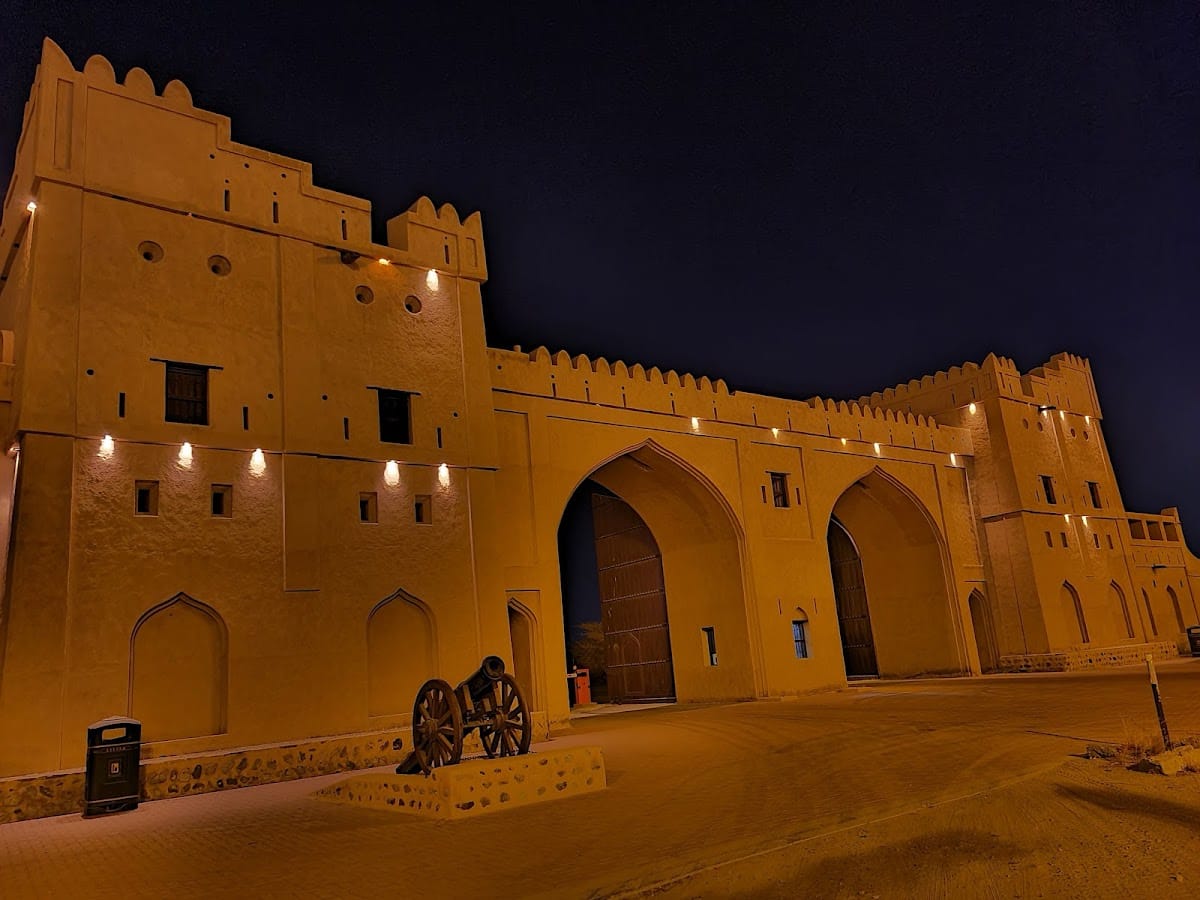
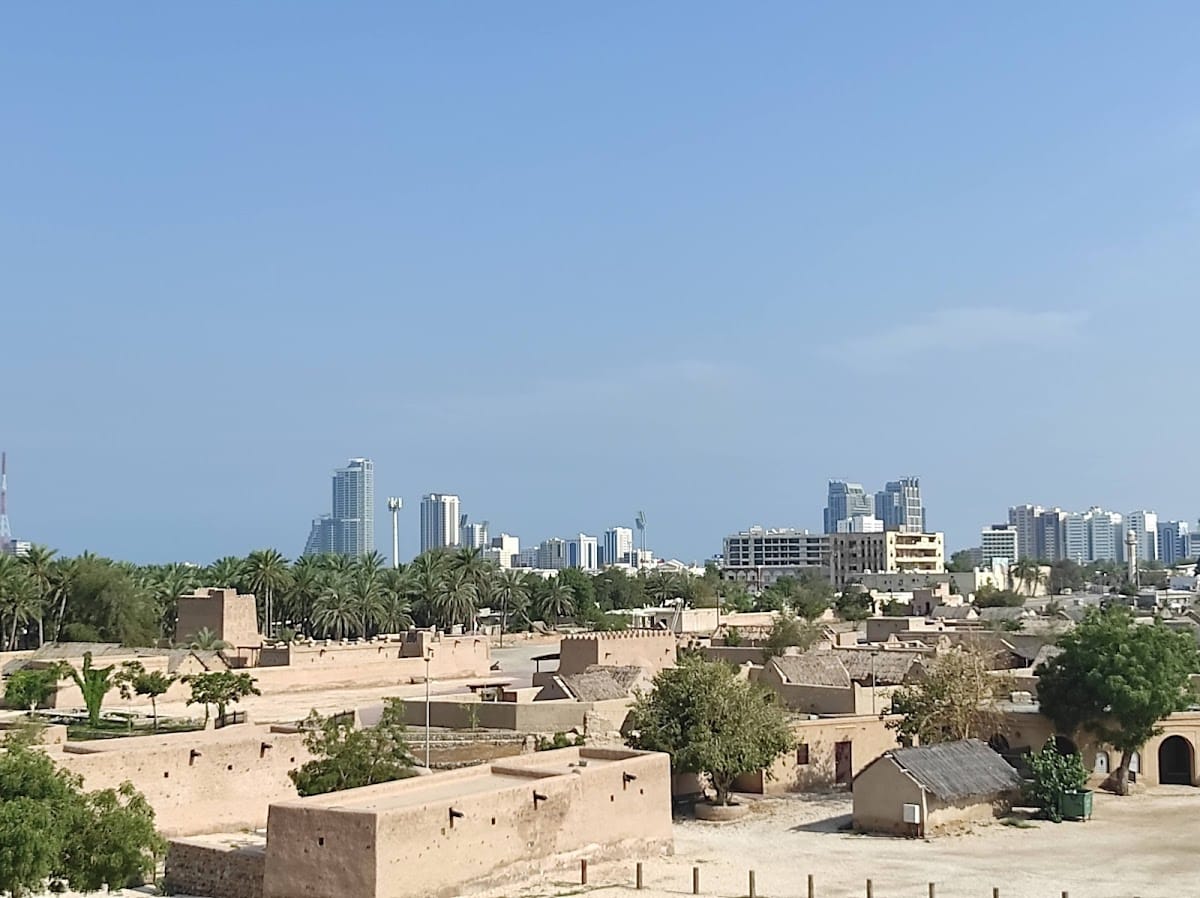
Fujairah Fort is built atop a small rocky hill around 20 meters in height, situated approximately one to two kilometers from both the modern city center and the coast of the Gulf of Oman. The fort’s form follows the natural shape of this hill rather than a regular geometric plan, lending an irregular outline that blends with the terrain. It is a two-story structure composed of traditional local materials including stone, gravel, mud, straw, gypsum, and palm branches, all bound together with a type of mortar called sarooj, valued for its durability and defensive strength.
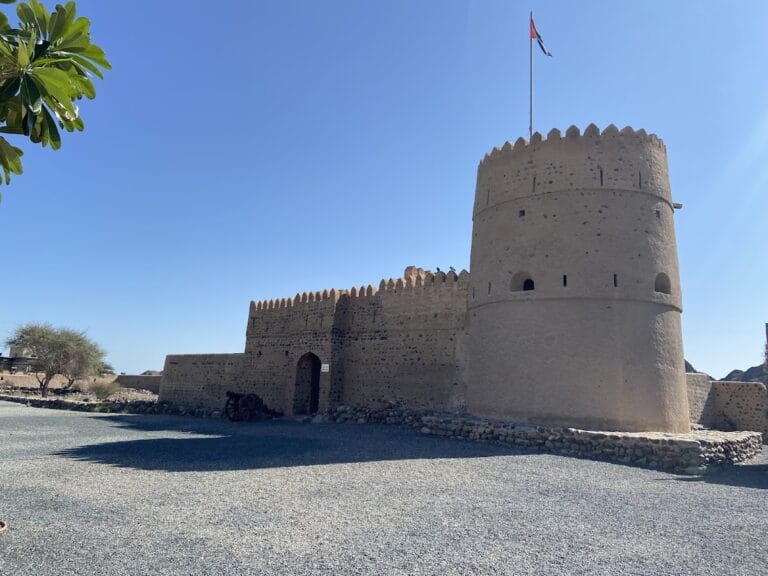
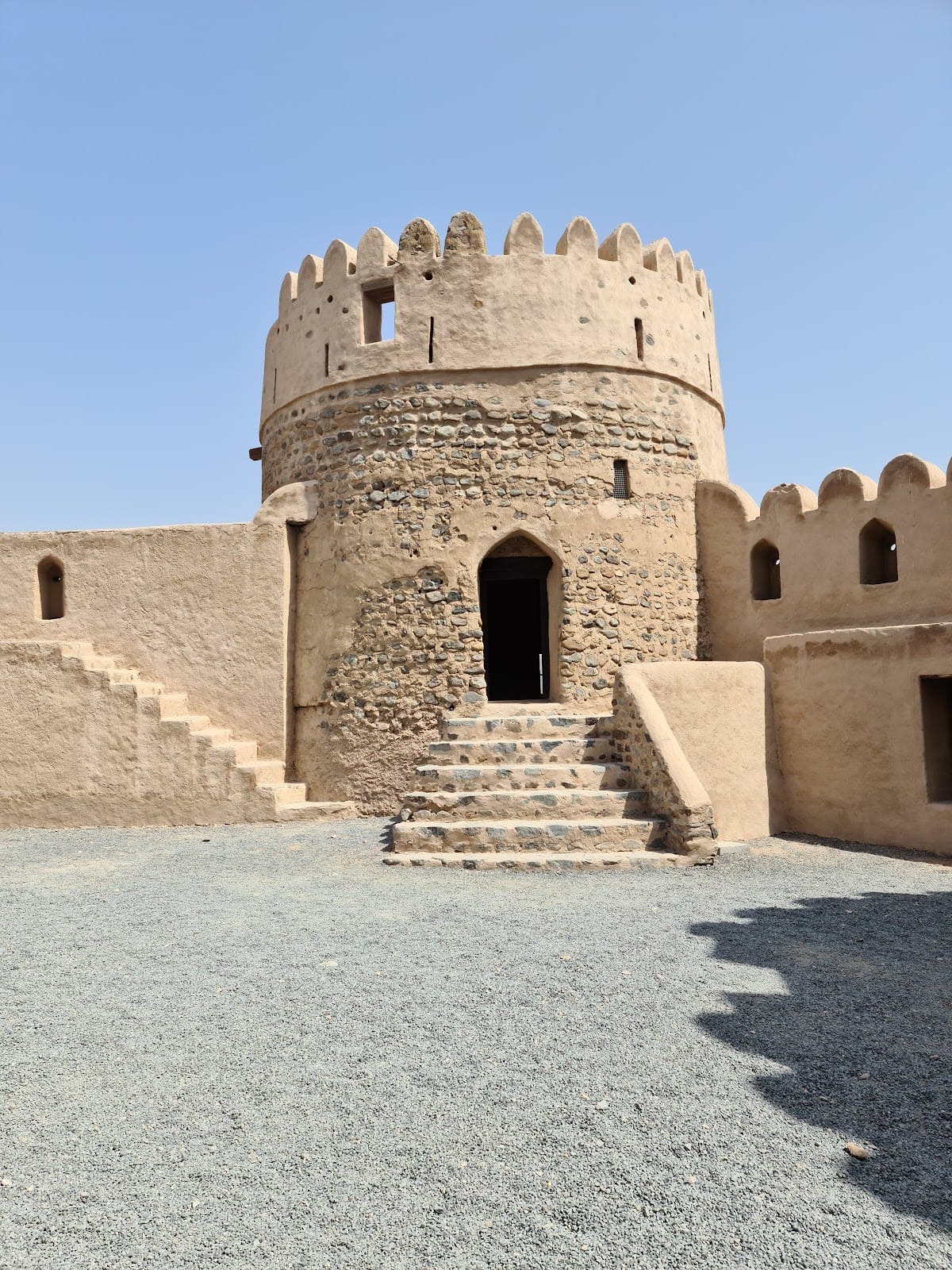
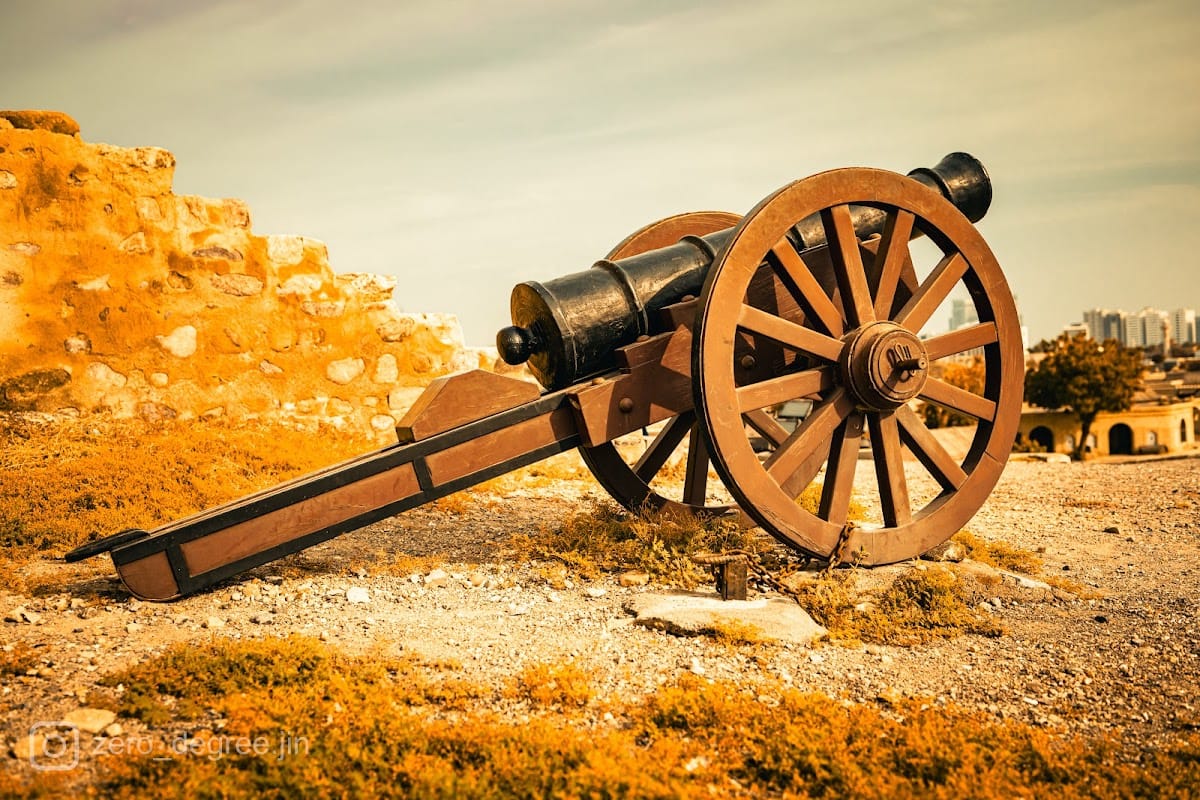
The fort features three large circular towers and one rectangular tower, all connected by defensive walls creating a protected enclosure. These towers were equipped with arrow slits and guard positions, maintaining constant surveillance and readiness. The northern tower, which faces the old village, notably contains the remains of an ancient cannon and cannonballs, offering direct evidence of its military role.
Inside, the ground floor includes an open courtyard, a main entrance, and a spacious room, from which stairs rise to the upper level. The upper floor houses a council chamber and a corridor leading to the towers, with a roof surrounded by battlements for added defense. Decorative plasterwork adorns parts of the interior, with painted columns and ornamental ceilings featuring arches and gypsum motifs that reflect the unique architectural styles of the region. Restoration efforts during the late 20th century carefully used original materials to preserve these features, ensuring the fort retains much of its historical character and defensive integrity.