Fuerte de la Galea: An Eighteenth-Century Defensive Fort in Spain


Site at a Glance
- Rating
- 4.3
- Popularity
- Low
- Country
- Spain
- Primary era
- Early Modern
- Eras represented
- Early Modern, Modern
- Civilizations
- Spanish
- Site type
- Military
- Remains
- Fort
On this page7 sections
History
Fuerte de la Galea, also known as Castillo del Príncipe, is an eighteenth-century defensive fort in Getxo, Spain, at Punta Galea and the entrance to the Nervión estuary. Built in 1742, it replaced a lookout post that had existed since the sixteenth century and formed part of the defenses of the Abra, the coastal bay and harbor at the estuary’s mouth. It is regarded as one of the best-preserved eighteenth-century military constructions in the Basque Country and the best-preserved example in Biscay.
Construction and coastal defense
The fort was designed by Colonel Jaime Sycre, and construction began in 1742. The work lasted one year, cost more than 130,000 reales, and was carried out through compulsory labor imposed on local residents. The stonemasons and carpenters Juan Pagoeta, Lorenzo Oruaga, and Francisco Doñabeitia directed the building work. Fuerte de la Galea worked with batteries on the left bank in the Ciérvana area to protect the Abra and the approach to the Nervión estuary.
Wartime destruction and rebuilding
During the War of the Convention, a 1790s conflict between revolutionary France and allied European powers including Spain, French forces occupied the fort in 1795. English forces destroyed it in 1827, after which it was rebuilt, with four of its gun embrasures removed during the reconstruction.
The fort was also involved in the Carlist Wars, nineteenth-century Spanish civil wars centered largely on the succession to the throne and the country’s political order. During the First Carlist War, the British Auxiliary Legion destroyed Fuerte de la Galea to prevent its use by the Carlists. It was rebuilt again during the Second Carlist War.
End of military use
In 1947, the Ministry of Defence relinquished the property and transferred it to the Getxo municipal government for public purposes. A recreational area centered on a picnic facility was later established there, but the facility closed in 1975. The fort has had no military function since 1947 and currently has no use.
Remains
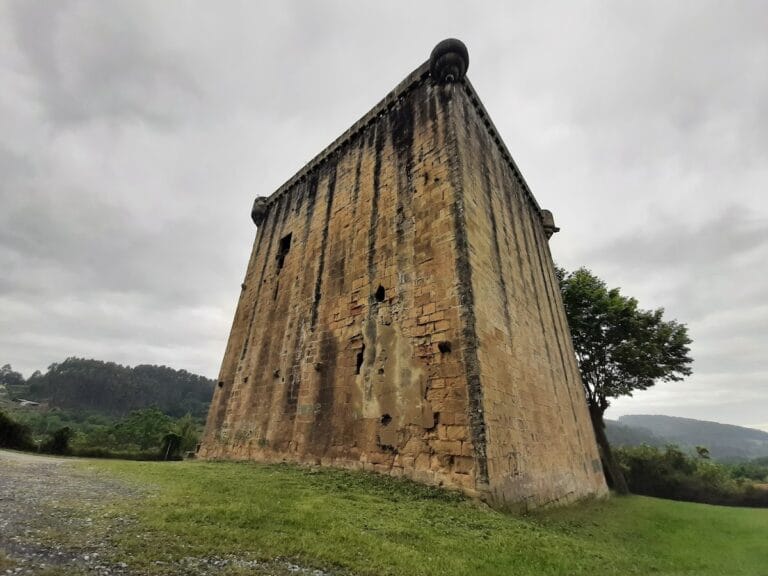
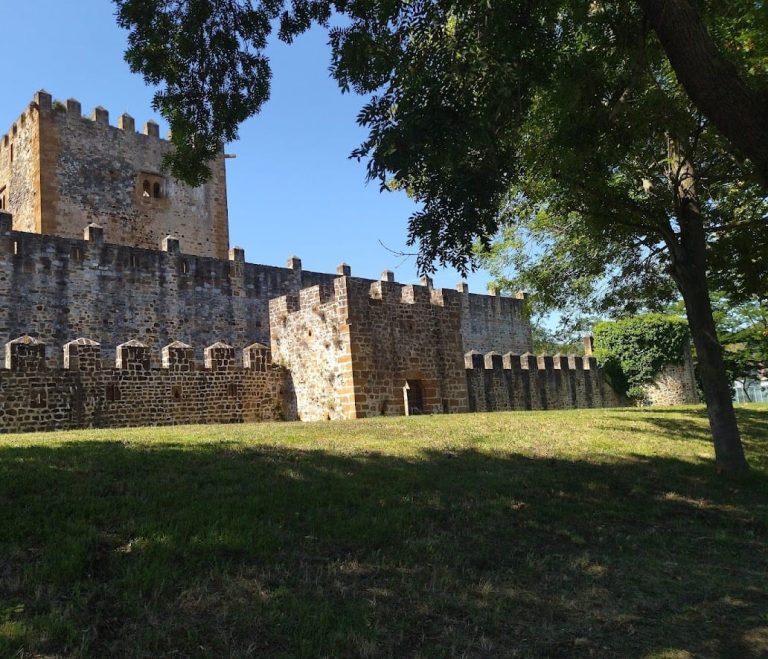
Fuerte de la Galea survives as a strongly built coastal fortification with powerful walls of rubble masonry and cut stone. A moat protects the landward side. The surviving structures include the defensive walls, firing openings for cannon, and interior buildings that served the garrison and stored military supplies.
Fortifications and interior buildings
The fort originally contained 18 gun embrasures, or openings in the walls through which cannons could be operated. Four were removed during the nineteenth-century rebuilding, leaving 14. Within the walls, several buildings housed stores, powder magazines for gunpowder and other ammunition, and facilities for the troops. These remains reflect the fort’s role as a defended artillery position controlling the approach to the Abra.
Lighthouse complex
In 1782, the Consulate of Bilbao, a commercial and administrative institution that represented merchants and regulated maritime trade in Bilbao and its port, commissioned a lighthouse at the fort. It was modeled on a lighthouse built on Mount Igueldo in San Sebastián. The original was a circular structure in which a fire fueled by turnip oil provided the light.
The 1782 lighthouse was replaced in the mid-nineteenth century by another lighthouse that remained active until 1925. The lighthouse operating today was built in 1925, forming part of the fort’s later maritime history alongside its surviving military fabric.