Castell d’Enfesta: A Medieval Castle and Lords’ Residence in Catalonia


Site at a Glance
- Rating
- 4.5
- Popularity
- Low
- Country
- Spain
- Primary era
- Medieval
- External website
- Open
- Eras represented
- Medieval
- Civilizations
- Crown of Aragon
- Site type
- Military
- Remains
- Castle
On this page8 sections
History
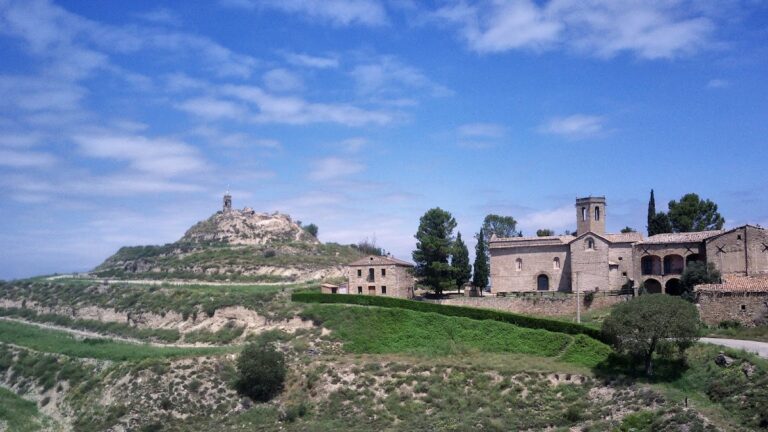
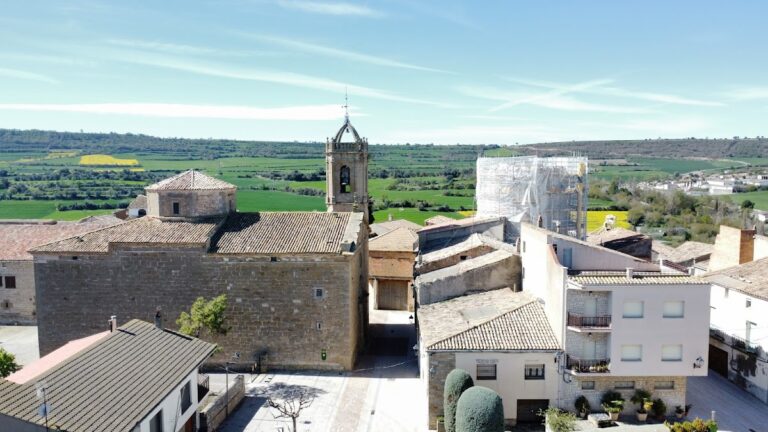
Castell d’Enfesta is a castle in Spain, within the enclave of Anfesta in the municipality of Molsosa, in Catalonia. Its construction is generally dated to the eleventh century, while the surviving building reflects Gothic architecture of the fourteenth and fifteenth centuries. The first written reference to the castle dates to 1081. It was the residence of the lords of Anfesta, who served as castellans, officials responsible for administering and often defending a castle and its territory, on behalf of the Viscounts of Cardona.
Medieval lordship
The castle formed the administrative centre of Anfesta under its local lords. Their role was connected to the Viscounts of Cardona, members of the medieval nobility who governed territories below the rank of count. The building’s later Gothic form belongs to the fourteenth and fifteenth centuries, after its eleventh-century origins.
Protection and restoration
Castell d’Enfesta was declared a Historic-Artistic Monument by a decree published in Spain’s official gazette on 5 May 1949. It received the further designation of an Asset of Cultural Interest on 8 November 1988. The Ben-Aicha family has owned the castle since 2009 and undertook restoration between 2011 and 2021.
The castle incorporates the church of Santa Maria, which served as the village’s place of worship until 1975. Religious use was then suspended because the church had fallen into a ruinous condition.
Remains
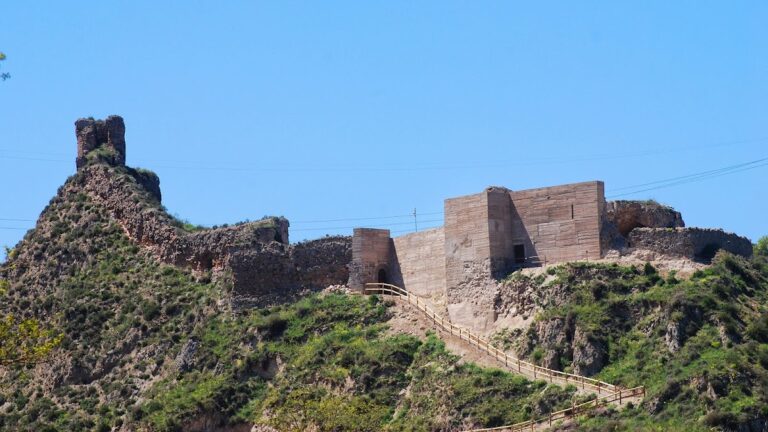
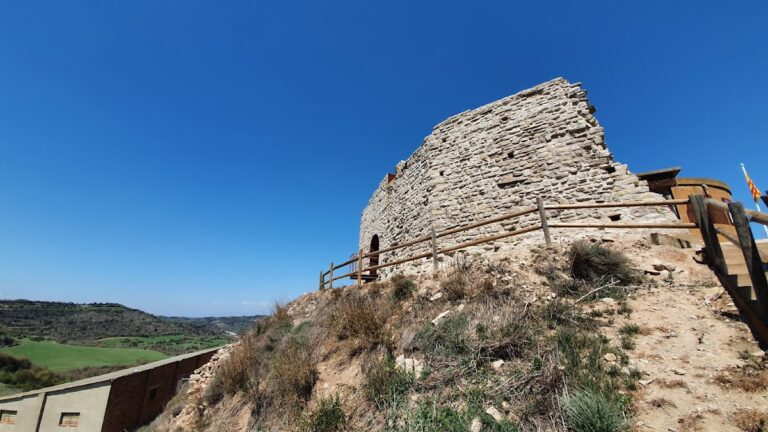
Hilltop building and setting
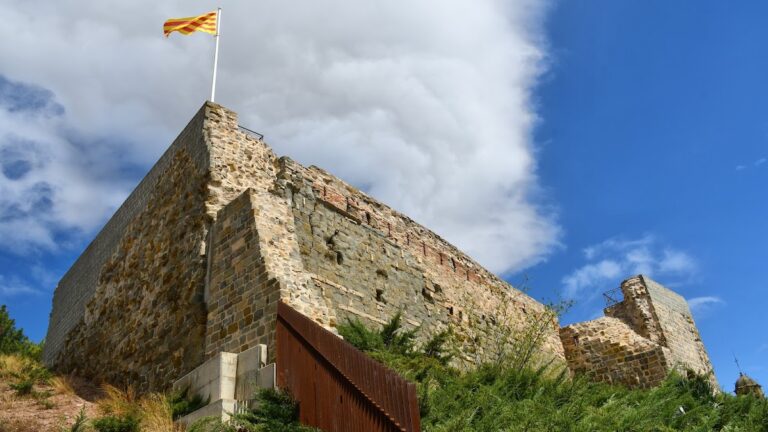
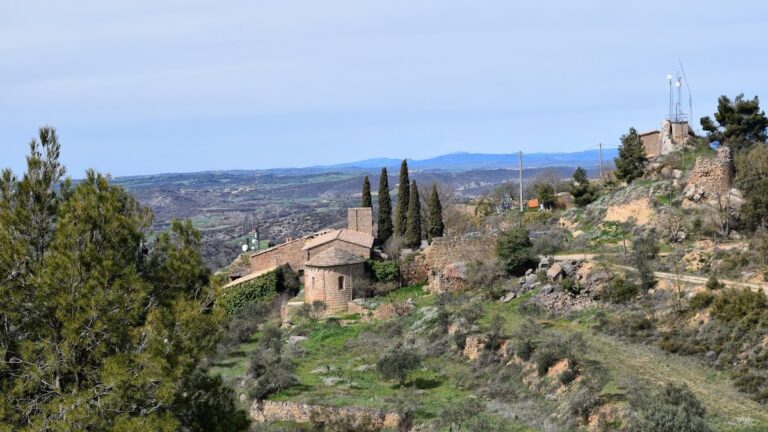
The castle is a quadrangular building made of ashlar blocks, carefully cut stone used for regular masonry. It stands on a hill in the southeastern part of Anfesta, at approximately 531 metres above sea level and about 35 metres above the surrounding plain; the castle’s listed elevation is 528 metres. Its west-facing facade is approximately 15 metres long and reaches a similar height. The building overlooks the Enfesta plain to the west. The Ballester tower of Castellfollit de Riubregós Castle lies about 2.4 kilometres to the west, while the tower of Calonge de Segarra Castle is approximately 1.3 kilometres away in a straight line.
West facade and entrances
Castle entrance
The central portal gives access to the castle through a lintelled, semicircular arch. It measures approximately 80 centimetres in rise, 310 centimetres in height, and 70 centimetres in width. The arch is formed by 11 voussoirs, wedge-shaped stones that make up an arch. Each is approximately 95 centimetres long, up to 42 centimetres wide, and 9 centimetres thick.
Santa Maria portal
A smaller portal on the left side of the facade leads to the church of Santa Maria. It has a lintelled, semicircular arch and measures approximately 51 centimetres in rise, 208 centimetres in height, and 61 centimetres in width. Ten voussoirs form the arch, each about 62 centimetres long and of unequal width. Its keystone, the central stone locking the arch, carries a relief of a Celtic cross enclosed within two concentric circles. A Celtic cross is a cross motif surrounded by a ring, associated with Celtic Christian art and symbolism.
Nearby sites