Frumoasa Monastery: An Orthodox Monastic Community in Moldova
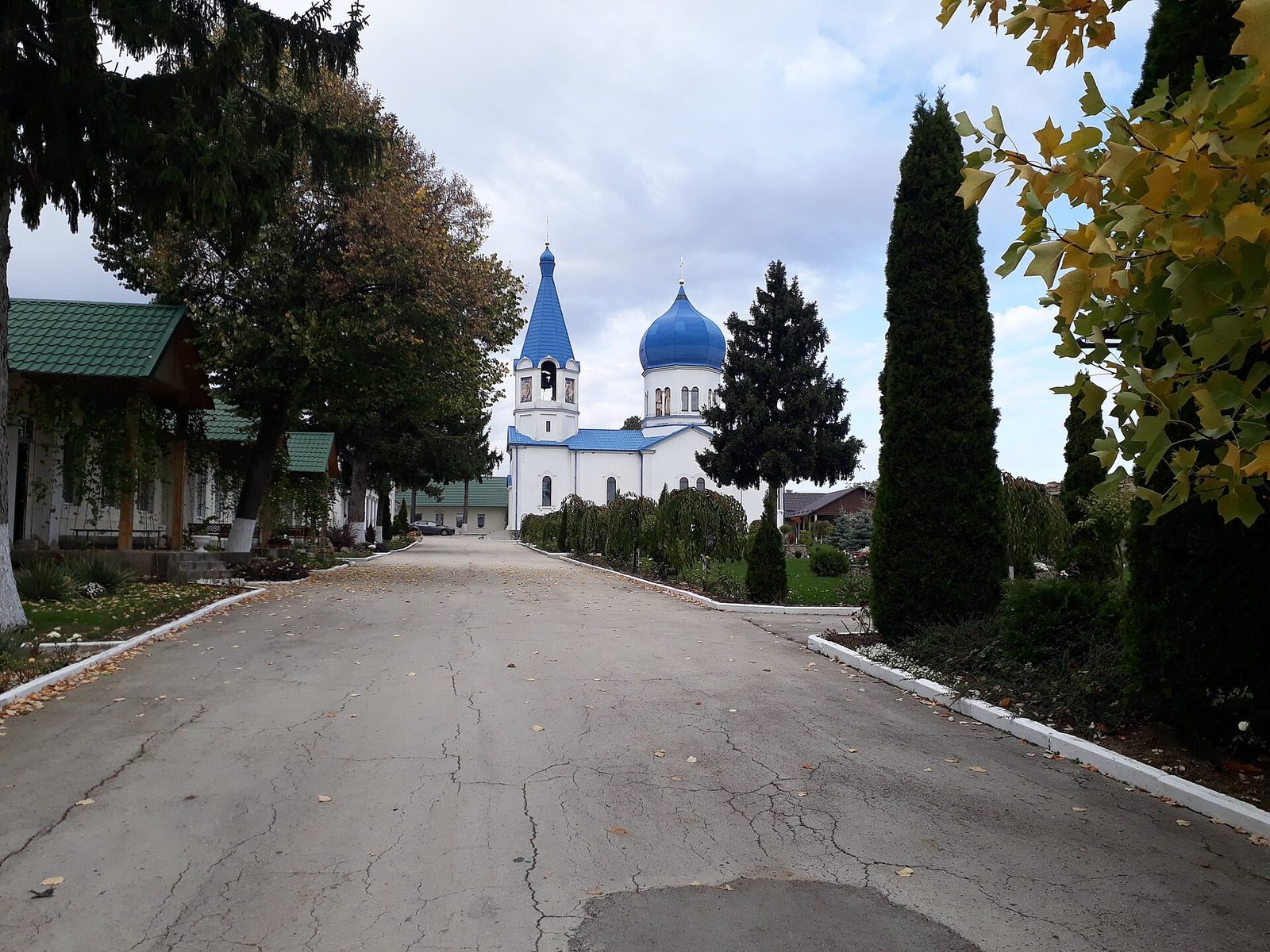
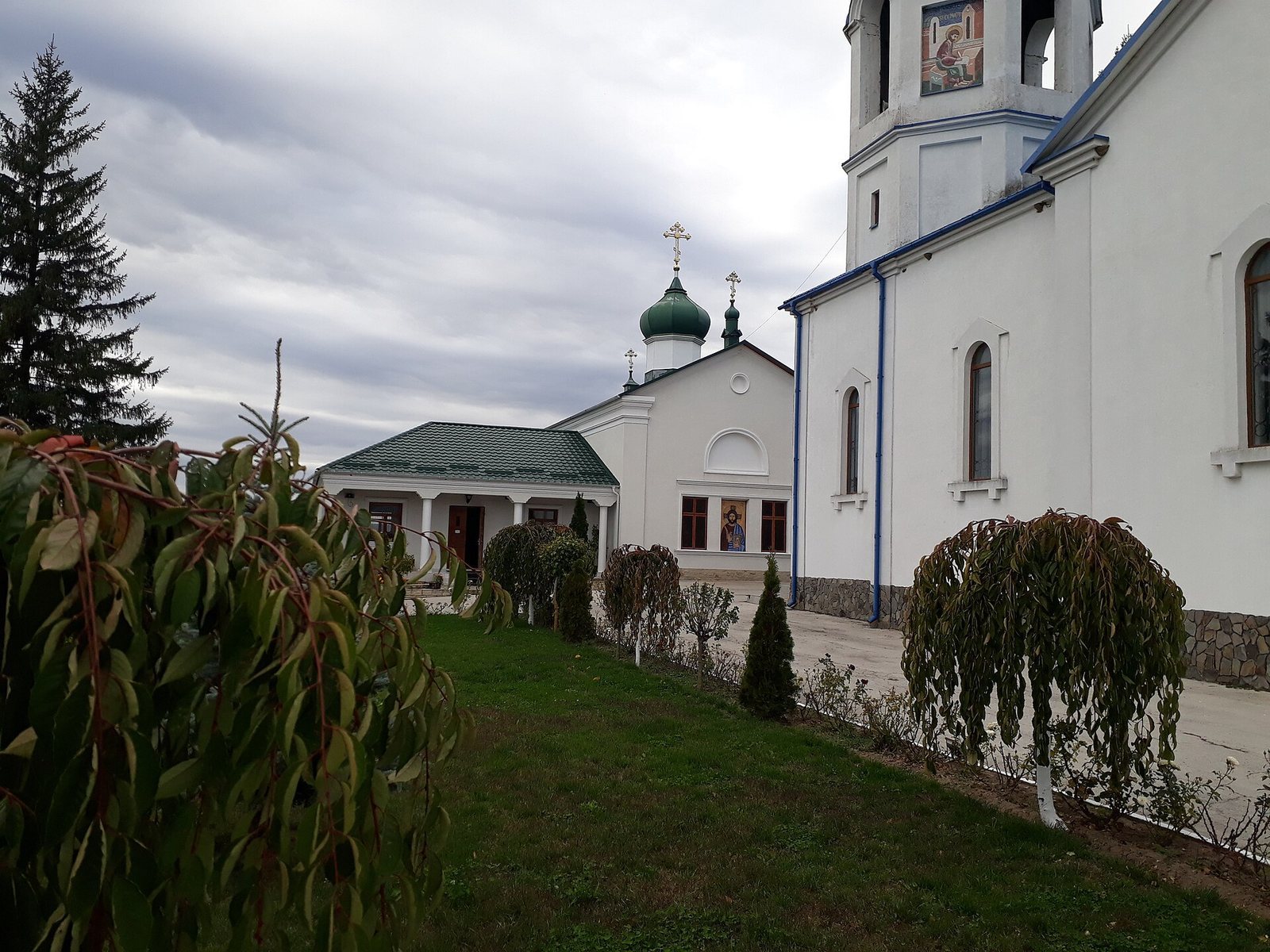
Site at a Glance
- Popularity
- Medium
- Country
- Moldova
- Primary era
- Modern
- Eras represented
- Modern
- Civilizations
- Ottoman, Principality of Moldavia, Russian
- Site type
- Religious
- Remains
- Monastery
On this page8 sections
History
Frumoasa Monastery is an Orthodox monastery founded in autumn 1804 at Frumușica in Moldova by Efrem Iurcu, a local landholder who later became the monk Eftimie and took the Great Schema, the most demanding stage of Orthodox monastic life. The community began as a skete, a small monastic settlement. Monks from Neamț Monastery, an important Orthodox center in Romania, joined Iurcu. Serafim, Ioanichie, and Macarie were monks ordained as priests, and Athanasius was a monk; all four were disciples of the influential Orthodox elder and reformer Paisius Velichkovsky. The monastery was first called Frumușica and was also known as the Dormition Monastery and the Holy Trinity Monastery of Frumoasa.
Foundation and monastic development
On 10 June 1807, 43 freeholders from the Bravicea estate endowed the monastery with land. Serafim led the community until 1810, when Eftimie took over. In 1812 it had 17 monks and eight novices. That year Metropolitan Gavriil Bănulescu-Bodoni, an Orthodox senior bishop serving in Bessarabia, established it as a cenobitic monastery, where monks lived together under a shared rule, and appointed Theodosius as its head. Abbot Sinesius succeeded him in 1815. In spring 1817, Ioanichie and three monks secretly departed for Neamț Monastery.
Abbot Benedict led the community from 1818 until his death in spring 1850. Mitrofan (Vitsinsky), an archimandrite, a senior monastic rank, briefly headed the monastery in 1851, followed by Abbot Varlaam (Chernyavsky). That year the community had 14 monks and eight novices. Archimandrite German led it from 1857 to 1869. The monastery opened a school for children in 1872, and during the Russo-Turkish War a hospital for wounded soldiers operated there in 1877–78. The future Metropolitan of Moldavia, Iosif Naniescu, trained at the monastery in the 1860s.
Later heads included Irenaeus from 1869 to 1879, German from 1879 to 1882, Benedict from 1882 to 1884, and Varsonofy from 1884 to 1890. Paisius led in 1890, followed by Joachim from 1891 to 1893, Sebastian from 1893 to 1898, and Joasaph (Gerbinovsky) from 1898 to 1911. The monastery had 24 monks and 13 novices in 1902. Abbot Nicholas was in office by 1938, although his appointment date is uncertain.
War and the women’s monastery
In autumn 1917, Bolsheviks mistreated monks and took control of part of the monastic administration. After Romanian forces arrived in 1918, an agrarian reform removed 157 hectares of the monastery’s land. The community had 89 residents in 1923. In the late 1930s, the monastery was reorganized as a women’s community. Abbess Taisia (Pachu) was appointed in 1938, and a preparatory school was set up for the Institute of Nursing Nuns in Chișinău.
In June 1940, the Soviet Union annexed Bessarabia, a historical region in eastern Europe. Taisia and several nuns fled to Romania. After the Romanian army returned in 1941, Agapia (Brumă), who came from Bucharest, became abbess. She fled when Soviet forces returned in 1944. Militina (Byanova) became abbess that autumn, followed by Eupraxia (Nour) on 23 November 1945. The monastery closed in 1946 under Soviet rule because it could not meet state tax obligations, and its nuns were transferred to Khirovsky Monastery.
Closure, reuse, and revival
From 1946 to 1994, the premises were used successively as an orphanage, a boarding school for deaf children, a juvenile penal colony, and a special school for children with intellectual disabilities. The school for deaf children operated from 1965 to 1973, the colony from 1973 to 1986, and the special school from 1986 to 1994.
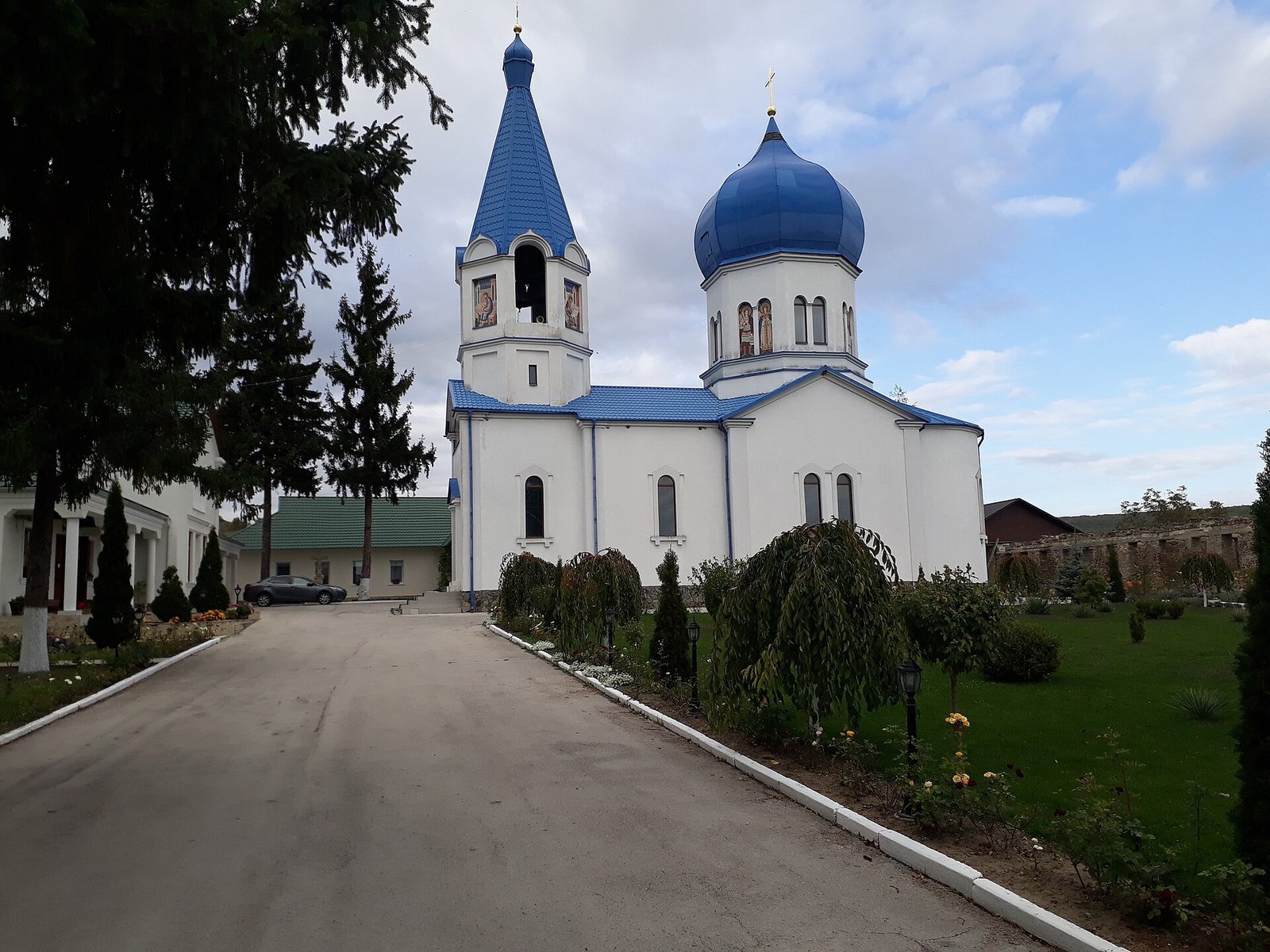
On 20 September 1994, the monastery reopened as a men’s community under Hieromonk Vasile (Cheban). Archimandrite Ambrose (Munteanu) led it from October 2002 to December 2005. It became a women’s monastery again on 27 December 2005, when Abbess Benedicta (Mura) was appointed. The monastery belongs to the Diocese of Ungheni and Nisporeni within the Russian Orthodox Church.
Remains
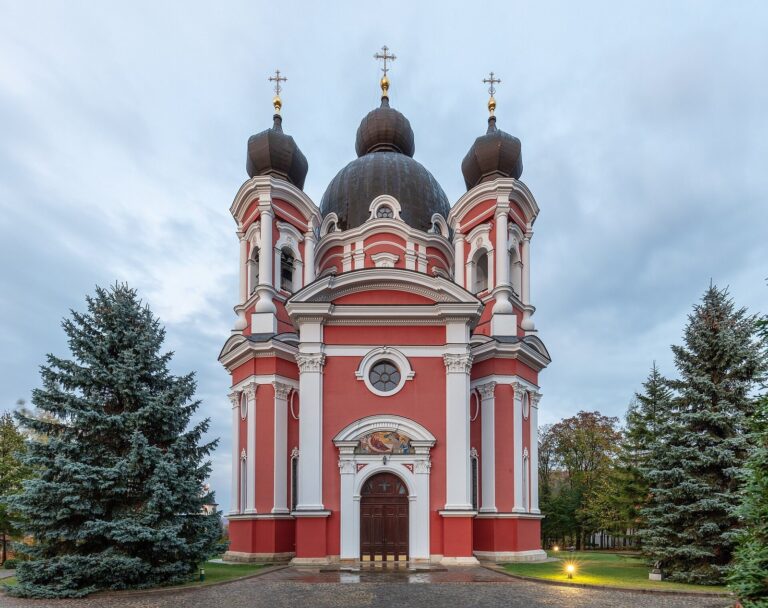
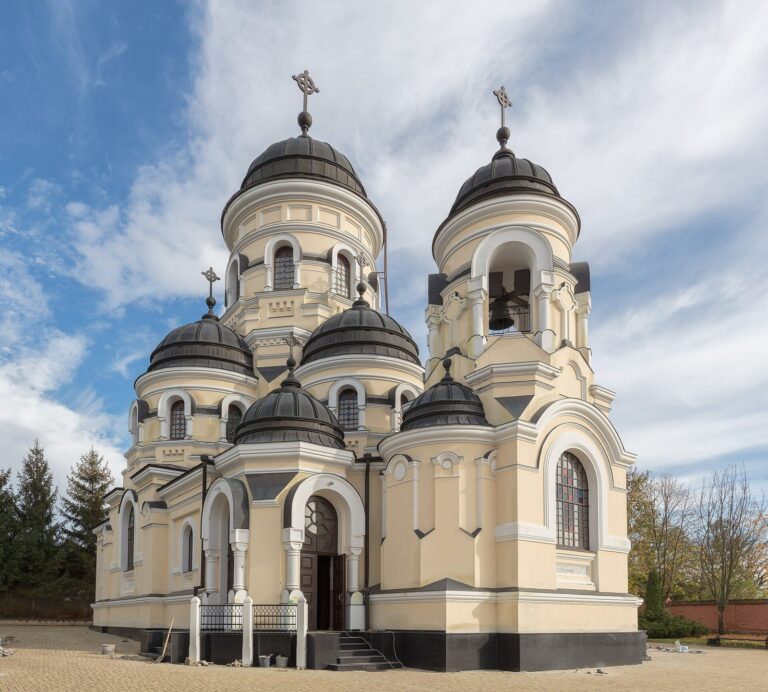
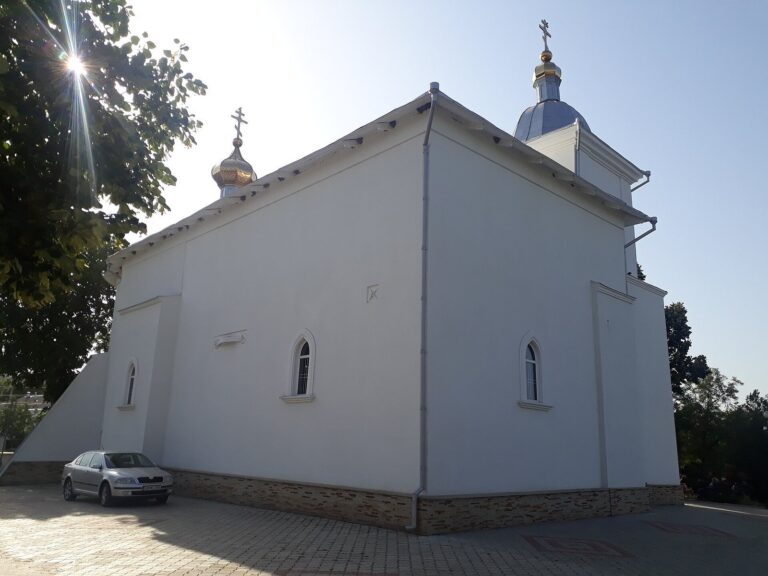
The monastery’s church buildings belonged to distinct phases and served different purposes. A church dedicated to the Dormition was built first in wood and later in stone, while a separate church dedicated to the Trinity served as the winter church.
Churches
Dormition Church
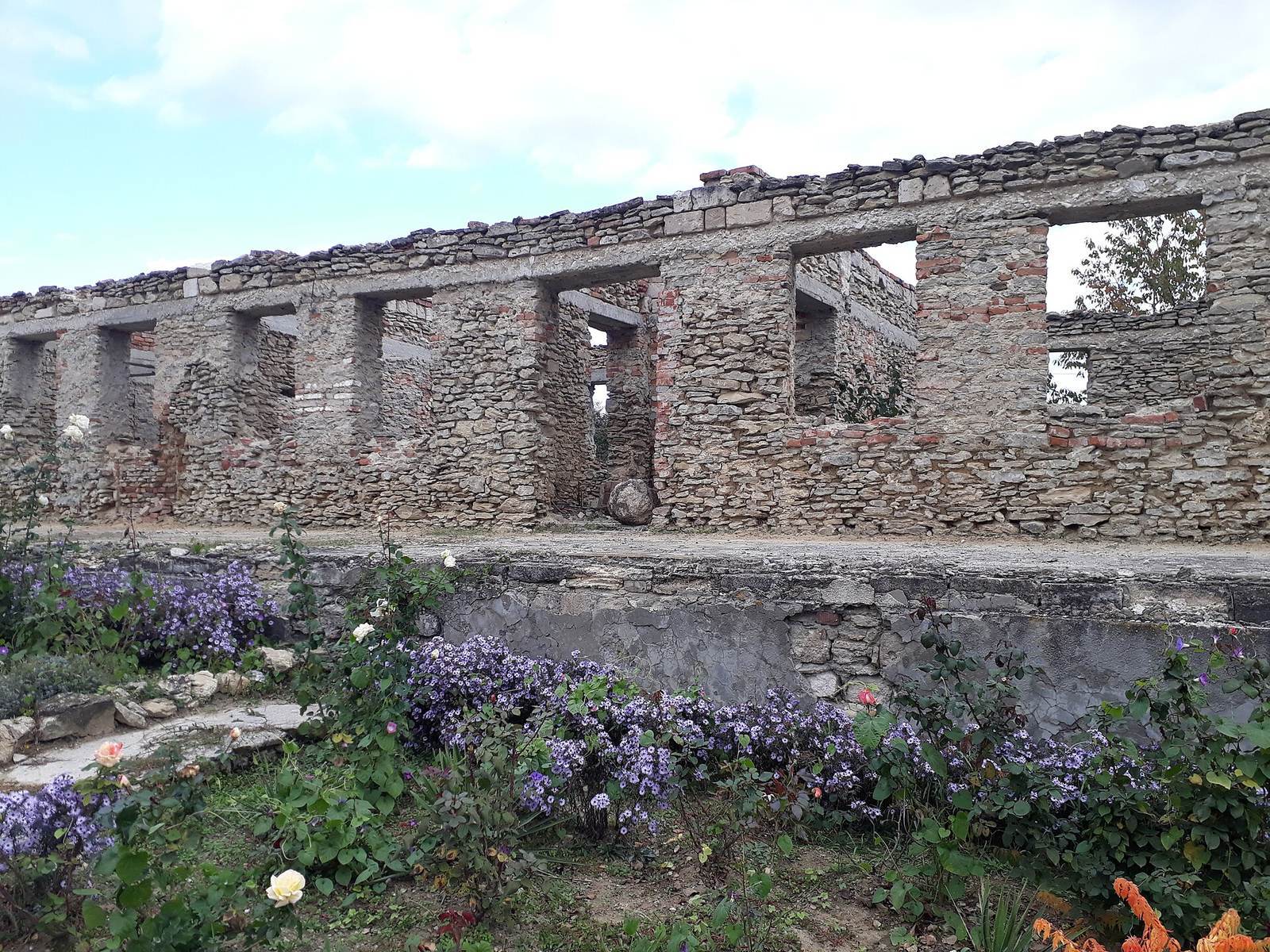
A wooden Dormition Church was built in 1807–08. A later church with the same dedication was constructed of stone in the late 1840s and consecrated on 8 October 1850. Worship continued in the church until 1954, when it became a sports hall. The building burned in 1986.
Trinity Church
The monastery also had a separate winter church dedicated to the Trinity. It was built during Archimandrite German’s leadership and consecrated on 17 August 1861. In September 1947, it was converted into a club.