Château de Saint-Laurent-le-Minier: A Historic Residence and Formal Garden in France


Site at a Glance
- Rating
- 4
- Popularity
- Very Low
- Country
- France
- Primary era
- Early Modern
- Eras represented
- Early Modern
- Civilizations
- French
- Site type
- Domestic
- Remains
- Elite Residence
On this page10 sections
History
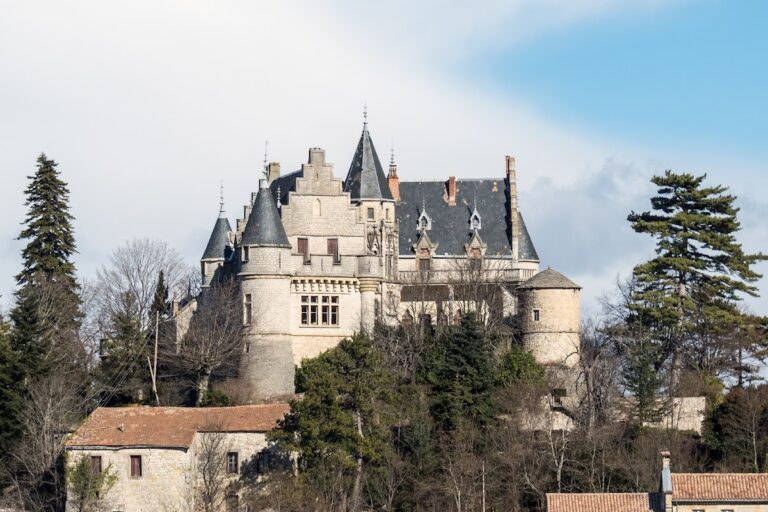
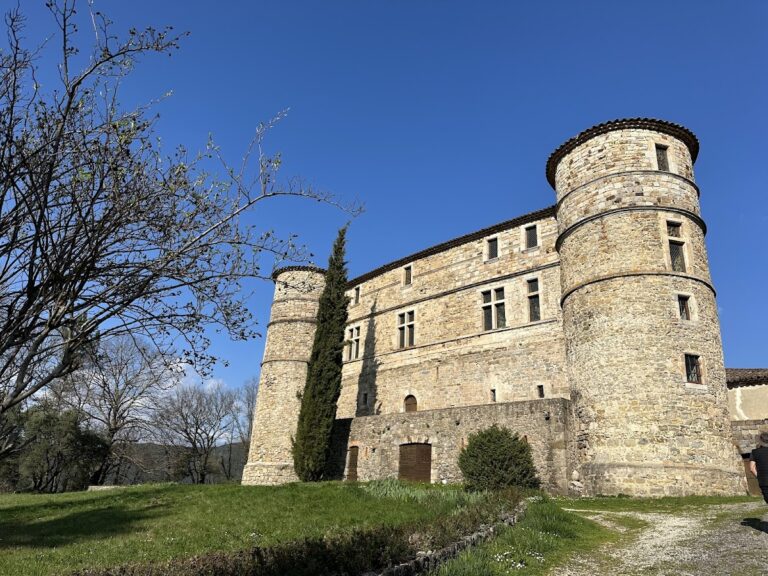
Château de Saint-Laurent-le-Minier is a historic residence in France, reconstructed and enlarged in 1664 in the tradition of grand Languedoc residences. Its grounds were arranged with a French formal garden based on plans supplied by André Le Nôtre, the major seventeenth-century French designer known for geometrically organized aristocratic gardens.
From the Barony of Hierle to the Sarret Family
Until 1649, Saint-Laurent formed part of the barony of Hierle. Christophe de Montfaucon, Baron of Vissec and Baron of Hierle, mortgaged the lordship as security for his daughter Diane’s dowry. He could not redeem the mortgage and was therefore compelled to sell the lordship.
Jean de Bonnail acquired it for 8,000 livres. After his death, ownership passed to his daughter Marie de Bonnail, who was married to Pierre de Sarret, a royal councillor at the Court of Aids of Montpellier. Pierre de Sarret reconstructed and enlarged the château in 1664. He also owned the Hôtel de la Coquille on Montpellier’s Place de la Canourgue and is identified as the château’s initial owner. The building was created for residential use.
Transformations and Modern Protection
The château and its grounds were altered several times between 1750 and 1800. During this period, the property passed by marriage into the Vissec de Latude family.
Since 1977, the property has been divided into privately owned co-ownership units, while the château and gardens have remained in private ownership. The château and its gardens have been protected as a registered historic monument since 6 January 1988, under reference PA00103226. In France, this status places a heritage site or structure under statutory preservation measures.
Remains
Château de Saint-Laurent-le-Minier stands slightly above the Vis, a tributary of the Hérault. The surviving property combines the château with a French formal garden and a water system spread across grounds that once covered 250 hectares and now extend over 7 hectares. The gardens include an orchard, a palm grove, basins, fountains, a nymphaeum, and an aqueduct. A nymphaeum is a water-related architectural feature, often designed as a grotto, fountain, or ornamental shrine.
The Château and Terraces
Main Building
The château has the character of a grand Languedoc residence, although its overall appearance recalls the Château de Castries on a more modest scale. The pavilions beside the façade have roofs with steep lower slopes, known as brisis, and glazed tiles. A brisis is the steep lower section of a mansard-style roof, which increases the usable space beneath it.
Western and Eastern Terraces
Two terraces frame the château on its western and eastern sides. The eastern terrace was formerly flanked by a large noria, a wheel-driven device for lifting water, measuring approximately 16 metres in diameter. It raised water from the aqueduct to supply the basins and fountains and to irrigate the gardens and orchards. The noria was destroyed around the middle of the twentieth century and has not been rebuilt.
Waterworks and Gardens
Waterfall and Aqueduct
The property includes the left bank of the Vis and a waterfall created artificially in the eighteenth century. The waterfall formed the first element of the château’s water-supply system. An aqueduct connects it with the château’s irrigation canal, which continues to water the property.
Formal Garden and Grounds
The formal gardens form part of the landscaped grounds associated with the château. Alongside the geometrically organized garden are the orchard, palm grove, basins, fountains, and nymphaeum, while the aqueduct and irrigation canal preserve the relationship between the water system and the cultivated areas.
Nearby sites