Forte Rossarol: An Italian Fortress and Former Army Barracks

Site at a Glance
- Rating
- 4.3
- Popularity
- Very Low
- Country
- Italy
- Primary era
- Modern
- Eras represented
- Modern
- Civilizations
- Italian
- Site type
- Military
- Remains
- Fort
History
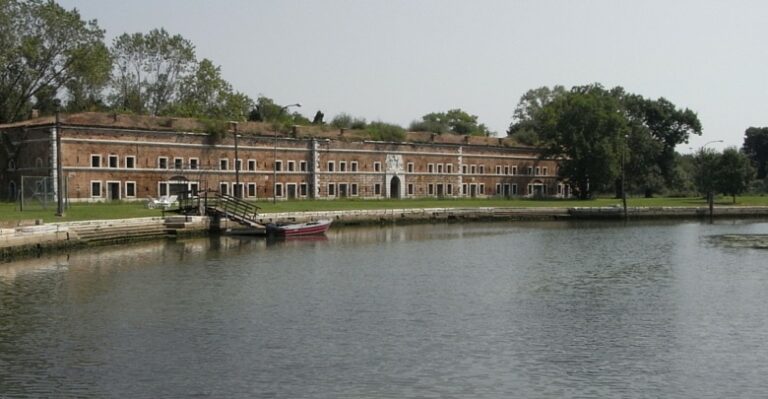
Forte Rossarol is a twentieth-century fortress and former Italian Army barracks in Italy, near Venice. Completed in 1907, it formed part of the Mestre entrenched camp, a network of fortified positions protecting Venice and its mainland approaches, and belonged to the wider defensive system of the Venetian Lagoon. The fort stood east of Forte Marghera and near Forte Bazzera, close to Tessera in Favaro Veneto.
Before the First World War, the completed fort was incorporated into Italy’s defensive preparations. During the war, it served in rear-area duties rather than at the front. After the Battle of Caporetto in 1917, a major Italian defeat that forced the army to retreat toward the Piave River and brought the threat of attack closer to Venice, Forte Rossarol was rearmed. It was never involved in combat.
After the Italian Army decommissioned the fort, the municipal administration acquired it. In 2013, the municipality granted the complex to Opera Don Milani on a 30-year loan. The organization established the Centro Soranzo community there, providing rehabilitation for people with drug addictions and accommodation for homeless people, refugees and asylum seekers, and unaccompanied foreign minors.
Remains
Forte Rossarol is a reinforced-concrete complex with two above-ground storeys that rise more than nine metres. Its defensive design combines the substantial main structure with underground passages and concealed weapon positions, while modest Rocchi-type ditches surround the fort.
Four shafts contained retractable machine guns. These disappearing emplacements allowed the weapons to be lowered out of sight when they were not firing, reducing their exposure to enemy observation and artillery. The shafts were accessible through underground galleries measuring 14 metres in length and excavated at a depth of two metres. Together with the surrounding ditches, these features express the fort’s role within the early twentieth-century defence of the Venetian Lagoon.
Nearby sites