Forte Boccea: A Military Fortification in Rome

Site at a Glance
- Rating
- 4
- Popularity
- Very Low
- Country
- Italy
- Primary era
- Modern
- Eras represented
- Modern
- Civilizations
- Italian
- Site type
- Military
- Remains
- Fort
On this page4 sections
History
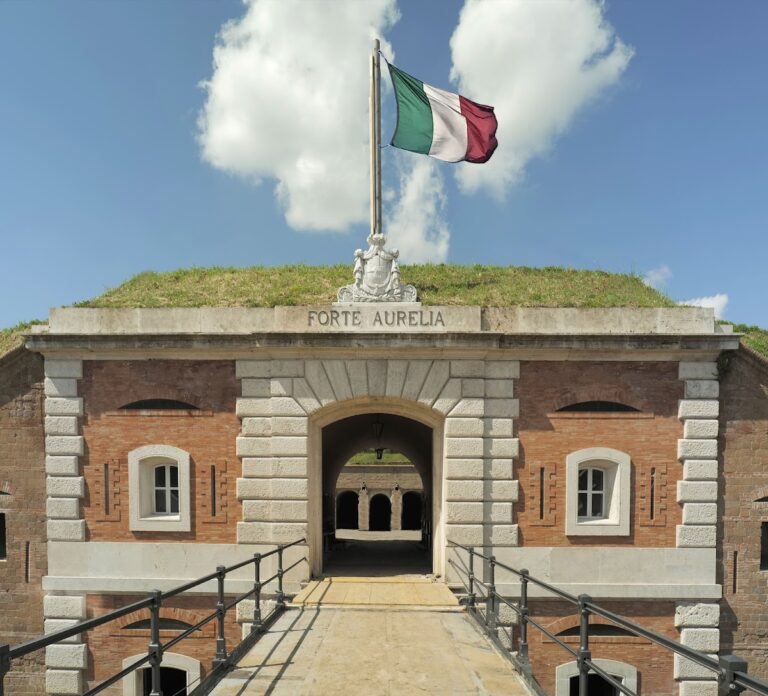
Forte Boccea is a nineteenth-century military fortification in Rome, Italy, built by the Kingdom of Italy in the Prussian style as part of the Entrenched Field of Rome. Construction began in 1877 and ended in 1881. The fort formed part of a coordinated ring of forts and defensive works established around Rome after the city became the capital of unified Italy. Victor Emmanuel II, the first king of unified Italy, is identified as its founder.
Defence of Rome
Forte Boccea was one of 15 forts created for the defence of the capital. Its strategic responsibilities included the areas of Monte Spaccato, Quarticciolo, and Primavalle. The wider group of Roman forts was constructed between 1877 and 1891, while Forte Boccea retained its military role until 1919.
Military Prison
After its defensive service ended, the fort became a military remand prison, a detention facility for people held under military jurisdiction before or during legal proceedings. It continued in this use until 2005. The fort is sometimes said to have held Nazi war criminals, but that claim remains unverified. It did hold Italian Jehovah’s Witnesses imprisoned for refusing military service. General Mario Carloni, an Italian army general, was imprisoned there from 1946 to 19 May 1951.
In 2013, a resolution approved the conversion of Forte Boccea into a park intended for cultural initiatives and events. The site remains associated with the Ministry of Defence.
Remains
Forte Boccea occupies 7.3 hectares at the first kilometre of Via di Boccea, the road from which it takes its name. It lies in Rome’s S. IX Aurelio suburb, within Municipio XIII. The surviving site is identified as a military fortification in the Prussian style, reflecting the nineteenth-century defensive design associated with Prussian engineering and its influence on fort construction across continental Europe.