Bogstad: Historic Manor and Museum in Norway


Site at a Glance
- Rating
- 4.6
- Popularity
- Low
- Country
- Norway
- Primary era
- Early Modern
- External website
- Open
- Eras represented
- Early Modern
- Civilizations
- Denmark–Norway
- Site type
- Domestic
- Remains
- Manor House
On this page7 sections
History
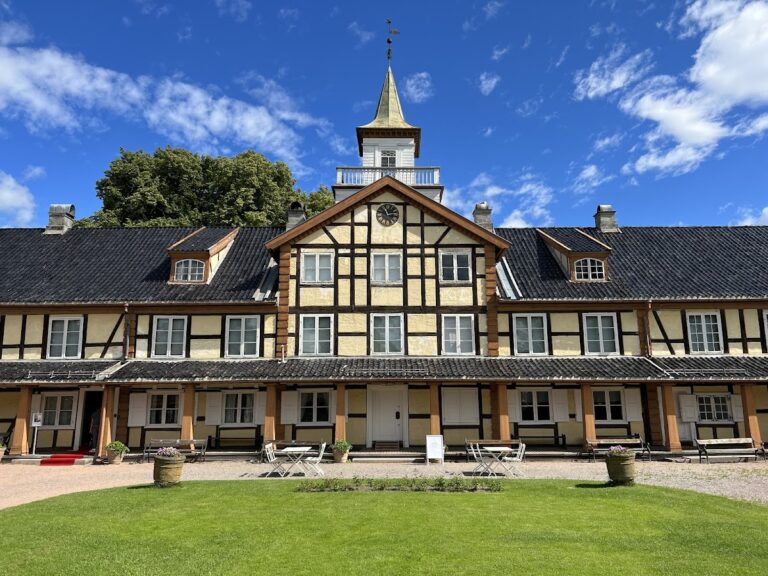
Bogstad is a historic farm and manor estate in Norway, near Oslo, whose Classicist manor house dates from between 1760 and 1780. The property originated beside Bogstadvannet in the Sørkedalen valley, an area now within Oslo’s Vestre Aker borough. Its history is closely connected with timber production, major landowners, and the development of the surrounding landscape.
Farm, Timber, and Family Ownership
Bogstad began as a farm near the lake and later became part of a large estate with forested land. These woods supported sawmills and the timber trade. Timber trader and landowner Morten Leuch owned Bogstad from 1756. Bernt Anker later acquired the property through his marriage to Leuch’s widow, Mathia Collett.
The estate also passed through the family of the merchant and councilman Peder Nielsen Leuch before coming to Norwegian Prime Minister Peder Anker. Through his marriage to Karen Anker, Peder Anker’s only child, Governor of Norway Herman Wedel Jarlsberg became connected with Bogstad.
Landscape and Manor Development
Peder Anker reshaped the area between the main house and Bogstadvannet with curved paths and artificial creeks. This work was expanded from 1780, as the estate was developed with a larger manor house in 1785. The changes joined the residential estate to its lake and valley setting through a deliberately designed landscape.
Public Ownership and Museum Use
Oslo Municipality has owned the property since 1954. The Bogstad Foundation owns the manor house and operates it as a museum in cooperation with the Norwegian Museum of Cultural History. Bogstad is also the name of a northwestern Oslo neighborhood that includes the manor grounds and Bogstad Golf Course. The property is listed as a cultural monument in Norway’s national cultural-heritage database under registration number 86176.
Remains
Manor House and Interiors
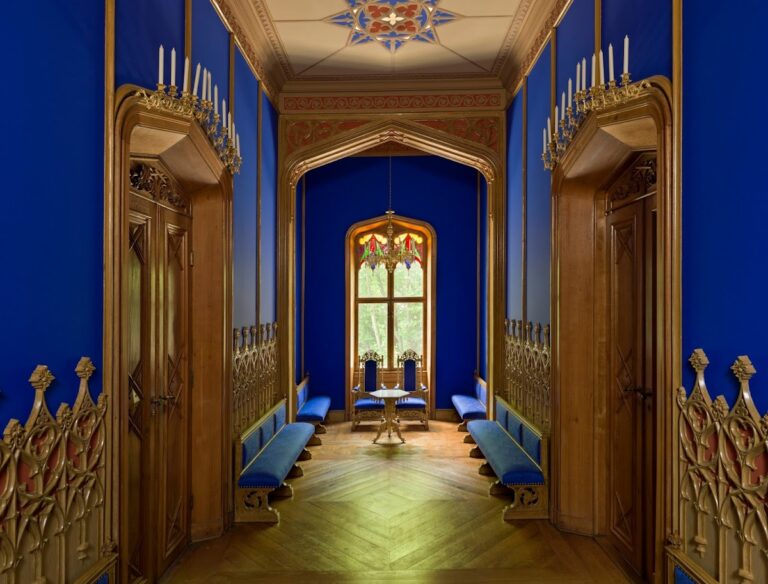
The manor house is a Classicist building dating from between 1760 and 1780. Classicism draws on forms and principles associated with ancient Greek and Roman architecture, and the house reflects the architectural traditions of its period. Its interiors contain paintings, chandeliers, furniture, and other furnishings dating from 1750 to 1850. Around 1800, the artist Fredrik Petersen painted a picture depicting Bogstad Manor.
Designed Grounds
The grounds descend along a slope from the main house toward Bogstadvannet. Their landscape design includes curved paths and artificial creeks created during the estate’s development. The grounds are associated with both the lake and the Sørkedalen valley, linking the manor’s built setting with the surrounding estate landscape.
Nearby sites