Fortaleza de São Vicente: A Coastal Bastion Fortification in Portugal
Site at a Glance
- Rating
- 4.6
- Popularity
- Very High
- Country
- Portugal
- Primary era
- Early Modern
- Eras represented
- Early Modern
- Civilizations
- Portuguese
- Site type
- Military
- Remains
- Fort
On this page13 sections
History
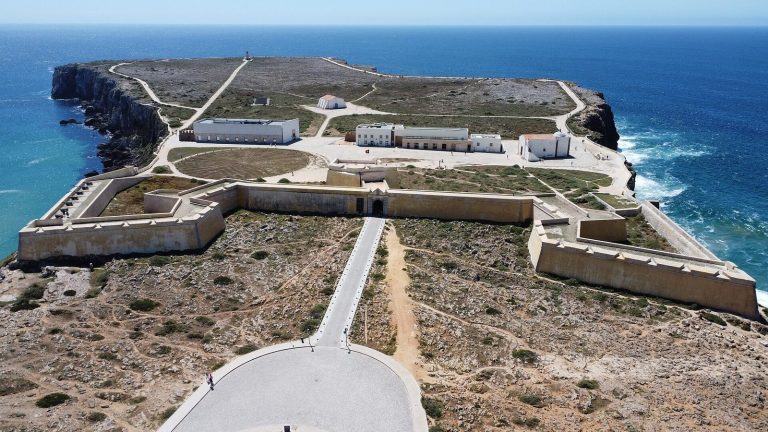
Fortaleza de São Vicente is a coastal bastion fortification at Cape São Vicente in Portugal, built around 1516 to protect a monastery and pilgrims while defending the southwestern coast against Muslim pirates. The fortress formed part of a larger religious and defensive complex whose surviving structures combine a sixteenth-century military role with later lighthouse use and Mannerist architectural characteristics.
Prehistoric and Classical Cape
Human occupation of Cape São Vicente reaches back into prehistory. Stone materials associated with Mousterian and Mirense traditions, as well as Paleolithic and Mesolithic remains, have been found at the site. Polished Neolithic stone pieces and an Iron Age bronze skewer point to continued activity across later prehistoric periods.
In antiquity, the cape also had a religious character. Classical writers including Ephorus, Artemidorus, and Strabo probably drew on the Massaliot Periplus, an account of coastal places and navigation, when describing sacred monoliths at the cape. Visitors were said to gather around the stones and make libations, or ritual offerings poured onto the ground or an altar. A burial tomb with an inscribed tombstone was discovered at the western end of the cape in 1639. The stone probably belongs to the Roman period.
The Cult of Saint Vincent
The cape later became a Christian pilgrimage destination associated with the legendary tomb of Saint Vincent, an early Christian martyr killed by the Romans in the fourth century. Tradition says that Christians fleeing persecution carried his remains by boat from Valencia, accompanied by a crow, and established a small hermitage and settlement at the cape. Saint Vincent’s cult later became especially important in Lisbon, where the boat and crows associated with his story became civic symbols.
The Arab geographer Al-Idrisi described a place called the “Temple of the Crow,” whose roof was inhabited by ten birds that supposedly never departed. Muslim forces demolished the temple in the twelfth century. Tradition holds that some members of its religious community were killed and others taken captive.
According to another tradition, two freed captives told King Afonso Henriques that Saint Vincent was buried at the cape after the king defeated the Moorish ruler Ismar. Afonso Henriques personally searched Sagres but did not find the remains. After the Christian conquest of Lisbon, the remains were reportedly recovered and carried there by boat, arriving in 1175 or 1176. Saint Vincent then became Lisbon’s patron saint.
Pilgrimage and Monastic Foundations
Around 1260, King Afonso III ordered a hospital or inn for pilgrims visiting the tomb. The institution also supported a permanent community at the strategically vulnerable cape. During the reign of King Denis, from 1279 to 1325, the church complex was enlarged into a monastery known as Corvo Monastery.
King Fernando granted the chapel and hermitage’s rents, rights, and offerings to his chief chaplain Vasco Lourenço between 1367 and 1383. On January 29, 1387, King John I made a similar donation to his chief chaplain Martim Gonçalves. Tradition also attributes another chapel at the burial place to Infante Dom Pedro, a Portuguese royal prince who was not the heir apparent.
Dom Fernando Coutinho, Bishop of Silves, became the principal promoter of the convent. He built houses beside the chapel and established a convent for the Order of Saint Jerome, a Catholic monastic order whose communities managed religious life and endowed properties. He also required the monks to maintain a lighthouse in a tower because of the frequent shipwrecks in the area.
The convent was supported by extensive properties and revenues. These included vineyards, orchards, olive groves, agricultural land, farms, sheds, and mills in the Monchique mountains, Vila Nova de Portimão, Messejana, Casal do Cabo near Lisbon, and Aljezur. King Manuel confirmed the donations on March 5, 1514.
Fortification and Religious Change
The convent was the only house of the Hieronymite friars in the Algarve, but their occupation was brief. Records place them at the site after 1514, and they left in 1516. Dom Fernando Coutinho then invited Capuchin friars of the Custody of Piedade, a regional administrative division of their order, to take over the convent under the same financial and lighthouse-maintenance obligations. Their arrival established the first Capuchin foundation in the Algarve and the order’s fourth in Portugal. The Capuchins were a reform branch of the Franciscan order associated with austerity and religious retreat.
Around 1516, Dom Fernando Coutinho ordered the fortress built to protect the convent and pilgrims and to defend the coast against Muslim pirates. He also constructed a wall from the Fortress of Belixe to Armação Nova, the northern coastal point, enclosing the convent within a defended area. A document from 1573 records royal interest in founding a monastery of the Order of Christ on the headland. This Portuguese military-religious order had succeeded the Knights Templar in Portugal and was associated with the defense of the region against Turkish and Moorish attacks.
Destruction, Rebuilding, and Later Use
In 1587, the British privateer Francis Drake attacked the defenses of the Sagres region. A privateer was an armed force authorized by a state to strike enemy shipping and coastal targets during wartime. Drake’s forces destroyed the convent and fortress, and the religious community took refuge in convents at Lagos and Portimão. The friars returned in 1606, when reconstruction of the fortress was completed by order of King Philip III of Spain.
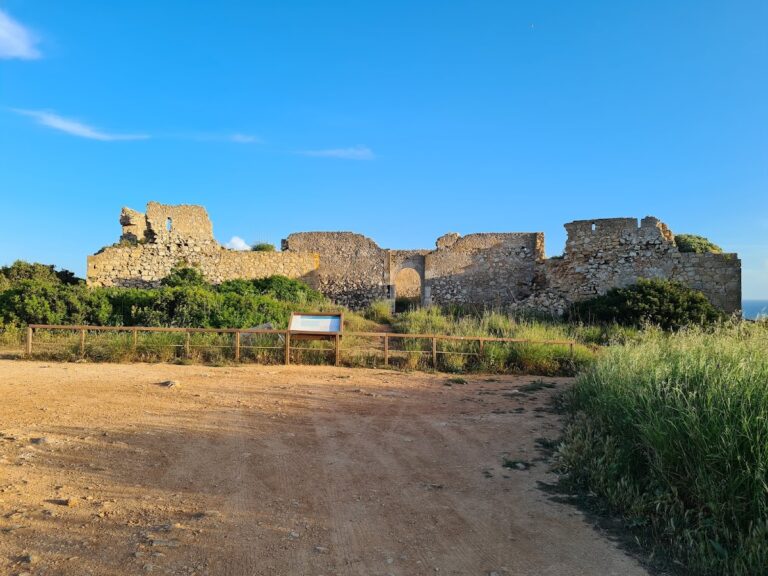
Earthquakes damaged the complex in 1719 and 1722, while the earthquake of 1755 caused severe destruction. Queen Maria ordered restoration work. The convent and church were abandoned after Portugal’s religious orders were dissolved in 1834.
Several attempts were made to replace the lighthouse destroyed during Drake’s attack. In 1846, Queen Maria II’s government ordered a new lighthouse to be built. Another lighthouse was constructed at the beginning of the twentieth century, and the remaining convent and church structures were replaced by buildings of the Ministry of the Navy serving the lighthouse. The fortress was classified as a Property of Public Interest by Decree No. 4075 on December 5, 1961, and suffered further earthquake damage in 1969. Improvement and maintenance work on the lighthouse and its supporting buildings took place between mid-2005 and October 2007, retaining their original design. A planned museum installation in Casa da Parede was not carried out because of insufficient funds.
Remains
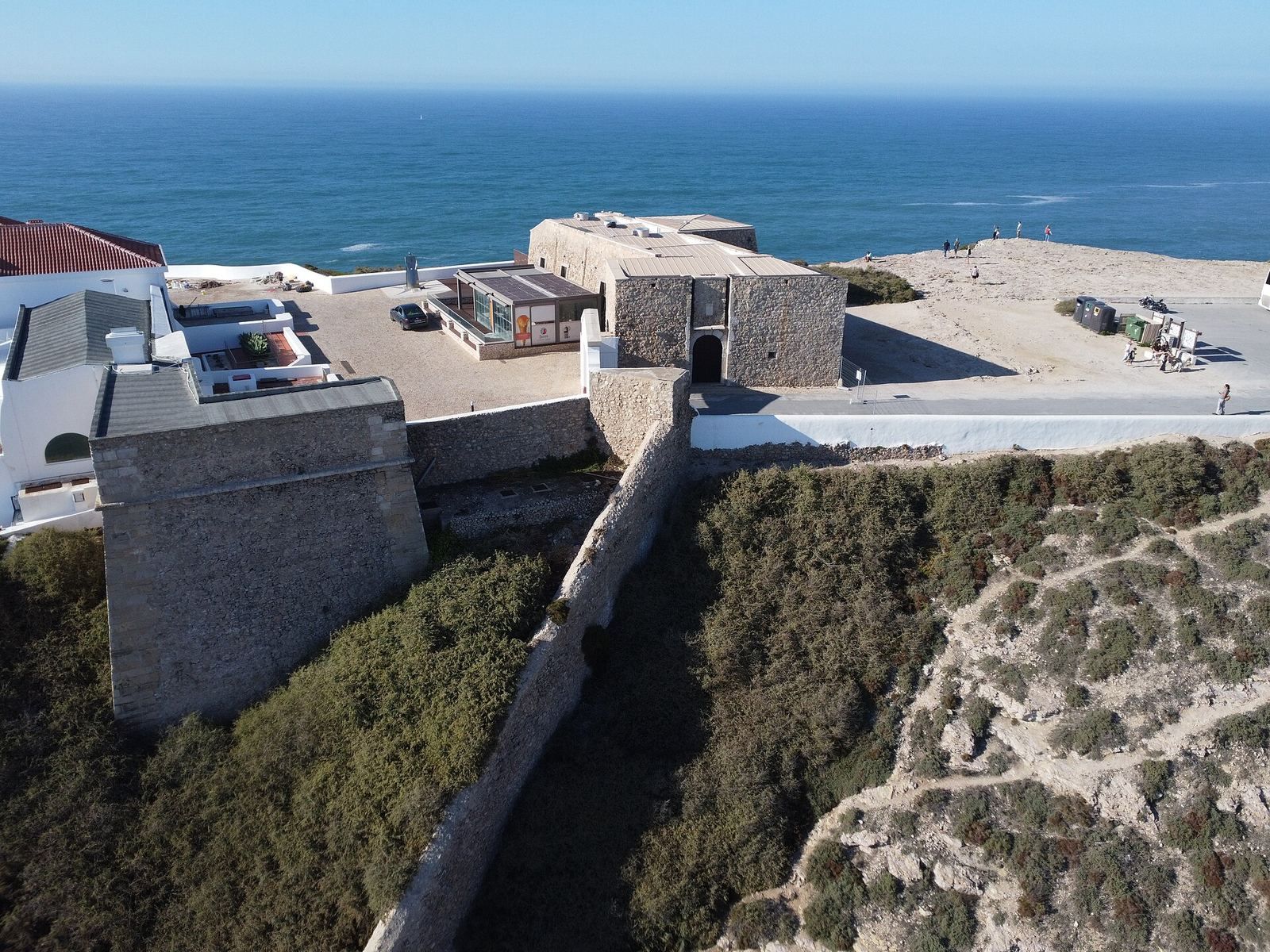
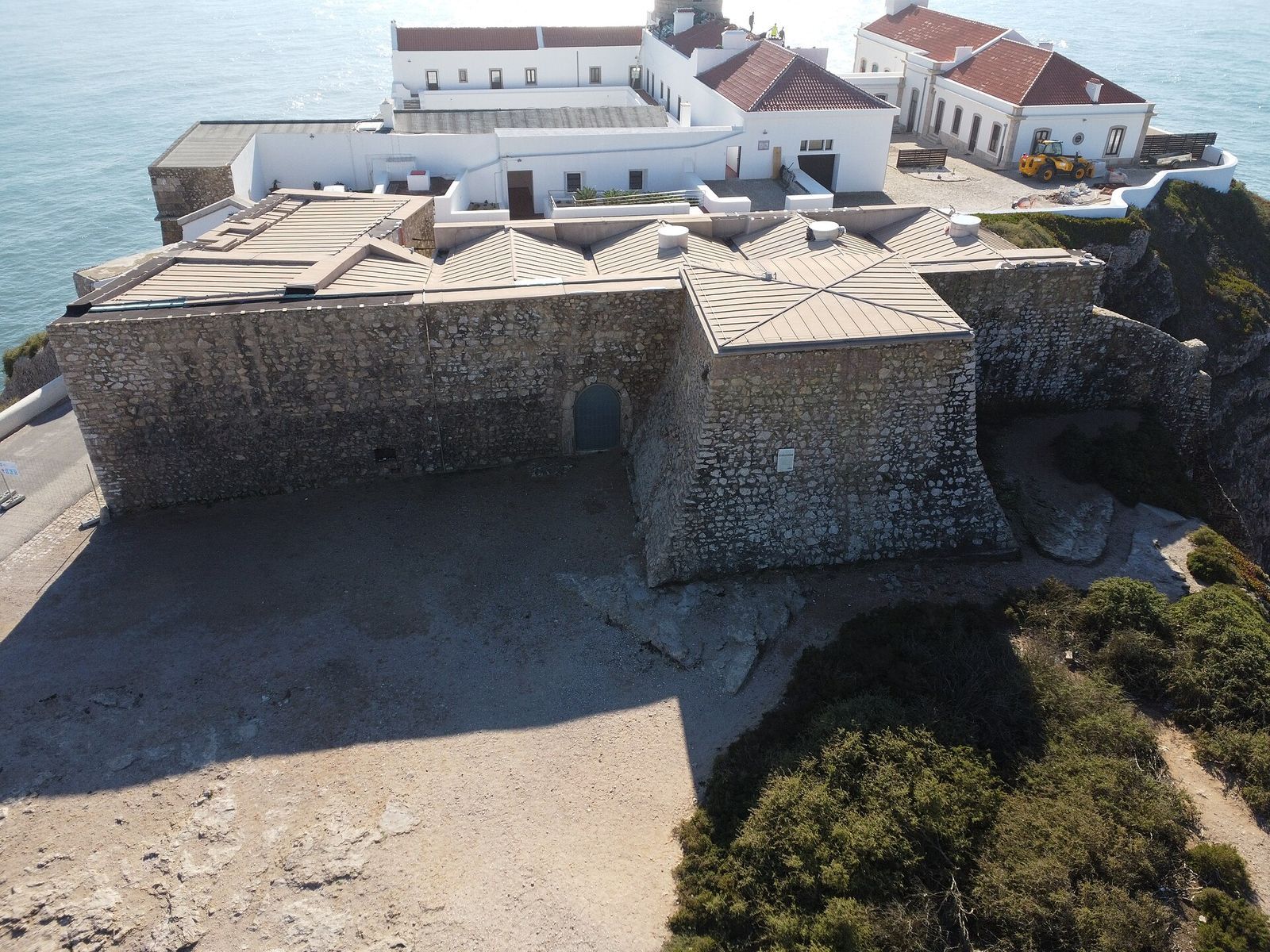
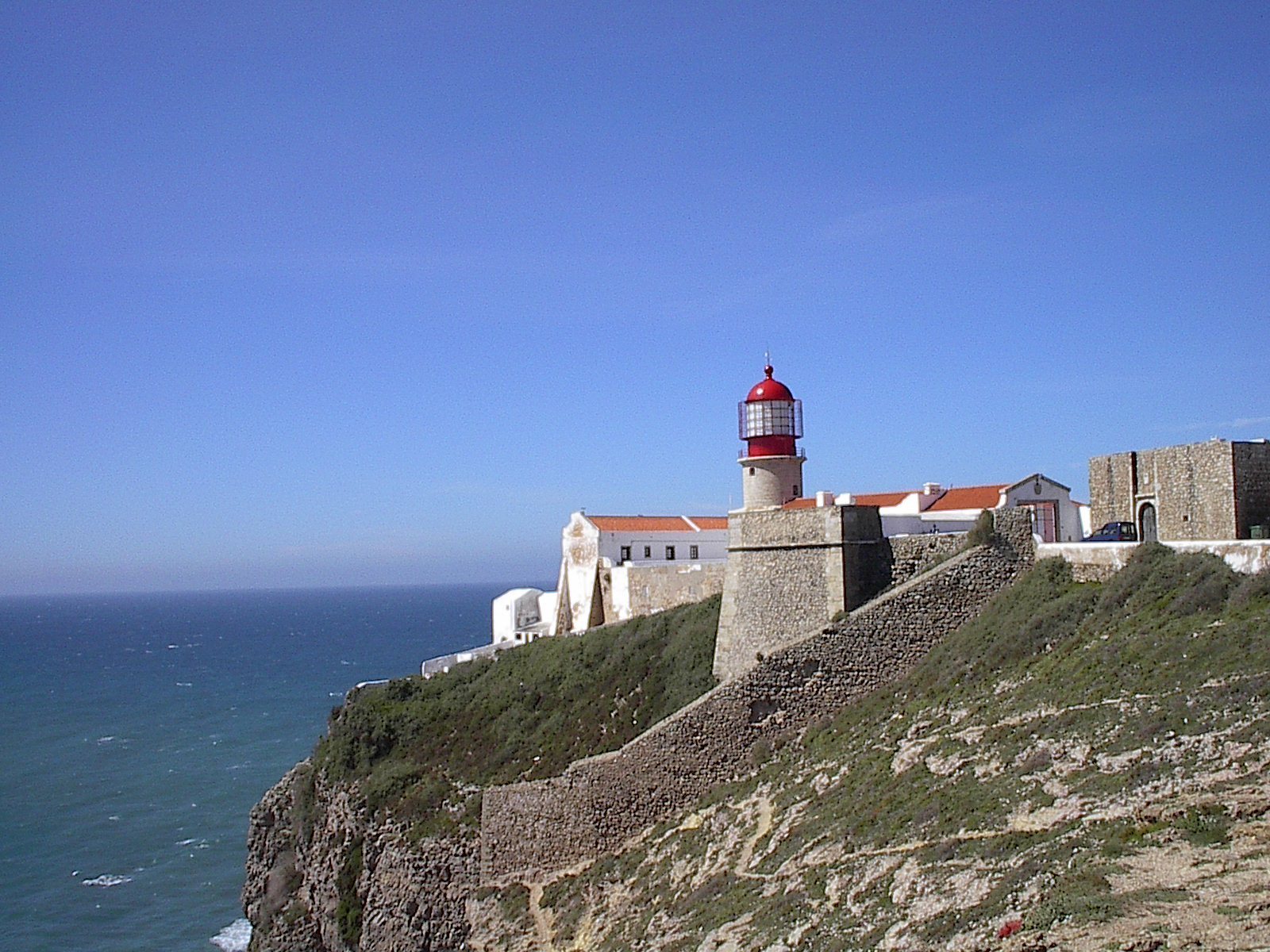
The surviving Fortaleza de São Vicente occupies a polygonal plan at Cape São Vicente, the southwesternmost point of the Portuguese coast. Its landward side is shaped by a projecting bulwark, a defensive work designed to help defenders cover the walls and approaches with overlapping fire. Barrel vaults and terraces remain among the fortress’s principal architectural elements, while the surviving buildings display characteristics of Mannerism, a late Renaissance style known for complex compositions and elongated forms.
Fortress Defenses
Main Entrance
The principal entrance is set in the fortress wall through a doorway topped by a perfect arch. Portugal’s coat of arms appears above it. The entrance originally included a drawbridge, linking the gateway to the fortress’s defensive system.
Secondary Entrance
A smaller entrance opens laterally from the fortification. Together with the main doorway, it forms the surviving access arrangement within the polygonal enclosure. The fortification also retains terraces and vaulted spaces associated with its military construction.
Lighthouse and Monastic Remains
São Vicente Lighthouse
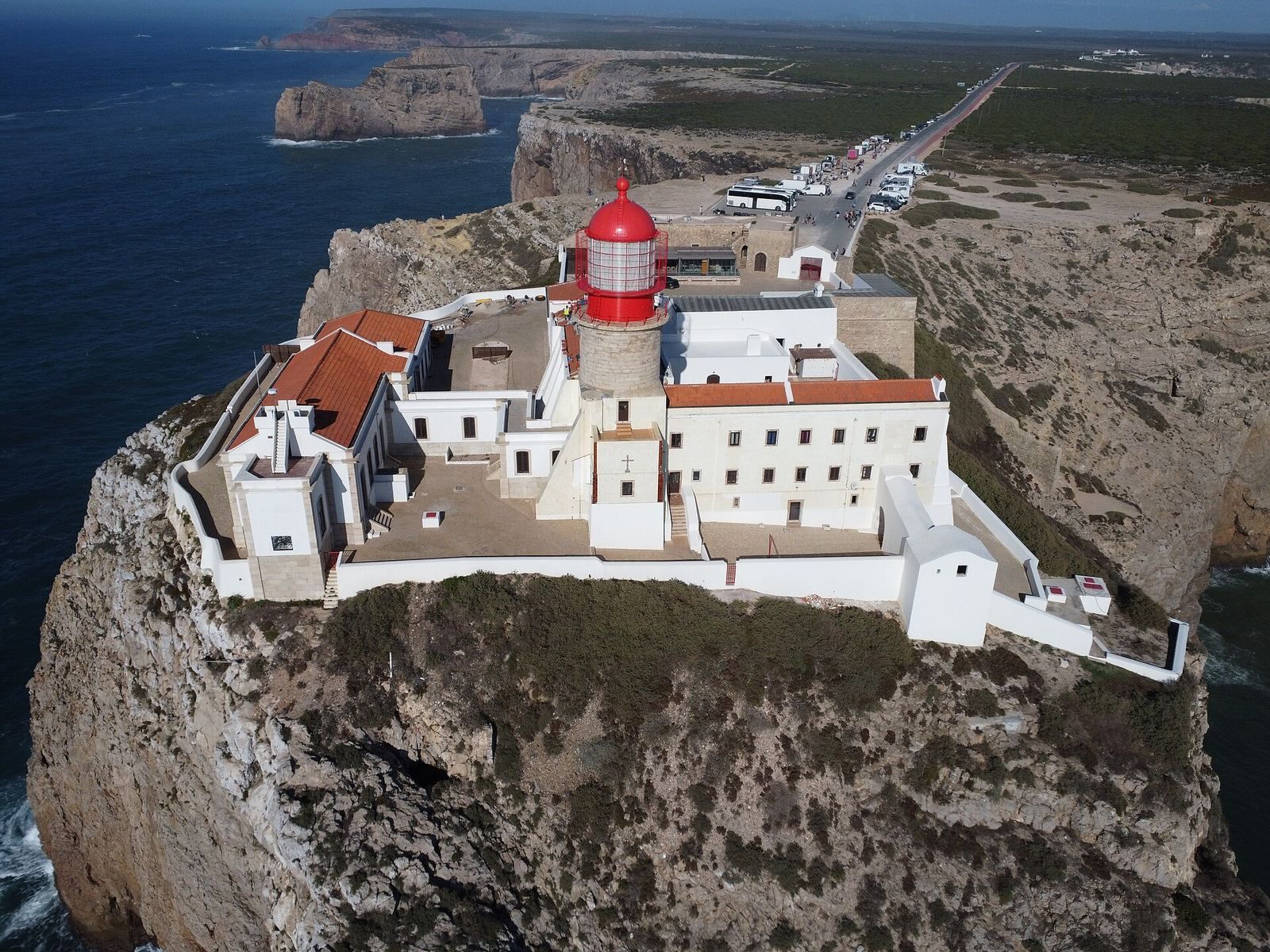
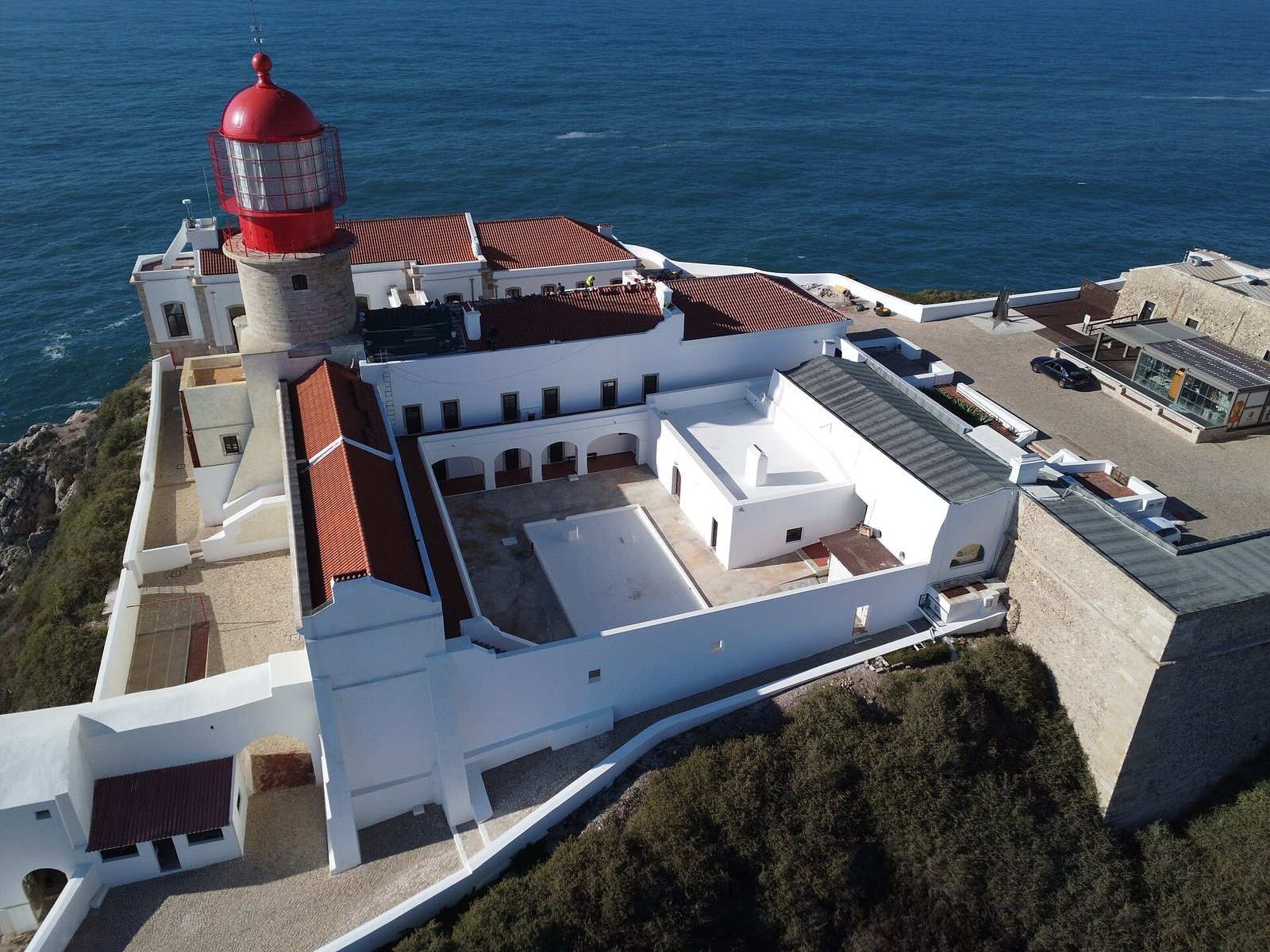
The São Vicente Lighthouse stands inside the fortress. Its light can be seen from approximately 43 kilometers away, and an audible signal accompanies it. The lighthouse is regarded as one of the longest-ranged in Europe. A tombstone beside the entrance commemorates the lighthouse’s construction in 1846.
Former Conventual Area
The buildings supporting the lighthouse occupy the area of the former monastic facilities. Within the complex, an open space enclosed by eight-sided walls may preserve the former cloister, a covered walkway surrounding a monastery courtyard. Traces of cisterns, tanks or underground reservoirs used to collect and store water, also survive. These elements preserve part of the relationship between the fortress, the religious foundation, and the lighthouse installation.
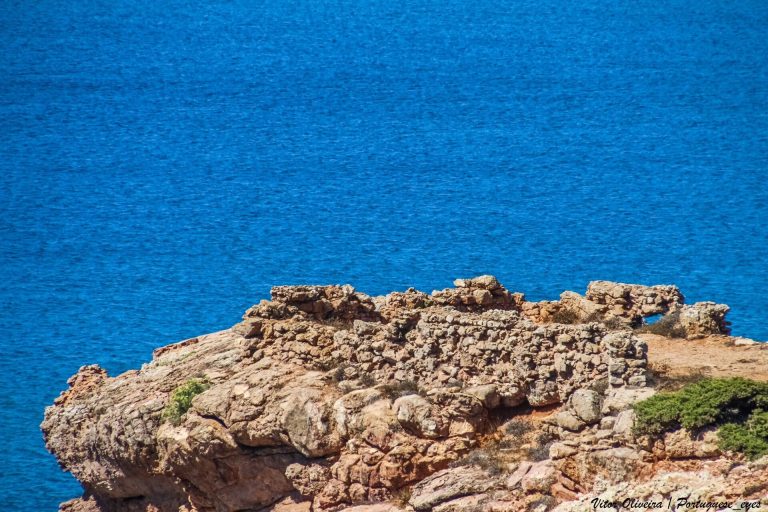
The wider archaeological setting includes the prehistoric stone materials, polished Neolithic pieces, Iron Age bronze skewer, and probable Roman-period inscribed tombstone associated with the cape. Together with the fortress fabric, these remains reflect the long sequence of human, religious, military, and maritime use at São Vicente.