Fort Villeneuve-Saint-Georges: A 19th-Century Work in the Defenses of Paris
Site at a Glance
- Popularity
- Medium
- Country
- France
- Primary era
- Modern
- Eras represented
- Modern
- Civilizations
- French
- Site type
- Military
- Remains
- Fort
On this page4 sections
History
Fort Villeneuve-Saint-Georges, a 19th-century military installation in France, formed part of the defenses of Paris.
Construction and military service
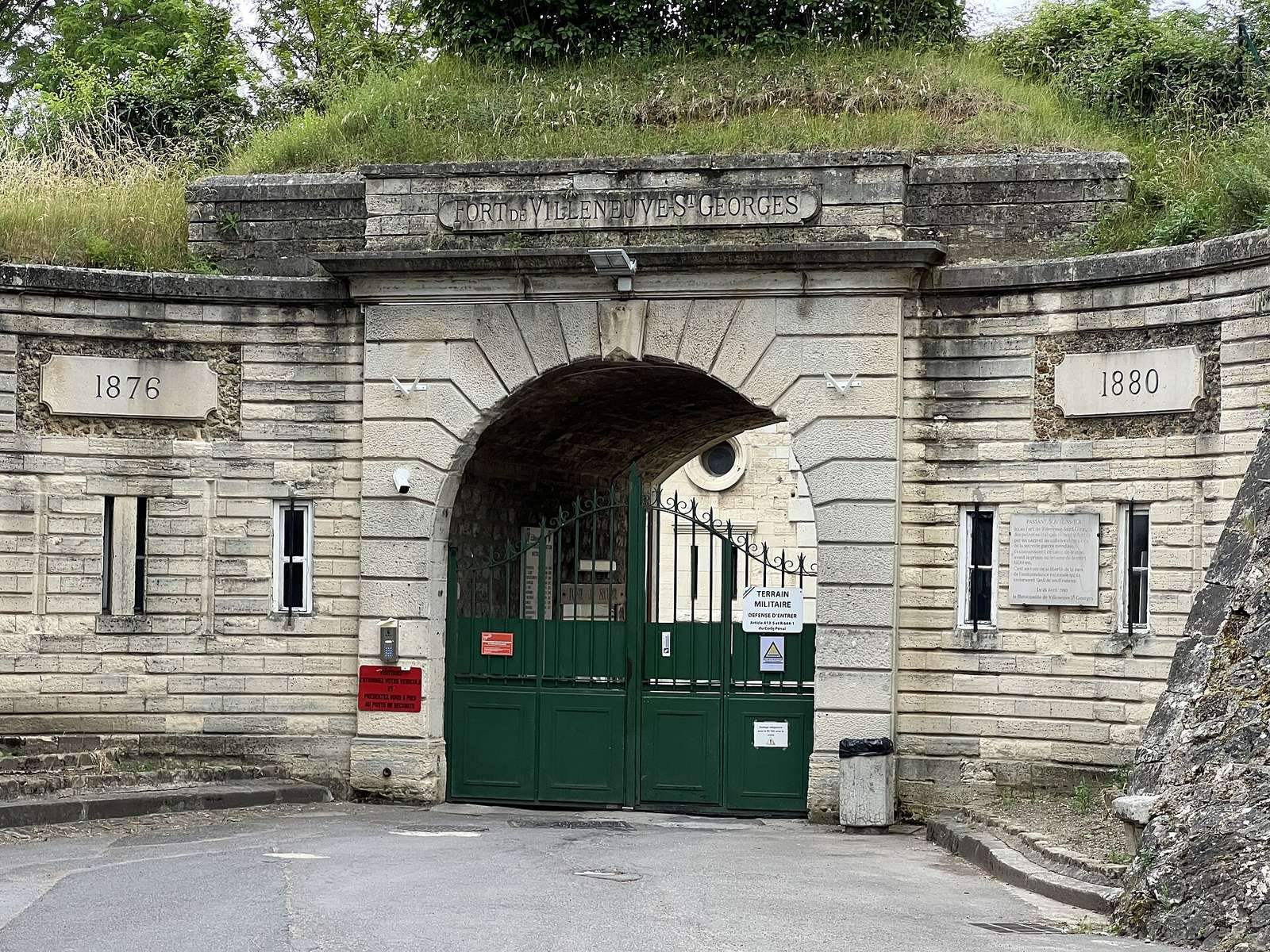
After the Franco-Prussian War of 1870, the French military expanded Paris’s defenses. French architect Viollet-le-Duc and General Séré de Rivières, a military engineer, devised a second defensive belt of 18 forts, including Fort de Villeneuve. Construction was decided in 1875, and the fort was built from 1876 to 1879. It officially entered service in 1880.
Wartime executions and later use
During the Second World War, eight resistance fighters from Villeneuve-Saint-Georges were executed at the fort. The French Resistance comprised groups and individuals who opposed the German occupation of France and the Vichy regime.
The fort was in ruins when the 6th Group of the Paris Fire Brigade, the fire and rescue service for Paris and its surrounding area, took it over in 1966 to train firefighter cadets. Following five months of major work, it received its first recruits on 1 June 1966.
The fire brigade continued using the fort until 2023, when it moved to a new training center serving Limeil-Brévannes, Valenton, and Villeneuve-Saint-Georges. The 11-hectare site was earmarked for police use, including part of the Operational Support Service of the Directorate of Public Order and Traffic, a unit of the Paris Police Prefecture. The Directorate is the fort’s current owner, and a symbolic handover of the keys took place on 21 December.
Remains
Covering 11 hectares, the fort formed one part of the defensive system built to protect Paris. Inside, a commemorative plaque recalls the wartime executions.