Fort of Bertheaume: A French Coastal Fortress at the Goulet de Brest


Site at a Glance
- Rating
- 4.5
- Popularity
- Medium
- Country
- France
- Primary era
- Early Modern
- External website
- Open
- Eras represented
- Early Modern, Modern
- Civilizations
- French, German
- Site type
- Military
- Remains
- Fort
On this page18 sections
History
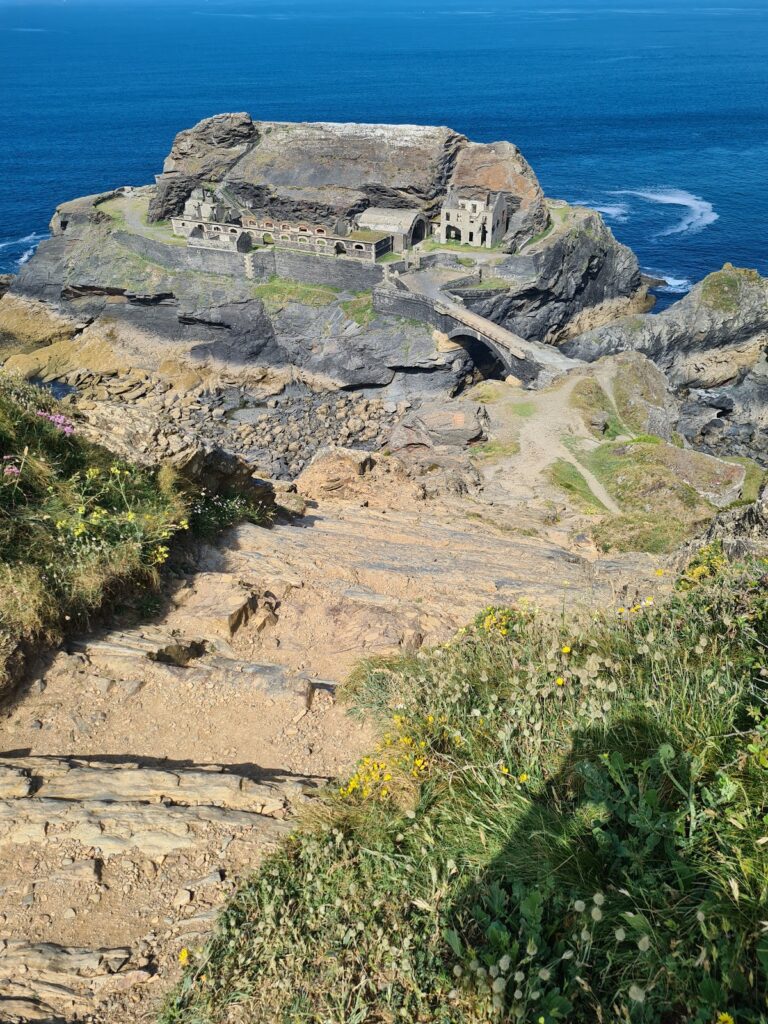
The Fort of Bertheaume is a French coastal fortress on a tidal island near Plougonvelin, France, built in its surviving form during the late seventeenth and early eighteenth centuries. Its steep cliffs and elevated position helped defend the Goulet de Brest, the narrow maritime passage linking Brest harbor with the open sea, from the seventeenth century onward. The site also preserves evidence of prehistoric activity, medieval occupation, and successive military adaptations.
Prehistoric and Early Christian Activity
Human activity at Bertheaume reaches back to the Mesolithic, the prehistoric period between the Paleolithic and Neolithic. Flint tools and waste from a cliff-side workshop include a distinctive assemblage that archaeologists call the “Berteaume Mesolithic.” Bronze Age chamber tombs on the mainland portion add evidence of later prehistoric use. Roman-era evidence consists of a small number of pottery sherds from the second and third centuries CE, together with fragments of roof tile.
Irish and Welsh monks may have reached this part of Armorica, the ancient name for the region that included present-day Brittany, during the fifth or sixth centuries. Local tradition associates Saint Sané with a landing on the beach of Perzel. According to the tradition, he then moved inland with 50 followers and established the parish of Plouzané.
Medieval Castle and English Custody
A document dated 8 March 1474 records a castle at Bertheaume. The transfer of the site from the Viscount of Léon to the Duke of Brittany during the fifteenth century has been taken to indicate that the castle was built in the early fourteenth century, before the War of the Breton Succession, the conflict fought from 1344 to 1364 over control of Brittany.
In January 1366, John V, Duke of Brittany, transferred custody of Brest and its defenses to Edward III of England. John recovered Brest for Brittany in 1397. During the period of English control, the island and castle acquired the names Bertem and Bertheaume, which were associated with Saint Bertem or Saint Bertellin. The site was also temporarily called Karreg Poncelin. A local tradition connects that name with Guyomarc Pontcellin, captain of the parish of Plouzané, who was reportedly killed by English forces while resisting a landing in 1472. The origin of Bertheaume remains uncertain. A probable explanation derives it from the Breton expression Aber C’homm, meaning “bay of the valley,” although an association with Saint Bertram has also been proposed.
The garrison apparently observed the naval Battle of Saint-Mathieu on 10 August 1512. The French ship Cordelière, commanded by Hervé de Portzmoguer, and the English flagship Regent, commanded by Admiral Sir Thomas Knyvett, were both lost after the Cordelière’s powder magazine exploded during an attempted English boarding. More than 1,700 French and English personnel died.
Destruction and Vauban’s Defenses
The medieval castle was destroyed in 1558 during an Anglo-Dutch expedition against the Brest area. After landing 7,000 troops at Blancs Sablons, the attackers destroyed settlements and religious buildings along the coast, including the castle at Bertheaume. Guillaume de Châtel assembled 10,000 men and forced the expedition to re-embark. A later record from 1585 identifies François, son of Olivier Kerannou de Kervasdoué, as the captain of the castle of Bertheaume.
In 1677, the engineer Sainte Colombe proposed placing cannon on the island among the ruins of the former castle of the Dukes of Brittany. Vauban, the principal military engineer of Louis XIV’s France, established a battery there in 1689. A battery was a fortified artillery position, while Vauban’s wider system combined layered guns, projecting bastions, enclosed walls, and other defensive works.
The battery proved its military value during the Anglo-Dutch attack on Camaret-sur-Mer and the Tour Vauban on 17 June 1694. It fired on the British force despite having only three cannon and two mortars. On 28 September that year, Vauban decided to build a fort on the site, with construction intended to begin in 1695. In May 1699, he presented plans for a small fort and battery commanding the roads and bay of Bertheaume, where ships waiting for favorable winds to enter Brest harbor anchored. Construction of the more elaborate fort began in 1700 under Benoît de Musinot, a Brest naval artillery officer and inventor of a swiveling mortar.
Nineteenth-Century Modernization
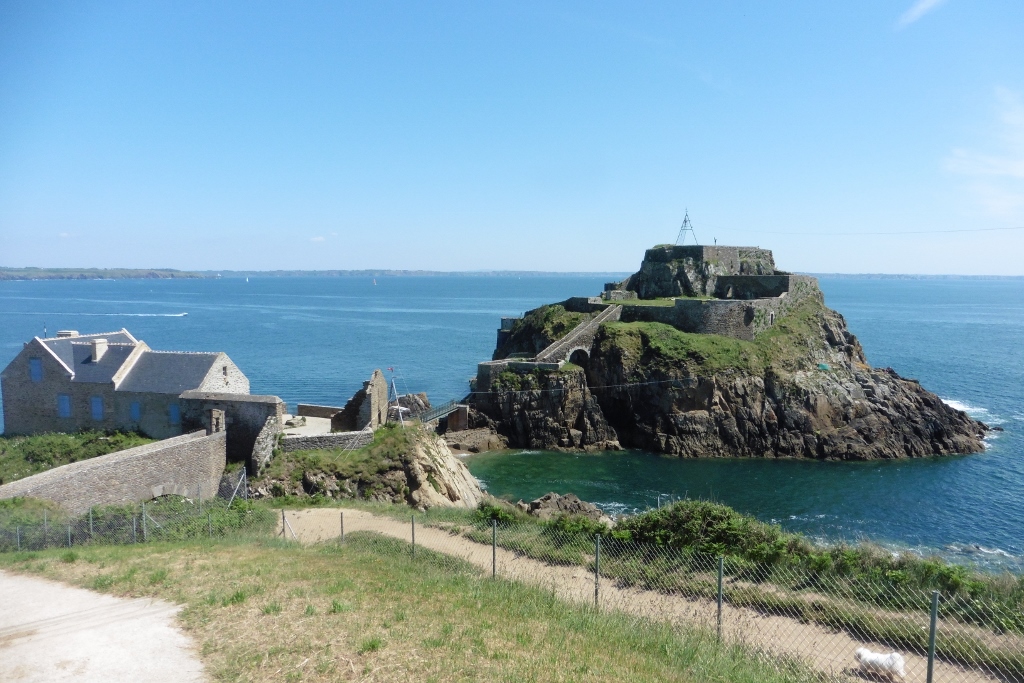
During the eighteenth century, the original Vauban battery was supplemented by a second, lower battery on the eastern side. An inspection in 1793 found the battery poorly maintained and generally useless. The fort was disarmed at the end of the Napoleonic Wars. During the nineteenth century, the defensive system spread across two islands, with the smaller island nearest the mainland belonging to this later phase.
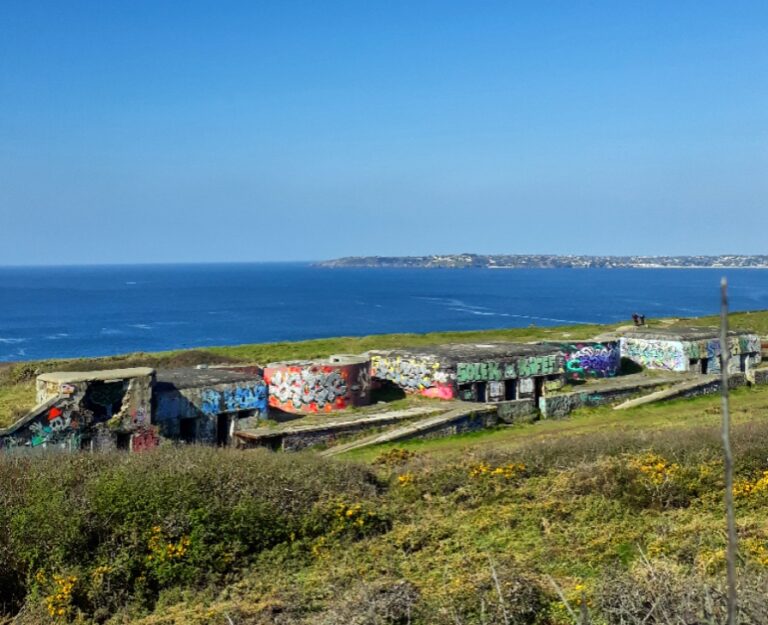
The French military eventually abandoned the fort as its principal defensive role. Between 1880 and 1890, modern mainland casemates replaced the older defenses. A casemate was a protected chamber designed to house guns or troops. These works gave the site a new artillery system whose field of fire reached through the Goulet toward the Crozon Peninsula.
World Wars and Military Abandonment
The alliance between Britain and France during the First World War removed Bertheaume’s former purpose of defending Brest against the Royal Navy. In August 1914, the fort fired a warning shot at an unaware freighter. The army then removed the guns and sent them to the front while retaining possession of the site.
Bertheaume subsequently became a base for captive observation balloons, tethered balloons that lifted observers above a military position for surveillance and reconnaissance. They monitored German U-boats, particularly after convoys carrying United States troops began arriving at Brest in 1917. The site continued for some time after the war as a training center for captive-balloon crews.
German forces occupied Bertheaume in 1940 and strengthened its defenses with concrete and additional weapons. The garrison resisted the Liberation and surrendered on 8 September 1944. Bertheaume did not return to military service after the Second World War. Nearby wartime losses included the aviso Vauquois in 1940, the buoy tender Émile-Allard in 1943, the German vessel Spece Spada T in 1943, and the German patrol vessels Leipzig Vorpostenboot and Dominique Vorpostenboot in 1944. British and American aircraft also crashed into the sea offshore in 1943 and 1944.
Preservation and Reuse
After the Second World War, the island and mainland section remained under the Ministry of Defence for approximately 45 years and became overgrown. The commune of Plougonvelin acquired the site around 1990 to 1992. Mine clearance, archaeological investigation, and rehabilitation followed, preparing the fort for public use. The landward section now contains an open-air theater, while the lower battery has been adapted for exhibitions, performances, and a restaurant. The footbridge connecting the island to the mainland has been rebuilt several times after repeated damage or destruction by winter storms.
Remains
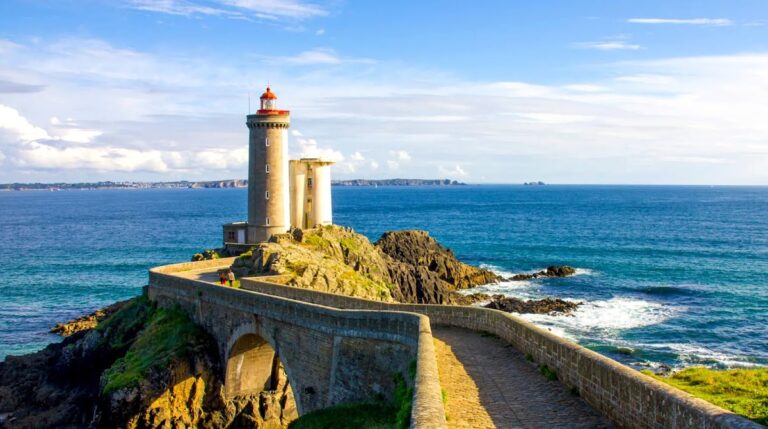
The Fort of Bertheaume occupies a rocky tidal island elevated above the sea, with steep cliffs and a connected mainland section. The surviving complex is principally a late-seventeenth- and early-eighteenth-century fortification, supplemented by later defenses. Before the first footbridge was built in 1835, access to the island was by boat or suspended craft. The larger island contains the main historic fort, while the smaller island nearest the mainland preserves nineteenth-century defenses.
Vauban-Era Fortification
Main Island and Artillery Levels
Musinot’s plan included a bastion, a semicircular battery, a magazine, barracks, and a powder store. A bastion is a projecting part of a fortification wall that allows defensive fire along the walls and surrounding approaches. The batteries occupy four levels on the larger island, connected by stairs, and posterns provide protected passages to the foot of the walls. The eighteenth-century complex also includes an enclosing wall, barracks, powder magazines, and a lower battery.
Powder Magazine and Lower Battery
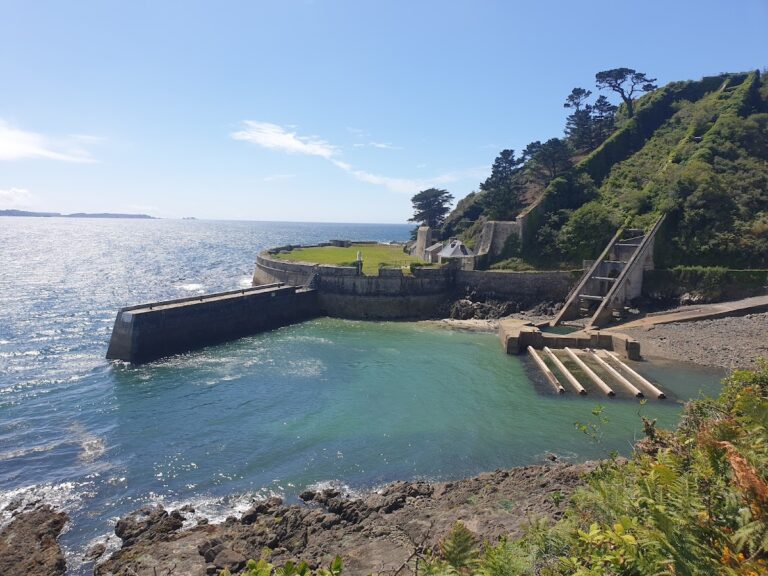
One powder magazine lies 13 meters underground. The lower battery was added on the eastern side during the eighteenth century and formed part of the fort’s layered artillery defenses. In its present adapted use, the former lower battery contains an exhibition area, an open-air theater, and a restaurant.
Later Defensive Works
Nineteenth-Century Islands and Mainland Casemates
The smaller island contains the defenses added during the nineteenth century. On the mainland, the casemates constructed between 1880 and 1890 replaced the older fortifications with protected artillery chambers. The principal battery held two 320-millimeter guns, two 240-millimeter guns, and two 160-millimeter guns. Their field of fire extended through the Goulet toward the Crozon Peninsula.
Supplementary Batteries
Two smaller batteries supplemented the principal mainland position with 95-millimeter quick-firing guns. The lower battery had three guns, while the upper battery had four guns and two heavy 240-millimeter mortars. Together, these installations represent the transition from the earlier island fort to a wider nineteenth-century coastal defense system.
Twentieth-Century Installations and Archaeological Features
German Wartime Additions
During the Second World War, German forces added a small modern concrete blockhouse on the island. They also installed anti-aircraft guns, 75-millimeter cannon, mortars, and machine guns, altering the older fortification for contemporary warfare.
Prehistoric Remains
The cliff-side workshop area contains Mesolithic flint-working remains associated with the distinctive Berteaume assemblage. The mainland section contains Bronze Age chamber tombs, linking the military complex to earlier prehistoric activity on the site.
Landward Cultural Reuse
The landward section includes an open-air theater. This later use occupies part of the rehabilitated complex and stands alongside the adapted lower battery, whose spaces now accommodate exhibitions, performances, and a restaurant.