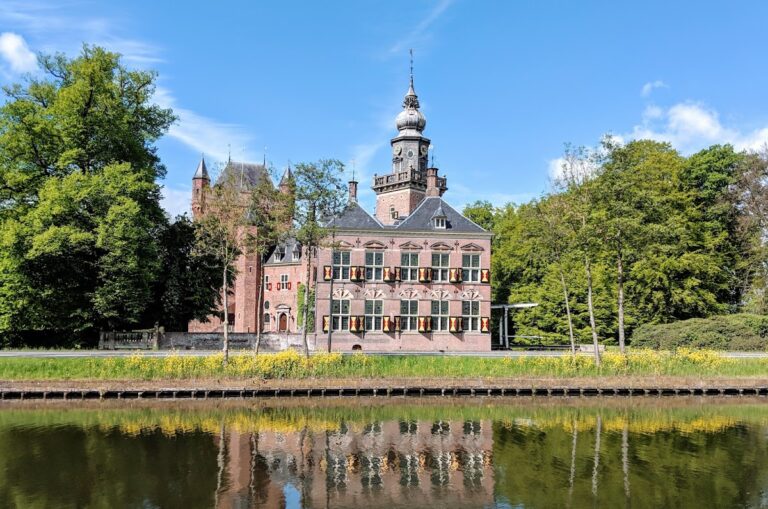
Fort bij Uithoorn: A Stelling van Amsterdam Fort in the Netherlands


Site at a Glance
- Rating
- 4.2
- Popularity
- Very Low
- Country
- Netherlands
- Primary era
- Modern
- External website
- Open
- Eras represented
- Modern
- Civilizations
- Dutch
- Site type
- Military
- Remains
- Fort
On this page8 sections
History
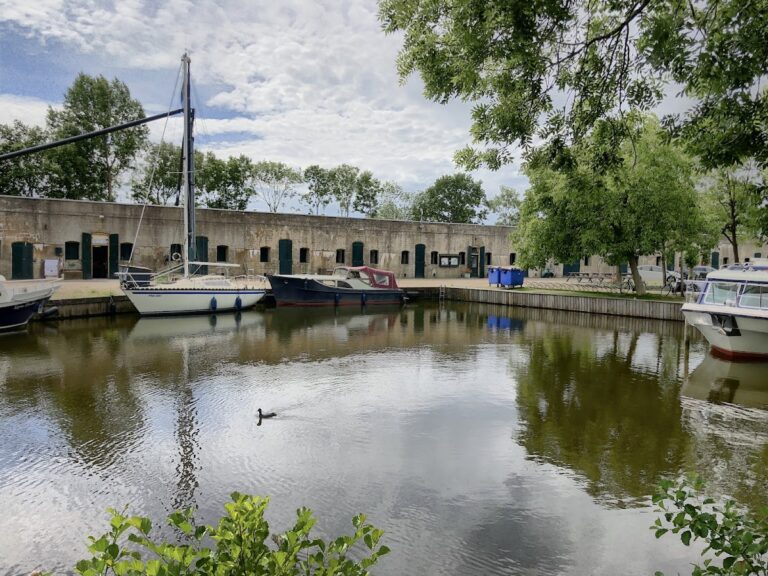
Fort bij Uithoorn is a Dutch fortification in Amstelhoek, Netherlands, forming part of the Stelling van Amsterdam, a defensive ring of forts and controlled inundations built to protect Amsterdam and its approaches. The site is sometimes called Fort Amstelhoek. Its fortification history began with earth walls, and construction at the location was approved by royal decree in 1887.
Construction and mobilization
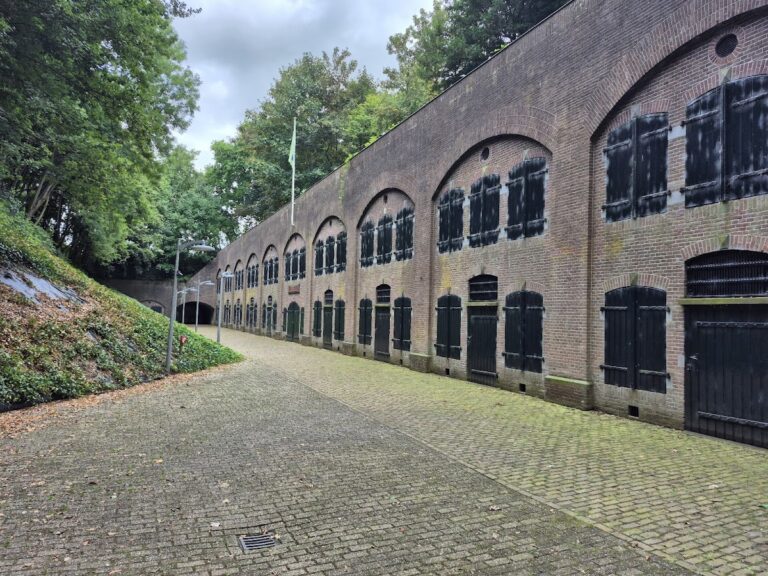
The fort was developed as a standard Model B design within the Stelling van Amsterdam’s fort-building program. Bombproof buildings, designed to withstand artillery fire, were added between 1909 and 1911. An anti-aircraft unit joined the fort’s defenses in 1917, when the garrison consisted of 321 men.
General mobilization on 1 August 1914 brought the educator and author Theo Thijssen to Fort bij Uithoorn. He was billeted there with approximately 300 other soldiers and wrote eight letters about daily life at the fort during his stay. Thijssen returned to teaching after his demobilization in June 1915.
Wartime and postwar uses
During the German occupation in the Second World War, the fort was requisitioned for the Vordere Wasserstellung, a defensive line intended for use if Allied forces penetrated the Atlantic Wall. Men were stationed at the fort, and ammunition was stored there. In April 1944, the occupying authorities flooded large areas of land as part of their defensive preparations.
After the war, Fort bij Uithoorn served as a storage facility. The fort keeper’s house was rebuilt in 1950, and the fortification closed in 1959. During the 1970s and 1980s, secret Organization B used the fort to support the provision of strategic information to the Dutch government in exile if a Soviet invasion occurred.
The fort is owned by Staatsbosbeheer, the Dutch public organization responsible for state-owned forests and nature areas. It is now used for events and storage. The fortification is protected as a national monument and forms part of the Stelling van Amsterdam, which is included on the World Heritage List.
Remains
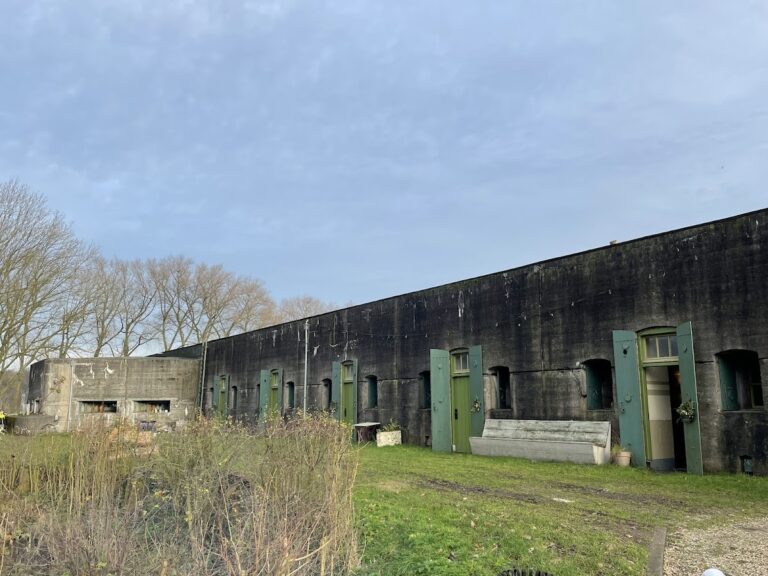
A moat surrounds Fort bij Uithoorn, which lies in Amstelhoek and can be seen from the N196. The site follows the standardized Model B arrangement, with concrete bombproof buildings and armored disappearing gun cupolas. These gun turrets could be raised for firing and lowered for protection, and bombproof corridors connected them to the main building.
Fortification and surviving interiors
Main defensive buildings
The concrete structures containing the disappearing gun cupolas remain intact. Above the doors of the poterne, a covered passage through the fort, the fort’s name and construction year are displayed. Other surviving defensive features include the left gorge casemate, a fortified chamber on the rear side of the fort, and a military engineering shed.
Interior rooms and fittings
A relatively large part of the original interior survives. Wooden partitions divide the rooms, while the telegraph room, kitchen, water de-ironing installation, and soldiers’ washing room remain among the preserved facilities. The washing-room door was walled up for a long period, helping to protect the interior.
Inundation landscape
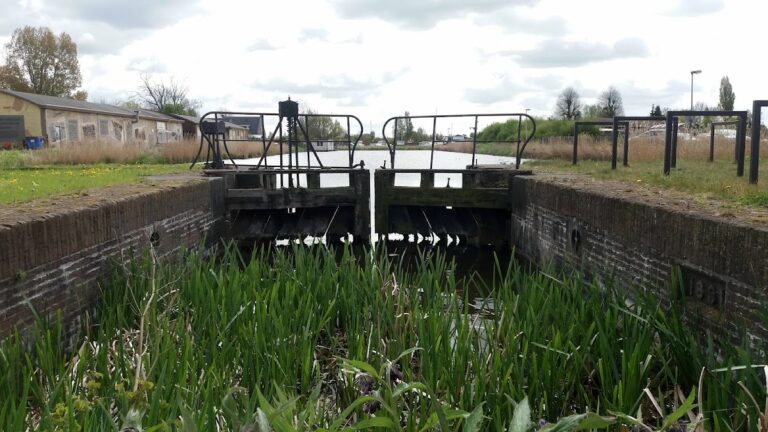
An inundation inlet stood immediately beside and west of the fort. It supplied water for deliberately flooding the terrain in front of the defensive position. A small lake remains east of the Ringdijk Tweede Bedijking, while a fan-shaped pattern in the vegetation marks the former inlet and its stone spillway.