Fort 7 “Za Rzeką”: A Redoubt Fort of the Kraków Fortress


Site at a Glance
- Rating
- 4.2
- Popularity
- Low
- Country
- Poland
- Primary era
- Modern
- External website
- Open
- Eras represented
- Modern
- Civilizations
- Habsburg
- Site type
- Military
- Remains
- Fort
On this page6 sections
History
Fort 7 “Za Rzeką,” also known as Bronowice, is a historic redoubt fort in Kraków, Poland, built between 1857 and 1865 as part of the Kraków Fortress, a system of defensive forts and military works constructed around the city. It replaced an FS-type fortified earthwork, known as a Feuerschanze, that had been created on the site in 1854.
Construction and modification
The fort was established as a bastion-like defensive work with an earthen rampart and brick construction used on its slope. Its defences were later altered. Traverses, raised or strengthened sections intended to limit the effects of fire along a rampart, were added in 1888. In 1909, an artillery position called a tradytor was built in the fort’s left shoulder and gorge to deliver flanking fire along a defensive line or ditch.
Military ownership and heritage protection
Throughout the twentieth century and the early twenty-first century, Fort 7 remained military property and served as a warehouse. For a long period, the Military Property Agency held it and the fort was not publicly accessible. It was entered in the register of immovable monuments of the Lesser Poland Voivodeship under number A-1141 on 29 November 2005. Since 13 September 2021, ownership has belonged to the University of the National Education Commission in Kraków.
Remains
Fort layout and central reduit
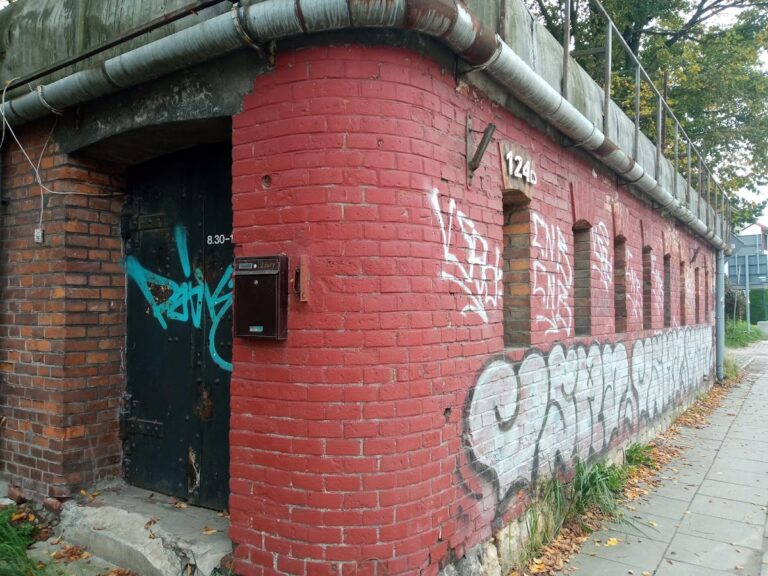
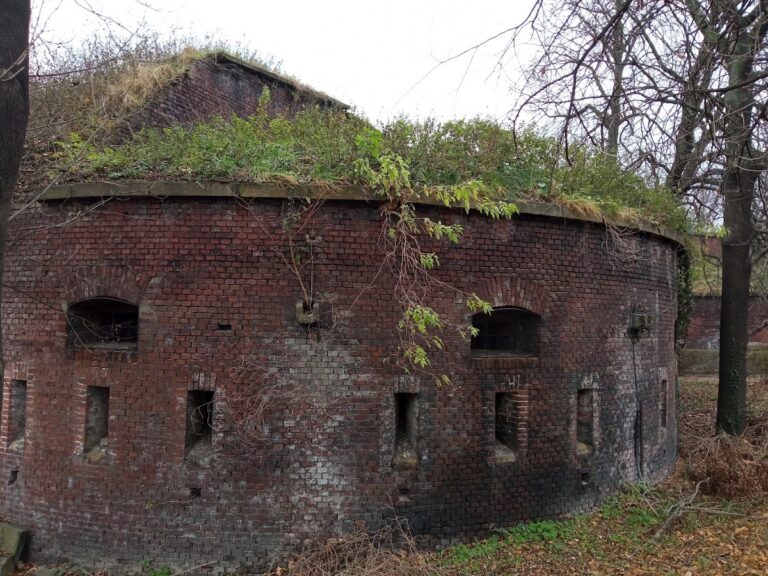
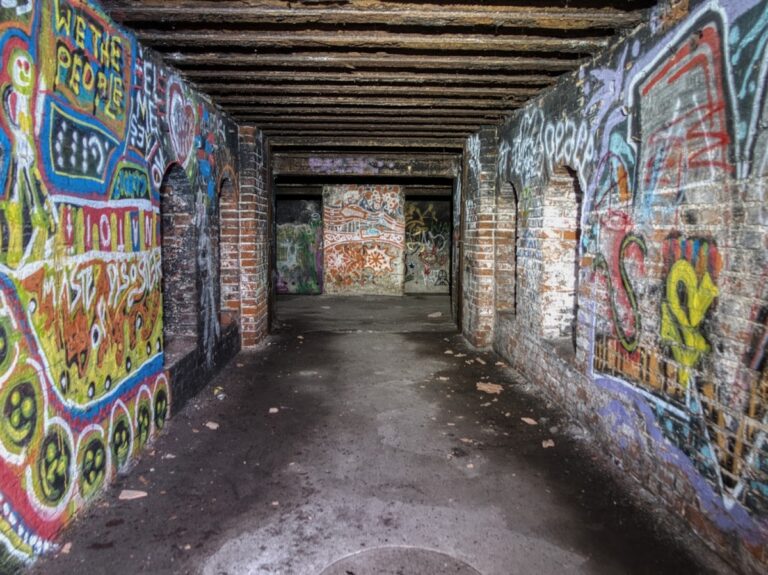
Fort 7 stands in Kraków’s Bronowice district on Lucjana Rydla Street. Its plan is based on a bastion-like earthwork, with an earthen rampart, brick-faced slope, and traverses. At the centre is a single-storey brick reduit, a fortified central building designed to provide a strong defensive position within the larger fort. The reduit has a horseshoe-shaped plan and a terrace covered by an earthen mantle with a parapet. It is enclosed by a large courtyard and a rampart, while the gorge line is interrupted on the axis of symmetry.
Ditch and entrances
A classical defensive ditch surrounds the fort. Two cat-ear-type caponiers, covered defensive works projecting into the ditch so that defenders could fire along or across it, form part of this outer defence. The reduit’s gate retains a drawbridge, preserving the principal crossing into the central part of the fort.
Nearby sites