Findlater Castle: A Ruined Coastal Fortress in Aberdeenshire



Site at a Glance
- Rating
- 4.8
- Popularity
- Low
- Country
- United Kingdom
- Primary era
- Medieval
- External website
- Open
- Eras represented
- Medieval, Early Modern
- Civilizations
- Kingdom of Scotland
- Site type
- Military
- Remains
- Castle
On this page8 sections
History
Findlater Castle is a ruined coastal castle in the United Kingdom, standing on a rocky promontory in Aberdeenshire above the Moray Firth. First recorded in 1246, the surviving ruins derive mainly from a fourteenth-century rebuilding, when the fortification was redesigned, probably on the model of Rosslyn Castle. The site later became associated with the Ogilvy family and served as the seat of the Earls of Findlater and Seafield.
Early Fortification and Norwegian Occupation
A fortification already stood at Findlater when the site first entered the historical record, although its original builder is uncertain. In the 1260s, King Alexander III of Scotland inspected, repaired, and strengthened it in preparation for an invasion by King Haakon IV of Norway. Haakon pursued Norwegian interests in the Scottish Isles and western Scotland during his reign from 1217 to 1263. Norwegian forces later occupied Findlater for a period, and one tradition holds that they destroyed the earlier fortress. According to this account, the surviving castle was built on its ruins.
Sinclair and Ogilvy Ownership
The site may have been associated with the Sinclair family before it passed to the Ogilvys. Sir John Sinclair, the last known Sinclair owner, died at the Battle of Harlow in 1411. Sir Walter Ogilvy subsequently acquired Findlater and received a royal licence in the mid-fifteenth century to fortify or rebuild it. Another tradition places the construction of the later castle in this period, after the land had passed to the Ogilvy family. The surviving remains are also linked to the earlier fourteenth-century rebuilding, and the design has been compared with Eilean Donan Castle as well as Rosslyn Castle.
Findlater was visited by James V of Scotland in November 1535, after the king had made a pilgrimage to Tain. In 1546, Sir Alexander Ogilvy disinherited his son James and transferred the castle to Sir John Gordon, the son of the fourth Earl of Huntly. James Ogilvy challenged the inheritance through his connections at the court of Mary, Queen of Scots. The dispute followed a conflict between father and son. James had plotted to imprison his father and deprive him of his lands, while John Gordon later married James’s mother and took possession of the castle and estates. James Ogilvy later served as Master of Household to Mary of Guise, Mary’s mother and regent during part of the queen’s minority.
The Siege of 1562
The conflict between the Ogilvys and Gordons continued. In July 1562, John Gordon fought James Ogilvy and Lord Ogilvy, injuring Lord Ogilvy’s arm. Gordon was imprisoned in Edinburgh until his opponent recovered, following a contemporary custom.
Later that year, the Earl of Huntly was accused of treason. Mary, Queen of Scots, who ruled from 1542 to 1567, sent an army with artillery from Dunbar Castle to besiege Findlater and remove John Gordon. Gordon initially refused to surrender and resisted the attack. A royal messenger was refused entry on 20 September. In October, the Earl of Huntly sent the keys of Findlater and Auchindoun to Mary, although she distrusted the messenger because of his low status. Huntly’s forces were defeated at the Battle of Corrichie near Aberdeen on 28 October 1562. John Gordon was captured and executed, and Findlater then returned to the Ogilvy family.
Decline and Protection
James Ogilvy became the first Earl of Findlater in 1638. He built Cullen House as a new family residence, replacing Findlater Castle as the family seat. Findlater was little used and already in decline by the time of his death in 1653. The castle was subsequently abandoned and fell into ruin. The ruins are identified with the Earl of Seafield, reflecting the site’s later historical association with the Earls of Findlater and Seafield.
Findlater Castle is a scheduled monument under Scottish law, a form of protection for sites of archaeological or historical importance. Its designation under the official name Findlater Castle dates from 23 December 1969. The name itself has been linked to the quartz-bearing white cliff on which the castle stands. One explanation derives it from Gaelic elements meaning “white” and “cliff” or “steep slope”; another tradition connects it with Norse elements carrying a similar meaning.
Remains
The Coastal Castle
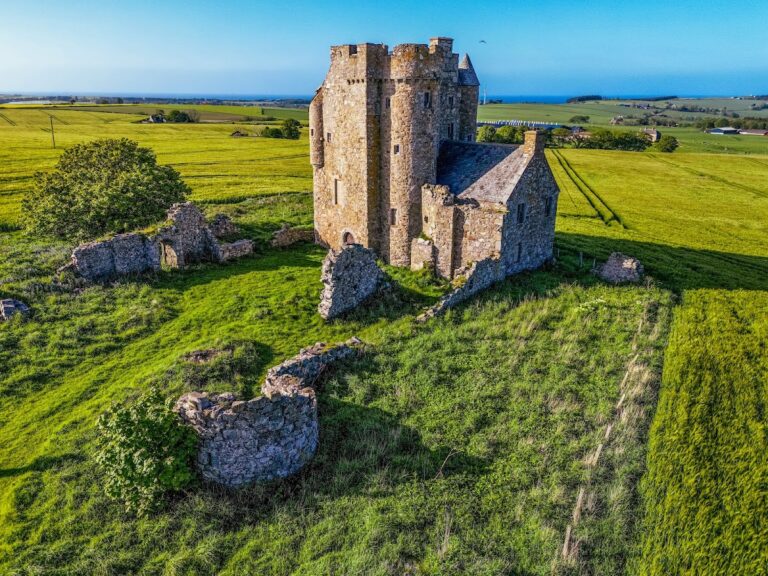
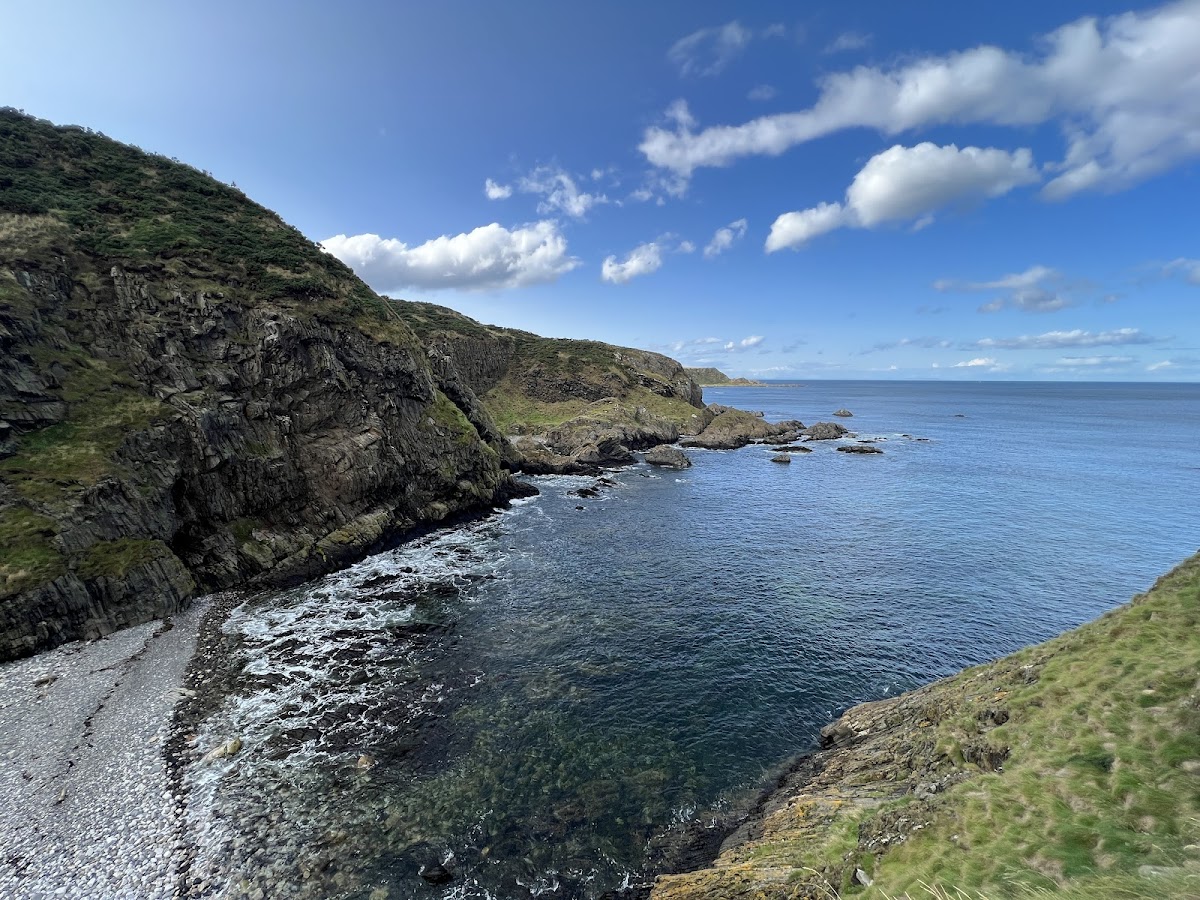
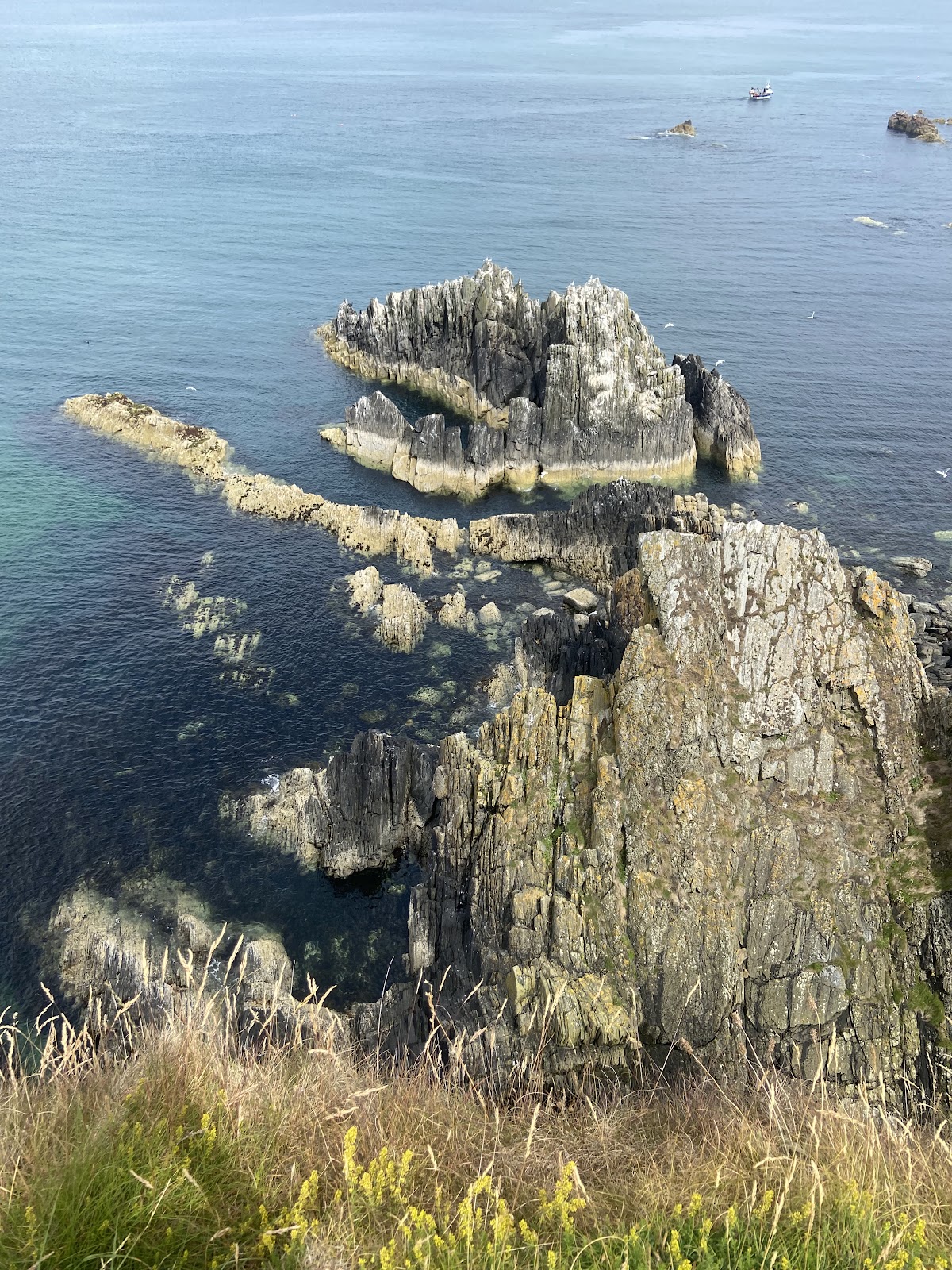
Findlater Castle occupies the end of a rocky promontory overlooking the Moray Firth, a large sea inlet on Scotland’s northeastern coast. The site lies near Sandend between Cullen and Portsoy, about 15 kilometres west of Banff. The rock rises approximately 15 metres, or 50 feet, above the sea and is surrounded by water except on its landward side, where a narrow isthmus connects it to the mainland.
The castle occupied the entire end of the promontory and consisted of a tower with supporting buildings on the summit of the rock. On the landward approach, a trench, ditch, and bastion, a projecting defensive work, protected the entrance. A raised stone causeway crossed the narrow isthmus. Access was further controlled by two drawbridges and a raised walkway above the surrounding rock. The surviving structures are associated mainly with the fourteenth-century rebuilding, whose design probably followed the model of Rosslyn Castle.
Findlater Doocot
Findlater Doocot stands between the parking area and the cliffs. A doocot is a purpose-built structure for housing domestic pigeons or doves. The tower-shaped building was probably constructed in the sixteenth century and was restored in 1992.