Boyne Castle: A Sixteenth-Century Castle in Aberdeenshire


Site at a Glance
- Rating
- 5
- Popularity
- Very Low
- Country
- United Kingdom
- Primary era
- Early Modern
- Eras represented
- Early Modern
- Civilizations
- Kingdom of Scotland
- Site type
- Military
- Remains
- Castle
On this page9 sections
History
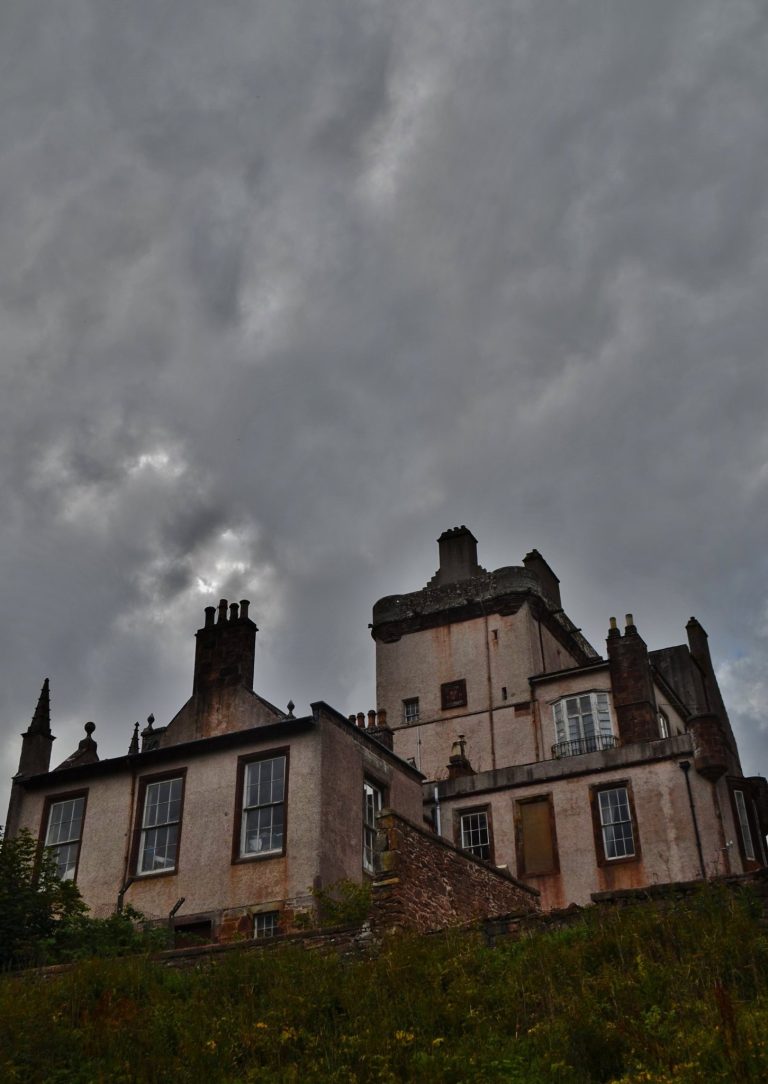
Boyne Castle, also known as the Palace of Boyne, is a sixteenth-century castle in Aberdeenshire, Scotland, in the United Kingdom. Its ownership was linked to several prominent Scottish families before the building became ruinous. The site remained occupied until after 1723.
Medieval ownership
Around 1320, the land belonged to Thomas Randolph, 1st Earl of Moray, a major Scottish nobleman of the early fourteenth century. It later passed to the Edmonstone family. David II, the medieval king of Scotland, granted Boyne to Sir John Edmonstone of Edmonstone for services rendered during the king’s captivity in England. Sir John’s son, Sir James Edmonstone, later married the widow of Douglas, described as a sister of Robert III, a later Scottish king.
The Ogilvie family acquired the castle through marriage in 1437. A local legend relates that the family heir fell from an open window into the gorge while being held by his nurse. The nurse then leapt after him, and both died. According to the tradition, the Ogilvies subsequently lost interest in Boyne Castle, after which the building began to decay.
The sixteenth-century castle
Sir George Ogilvy of Dunlugas is sometimes credited with building the present castle in the late sixteenth century, although his ownership is uncertain. Charles McKean proposed an earlier date, suggesting that Alexander Ogilvy of Boyne built it before 1575 for his bride, Mary Beaton. She had been a companion of Mary, Queen of Scots and had been brought up at the French royal court.
James Ogilvie of Cardell recorded that Mary, Queen of Scots stayed at the “Craig of Boyne” on 19 September 1562. That place may have been a separate, earlier site nearer the sea, occupied before the present castle was built. James VI of Scotland stayed at Boyne Castle in July 1589. During his visit, Andrew Keith, Lord Dingwall, George Young, and John Skene brought news from Denmark about marriage negotiations, preparations for ships, jewels, and a silver coach for Anne of Denmark.
Later history and protection
Occupation continued until after 1723, after which the castle declined into its present ruinous condition. Boyne Castle was designated a Scheduled Monument on 30 September 1933. This status gives legal protection to archaeological and historic sites considered nationally important.
Remains
Setting and defensive layout
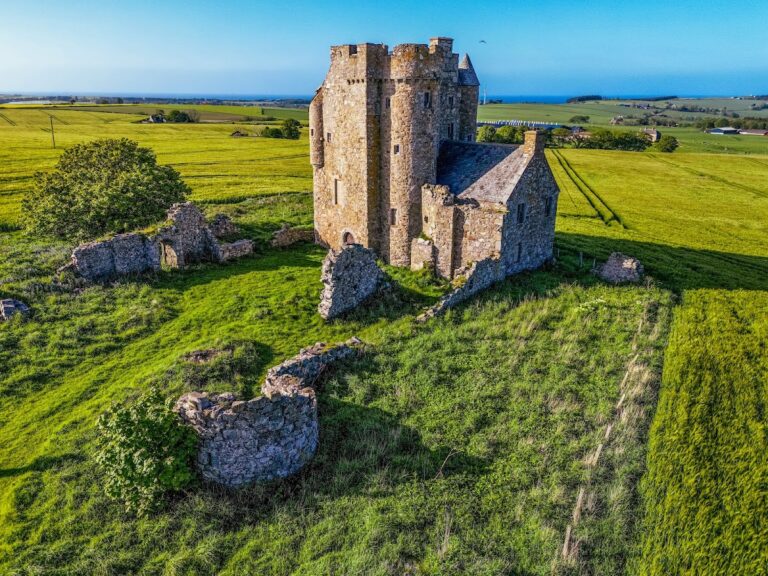
Boyne Castle is a quadrangular castle, meaning that it follows a roughly four-sided plan, about 1.5 miles (2.4 kilometres) east of Portsoy and 0.5 miles (0.8 kilometres) south of Boyne Bay. It stands above the steep gorge of the Burn of Boyne, also called Boyne Water. The gorge provides natural protection on three sides, while a dry moat, a defensive ditch without water, extends along the south side and is nearly 60 feet (18 metres) wide.
Gatehouse and towers
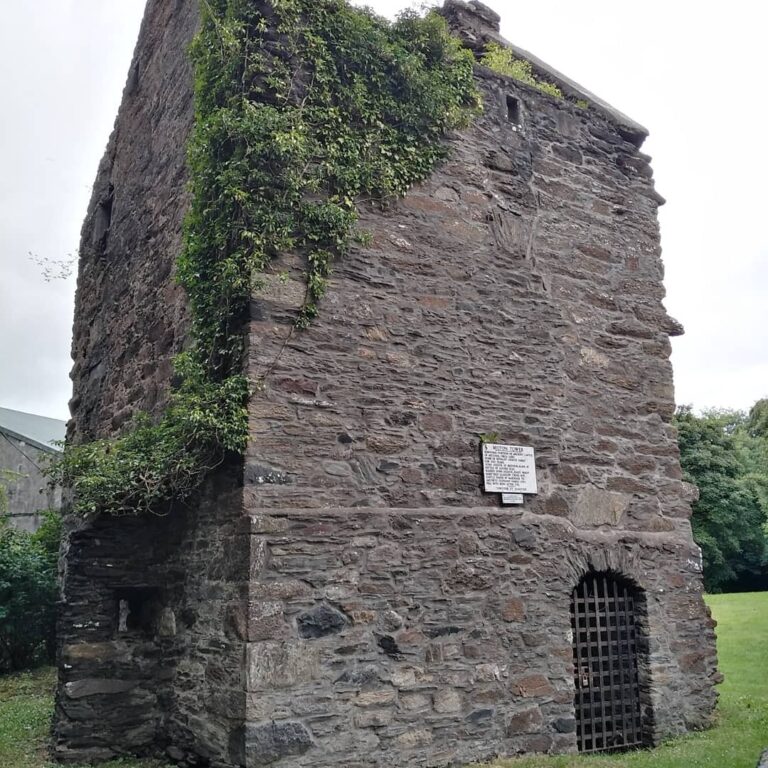
Round towers occupy the four corners of the castle. Each is approximately 22 feet (6.7 metres) in diameter. On the south side, a twin-turreted gatehouse forms the principal entrance and is approached by a raised, walled causeway, a passage carried across or beside the moat. The western walls and the towers survive to approximately 33 feet (10 metres), although the castle is now overgrown and ruinous.
Gardens and interior remains
Two walled gardens survive as remains within the castle’s grounds. The building was formerly described as containing fine rooms above vaulted basements, together with large windows. These descriptions provide evidence of the residential character of the castle as well as its defensive arrangement.
The Craig of Boyne
Objects recovered in 1869 from a kitchen midden at the Craig of Boyne included bone sewing needles, brass pins, and a lead tag used as a quality mark on imported cloth. A kitchen midden is a deposit formed chiefly from discarded food and domestic refuse. The Craig of Boyne may have been a separate earlier site from the present castle, and the finds help distinguish its archaeological remains from those of Boyne Castle.