Ferring Church: A Romanesque Church in Denmark
Site at a Glance
- Popularity
- Very Low
- Country
- Denmark
- Primary era
- Medieval
- Eras represented
- Medieval, Early Modern, Modern
- Civilizations
- Danish
- Site type
- Religious
- Remains
- Church
On this page13 sections
History
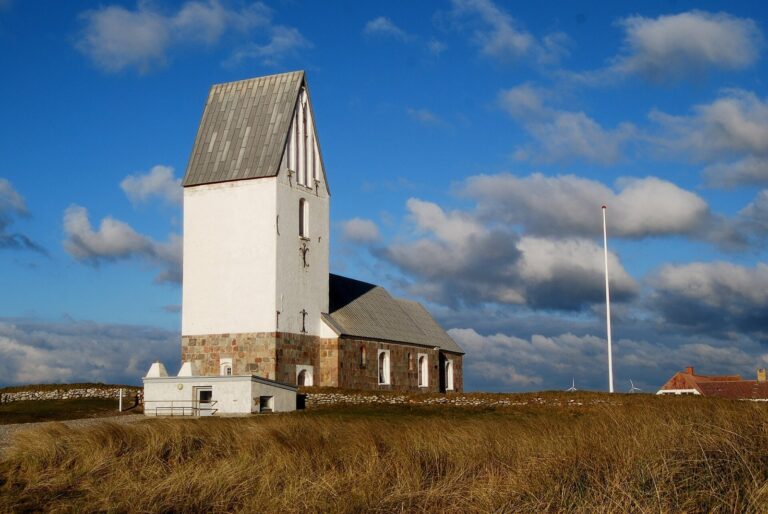
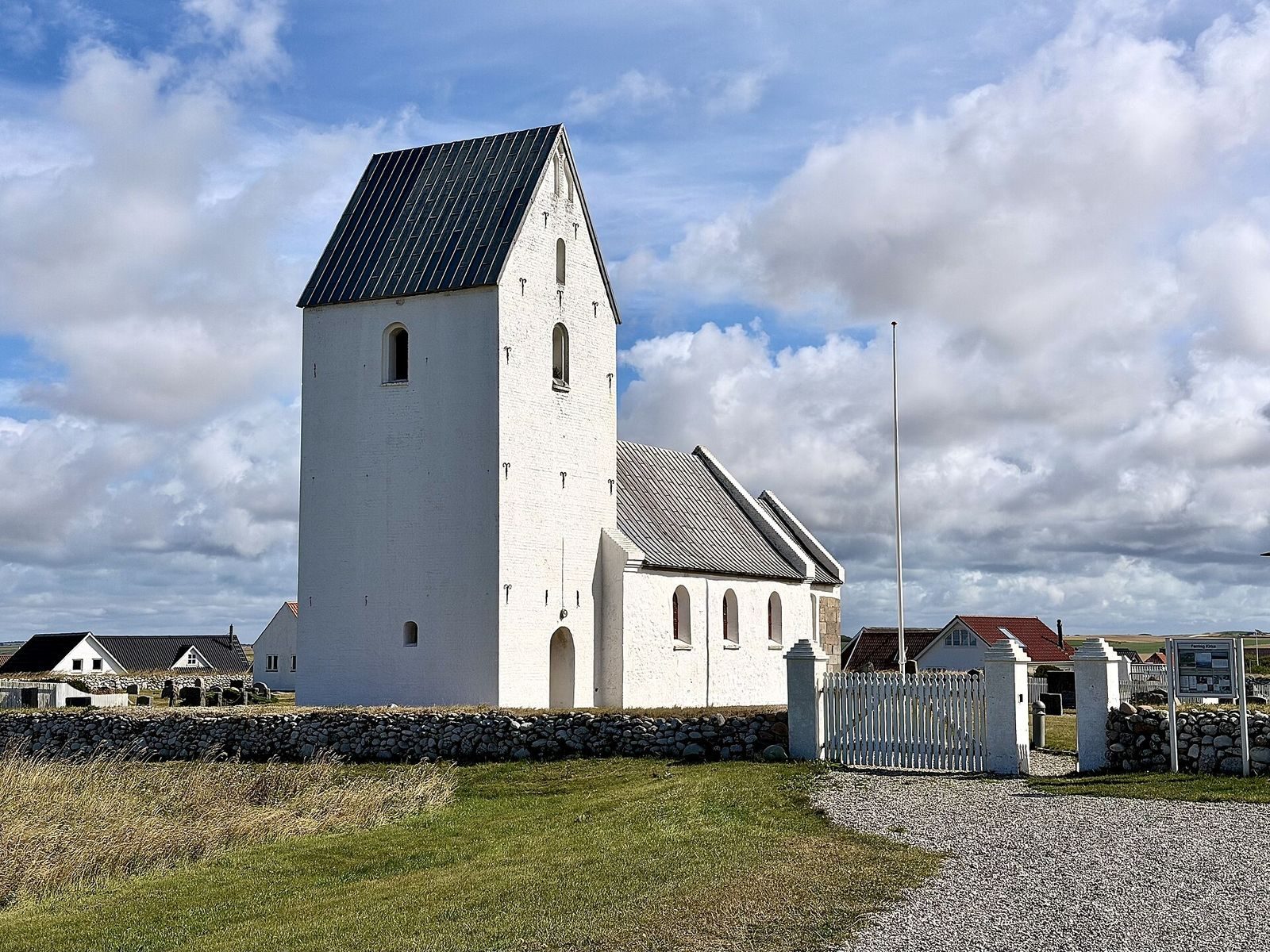
Ferring Church is a medieval church in Ferring, Denmark. Its chancel, the area around the altar, and nave, the main body of the church, date to around 1100 and were built in the Romanesque style, a medieval style that preceded Gothic. The church is Evangelical Lutheran and belongs to the Church of Denmark, Denmark’s national Lutheran church. Its administrative affiliations include Ferring Parish, the Dybe–Ramme–Fjaltring–Trans–Vandborg–Ferring–Lomborg–Rom Pastoral District, Lemvig Deanery, and the Diocese of Viborg.
The church appears in two paintings of the west Jutland coast. Carl Frederik Sørensen included it in an 1848 painting of a shipwreck after a storm, while Hans Smidth depicted it in an early 1880s painting of Ferring at Bovbjerg.
Uncovering and conservation
Eigil Rothe uncovered the frescoes on the nave’s north wall between 1912 and 1915. Egmont Otto Lind restored them in 1937 and again in 1958. After several attempts, the paintings were detached and remounted on the north wall in 1969.
Remains
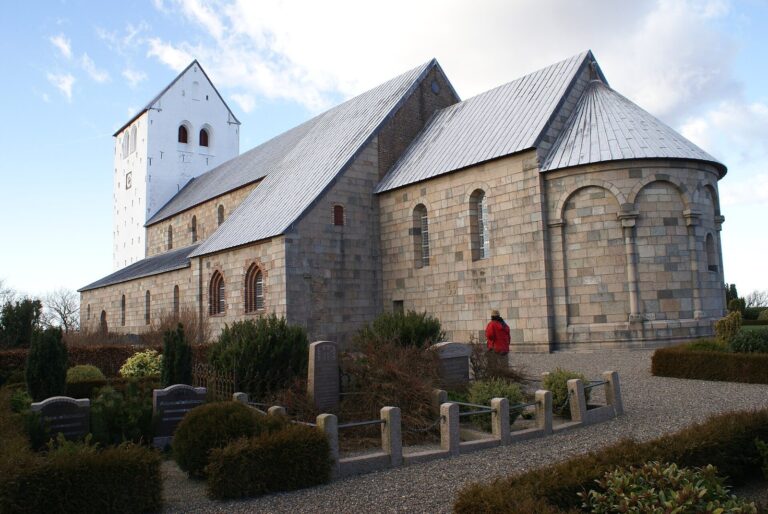
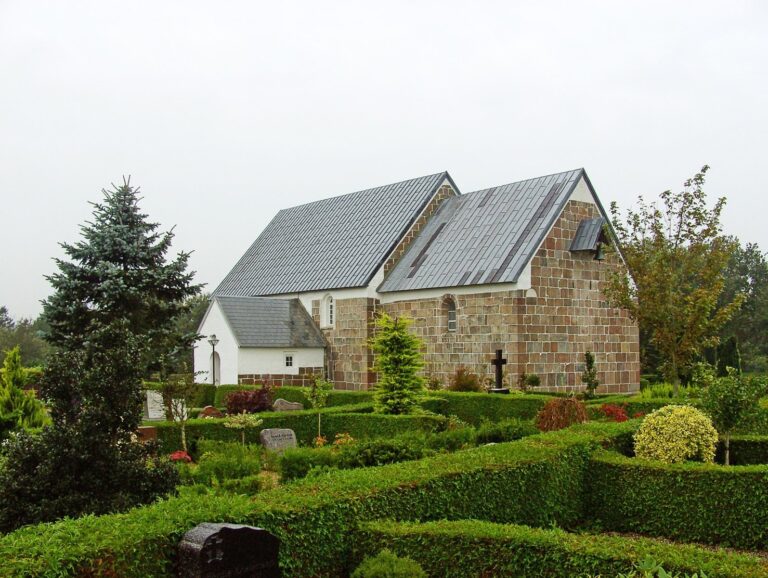
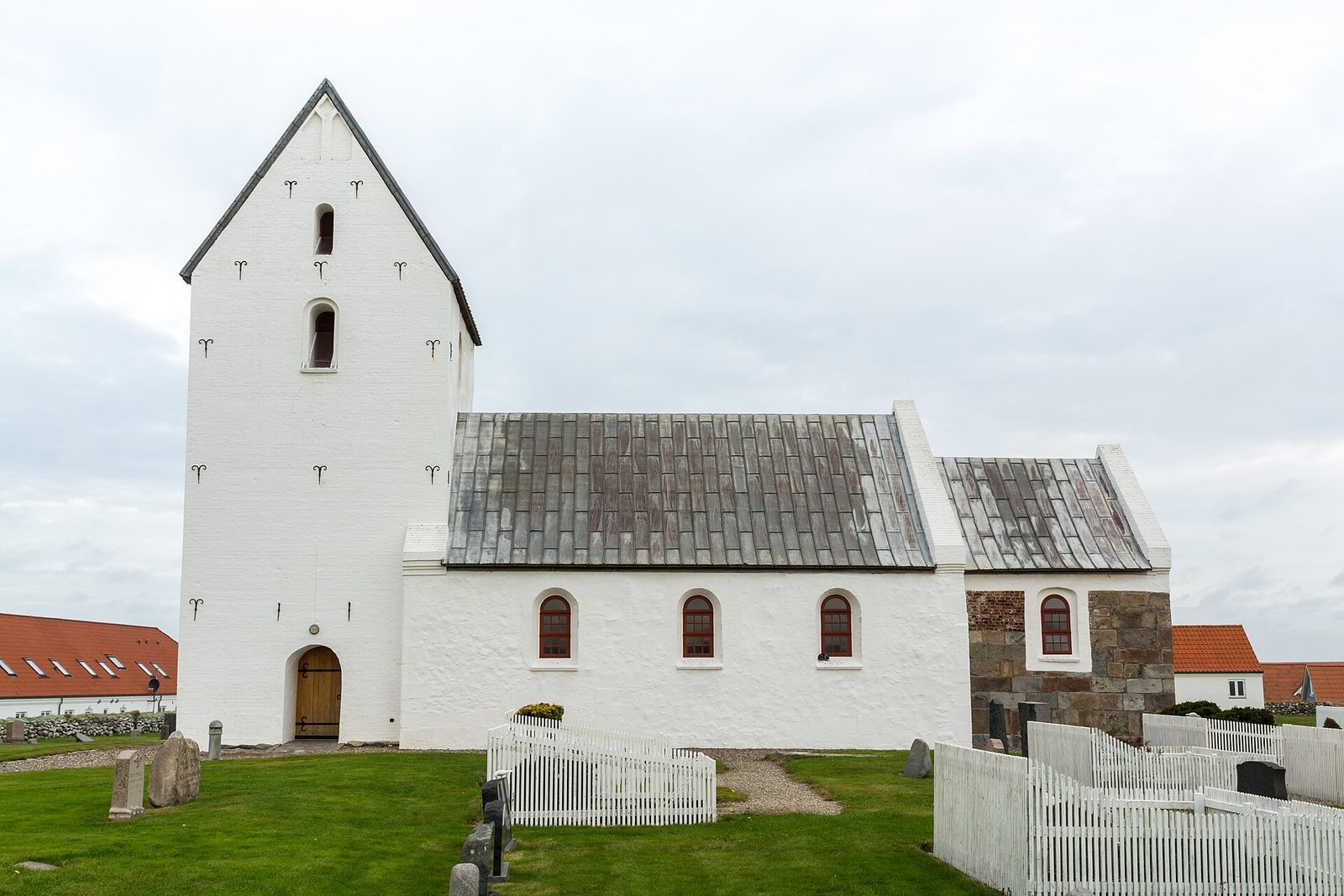
The Romanesque chancel and nave form the church’s principal spaces, with a tower from a later phase. Granite ashlar, fieldstone, and brick are among the building materials. The interior retains painted wall decoration, distinct ceiling forms, and furnishings from different periods.
Masonry and openings
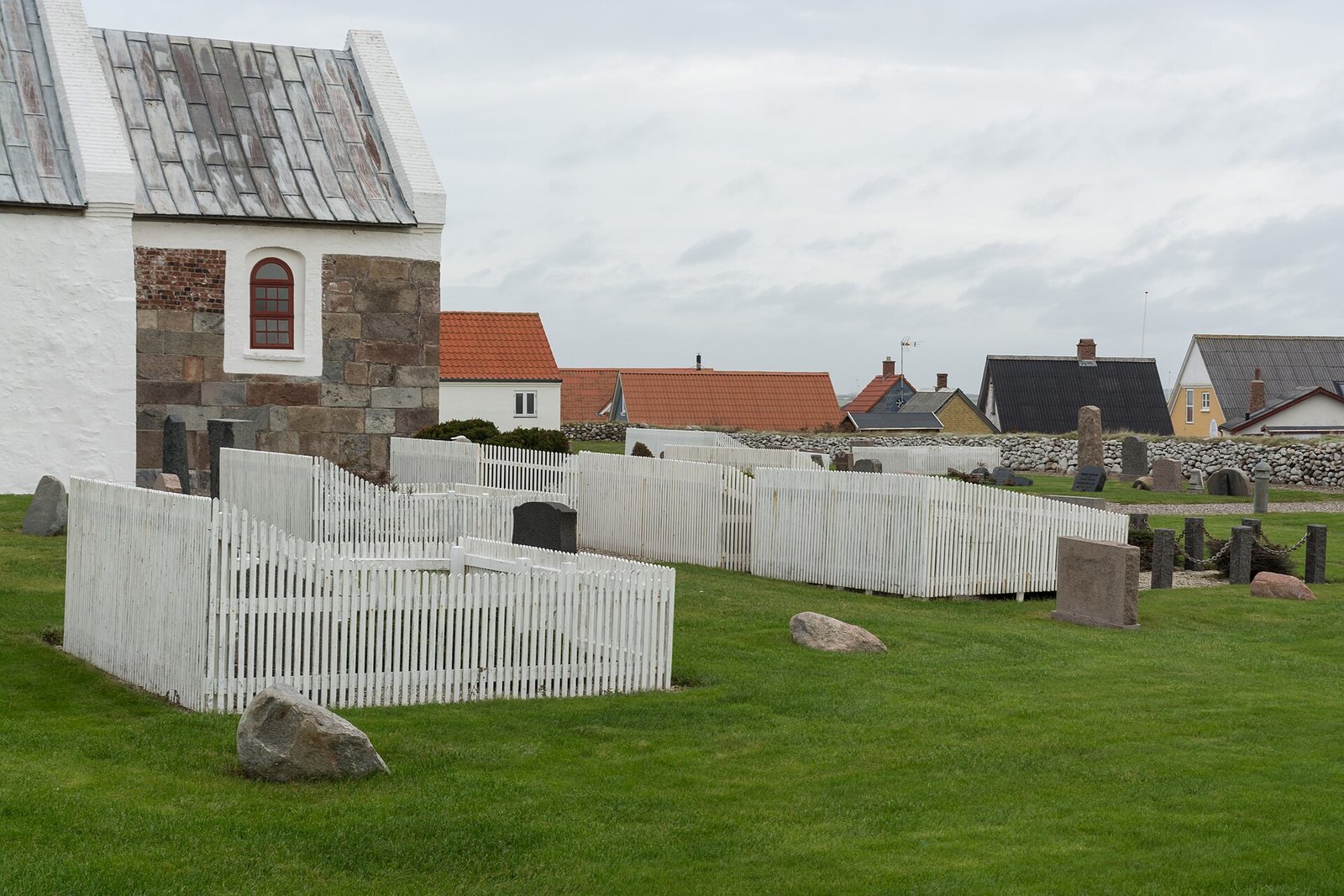
The chancel is built of granite ashlar, carefully cut stone blocks, above a plinth with beveled edges. The nave uses fieldstone, stone in less regular shapes, with ashlar blocks at its corners. A blocked rectangular doorway remains visible in the north wall, and a blocked Romanesque window there forms an interior niche. The tower dates to the Late Gothic period, the later phase of Gothic architecture.
Interior structure
The chancel arch retains chamfered imposts, projecting supports from which an arch springs, and is flanked by pointed niches for side altars. The nave has a flat-beam ceiling, while the chancel has a vault without ribs. A hagioscope, an opening that allows a view toward the altar, is set in the chancel’s south wall. Heart-shaped decorations in the vault were uncovered in 1985 and attributed to the Lemvig Group, an art-historical grouping of medieval church paintings associated with the Lemvig area. Their poor condition led to their being covered again with whitewash.
Wall paintings
New Testament frieze and border
The heavily damaged fresco frieze on the nave’s north wall contains scenes from the New Testament. In its lower band, kings appear with Herod, followed by Herod ordering the killing of children. The upper band is read from east to west. Its first described motif is the hindquarters of horses moving away from the triumphal wall, perhaps referring to the kings’ dream. Scrolling plants run along the upper border, in forms compared to the intertwined serpent patterns of Viking Age art. The frescoes’ style has been compared with English book illustrations of the 10th century. Ochre-yellow lions and malachite-green leaves survive among the colors, while blue and red are clearest in the framing. Traces on the south wall may indicate that the Passion story continued there.
Flight into Egypt and Temptations
West of the north window is a scene of the Flight into Egypt, based on Pseudo-Matthew, an early Christian account of Jesus’s childhood outside the New Testament. Mary rides a donkey with the child, while Joseph approaches a temple where the family is to spend the night. Lions around a tree above the window may refer to the story of lions being tamed when they encountered Jesus. The temple also represents Jerusalem in the scenes of the Temptations. The first two temptations appear together: the devil sits beside stones he wants Jesus to turn into bread, then urges him to throw himself from Jerusalem’s towers to prove he can fly. In the next scene, the devil offers worldly riches. Jesus refuses, and the defeated figure lies beneath a tree that bends over him in an accusatory pose. The frieze concludes with the Entry into Jerusalem.
Furnishings and sculpture
Altarpiece and pulpit
The Renaissance altarpiece, in a style that revived classical forms, dates to 1638. Poul Steffensen painted the pulpit panels in 1912. A painting of Christ and the Rich Young Man was not allowed to serve as an altar painting; it is probably the same work now in Åsum Church.
Sculpture
The church contains a Late Gothic crucifix and a figure of the Virgin Mary from the late 13th century, placed in the northern side-altar niche. A figure of Christ stands above the entrance door.
Baptismal font
The Romanesque granite baptismal font, a basin used in Christian baptism, has chalice-leaf ornament on its bowl and claw-like forms at the corners of its square base.
Churchyard
Each grave is enclosed by its own fence, a local custom probably chosen because strong winds could damage living hedges. The painter Kristen Bjerre, who died in 1943, is buried in the churchyard.